Go Back
Mary Berry Lasagna Recipe

Mary Berry Lasagna Recipe

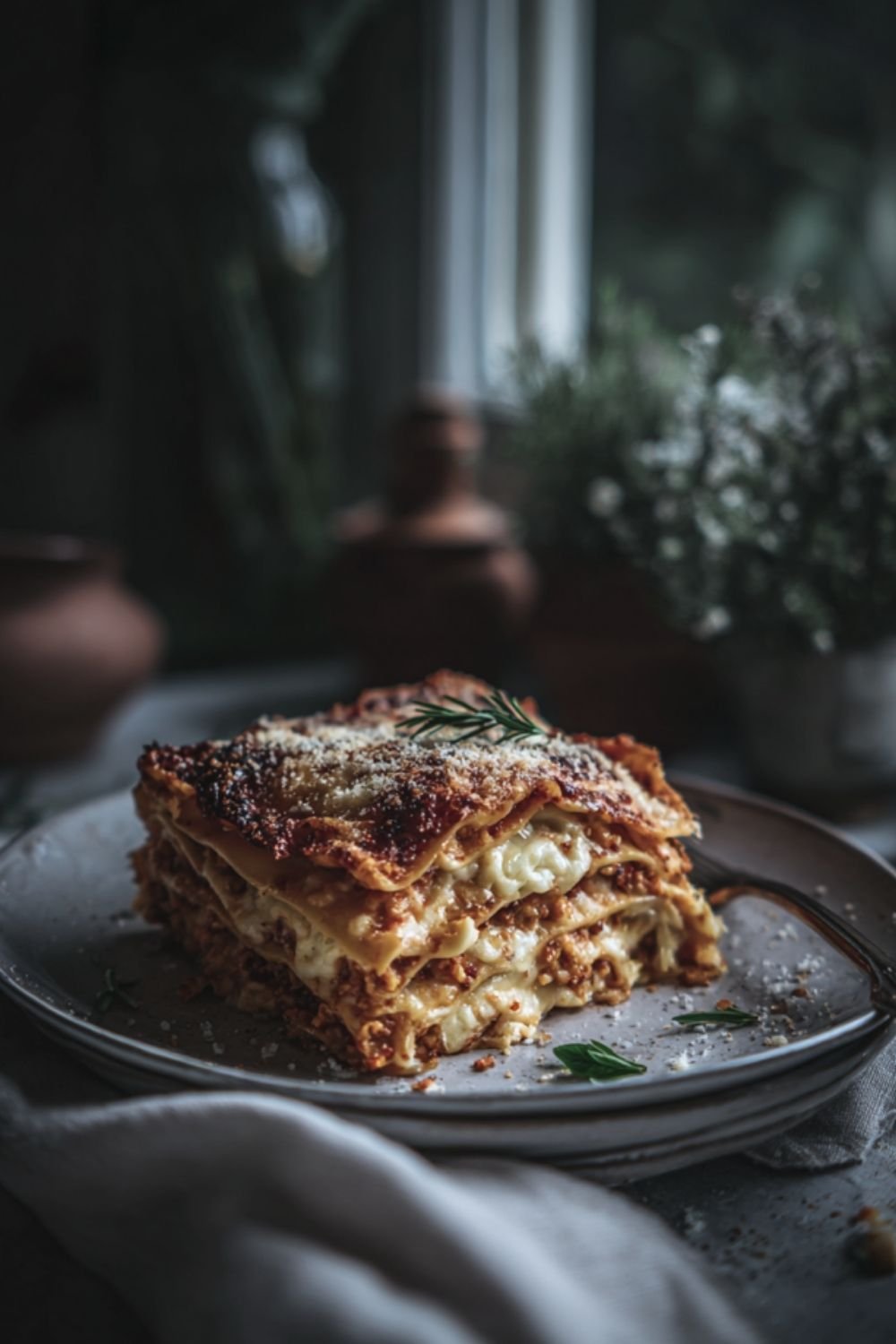
Layers of rich ground beef sauce, creamy white sauce infused with mustard and nutmeg, and melted Cheddar and Parmesan cheeses alternate with tender no-boil lasagna sheets, then baked until golden and bubbling for a hearty, comforting classic.
Prep Time 20 minutes
Cook Time 2 hours 15 minutes
Servings: 8
Course: Main Course
Cuisine: Italian-British
Calories: 640

Ingredients
  

For the Meat Sauce:
  • 2 tbsp olive oil
  • 2 lb 1 kg ground beef
  • cup all-purpose flour
  • cups beef stock
  • 1 × 14 oz 400 g can chopped tomatoes
  • 6 celery stalks sliced
  • 2 onions chopped
  • 2 large garlic cloves crushed
  • ¼ cup tomato paste
  • 1 tsp sugar
  • Salt and black pepper to taste
For the White Sauce:
  • 4 tbsp butter
  • cup all-purpose flour
  • cups milk
  • 1 tsp Dijon mustard
  • ¼ tsp grated nutmeg
For the Lasagna Assembly:
  • 4 oz 125 g grated aged Cheddar cheese
  • 1 oz 30 g grated Parmesan cheese
  • 6 oz 175 g no-boil lasagna noodles
  • Chopped parsley for garnish

Method
 

  1. Preheat the oven to 375°F (190°C). Begin making the meat sauce: heat the oil in a saucepan over medium-high heat, add the ground beef, and cook, stirring frequently and breaking up any lumps, until the meat is evenly browned all over.
  2. Sprinkle the flour over the browned meat and stir continuously for 1 minute to cook out the raw flour taste. Then add the stock, tomatoes, celery, onions, garlic, tomato paste, and sugar, stirring everything together well.
  3. Season the sauce generously with salt and pepper, then bring it to a boil. Once boiling, reduce the heat, cover the pan, and let it simmer gently for 1 hour, stirring occasionally, until the sauce is rich and thickened.
  4. While the meat sauce simmers, prepare the white sauce: melt the butter in a separate saucepan over medium heat. Sprinkle in the flour and cook, stirring constantly, for 1 minute to create a smooth roux.
  5. Remove the pan from the heat and gradually blend in the milk, whisking continuously to prevent lumps from forming. Return to the heat and bring to a gentle boil, stirring constantly until the sauce thickens to a creamy consistency.
  6. Let the white sauce simmer for 2–3 minutes to cook through fully. Stir in the mustard and a pinch of nutmeg, then season with salt and pepper to taste.
  7. To assemble the lasagna, spoon one-third of the meat sauce into the bottom of a large shallow ovenproof dish, spreading it out evenly. Pour one-third of the white sauce over the meat sauce, then sprinkle with one-third of the combined Cheddar and Parmesan cheeses.
  8. Arrange half of the lasagna sheets in a single layer over the cheese, breaking them if necessary to fit the dish. Repeat the layering process once more with another third of each sauce and cheese, then top with the remaining lasagna sheets.
  9. Finish by topping with the final third of both sauces and the remaining Cheddar and Parmesan cheeses, spreading everything evenly to the edges.
  10. Place the dish in the preheated oven and bake for 45–60 minutes until the pasta is completely tender when pierced with a knife and the topping has turned a beautiful golden brown color. Let it rest for 5 minutes, then serve hot, garnished with a sprinkle of fresh chopped parsley.
Notes

What Are Common Lasagne Mistakes?

The most common lasagne mistake is using too much sauce, which creates a watery, soggy dish rather than distinct layers. The meat and white sauces should coat the pasta generously but not pool excessively. Another frequent error is undercooking the meat sauce, resulting in bland flavors and tough ground beef. Allow adequate simmering time for flavors to develop and meat to become tender. Using boiling lasagna sheets when no-boil varieties are called for creates mushy pasta that falls apart during serving.
Many cooks fail to make their white sauce correctly, resulting in lumpy, separated mixtures. The key is gradually blending milk into the roux off the heat, then returning to the stove and stirring constantly as it heats. Skipping seasoning or under-seasoning creates flat, uninspired flavors throughout the dish. Taste sauces carefully and season generously with salt, pepper, mustard, and nutmeg. Insufficient layering or uneven distribution of sauce means some portions are dry while others are soupy.
Overbaking lasagne until the edges char or the top becomes too dark results in tough, dried-out pasta and burnt cheese. Cover with foil if the top browns too quickly before the interior finishes cooking. Cutting into lasagne immediately after baking causes it to fall apart and lose shape. Allow the dish to rest for 10-15 minutes, which lets layers set and makes serving cleaner. These simple adjustments transform good lasagne into exceptional results.