Go Back
Mary Berry Persian pilaf

Mary Berry Persian Pilaf Recipe

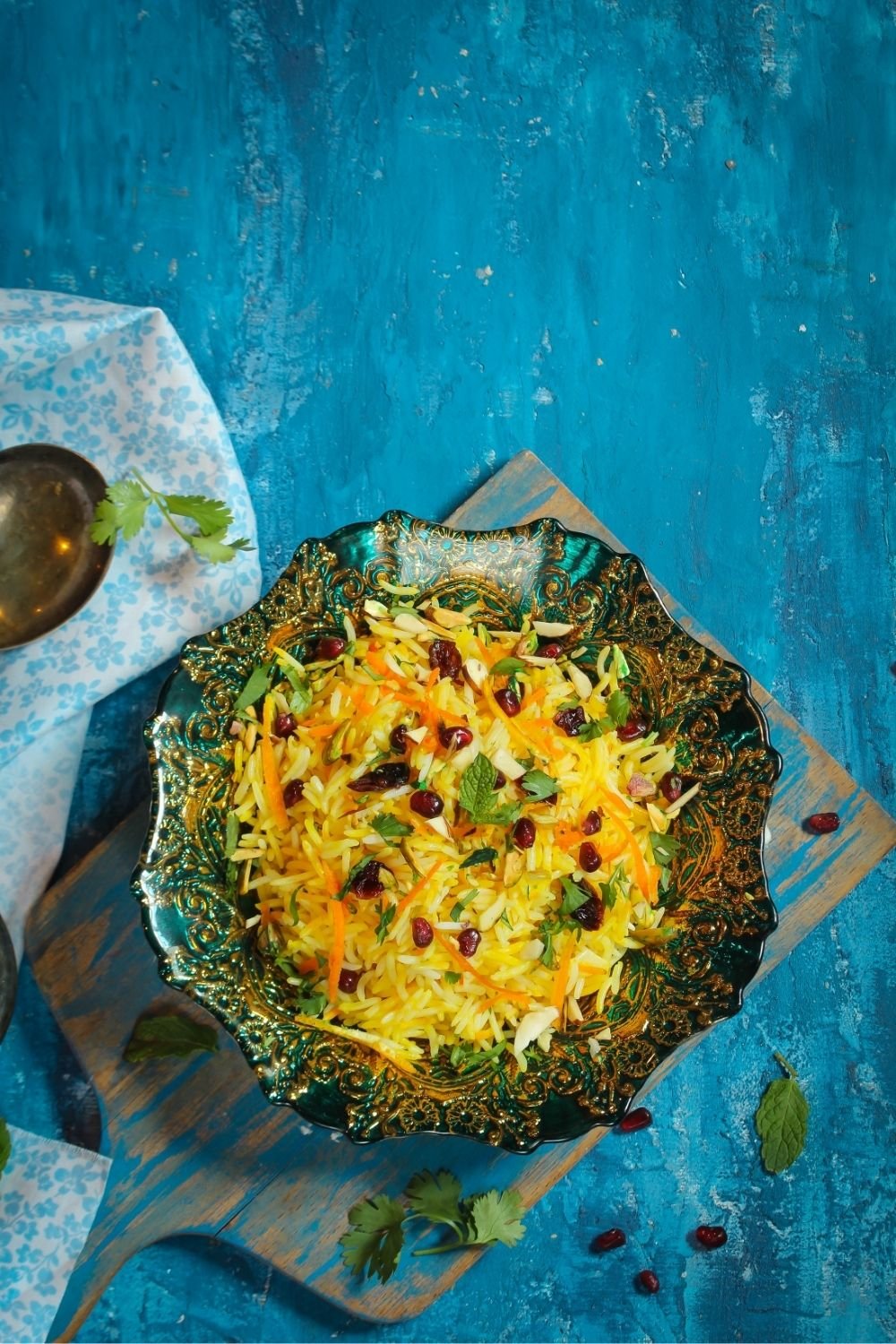
Whole spices toast and dry-fry to release aromatic oils, creating a fragrant foundation for fluffy long-grain rice cooked in stock with warm spices like cinnamon, cardamom, and cumin. Topped with pistachios and raisins for color and contrast, this elegant yet forgiving dish emerges with each grain separate and perfectly cooked, delivering authentic Persian flavor without demanding fussy technique.
Prep Time 15 minutes
Cook Time 30 minutes
Servings: 6
Course: Side Dish
Cuisine: Persian
Calories: 320

Ingredients
  

  • 1 small cinnamon stick
  • 2 tsp cumin seeds
  • 6 black peppercorns
  • Seeds of 4 cardamom pods crushed
  • 3 cloves
  • 2 tbsp sunflower oil
  • 1 small onion chopped
  • 1 tsp turmeric
  • cups long-grain rice
  • cups hot vegetable or chicken stock
  • 2 bay leaves torn into pieces
  • Salt and black pepper to taste
  • 2 oz 60g shelled pistachios, coarsely chopped
  • 1 oz 30g raisins
  • Fresh cilantro for garnish

Method
 

  1. Begin by toasting your whole spices to liberate their aromatic potential. Heat a heavy pan over medium heat and add 1 small cinnamon stick, 2 tsp cumin seeds, 6 black peppercorns, the seeds of 4 cardamom pods (crushed), and 3 cloves.
  2. Dry-fry these spices for 2–3 minutes until they begin to release their aromas—this essential step builds the flavor foundation of your pilaf. Once fragrant, add 2 tbsp sunflower oil to the pan and, when hot, add 1 small chopped onion along with 1 tsp turmeric.
  3. Cook gently, stirring occasionally, for about 10 minutes until the onion is completely softened and has absorbed the spice flavors.
  4. Next, incorporate the rice into the aromatic base. Add 1½ cups long-grain rice to the pan and stir thoroughly to coat each grain with the oil and spice mixture.
  5. Slowly pour in 5¼ cups of hot vegetable or chicken stock, then add 2 bay leaves (torn into pieces) and season generously with salt and black pepper to taste.
  6. Bring the mixture to a boil, then immediately lower the heat, cover the pan tightly, and cook very gently for about 10 minutes without lifting the lid—this allows the rice to steam evenly and absorb the liquid properly.
  7. Remove the saucepan from the heat and let it stand, still covered, for about 5 minutes. This resting period allows the rice to finish cooking and the grains to become light and fluffy.
  8. Finally, add 2 oz (60g) of coarsely chopped shelled pistachios and 1 oz (30g) of raisins to the pilaf, gently forking them through to fluff up the rice without crushing the grains.
  9. Garnish generously with fresh cilantro and serve immediately while the pilaf is still warm.

Notes

Mary Berry Persian pilaf Substitutions and Variations

While the classic Persian pilaf recipe delivers authentic flavor, you can easily adapt it to suit your pantry, dietary preferences, or taste preferences. If you’re missing cardamom pods, substitute equal amounts of allspice or nutmeg for similar warmth. Swap pistachios for almonds or cashews if you prefer, or use dried cranberries instead of raisins for tanginess. For a vegetable-forward version, I’d recommend adding diced carrots, peas, or dried apricots during cooking. You can replace sunflower oil with ghee for richer flavor. If you’re avoiding nuts entirely, simply omit them without affecting the pilaf’s texture. Brown rice works as a substitute for long-grain white rice, though it’ll require additional cooking time. These variations maintain the dish’s essential character while personalizing it to your preferences.