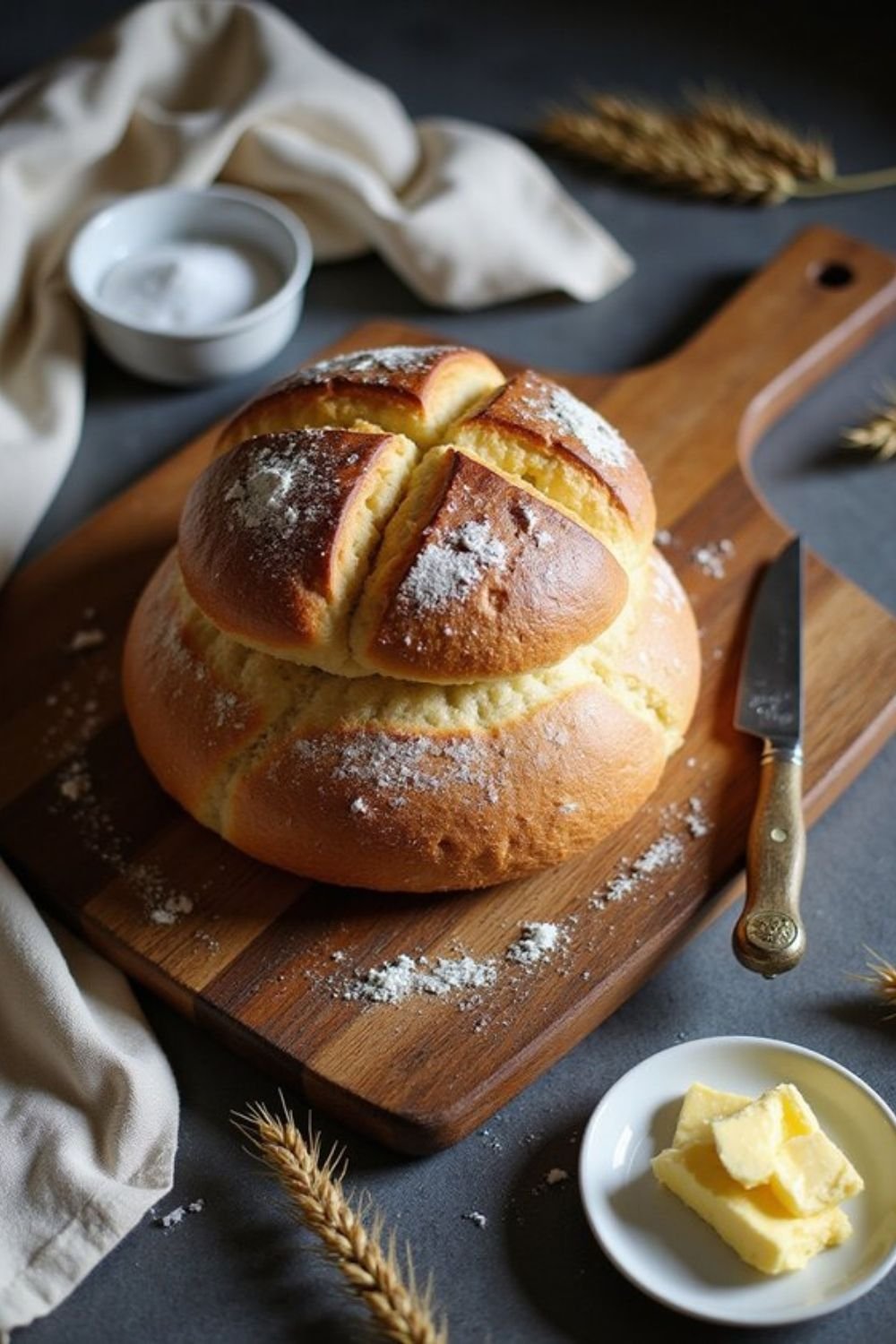
Begin by combining all the dry and wet ingredients in a bowl: 3½ cups (450g) bread flour, 1 × ¼-ounce (7g) packet fast-acting dried yeast, 1 teaspoon salt, 3 tablespoons (40g) salted butter (melted), and 1 cup + 3 tablespoons (300ml) warm water.
Mix until a soft, sticky dough forms. Transfer the dough to a floured surface and knead for 4–5 minutes until it becomes smooth and elastic.
Place the kneaded dough in a lightly oiled bowl, cover tightly with plastic wrap, and allow it to rise in a warm location for 1–1½ hours until it has doubled in size.
Once the dough has risen, line a baking sheet with parchment paper and turn out the dough onto it. Punch down the dough to release excess gas, then divide it into two pieces—one substantially larger than the other.
Shape both pieces into balls and stack the smaller ball on top of the larger one to create the signature cottage loaf shape. Using a floured wooden spoon handle, push it straight through the center of both balls down to the baking sheet; this creates the characteristic indentation that holds the loaf together and gives it its distinctive appearance.
Place the entire baking sheet inside a sealed plastic bag and allow the shaped loaf to proof for 35–45 minutes.
Preheat the oven to 425°F during the final stages of proofing. Just before baking, brush the loaf generously with a glaze made from 1 extra-large egg beaten together with 1 tablespoon milk.
Bake for 20–25 minutes until the loaf is golden brown and sounds hollow when tapped on the bottom. Transfer the finished loaf to a wire rack to cool completely before slicing.