

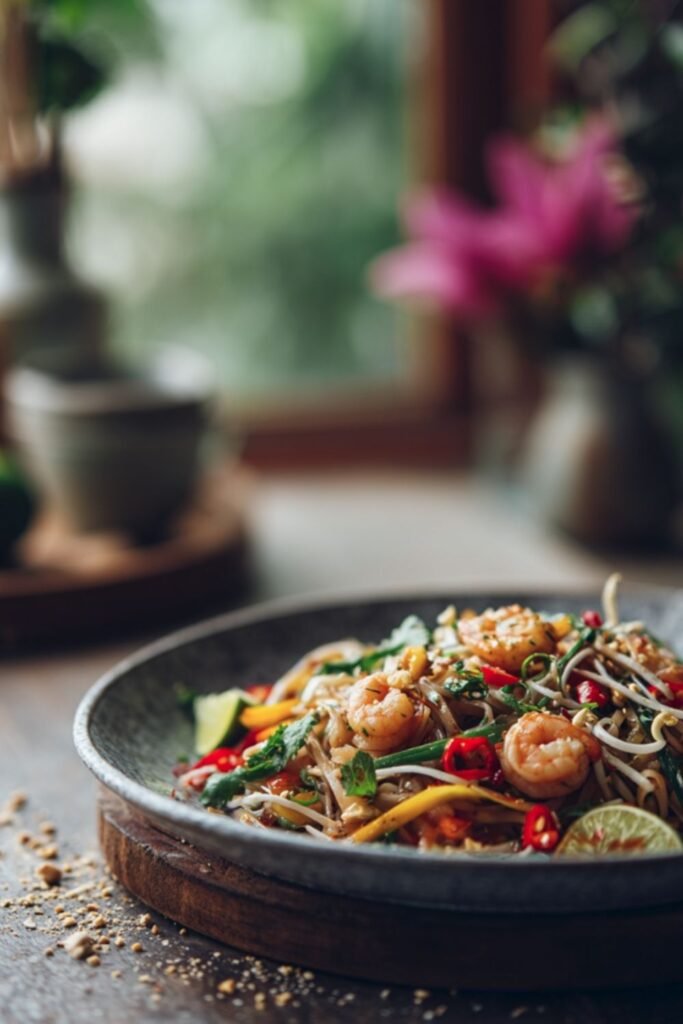
You’re probably thinking Pad Thai’s one of those dishes that requires a Thai restaurant’s secret techniques and fancy equipment, right. Here’s the thing though: you can pull together an authentic-tasting version in your own kitchen in about twenty minutes, and honestly, the shrimp cooks so fast you’ll wonder why you haven’t made this more often. But what’s the real trick to nailing those perfect salty-sour-sweet-spicy flavors.
Why You’Ll Love This Pad Thai With Shrimp
This dish brings together everything you want in a weeknight dinner: it comes together in about 20 minutes, tastes like you’ve been cooking Thai food your whole life, and somehow manages to feel both comforting and exciting on the same plate.
I love how the shrimp cooks faster than chicken, keeping your prep time minimal. The fresh ginger and lemongrass don’t intimidate me anymore—they’re just finely chopped ingredients that transform ordinary noodles into something restaurant-quality. What really gets me is how the soy sauce, fish sauce, and lime juice create this perfectly balanced sauce that coats every strand.
Plus, you’re getting vegetables and protein without feeling like you’re eating “healthy food.” The peanuts add that satisfying crunch I crave.
Love the sweet-tangy-spicy balance in this Pad Thai? Mary Berry’s Eggplant Parmigiana brings equally exciting Italian flavors with rich tomato sauce and melted cheese. It’s perfect when you want comfort food with European flair.
What Ingredients Are In Pad Thai With Shrimp?
Creating an authentic Pad Thai with shrimp requires a thoughtful combination of pantry staples and fresh ingredients that work together to build layers of flavor. The foundation starts with wide rice noodles, which provide the perfect texture to absorb the savory-tangy sauce. Proteins come in the form of shrimp and chicken, while fresh aromatics like ginger, lemongrass, and red chile provide the characteristic Thai punch. The sauce itself relies on a trio of umami-rich condiments: soy sauce, fish sauce, and bright lime juice that balance saltiness with acidity.
Ingredients:
- 8 oz (250 g) wide rice noodles
- 2 tbsp olive oil
- 2 skinless boneless chicken breasts (about 4 oz/125 g each), cut into thin strips
- 1 small fresh red chile, halved, seeded, and finely chopped
- 1 in (2.5 cm) piece fresh ginger, peeled and finely grated
- 1 in (2.5 cm) piece fresh lemongrass from the lower stalk, very finely chopped
- 4 oz (125 g) peeled raw jumbo shrimp
- 3 oz (90 g) thinly sliced oyster mushrooms
- 4 oz (125 g) sugar snap peas, trimmed and sliced diagonally
- 3 tbsp soy sauce
- 2 tbsp lime juice
- 1 tbsp fish sauce
- Salt and black pepper to taste
- ¼ cup salted or unsalted peanuts for serving
Choose fresh shrimp with a clean, briny smell. Buy ginger and lemongrass from Asian markets for better quality and price. Use authentic fish sauce for genuine flavor—its strong aroma mellows considerably during cooking. Frozen lemongrass works if fresh is unavailable, though fresh delivers better complexity.
How To Make This Pad Thai With Shrimp
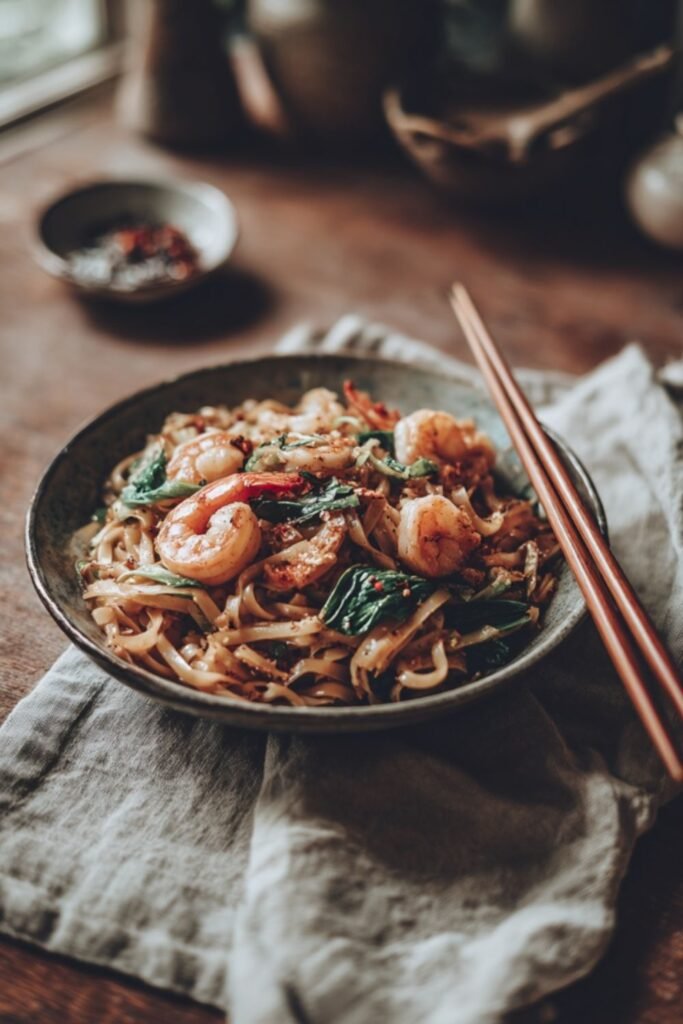
- Prepare the noodles following the directions on the package. Once cooked, drain them thoroughly in a colander, then rinse under cold running water to stop the cooking process and prevent sticking. Set the noodles aside while you prepare the rest of the dish.
- Pour 1 tablespoon of the oil into a wok or large nonstick frying pan and heat it over high heat until shimmering. Add the chicken pieces and stir-fry vigorously for about 2 minutes, tossing frequently, until they turn golden brown on all sides and are cooked through completely. Using a slotted spoon, lift the chicken out of the pan and transfer it to a plate, setting it aside temporarily.
- Add the remaining oil to the same pan and let it heat up again. Toss in the chile, ginger, and lemongrass, followed immediately by the shrimp, mushrooms, and peas. Stir-fry this colorful mixture for 1 minute, keeping everything moving to prevent burning. Next, pour in the soy sauce, lime juice, and fish sauce, then season with salt and pepper to your liking. Return the reserved chicken to the pan along with the cooked noodles, tossing everything together energetically. Continue stir-frying for another 2–3 minutes until the shrimp turns bright pink and opaque, and everything is steaming hot throughout.
- Transfer the fragrant stir-fry to serving bowls or plates and finish with a generous scattering of crushed peanuts and fresh cilantro leaves over the top. Serve immediately while piping hot.
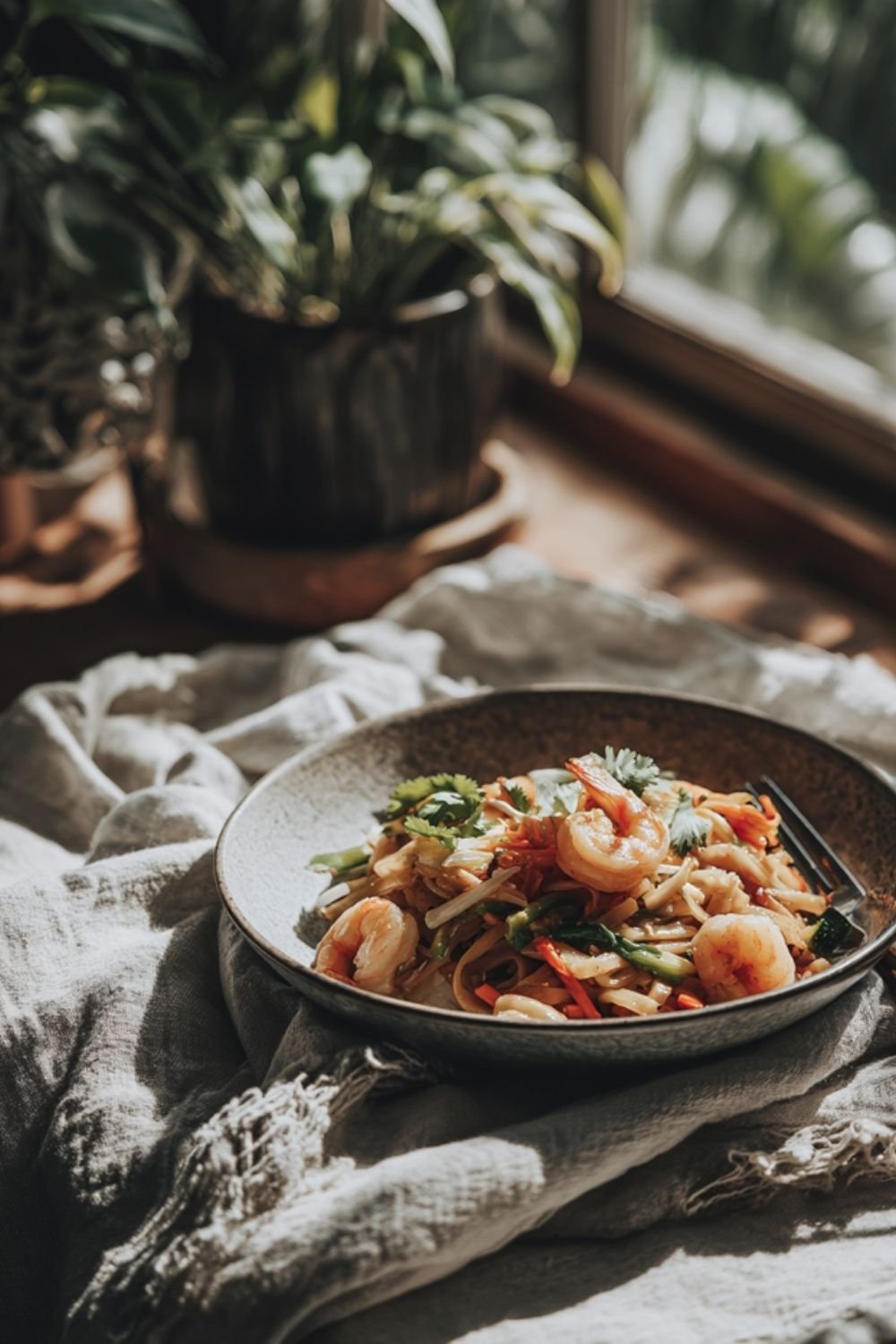
Pad Thai With Shrimp
Ingredients
Method
- Prepare the noodles following the directions on the package. Once cooked, drain them thoroughly in a colander, then rinse under cold running water to stop the cooking process and prevent sticking. Set the noodles aside while you prepare the rest of the dish.
- Pour 1 tablespoon of the oil into a wok or large nonstick frying pan and heat it over high heat until shimmering. Add the chicken pieces and stir-fry vigorously for about 2 minutes, tossing frequently, until they turn golden brown on all sides and are cooked through completely. Using a slotted spoon, lift the chicken out of the pan and transfer it to a plate, setting it aside temporarily.
- Add the remaining oil to the same pan and let it heat up again. Toss in the chile, ginger, and lemongrass, followed immediately by the shrimp, mushrooms, and peas. Stir-fry this colorful mixture for 1 minute, keeping everything moving to prevent burning. Next, pour in the soy sauce, lime juice, and fish sauce, then season with salt and pepper to your liking. Return the reserved chicken to the pan along with the cooked noodles, tossing everything together energetically. Continue stir-frying for another 2–3 minutes until the shrimp turns bright pink and opaque, and everything is steaming hot throughout.
- Transfer the fragrant stir-fry to serving bowls or plates and finish with a generous scattering of crushed peanuts and fresh cilantro leaves over the top. Serve immediately while piping hot.
Notes
What Are Common Pad Thai Mistakes?
The most common Pad Thai mistake is overcooking the noodles, which become mushy and break apart when tossed. Cook until just tender, then refresh under cold water to stop cooking. Overcrowding the pan traps steam and prevents proper stir-frying, so cook in batches if necessary. Using poor-quality fish sauce creates unpleasant flavors, so invest in authentic Thai brands. Balance flavors carefully with lime juice and fish sauce for authentic taste. Another frequent error is cooking shrimp and chicken too long, resulting in tough, rubbery texture. Add proteins last or cook separately, then combine briefly. Skipping fresh herbs like cilantro diminishes authentic flavor and freshness. Many cooks also fail to use high enough heat, creating steamed rather than stir-fried results. Maintain a hot wok or pan throughout cooking for proper texture and flavor development that defines authentic Pad Thai.What Are Common Pad Thai Mistakes?
The most common Pad Thai mistake is overcooking the noodles, which become mushy and break apart when tossed. Cook until just tender, then refresh under cold water to stop cooking. Overcrowding the pan traps steam and prevents proper stir-frying, so cook in batches if necessary. Using poor-quality fish sauce creates unpleasant flavors, so invest in authentic Thai brands. Balance flavors carefully with lime juice and fish sauce for authentic taste.
Another frequent error is cooking shrimp and chicken too long, resulting in tough, rubbery texture. Add proteins last or cook separately, then combine briefly. Skipping fresh herbs like cilantro diminishes authentic flavor and freshness. Many cooks also fail to use high enough heat, creating steamed rather than stir-fried results. Maintain a hot wok or pan throughout cooking for proper texture and flavor development that defines authentic Pad Thai.
Pad Thai With Shrimp Substitutions And Variations
Since you’re working with a flexible stir-fry base, you’ve got plenty of room to swap things around based on what’s in your pantry or what you’re craving that day. I’d suggest trying chicken instead of shrimp if seafood isn’t your thing, or going half-and-half with both proteins for extra heartiness.
Mushrooms are easy to replace with bell peppers, broccoli, or even cashews for crunch. Can’t find lemongrass? Swap it for lime zest—you’ll get that citrusy brightness without hunting down specialty ingredients. The beauty here is flexibility.
Want it spicier? Add more chile or a dash of sriracha. Prefer it milder? Cut back on the fish sauce or reduce the ginger. These tweaks let you make this dish genuinely yours.
What To Serve With Pad Thai With Shrimp
Pad Thai doesn’t need much help standing on its own, but I’d argue it actually shines when you’ve got some solid sides to round out the meal. A crisp cucumber salad with rice vinegar cuts through the richness beautifully.
Spring rolls—either fried or fresh—add textural contrast that your palate’ll appreciate. I’d also suggest serving jasmine rice on the side, which isn’t strictly traditional but helps soak up extra sauce if you’re the greedy type. Don’t overlook fresh lime wedges and extra crushed peanuts for customizing each bite.
A cold Thai iced tea or simple sparkling water keeps things balanced. These accompaniments transform your dish from good to genuinely memorable, creating a more complete dining experience that feels restaurant-quality without the pretension.
Final Thoughts
Once you’ve mastered this pad thai with shrimp, you’ll realize how forgiving and adaptable the whole dish actually is. Want to swap chicken for extra shrimp? Go for it. Prefer cashews over peanuts? Totally works. That’s what I love about this recipe—it’s a canvas waiting for your personal touch.
The beauty lies in balancing those core flavors: tangy, salty, spicy, and savory. Get those right, and you can improvise with vegetables and proteins without losing the dish’s soul. I’d encourage you to taste as you cook, adjusting lime juice and fish sauce to match your preferences.
This pad thai delivers restaurant-quality results at home, proving that impressive meals don’t require complicated techniques or obscure ingredients.