

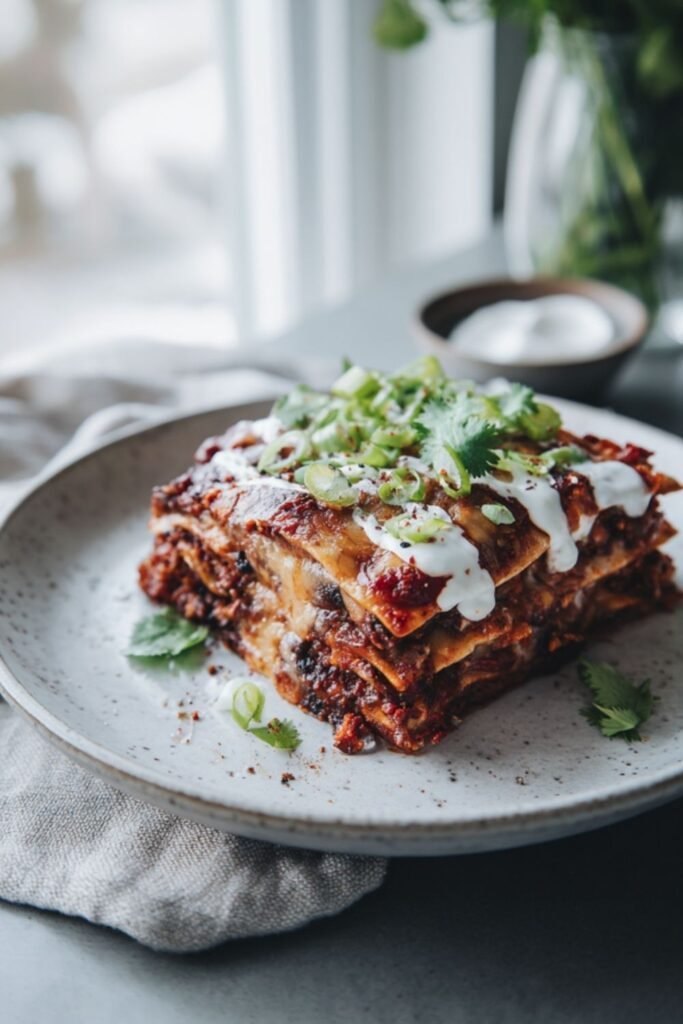
You’re probably thinking vegetarian enchiladas mean sad, flavorless tortillas stacked with nothing but beans. But here’s the thing: when you layer homemade tomato sauce with a sharp feta and Cheddar blend, suddenly you’ve got something that actually tastes incredible. Skip the rolling hassle, stack those tortillas instead, and you’ll wonder why you didn’t try this method sooner. So what makes this version different.
Why You’Ll Love This Vegetarian Stacked Enchiladas
Because you’re probably tired of the same old veggie dinner routine, these stacked enchiladas hit different. They’re not just another bean-and-cheese situation, though I won’t lie, that combo’s pretty solid. What makes them special is how the homemade tomato sauce ties everything together—fresh cilantro, lime zest, jalapeño heat—transforming simple ingredients into something genuinely crave-worthy.
You get that satisfying layers-of-flavor thing without feeling like you’re eating rabbit food. The feta and Cheddar blend creates this tangy-sharp contrast that keeps your taste buds interested. Plus, stacking instead of rolling means less awkward tortilla wrestling and more actual eating. These enchiladas prove vegetarian doesn’t mean boring. They’re the kind of dish that makes you forget meat was ever on the menu.
Balance your Mexican-inspired nights with Mary Berry’s Chicken Curry for aromatic Asian comfort. The warming spices and silky sauce create a completely different but equally satisfying experience.
What Ingredients Are In Vegetarian Stacked Enchiladas?
To create this satisfying vegetarian dish, you’ll need a combination of fresh produce, pantry staples, and dairy products that work together to build layers of authentic Mexican flavor. The recipe is straightforward in its ingredient list, requiring no specialty items that are difficult to locate. Most of these components are likely already in your kitchen or easily found at any standard grocery store, making this an accessible recipe for weeknight cooking or weekend meal prep.
Ingredients:
For the Mexican Tomato Sauce:
- 1 tablespoon olive oil
- ½ small onion, finely chopped
- 1 jalapeño, halved, seeded, and finely chopped
- 1 garlic clove, crushed
- 1 can (14 oz/400 g) chopped tomatoes
- Grated zest of ½ lime
- 2 tablespoons fresh cilantro, chopped
- Salt and black pepper to taste
For the Enchiladas:
- 4 large flour tortillas (approximately 9 inches/23 cm in diameter)
- 1 can (6 oz/175 g) red kidney beans, drained
- 2 oz (60 g) grated feta cheese
- 2 oz (60 g) grated Cheddar cheese
- 1 tablespoon olive oil
- Guacamole for serving
When shopping for these ingredients, opt for fresh cilantro and lime rather than dried or bottled alternatives, as they provide noticeably brighter flavor to the sauce. If you cannot find fresh jalapeños, canned varieties work acceptably, though fresh delivers superior taste and texture. For the cheeses, freshly grating them from blocks rather than purchasing pre-shredded versions guarantees better melting and a smoother final dish. The quality of your canned tomatoes also matters—look for whole or diced tomatoes without added sugar for the most authentic Mexican flavor profile.
How To Make This Vegetarian Stacked Enchiladas
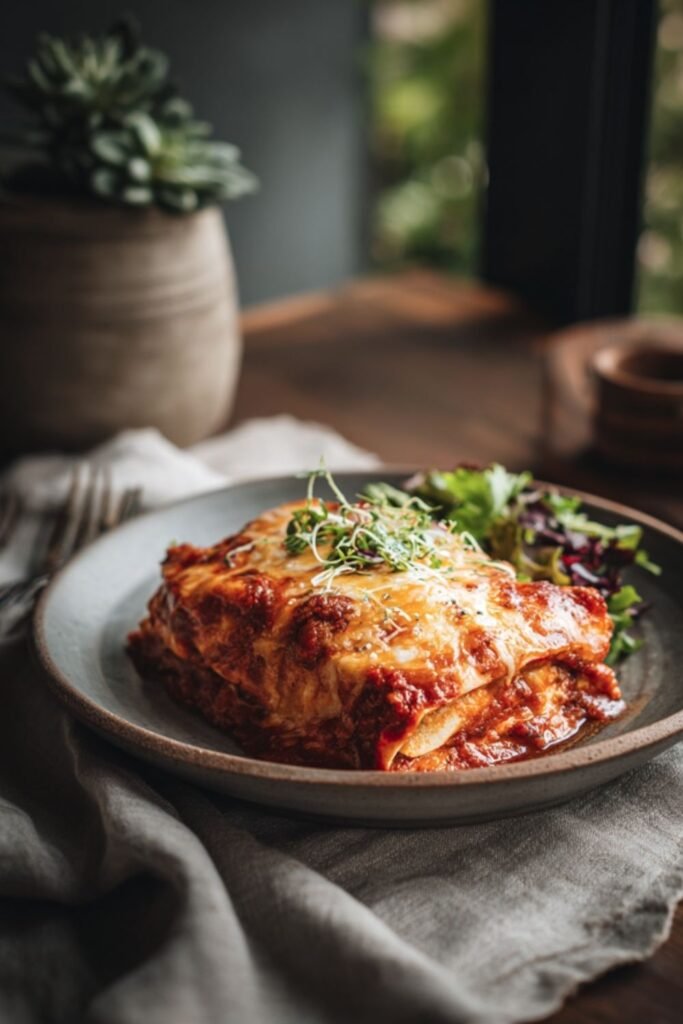
- Start by making the tomato sauce: heat the oil in a pan over high heat, then add the onion, jalapeño, and garlic. Cook for a few minutes, stirring frequently, until they become fragrant and slightly softened.
- Add the tomatoes to the pan and reduce the heat to low. Let the mixture simmer without a lid for about 10 minutes, stirring occasionally, until it thickens to the consistency of chutney.
- If the sauce is still a little runny after 10 minutes, increase the heat to high and boil it rapidly, stirring continuously, until it reaches the desired thick consistency. Remove from heat.
- Stir in the lime zest and chopped cilantro, then season the sauce generously with salt and pepper. Set aside to cool slightly while you assemble the enchiladas.
- Lay out 1 tortilla on a clean work surface. Spread half of the prepared tomato sauce over it, leaving about 1 in (2.5 cm) clear around the edge.
- Scatter half of the red kidney beans evenly over the sauce, then sprinkle with half of both the cheeses, distributing them evenly.
- Place another tortilla on top and press down gently with your hand to compress the layers and help the two tortillas stick together, creating a sealed sandwich.
- Repeat the process with the remaining ingredients to create a second enchilada sandwich with the other two tortillas.
- Heat the oil in a wide-based frying pan over medium-high heat, making sure the pan is large enough to fit the tortillas flat without overlapping.
- Carefully place one enchilada in the hot pan and cook for 3–4 minutes on each side, flipping once, until the tortillas turn golden brown and crispy, the filling is heated through, and the cheese has melted completely.
- Repeat with the second enchilada, adding more oil to the pan if needed. Once cooked, transfer each enchilada to a cutting board and slice into 6 equal wedges. Serve hot with guacamole on the side.
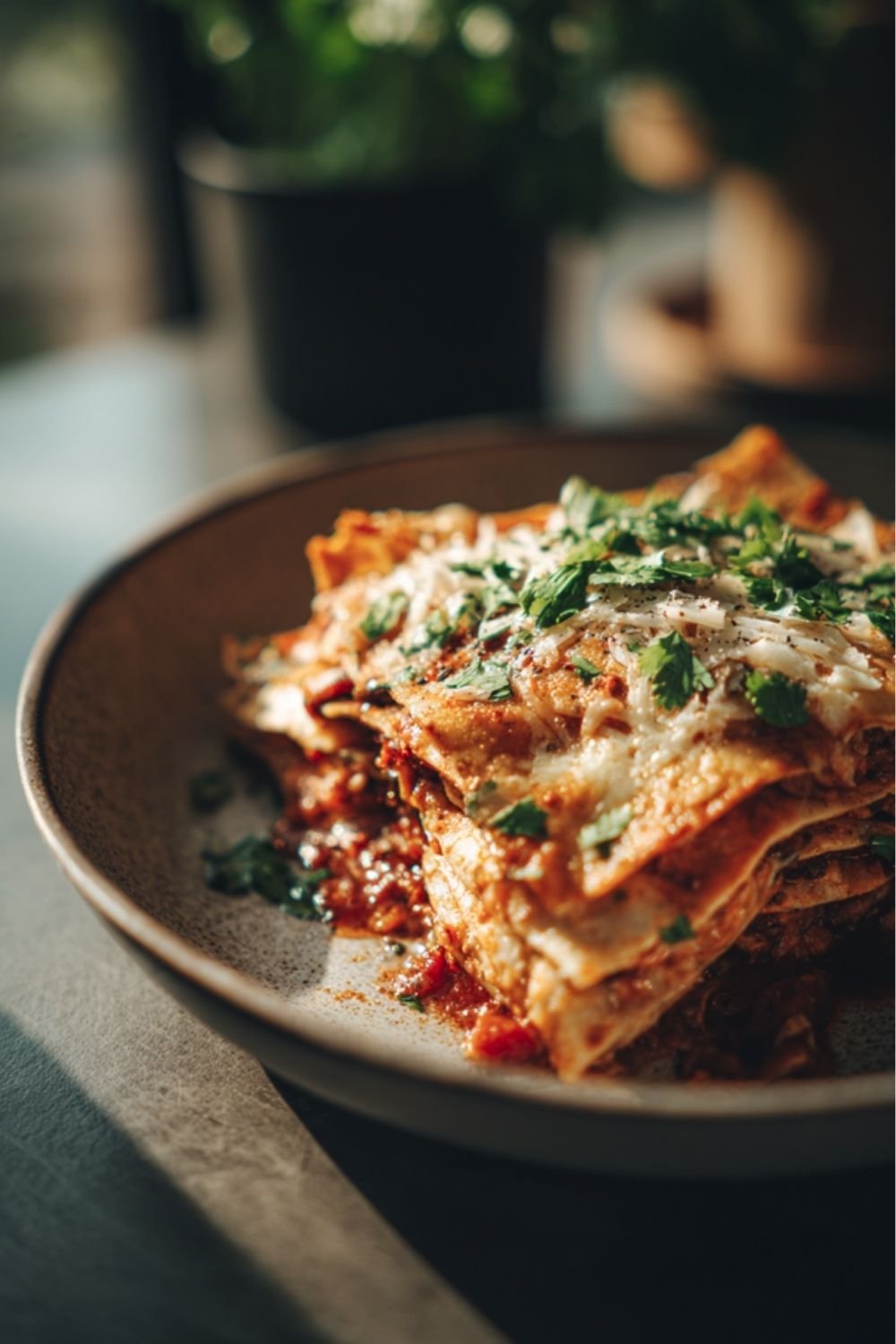
Vegetarian Stacked Enchiladas
Ingredients
Method
- Start by making the tomato sauce: heat the oil in a pan over high heat, then add the onion, jalapeño, and garlic. Cook for a few minutes, stirring frequently, until they become fragrant and slightly softened.
- Add the tomatoes to the pan and reduce the heat to low. Let the mixture simmer without a lid for about 10 minutes, stirring occasionally, until it thickens to the consistency of chutney.
- If the sauce is still a little runny after 10 minutes, increase the heat to high and boil it rapidly, stirring continuously, until it reaches the desired thick consistency. Remove from heat.
- Stir in the lime zest and chopped cilantro, then season the sauce generously with salt and pepper. Set aside to cool slightly while you assemble the enchiladas.
- Lay out 1 tortilla on a clean work surface. Spread half of the prepared tomato sauce over it, leaving about 1 in (2.5 cm) clear around the edge.
- Scatter half of the red kidney beans evenly over the sauce, then sprinkle with half of both the cheeses, distributing them evenly.
- Place another tortilla on top and press down gently with your hand to compress the layers and help the two tortillas stick together, creating a sealed sandwich.
- Repeat the process with the remaining ingredients to create a second enchilada sandwich with the other two tortillas.
- Heat the oil in a wide-based frying pan over medium-high heat, making sure the pan is large enough to fit the tortillas flat without overlapping.
- Carefully place one enchilada in the hot pan and cook for 3–4 minutes on each side, flipping once, until the tortillas turn golden brown and crispy, the filling is heated through, and the cheese has melted completely.
- Repeat with the second enchilada, adding more oil to the pan if needed. Once cooked, transfer each enchilada to a cutting board and slice into 6 equal wedges. Serve hot with guacamole on the side.
Notes
What’S The Difference Between Stacked And Rolled Enchiladas?
Stacked enchiladas layer tortillas flat with filling between each layer, creating a casserole-like presentation that’s easier to assemble and serve in wedges. Rolled enchiladas wrap filling inside individual tortillas, then arrange seam-side down in a baking dish. Stacked versions cook faster and stay crispy longer, while rolled enchiladas offer traditional presentation. Both deliver delicious results with different textures and serving styles.What’S The Difference Between Stacked And Rolled Enchiladas?
Stacked enchiladas layer tortillas flat with filling between each layer, creating a casserole-like presentation that’s easier to assemble and serve in wedges. Rolled enchiladas wrap filling inside individual tortillas, then arrange seam-side down in a baking dish. Stacked versions cook faster and stay crispy longer, while rolled enchiladas offer traditional presentation. Both deliver delicious results with different textures and serving styles.
Vegetarian Stacked Enchiladas Substitutions And Variations
Flexibility is what makes this dish so appealing, honestly. Don’t have red kidney beans? I’d swap in black beans or pinto beans without hesitation. The cheese situation’s pretty forgiving too—if feta isn’t your thing, crumbled queso fresco works beautifully, or you could go full Cheddar if you’re feeling lazy, which I respect.
Want to bulk it up? I’d add sautéed mushrooms or spinach between those tortilla layers. They’ll soak up the tomato sauce like little flavor sponges. Corn tortillas can replace flour ones if you’re after that authentic vibe, though they’re trickier to stack without tearing. Even the tomato sauce adapts well—salsa works in a pinch, or you could blend roasted red peppers in for something different.
What To Serve With Vegetarian Stacked Enchiladas
Now that you’ve got your stacked enchiladas dialed in—beans swapped, cheeses adjusted, maybe some spinach tucked between the layers—you’ll want to think about what’s actually going on the plate alongside them. I’d lean toward fresh sides that won’t make you feel like you’ve swallowed a brick.
Sour cream or Mexican crema cuts through the cheese richness beautifully, while that guacamole I mentioned? Non-negotiable. A crisp lime-dressed salad with romaine and cilantro keeps things balanced. Rice works, sure, but honestly, you don’t need it when your enchiladas are this substantial.
Mexican street corn on the side brings serious flavor without heaviness. Pickled onions add a tangy bite that makes each forkful interesting. Keep it simple, keep it fresh.
Final Thoughts
Three things matter most when you’re making vegetarian enchiladas: you’ve got to build layers with intention, season your sauce like you mean it, and not overthink the filling combinations. Honestly, that’s where most home cooks stumble. They worry their bean-and-cheese stack won’t impress, when really, the magic happens in that tomato sauce simmering on your stovetop. I’d argue the sauce carries more weight than the filling itself. Your tortillas need that flavor bath to transform from bland to brilliant. So don’t skimp on cilantro, lime zest, or jalapeño heat. Those elements matter. The beauty of stacked enchiladas is their simplicity—no rolling required, just strategic layering. You’ve got this.