


I attempted croissants once thinking it was beyond me, some French skill I’d never possess. The lamination seemed impossible, folding butter into dough over and over, keeping everything cold enough to matter. I watched Mary Berry make them and realized she wasn’t treating it like magic. She was just being methodical, patient, respecting what the dough needed. Butter stayed cold. Folds happened in their proper sequence. She didn’t rush or panic. The way she handled the pastry was almost meditative, her hands knowing what came next. That confidence changed how I thought about the whole thing. They weren’t impossible. They just required time and attention.
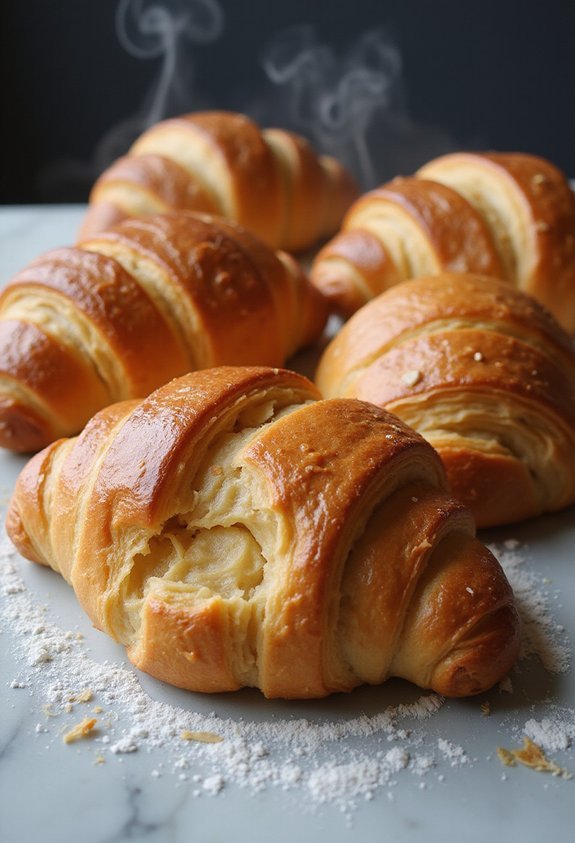
Now when I make croissants, I give myself a weekend for it. The dough comes together simply enough, then the waiting begins. Cold stretches in the fridge between folds, butter folding into dough, more waiting. There’s a rhythm to it once you stop fighting the process. My kitchen becomes cool. Flour dusts everything. I work the laminated dough gently, shaping it into crescents that prove slowly overnight. The morning they go into the oven, they’re already beautiful. They puff and brown, developing those golden layers that shatter when you bite them.
The smell that fills the kitchen is worth every fold and every moment of patience. Warm, buttery, slightly sweet. People understand immediately why croissants matter.
Why You’Ll Love This Mary Berry Croissants
When you bite into a homemade croissant, you’ll understand why these butter-laden pastries deserve their legendary status. I find that Mary Berry’s method delivers that perfect balance of crispy exterior and tender, flaky layers that commercial versions simply can’t match.
What sets this recipe apart is its straightforward approach. You’re not wrestling with complicated lamination techniques—the process becomes manageable and genuinely achievable in your own kitchen. The dough transforms beautifully through chilling and folding, creating those signature paper-thin sheets.
There’s something deeply satisfying about pulling warm croissants from your oven, knowing you’ve created something truly special. The butter-rich flavor speaks for itself, and you’ll discover that homemade versions far surpass anything you’d buy. That’s why I return to this recipe repeatedly.
For a show-stopping baked good that is perfect for weekend brunch or special occasions, check out our Cinnamon Rolls. Topped with a luscious cream cheese frosting and bursting with warm spice, these rolls are guaranteed to become a firm family favorite.
What Ingredients Are In Mary Berry Croissants?
Mary Berry’s croissant recipe calls for a carefully balanced selection of simple, quality ingredients that work together to create those coveted flaky layers and rich, buttery flavor. The foundation starts with bread flour, which provides the structure needed for proper gluten development, while fast-acting dried yeast confirms reliable rising.
The real magic happens with the generous amount of butter that’s folded into the dough, creating those characteristic paper-thin laminated sheets that define a perfect croissant.
Ingredients:
- 3⅓ cups bread flour
- ½ teaspoon salt
- 21 tablespoons (2 sticks + 5 tablespoons) butter, at room temperature
- 1 × ¼oz (7g) package fast-acting dried yeast
- 2 tablespoons granulated sugar
- Approximately ⅔ cup milk
- Sunflower oil for greasing
- Beaten egg for glazing
The quality of your butter makes a significant difference in the final result—using European-style butter with higher fat content will yield even more impressive lamination and flavor. Additionally, verifies your milk is warmed as specified in the instructions, as this activates the yeast properly and helps develop the dough’s texture.
Room temperature butter is vital for the folding process, as butter that’s too cold will break during lamination, while butter that’s too warm will blend into the dough rather than creating distinct layers.
How To Make This Mary Berry Croissants
- Begin by preheating your oven to 425°F (220°C) and preparing your base dough. Combine 3⅓ cups bread flour and ½ teaspoon salt in a large bowl, then rub in 4 tablespoons of butter with your fingertips until the mixture resembles fine bread crumbs.
- Stir in 1 × ¼oz (7g) package of fast-acting dried yeast and 2 tablespoons of granulated sugar. Create a well in the center of the dry ingredients and pour in a mixture of approximately ⅔ cup milk combined with about ⅔ cup of very hot water.
- Mix thoroughly with a wooden spoon until the dough is smooth and well incorporated. Cover the bowl with oiled plastic wrap and refrigerate for 2 hours to allow the dough to develop and become easier to work with.
- While the dough chills, prepare your butter lamination layer. Spread the remaining 17 tablespoons of butter (at room temperature) onto a sheet of parchment paper into a 5 × 8 inch rectangle.
- Cover with another sheet of parchment paper and refrigerate until the dough is ready. This butter layer is essential for creating the characteristic flaky lamination that defines authentic croissants.
- After the 2-hour chill, remove the dough and roll it out on a floured surface into a 7 × 14 inch rectangle. Position the chilled butter block on top so that it covers the top two-thirds of the dough rectangle.
- At this stage, you’re ready to proceed with the folding and lamination process that transforms the dough into those coveted paper-thin, buttery layers. Brush the finished croissants with beaten egg before baking to achieve a beautiful golden glaze.

Mary Berry Croissants Recipe
Ingredients
Method
- Begin by preheating your oven to 425°F (220°C) and preparing your base dough. Combine 3⅓ cups bread flour and ½ teaspoon salt in a large bowl, then rub in 4 tablespoons of butter with your fingertips until the mixture resembles fine bread crumbs.
- Stir in 1 × ¼oz (7g) package of fast-acting dried yeast and 2 tablespoons of granulated sugar. Create a well in the center of the dry ingredients and pour in a mixture of approximately ⅔ cup milk combined with about ⅔ cup of very hot water.
- Mix thoroughly with a wooden spoon until the dough is smooth and well incorporated. Cover the bowl with oiled plastic wrap and refrigerate for 2 hours to allow the dough to develop and become easier to work with.
- While the dough chills, prepare your butter lamination layer. Spread the remaining 17 tablespoons of butter (at room temperature) onto a sheet of parchment paper into a 5 × 8 inch rectangle.
- Cover with another sheet of parchment paper and refrigerate until the dough is ready. This butter layer is essential for creating the characteristic flaky lamination that defines authentic croissants.
- After the 2-hour chill, remove the dough and roll it out on a floured surface into a 7 × 14 inch rectangle. Position the chilled butter block on top so that it covers the top two-thirds of the dough rectangle.
- At this stage, you’re ready to proceed with the folding and lamination process that transforms the dough into those coveted paper-thin, buttery layers. Brush the finished croissants with beaten egg before baking to achieve a beautiful golden glaze.
Notes
What To Serve With Mary Berry Croissants
Once you’ve perfected these buttery, flaky croissants, you’ll want to pair them thoughtfully to elevate your breakfast or afternoon tea. I recommend serving them warm with quality butter and your favorite jam—raspberry or apricot work beautifully. For a savory twist, I fill mine with ham and cheese or smoked salmon and cream cheese. You can also enjoy them plain, letting the laminated pastry’s delicate layers shine. Pair your croissants with strong coffee or tea to cut through the richness. A fresh fruit salad or light soup balances the indulgence perfectly. I’ve found that serving croissants within hours of baking yields the best texture and flavor, so timing’s everything when hosting breakfast.Mistakes To Avoid When Making Croissants
The biggest mistake is using warm butter, which melts into dough instead of creating layers. Keep butter cold and firm throughout lamination. Avoid rushing the process. Croissants require multiple rest periods between folds to develop proper texture.
Overworking dough develops too much gluten, resulting in tough croissants. Don’t skip sealing butter inside dough at the start of lamination. Incorrect folding technique prevents proper layer formation. Baking at wrong temperature causes uneven browning or undercooked centers. Allow final proofing to complete fully before baking. Patience and proper technique create beautiful, flaky croissants.
Mary Berry Croissants Substitutions And Variations
Since croissant dough’s success depends on butter’s laminating properties, I’d recommend sticking with real butter rather than margarine or oil-based spreads, which won’t create the same flaky layers. You can experiment with milk alternatives like almond or oat milk if you’re dairy-free, though this may slightly affect texture.
For flavor variations, try adding vanilla extract, cardamom, or cinnamon to your dough. Once baked, you can fill croissants with chocolate, almond paste, or jam for sweet versions, or ham and cheese for savory options.
Some bakers prefer all-purpose flour instead of bread flour for a more delicate crumb, though bread flour’s higher protein content yields superior structure. These adjustments let you personalize the recipe while maintaining the essential lamination technique.
What To Serve With Mary Berry Croissants
Once you’ve perfected these buttery, flaky croissants, you’ll want to pair them thoughtfully to elevate your breakfast or afternoon tea. I recommend serving them warm with quality butter and your favorite jam—raspberry or apricot work beautifully.
For a savory twist, I fill mine with ham and cheese or smoked salmon and cream cheese. You can also enjoy them plain, letting the laminated pastry’s delicate layers shine. Pair your croissants with strong coffee or tea to cut through the richness.
A fresh fruit salad or light soup balances the indulgence perfectly. I’ve found that serving croissants within hours of baking yields the best texture and flavor, so timing’s everything when hosting breakfast.
Final Thoughts
Making Mary Berry’s croissants is a rewarding challenge that’ll transform your baking skills. You’ll discover how lamination creates those signature flaky layers that make homemade croissants superior to store-bought versions. The process demands patience—chilling times and precise folding aren’t shortcuts but essential steps that yield exceptional results.
Once you’ve mastered this recipe, you’ll gain confidence tackling other French pastries. The techniques you’ll learn apply to pain au chocolat, Danish pastries, and millefeuille. Yes, croissants require time and attention, but the payoff justifies every moment spent. When you pull golden, buttery croissants from your oven and taste that delicate crunch, you’ll understand why Mary Berry’s method has earned its reputation. You’ve earned something truly special.