

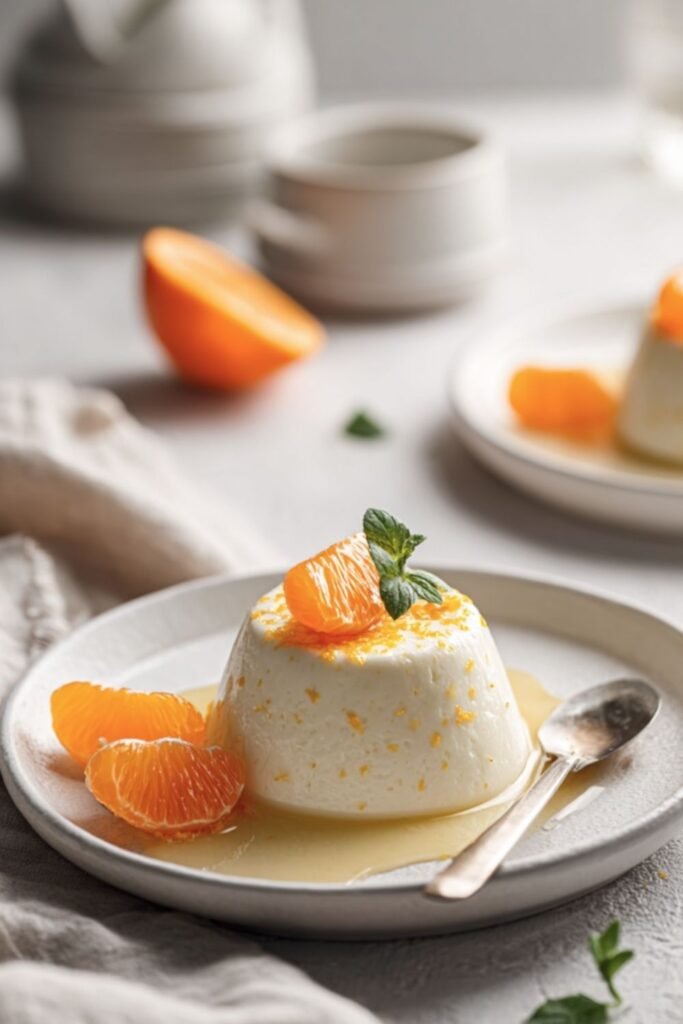
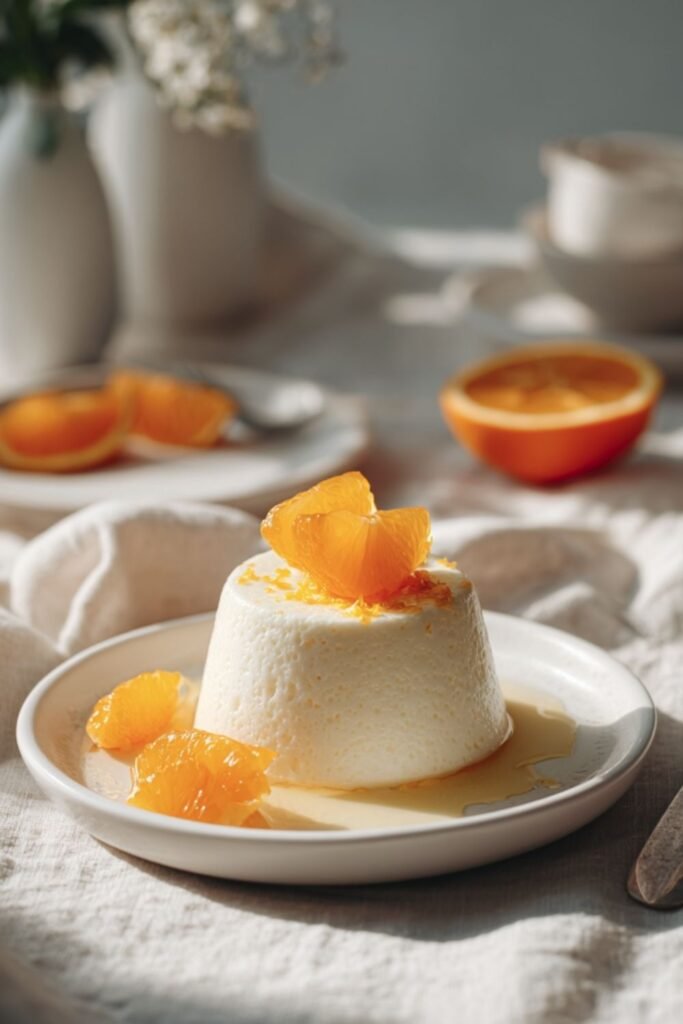
Orange panna cotta delivers pure elegance in a spoon. Mary Berry infuses the silky custard with fresh citrus, creating something light yet luxurious. Soaked orange segments add brightness and texture, their juice mingling with the panna cotta’s delicate sweetness.
This dessert requires minimal technique but delivers maximum impact. The panna cotta sets gently, its creamy texture melting on your tongue while citrus flavors dance through every bite. Berry’s version balances richness with refreshment perfectly.
Serve it chilled and watch your guests linger over each spoonful. Simple, sophisticated, utterly satisfying.
Why You’Ll Love This Mary Berry Orange Panna Cotta With Soaked Oranges
If you’re drawn to elegant desserts that don’t require hours in the kitchen, you’ll appreciate how this panna cotta delivers restaurant-quality results with straightforward steps. I love that it’s make-ahead friendly—you can prepare it the night before, eliminating last-minute stress.
The silky cream base contrasts beautifully with the bright, invigorating citrus topping, creating layers of flavor that feel indulgent without heaviness. The orange liqueur adds sophistication, while the fresh segments provide genuine fruit taste rather than artificial flavoring.
What impresses me most is how accessible it remains despite its upscale appearance. Your guests won’t believe you made it yourself. It’s the perfect dessert when you want to impress without spending hours cooking, combining simplicity with genuine elegance.
Want an impressive yet simple dessert that works any time of year? Our Mary Berry Fruit Fritters showcase seasonal fruits beautifully in a light, crispy batter that everyone will adore.
What Ingredients Are In Mary Berry Orange Panna Cotta With Soaked Oranges?
This elegant dessert requires a surprisingly short list of ingredients, most of which are pantry staples or easily sourced from any supermarket. The recipe relies on quality cream and fresh oranges as its foundation, with gelatin providing the essential structure that gives panna cotta its characteristic silky texture. The orange liqueur adds a sophisticated depth that elevates the dish beyond a simple cream dessert, while the powdered gelatin and sugar work together to create the perfect balance of sweetness and wobble.
Ingredients:
- Sunflower oil for greasing
- 2 teaspoons powdered gelatin
- 2½ cups whipping cream
- ¼ cup granulated sugar
- 5 oranges
- ¼ cup orange liqueur
When selecting ingredients, choose heavy whipping cream with a fat content of at least 36% for the richest texture and best results. The quality of your oranges matters greatly—look for firm, unblemished fruits with thin skins that yield slightly to pressure, as these will have the most juice and flavor.
For the orange liqueur, Cointreau, Grand Marnier, or any quality triple sec works well; if you prefer to avoid alcohol, substitute with freshly squeezed orange juice or additional zest. The powdered gelatin should be stored in a cool, dry place and used before the expiration date, as old gelatin may not set properly.
How To Make This Mary Berry Orange Panna Cotta With Soaked Oranges
- Begin by preparing your molds and cream base. Brush 4 × 5fl oz (150ml) ramekins or metal molds with sunflower oil and arrange them on a pan. In a small bowl, measure 3 tablespoons of cold water, sprinkle 2 teaspoons of powdered gelatin over the top, and let it sit until spongy.
- While the gelatin hydrates, pour 2½ cups of whipping cream into a saucepan and add ¼ cup of granulated sugar. Finely grate the zest from the oranges and add it to the pan along with 2 tablespoons of orange liqueur.
- Heat the cream mixture until bubbles form around the edges, stirring constantly until the sugar dissolves completely and the cream is smooth. Remove from heat and allow it to cool slightly before proceeding to the next step.
- Once the cream has cooled, add the sponged gelatin to the warm cream and whisk vigorously until it is completely dissolved and the mixture is smooth. Carefully pour the cream mixture into the prepared, oil-brushed molds.
- Transfer the pan to the refrigerator and chill for approximately 6 hours, though ideally overnight, until the panna cotta is fully set and has achieved its characteristic wobble.
- While the panna cotta sets, prepare the soaked oranges for serving. Using a serrated knife, peel and segment the remaining oranges, working over a bowl to capture all the juice. Place the orange segments into the bowl and squeeze the thick, white membranes over it to extract every drop of remaining juice.
- Stir in the remaining ¼ cup of orange liqueur and refrigerate the mixture until serving time. To serve, briefly dip each mold into very hot water, gently loosen the panna cotta from the top with your fingertips, and carefully invert it onto a plate. Present each chilled panna cotta with a spoonful of the soaked oranges alongside.
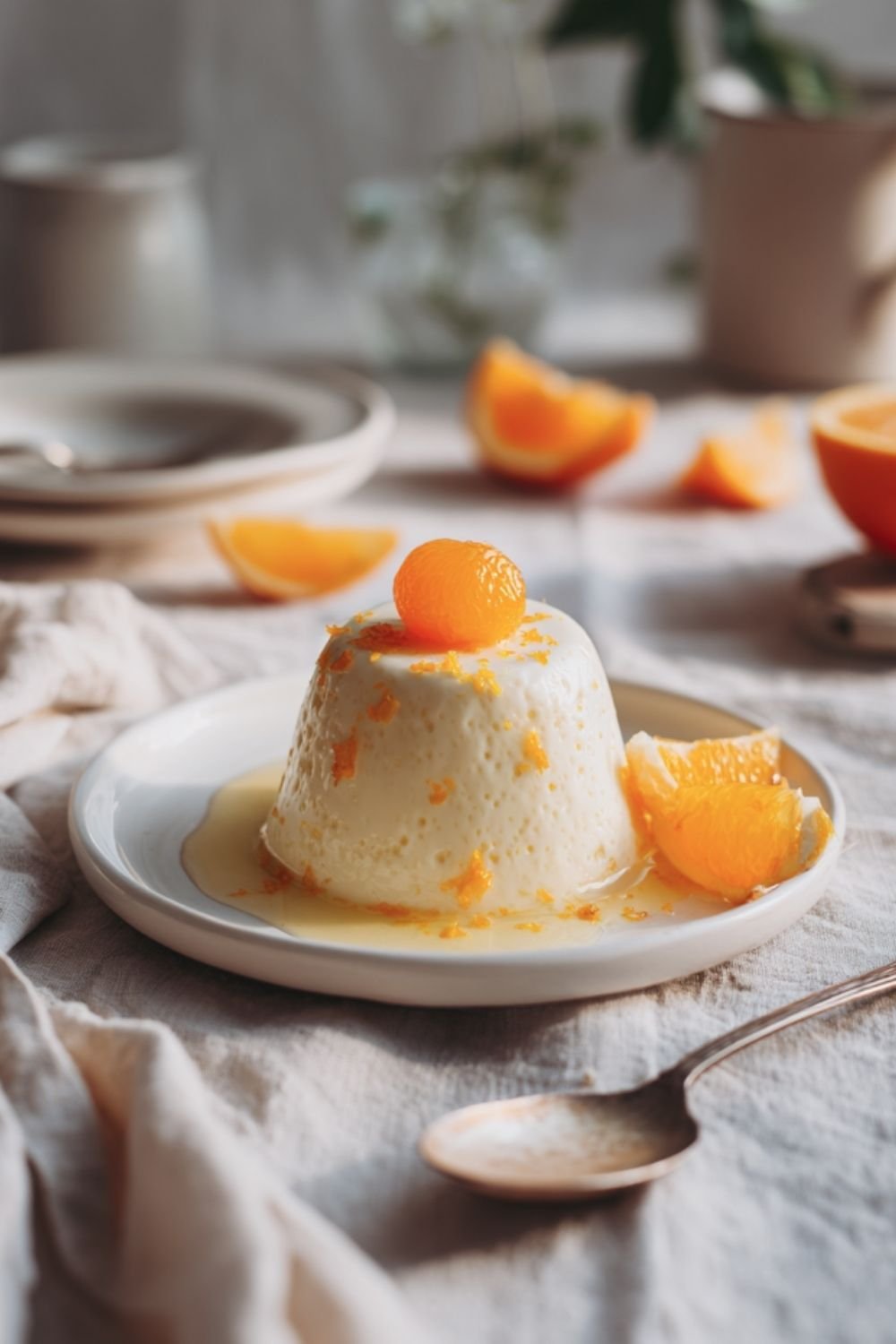
Mary Berry’S Orange Panna Cotta Recipe
Ingredients
Method
- Begin by preparing your molds and cream base. Brush 4 × 5fl oz (150ml) ramekins or metal molds with sunflower oil and arrange them on a pan. In a small bowl, measure 3 tablespoons of cold water, sprinkle 2 teaspoons of powdered gelatin over the top, and let it sit until spongy.
- While the gelatin hydrates, pour 2½ cups of whipping cream into a saucepan and add ¼ cup of granulated sugar. Finely grate the zest from the oranges and add it to the pan along with 2 tablespoons of orange liqueur.
- Heat the cream mixture until bubbles form around the edges, stirring constantly until the sugar dissolves completely and the cream is smooth. Remove from heat and allow it to cool slightly before proceeding to the next step.
- Once the cream has cooled, add the sponged gelatin to the warm cream and whisk vigorously until it is completely dissolved and the mixture is smooth. Carefully pour the cream mixture into the prepared, oil-brushed molds.
- Transfer the pan to the refrigerator and chill for approximately 6 hours, though ideally overnight, until the panna cotta is fully set and has achieved its characteristic wobble.
- While the panna cotta sets, prepare the soaked oranges for serving. Using a serrated knife, peel and segment the remaining oranges, working over a bowl to capture all the juice. Place the orange segments into the bowl and squeeze the thick, white membranes over it to extract every drop of remaining juice.
- Stir in the remaining ¼ cup of orange liqueur and refrigerate the mixture until serving time. To serve, briefly dip each mold into very hot water, gently loosen the panna cotta from the top with your fingertips, and carefully invert it onto a plate. Present each chilled panna cotta with a spoonful of the soaked oranges alongside.
Notes
What To Serve With Mary Berry Orange Panna Cotta
While the panna cotta shines on its own with its citrus-soaked accompaniment, I’d pair it with light, complementary sides to elevate your dessert course. Crisp ladyfinger biscuits or delicate almond tuiles offer pleasant textural contrast against the creamy panna cotta. A small glass of dessert wine—perhaps a sweet Riesling or Moscato—harmonizes beautifully with the orange liqueur notes. For warmth, consider serving shortbread or butter cookies alongside. Fresh mint leaves add visual appeal and a subtle freshness. If you’re hosting a formal dinner, a small scoop of vanilla or mascarpone gelato provides cooling relief while maintaining elegance. These accompaniments don’t compete with the dessert’s star ingredients; instead, they enhance the overall experience without overwhelming your palate.Ways To Customize This Orange Panna Cotta
Once you’ve mastered the classic recipe, you’ll find that Mary Berry’s orange panna cotta welcomes creative adaptations. You can substitute the whipping cream with mascarpone for a richer, tangier dessert, or use half cream and half Greek yogurt for a lighter version.
For the liqueur, try Cointreau, Grand Marnier, or even limoncello as alternatives to orange liqueur. You might swap oranges entirely—lemons, grapefruits, or blood oranges work beautifully. If you prefer non-alcoholic versions, replace the liqueur with fresh juice or zest.
Consider adding vanilla extract or a splash of almond extract to deepen the flavor profile. For texture variation, layer the panna cotta with candied citrus peel or crushed amaretti biscuits for added crunch.
What To Serve With Mary Berry Orange Panna Cotta With Soaked Oranges
While the panna cotta shines on its own with its citrus-soaked accompaniment, I’d pair it with light, complementary sides to elevate your dessert course. Crisp ladyfinger biscuits or delicate almond tuiles offer pleasant textural contrast against the creamy panna cotta.
A small glass of dessert wine—perhaps a sweet Riesling or Moscato—harmonizes beautifully with the orange liqueur notes. For warmth, consider serving shortbread or butter cookies alongside. Fresh mint leaves add visual appeal and a subtle freshness.
If you’re hosting a formal dinner, a small scoop of vanilla or mascarpone gelato provides cooling relief while maintaining elegance. These accompaniments don’t compete with the dessert’s star ingredients; instead, they enhance the overall experience without overwhelming your palate.
Final Thoughts
Mary Berry’s orange panna cotta strikes that rare balance between sophistication and simplicity—it’s elegant enough for dinner parties yet straightforward enough that you won’t feel intimidated in the kitchen. I’ve found that this dessert rewards patience; chilling overnight truly sets it apart from rushed versions. The orange liqueur isn’t just flavoring—it’s essential, adding depth that elevates the dish beyond basic cream and gelatin. When you invert those perfectly set molds and see them hold their shape, you’ll understand why this recipe endures. The soaked oranges provide brightness and texture that contrast beautifully with the silky panna cotta. This dessert proves that impeccable technique and quality ingredients need nothing more. It’s timeless, refined, and absolutely worth mastering.