 Lucy M.
 Tired of heavy desserts that leave everyone too full to enjoy them properly? Mary Berry lemon curd cheesecake is here to solve that problem perfectly. The bright citrus flavor cuts through the creamy richness beautifully, providing that refreshing finish without being overly dense or cloying.
No more watching guests struggle through oversized portions, this light and tangy cheesecake disappears happily every single time. Whether you’re serving it after a big meal or as a special treat, this is the delicious solution that guarantees satisfaction without the uncomfortable fullness.
Why You’Ll Love This Lemon Curd Cheesecake
This cheesecake hits differently than your typical American-style version, and honestly, that’s the whole appeal. Instead of that dense, cream-cheese brick we’re used to, Mary Berry uses cottage cheese or ricotta, which makes it lighter, almost soufflé-like. The almond flour adds this subtle nuttiness, while the lemon zest and juice cut through any heaviness.
Golden raisins? They’re little pops of sweetness throughout. And because the egg whites get whipped separately, you end up with something airy and delicate. It’s elegant without being fussy, which is exactly what I need in my dessert repertoire.
What Ingredients Are In Lemon Curd Cheesecake?
The foundation of Mary Berry’s lemon curd cheesecake is decidedly European in its approach, swapping cream cheese for lighter dairy options and incorporating almond flour for structure and flavor. This isn’t your standard New York-style cheesecake—it’s lighter, more textured, and relies on the natural tang of cottage cheese or ricotta to balance the sweetness.
Ingredients:
- ⅔ cup (150g) salted butter, softened
- 1 cup + 6 tbsps (275g) granulated sugar
- 2⅓ cups (550g) full-fat cottage cheese or ricotta
- 4 extra-large eggs, separated
- 1¼ cups (115g) almond flour
- ¾ cup (115g) golden raisins
- ⅓ cup (55g) semolina
- Finely grated zest and juice of 2 lemons
- Confectioners’ sugar, for dusting
When selecting your ingredients, prioritize full-fat cottage cheese or ricotta—the low-fat versions won’t give you the same richness or structure. If using cottage cheese, consider blending it smooth first to avoid any graininess in the final texture. Fresh lemons are non-negotiable here; bottled juice simply won’t deliver that bright, aromatic quality you need. The golden raisins can be plumped in warm water for a few minutes if they seem too dry, and make sure your eggs are at room temperature for easier separation and better volume when whipping the whites.
Looking for more from-scratch baking? Our Zucchini Loaves is wonderfully satisfying to make.
How To Make This Lemon Curd Cheesecake
- Start by preheating your oven to 375°F and preparing a 9-inch springform pan by greasing it thoroughly and lining the base with parchment paper.
- In a large mixing bowl, beat ⅔ cup (150g) of softened salted butter together with 1 cup + 6 tbsps (275g) of granulated sugar and 2⅓ cups (550g) of full-fat cottage cheese or ricotta until the mixture becomes creamy and well combined.
- Add the 4 extra-large egg yolks one at a time, beating well after each addition to guarantee they’re fully incorporated. Then fold in the 1¼ cups (115g) of almond flour, ¾ cup (115g) of golden raisins, ⅓ cup (55g) of semolina, and the finely grated zest and juice of 2 lemons.
- Allow this mixture to rest for 10 minutes to let the flavors meld and the dry ingredients fully hydrate.
- While the batter rests, whisk the 4 egg whites until they form stiff peaks. Gently fold the whipped egg whites into the lemon mixture in batches, being careful not to deflate them—this whipped egg white is what gives the cheesecake its characteristically light and fluffy texture. Pour the batter into the prepared springform pan and transfer it to the preheated oven.
- Bake for approximately 1 hour, covering the top with foil halfway through the baking time to prevent the surface from over-browning.
- Once baked, turn off the oven and crack the door slightly open, allowing the cheesecake to cool inside for 1 hour. This gradual cooling process prevents the cheesecake from cracking or sinking. Remove the cheesecake from the oven and allow it to cool completely at room temperature.
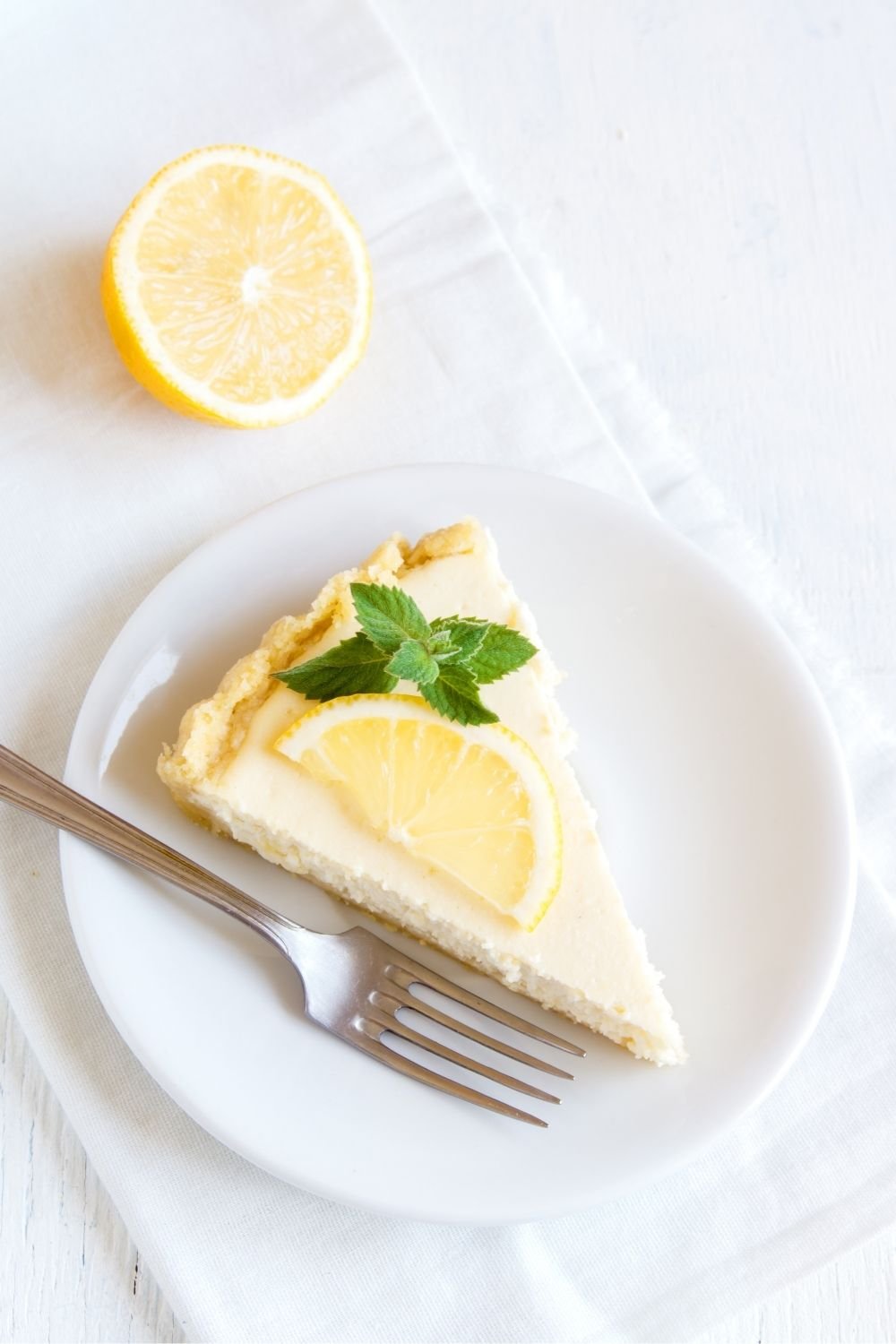
- Once fully cooled, loosen the edges with a knife, release the springform pan, carefully invert the cheesecake to peel off the parchment paper, and turn it upright once more. Finish by dusting the top generously with confectioners’ sugar just before serving.
Mary Berry Lemon Curd Cheesecake Recipe
Ingredients
Method
- Start by preheating your oven to 375°F and preparing a 9-inch springform pan by greasing it thoroughly and lining the base with parchment paper.
- In a large mixing bowl, beat ⅔ cup (150g) of softened salted butter together with 1 cup + 6 tbsps (275g) of granulated sugar and 2⅓ cups (550g) of full-fat cottage cheese or ricotta until the mixture becomes creamy and well combined.
- Add the 4 extra-large egg yolks one at a time, beating well after each addition to guarantee they’re fully incorporated. Then fold in the 1¼ cups (115g) of almond flour, ¾ cup (115g) of golden raisins, ⅓ cup (55g) of semolina, and the finely grated zest and juice of 2 lemons.
- Allow this mixture to rest for 10 minutes to let the flavors meld and the dry ingredients fully hydrate.
- While the batter rests, whisk the 4 egg whites until they form stiff peaks. Gently fold the whipped egg whites into the lemon mixture in batches, being careful not to deflate them—this whipped egg white is what gives the cheesecake its characteristically light and fluffy texture. Pour the batter into the prepared springform pan and transfer it to the preheated oven.
- Bake for approximately 1 hour, covering the top with foil halfway through the baking time to prevent the surface from over-browning.
- Once baked, turn off the oven and crack the door slightly open, allowing the cheesecake to cool inside for 1 hour. This gradual cooling process prevents the cheesecake from cracking or sinking. Remove the cheesecake from the oven and allow it to cool completely at room temperature.
- Once fully cooled, loosen the edges with a knife, release the springform pan, carefully invert the cheesecake to peel off the parchment paper, and turn it upright once more. Finish by dusting the top generously with confectioners’ sugar just before serving.
Notes
How Do You Tell When Cheesecake Is Done?
Knowing when your Mary Berry lemon curd cheesecake is perfectly set requires understanding the difference between baked and no-bake versions. For baked cheesecakes, the edges should be set and slightly puffed while the center remains slightly wobbly, about 2-3 inches in diameter. This jiggle ensures a creamy, non-cracked finish. For no-bake lemon curd cheesecake like Mary Berry’s recipe, the test is simpler. After the minimum chilling time, gently touch the center of the cheesecake. It should feel firm to the touch, not sticky or wet. The surface should have a smooth, matte appearance rather than looking glossy or liquid. Avoid inserting a knife or toothpick into cheesecake, as this creates unsightly holes. Instead, use the gentle wobble test for baked versions or the touch test for no-bake ones. When properly set, your Mary Berry lemon cheesecake will slice cleanly without the filling oozing out or sticking excessively to your knife.How Do You Tell When Cheesecake Is Done?
Knowing when your Mary Berry lemon curd cheesecake is perfectly set requires understanding the difference between baked and no-bake versions. For baked cheesecakes, the edges should be set and slightly puffed while the center remains slightly wobbly, about 2-3 inches in diameter. This jiggle ensures a creamy, non-cracked finish.
For no-bake lemon curd cheesecake like Mary Berry’s recipe, the test is simpler. After the minimum chilling time, gently touch the center of the cheesecake. It should feel firm to the touch, not sticky or wet. The surface should have a smooth, matte appearance rather than looking glossy or liquid.
Avoid inserting a knife or toothpick into cheesecake, as this creates unsightly holes. Instead, use the gentle wobble test for baked versions or the touch test for no-bake ones. When properly set, your Mary Berry lemon cheesecake will slice cleanly without the filling oozing out or sticking excessively to your knife.
Lemon Curd Cheesecake Substitutions And Variations
Want to make this cheesecake work with what’s already hiding in your pantry? I’ve got you covered. Swap cottage cheese for ricotta if that’s what you have, they’re basically twins here. No almond flour? Ground almonds work perfectly, or try all-purpose flour in a pinch, though you’ll lose that nutty depth. Golden raisins can become regular raisins, dried cranberries, or honestly, nothing at all if raisins aren’t your thing. Orange zest instead of lemon creates a sweeter vibe. And if semolina‘s missing, cornmeal or fine polenta steps right in without anyone noticing.
What To Serve With Lemon Curd Cheesecake
Since this cheesecake already brings serious lemon drama to the table, you don’t need much to make it shine. I like keeping things simple: fresh berries, maybe some whipped cream if you’re feeling fancy. A strong cup of tea works beautifully alongside, cutting through all that creamy richness. Coffee’s great too, though I’m partial to something with a little bergamot. You could go wild with a berry compote, but honestly? A dusting of confectioners’ sugar and a handful of raspberries does the trick. Sometimes less really is more, especially when your dessert’s already the star.
Final Thoughts
At the end of the day, this lemon curd cheesecake is one of those recipes that looks way more complicated than it actually is. You’re basically just mixing things together, no fancy techniques required. The almond flour gives it this beautiful texture, the cottage cheese keeps it light, and that lemon curd layer, well, that’s where the magic happens. I’m telling you, people will think you spent hours slaving away when really you were probably scrolling through your phone while it baked. Sometimes the simplest recipes make you look like the biggest show-off, and I’m completely okay with that.