
 Lucy M.
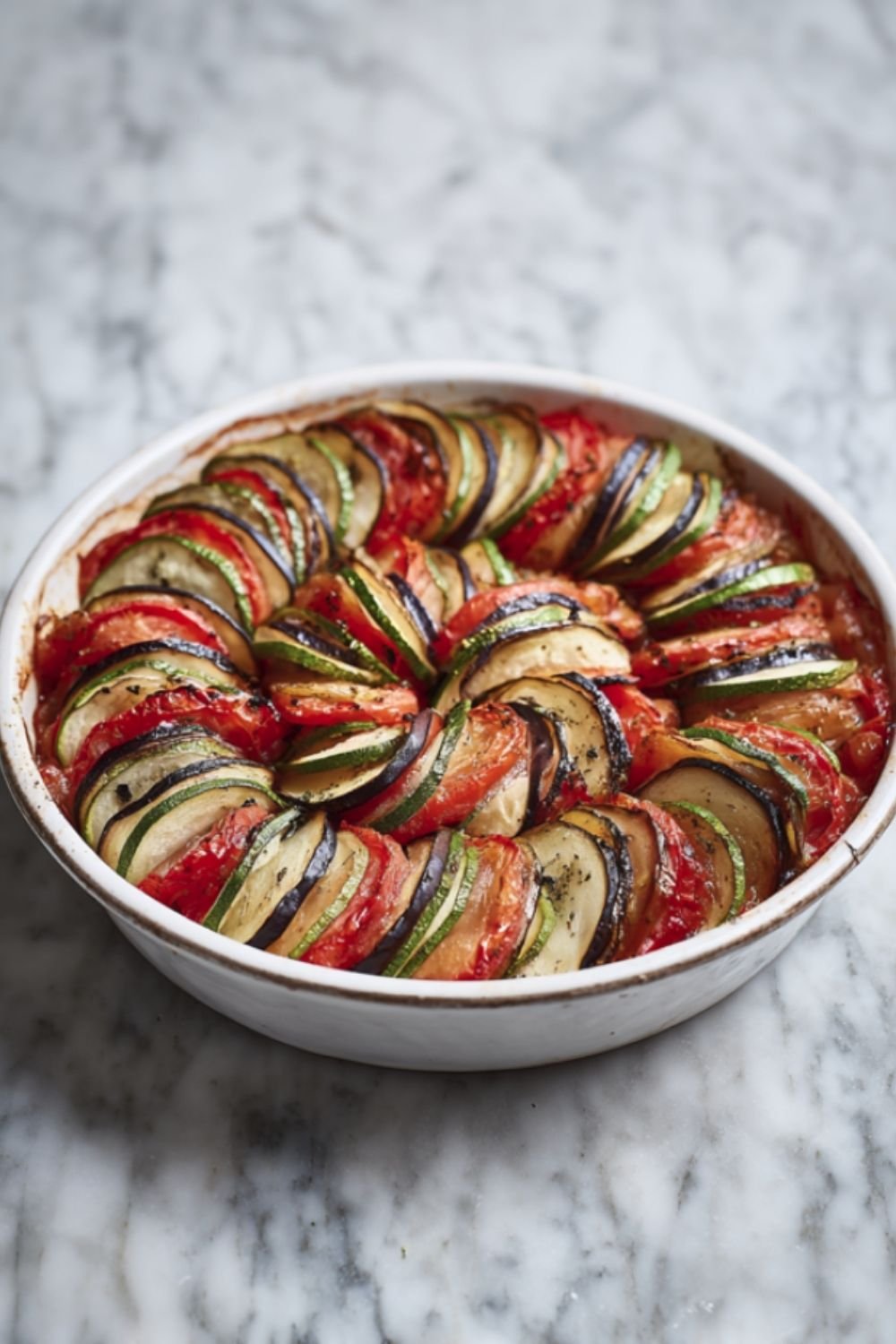
 There’s a Pixar film about a rat who becomes a chef, and I think about it every time I make ratatouille. The film got something right that took me years to understand. You can follow every rule perfectly and still miss the whole point. I started cooking this dish the way I thought it should be done, slicing vegetables with precision, arranging them like they mattered more than flavor. Then one summer I stopped caring about how it looked and just cooked. Chopped things roughly, let them soften together, tasted and adjusted. Suddenly it tasted like something real.
Mary Berry would probably recognize what I’m doing now. She cooks without fuss, trusting ingredients and time over technique. I’ve borrowed that approach completely. Olive oil in a wide pan, onions first until soft, then garlic. Everything else goes in without ceremony. The eggplant surrenders to the heat first, creating a base. Peppers and courgettes follow. Tomatoes come last, their acidity brightening everything. I don’t stir constantly. I let it find its own rhythm while I do other things.
The dish teaches something about letting go. Vegetables that seemed separate become unified. Flavors deepen overnight. Leftovers often taste better than the first serving. I make it in summer when the garden is bursting, but I’ve started freezing batches for winter Sundays. It’s honest food, the kind that doesn’t demand anything except to be eaten warm with good bread.
Why You’Ll Love This Mary Berry Ratatouille
Mary Berry’s ratatouille strikes the perfect balance between simplicity and sophistication—you’ll appreciate how the straightforward technique transforms humble vegetables into something genuinely special. I love that this dish celebrates seasonal produce without demanding fancy skills or obscure ingredients. The gentle simmering method coaxes out natural flavors, letting each vegetable contribute its own character while melding into a cohesive whole.
What really wins me over is its versatility. You can serve it piping hot as a main course or chill it for a chilled summer side. The recipe respects your time too—minimal prep work means you’re mostly just letting the pan do the work.
Mary’s approach proves that exceptional cooking isn’t about complexity; it’s about understanding ingredients and technique. This ratatouille delivers restaurant-quality results from your own kitchen.
For a classic comfort food side that delivers restaurant-quality results at home, check out our Steak Fries. Simple to make yet incredibly satisfying, these chunky fries are perfect alongside burgers, grilled meats, or enjoyed on their own with your favorite dipping sauce.
What Ingredients Are In Mary Berry Ratatouille?
Mary Berry’s ratatouille requires just a handful of essential ingredients that you likely already have in your kitchen. The beauty of this recipe lies in its simplicity—no exotic items or hard-to-find components needed. The ingredient list focuses on quality vegetables at their peak and a few pantry staples that allow their natural flavors to shine through without overwhelming the dish.
Ingredients:
- ¼ cup olive oil
- 1 large onion, sliced
- 1 large garlic clove, crushed
- 1 large eggplant, cut into ½ inch (1cm) slices
- 4 zucchini, sliced
- 6 juicy ripe tomatoes, sliced
- 1 large red bell pepper, halved, seeded, and sliced
- 1 tsp granulated sugar
- Salt and black pepper
- 1 tbsp chopped fresh basil for garnish
Since ratatouille depends heavily on the quality of its vegetables rather than complex seasoning, selecting ripe tomatoes and fresh produce makes a significant difference in the final result. The sugar serves a practical purpose—it balances any acidity from the tomatoes, not to sweeten the dish.
Fresh basil should ideally be added just before serving to preserve its aromatic qualities, as heat can diminish its delicate flavor. If fresh basil isn’t available, dried herbs can work in a pinch, though the fresh version is recommended for authentic Mary Berry-style results.
How To Make This Mary Berry Ratatouille
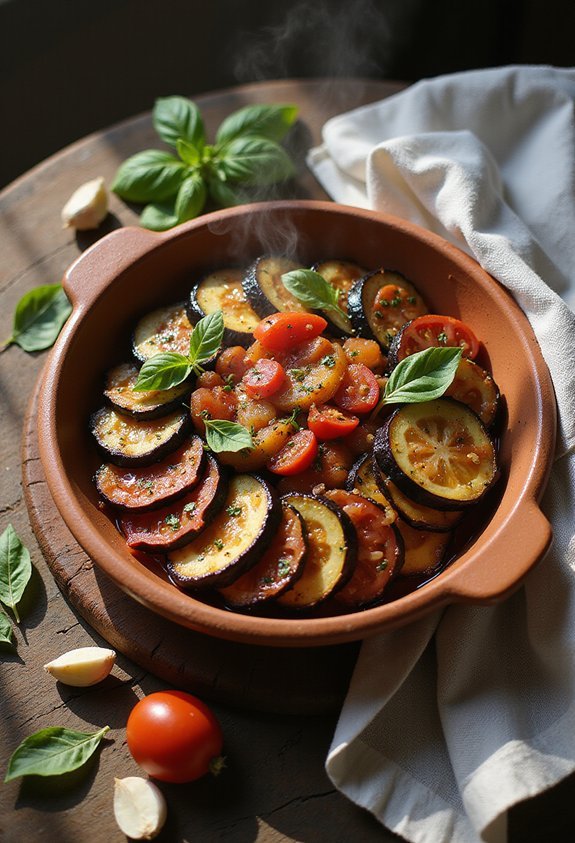
- Begin by heating ¼ cup of olive oil in a large frying pan over medium heat. Add 1 large sliced onion and 1 large crushed garlic clove to the pan, stirring occasionally for 3–5 minutes until the aromatics have softened and become fragrant.
- This initial step builds the flavor foundation for your ratatouille. Once the onion and garlic are ready, add 1 large eggplant that has been cut into ½ inch slices. Cover the pan and allow the eggplant to simmer gently for 20 minutes, which gives it time to become tender and absorb the garlic-infused oil.
- Next, incorporate 4 sliced zucchini, 6 sliced juicy ripe tomatoes, and 1 large sliced red bell pepper into the pan.
- Sprinkle in 1 tsp of granulated sugar and season generously with salt and black pepper to taste. The sugar helps balance any acidity from the tomatoes and enhances the natural flavors of the vegetables.
- Cover the pan again and continue cooking gently over low heat, stirring occasionally, for approximately 30 minutes or until all the vegetables have become soft and have melded together into a cohesive dish.
- Once the vegetables have reached the desired tenderness, taste the ratatouille and adjust the seasoning as needed.
- Serve the dish either hot immediately after cooking or allow it to cool and serve it cold—both presentations are equally delicious. Just before serving, garnish with 1 tbsp of freshly chopped basil to add a bright, herbaceous finish that complements the rich, cooked vegetables perfectly.
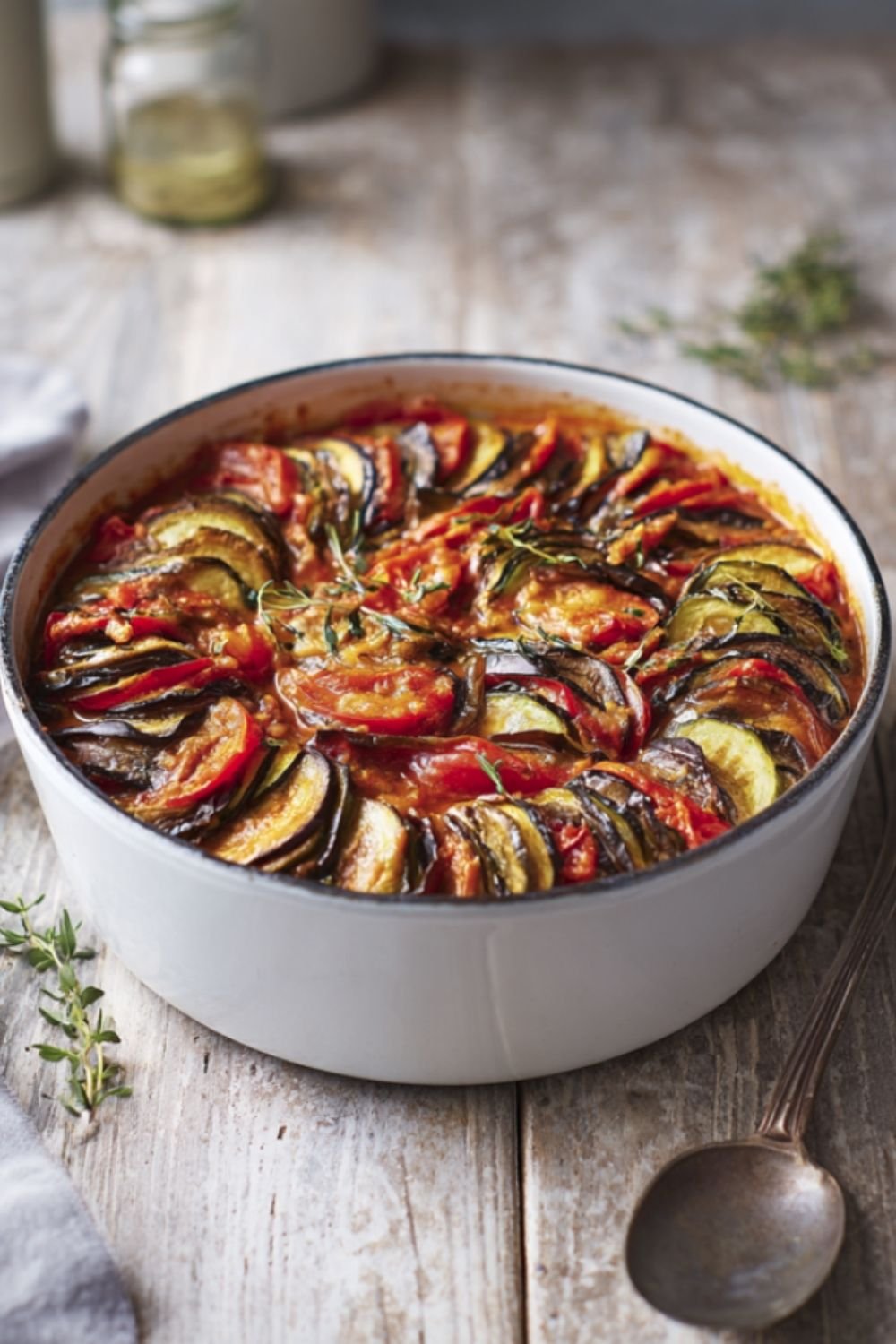
Mary Berry Ratatouille Recipe
Ingredients
Method
- Begin by heating ¼ cup of olive oil in a large frying pan over medium heat. Add 1 large sliced onion and 1 large crushed garlic clove to the pan, stirring occasionally for 3–5 minutes until the aromatics have softened and become fragrant.
- This initial step builds the flavor foundation for your ratatouille. Once the onion and garlic are ready, add 1 large eggplant that has been cut into ½ inch slices. Cover the pan and allow the eggplant to simmer gently for 20 minutes, which gives it time to become tender and absorb the garlic-infused oil.
- Next, incorporate 4 sliced zucchini, 6 sliced juicy ripe tomatoes, and 1 large sliced red bell pepper into the pan.
- Sprinkle in 1 tsp of granulated sugar and season generously with salt and black pepper to taste. The sugar helps balance any acidity from the tomatoes and enhances the natural flavors of the vegetables.
- Cover the pan again and continue cooking gently over low heat, stirring occasionally, for approximately 30 minutes or until all the vegetables have become soft and have melded together into a cohesive dish.
- Once the vegetables have reached the desired tenderness, taste the ratatouille and adjust the seasoning as needed.
- Serve the dish either hot immediately after cooking or allow it to cool and serve it cold—both presentations are equally delicious. Just before serving, garnish with 1 tbsp of freshly chopped basil to add a bright, herbaceous finish that complements the rich, cooked vegetables perfectly.
Notes
Mary Berry Mary Berry Ratatouille Substitutions And Variations
While this classic ratatouille recipe’s simplicity is part of its appeal, you can easily customize it to suit your preferences or work with what you’ve got on hand. If you don’t have eggplant, swap it for additional zucchini or summer squash. Prefer your ratatouille spicier? Add red pepper flakes or a diced chili. You can substitute the fresh basil with oregano or thyme for an earthier flavor. Cherry tomatoes work wonderfully if large ripe ones aren’t available. For a heartier dish, stir in white beans during the final cooking stage. Yellow bell peppers or orange peppers offer a slightly sweeter note than red. The beauty of ratatouille lies in its flexibility—adapt it to your pantry and taste preferences while maintaining its essential Mediterranean character.Mary Berry Ratatouille Substitutions And Variations
While this classic ratatouille recipe’s simplicity is part of its appeal, you can easily customize it to suit your preferences or work with what you’ve got on hand. If you don’t have eggplant, swap it for additional zucchini or summer squash.
Prefer your ratatouille spicier? Add red pepper flakes or a diced chili. You can substitute the fresh basil with oregano or thyme for an earthier flavor. Cherry tomatoes work wonderfully if large ripe ones aren’t available.
For a heartier dish, stir in white beans during the final cooking stage. Yellow bell peppers or orange peppers offer a slightly sweeter note than red. The beauty of ratatouille lies in its flexibility—adapt it to your pantry and taste preferences while maintaining its essential Mediterranean character.
What To Serve With Mary Berry Ratatouille
This versatile vegetable dish pairs beautifully with crusty bread, grilled meats, or simple starches that won’t overshadow its delicate flavors. I’d recommend serving it alongside a crispy baguette to soak up the savory juices. For a heartier meal, pair it with grilled chicken breast or lamb chops—the proteins complement the ratatouille’s richness perfectly.
You can also serve it over fluffy couscous or steamed rice to create a satisfying main course. If you’re looking for something lighter, I find it pairs wonderfully with a fresh green salad dressed in lemon vinaigrette.
Don’t overlook the option of enjoying it cold as a summer appetizer with fresh mozzarella and crusty bread. The dish’s versatility makes it an ideal accompaniment for countless dining occasions.
Final Thoughts
Mary Berry’s ratatouille truly shines as one of those recipes that rewards you with minimal effort but maximum flavor. You’ll find that this dish doesn’t demand fancy techniques or hard-to-find ingredients—just fresh vegetables, olive oil, and patience. The beauty lies in its simplicity and versatility. Whether you’re serving it warm alongside grilled fish or chilled as a summer salad, it adapts effortlessly to your needs. I encourage you to make this recipe your own by adjusting vegetables based on what’s seasonal and available. Once you’ve tasted how the flavors meld together during that gentle cooking process, you’ll understand why this Mediterranean classic remains timeless. It’s comfort food at its finest.