
 Lucy M.
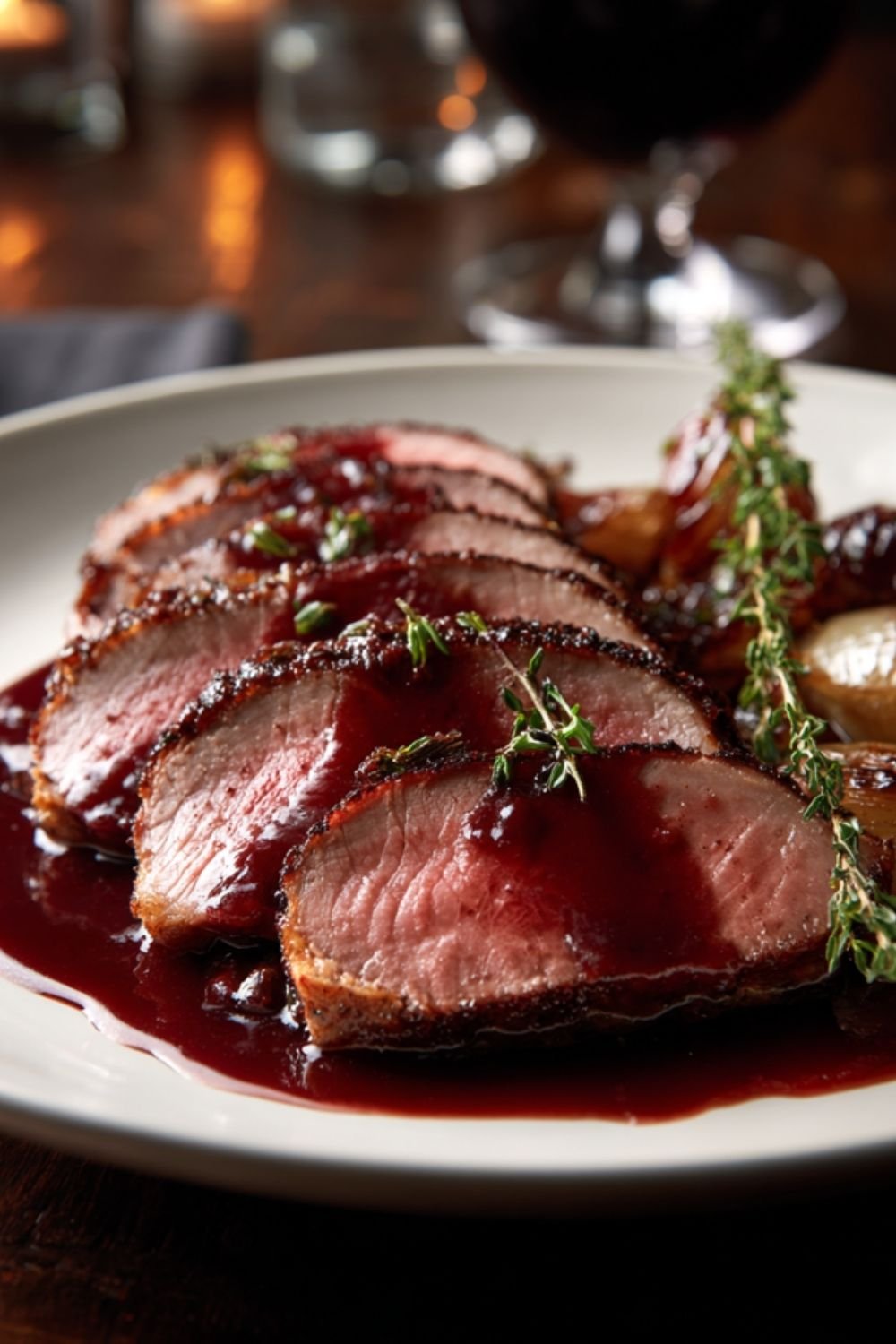
 Are you ready to elevate your dinner game with a restaurant-worthy dish that’s surprisingly easy to master at home? Red wine sauce for duck breasts is the epitome of French elegance, combining perfectly seared duck with crispy, golden skin and a luxurious wine reduction that’s rich, glossy, and absolutely irresistible.
This classic recipe starts with a simple balsamic and rosemary marinade that infuses the meat with aromatic depth, then builds a velvety sauce from the pan drippings, red wine, and beef stock that’s finished with butter for that signature silky texture.
Whether you’re planning a romantic date night or looking to impress dinner guests, this red wine sauce for duck breasts delivers sophisticated flavors without requiring professional chef skills. The key is in the technique: rendering the duck fat slowly to achieve that coveted crispy skin, then deglazing the pan to capture every bit of caramelized flavor. In just about an hour, you’ll have a dish that looks and tastes like it came straight from a French bistro, complete with a sauce so good you’ll want to soak it up with crusty bread.
Why You’Ll Love This Red Wine Sauce For Duck Breasts
If you’re looking for a sauce that actually deserves the protein it’s paired with, this red wine reduction is it. I’m talking about something that transforms duck breasts from nice to absolutely memorable.
The balsamic and fresh rosemary create this deep, complex flavor that doesn’t overshadow the meat, you know? It’s rich enough to feel fancy, yet straightforward enough that you won’t stress making it. The red wine brings elegance without pretension, while butter and tomato paste add silky depth. Honestly, this sauce works because it respects the duck instead of competing with it.
You get restaurant-quality results without the restaurant-level stress, which basically means you’re winning at dinner. The beef stock ties everything together into something genuinely craveable, not just pretty on a plate.
If you’re looking for more bold, flavorful meat dishes with rich marinades, try our authentic jerk chicken recipe with its spicy Caribbean seasoning blend.
What Ingredients Are In Red Wine Sauce For Duck Breasts?
Creating this elegant red wine sauce requires a carefully balanced combination of aromatics, liquids, and finishing ingredients that work together to complement the richness of duck. The marinade forms the flavor foundation with garlic, balsamic vinegar, and fresh rosemary, while the sauce itself builds layers of depth through red wine, beef stock, and tomato paste. Each component serves a specific purpose—the acidity cuts through the fat, the herbs provide aromatic complexity, and the butter creates a silky, luxurious finish that ties everything together.
Marinade:
- 5 garlic cloves, sliced
- 2 tbsp balsamic vinegar
- 1 tbsp chopped fresh rosemary
For the Sauce:
- 4 duck breasts (8–10oz/250–300g each), skin on
- ½ cup beef stock
- ½ cup red wine
- 1 tsp tomato paste
- 1 tsp lemon juice
- 3 tsp butter
- Salt and black pepper to taste
- 1 tbsp chopped fresh rosemary for garnish
Quality matters critically with these ingredients, particularly the duck breasts and red wine. Choose a dry red wine with good acidity rather than something overly tannic, as it will reduce more gracefully into the sauce.
Fresh herbs are essential—dried rosemary cannot replicate the bright, piney notes that fresh provides. If possible, source duck breasts with a good fat cap and unblemished skin, as this contributes to both the flavor and the visual appeal of the final dish.
How To Make This Red Wine Sauce For Duck Breasts
- Prepare the marinade by combining the garlic, vinegar, and rosemary in a bowl. Using a sharp knife, score the skin of the duck breasts in a crisscross pattern. Place the duck breasts skin-side down in a shallow dish and spoon the marinade over them. Cover and refrigerate for 30 minutes.
- Transfer the duck breasts to a frying pan, placing them skin-side down along with any remaining marinade. Cook over medium-high heat for 5–7 minutes until the skin is crispy and golden. Flip the breasts over and cook for an additional 5 minutes on the other side. Remove the duck from the pan and set aside in a warm place to rest.
- Carefully spoon off any excess fat from the frying pan, leaving just the flavorful cooking juices behind. Pour in the stock and wine, then increase the heat to high and boil rapidly until the liquid reduces to a dark, syrupy glaze. Stir in the tomato paste and lemon juice to add depth and brightness to the sauce.
- Take the pan off the heat and whisk in the butter, a little at a time, allowing it to melt slowly into the sauce and create a rich, velvety texture. Taste and adjust the seasoning with salt and pepper as needed.
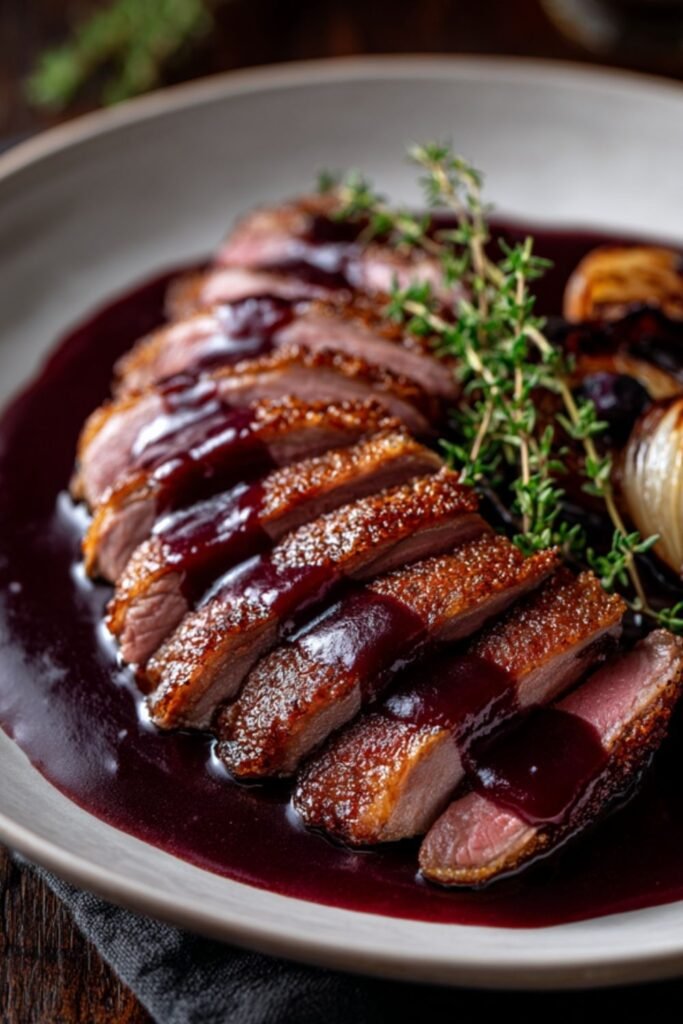
- Slice the rested duck breasts diagonally into thin pieces and arrange them attractively on warmed serving plates. Spoon the glossy sauce around the sliced duck, sprinkle with freshly chopped rosemary for garnish, and serve alongside boiled potatoes and green beans.
Red Wine Sauce For Duck Breasts
Ingredients
Method
- Prepare the marinade by combining the garlic, vinegar, and rosemary in a bowl. Using a sharp knife, score the skin of the duck breasts in a crisscross pattern. Place the duck breasts skin-side down in a shallow dish and spoon the marinade over them. Cover and refrigerate for 30 minutes.
- Transfer the duck breasts to a frying pan, placing them skin-side down along with any remaining marinade. Cook over medium-high heat for 5–7 minutes until the skin is crispy and golden. Flip the breasts over and cook for an additional 5 minutes on the other side. Remove the duck from the pan and set aside in a warm place to rest.
- Carefully spoon off any excess fat from the frying pan, leaving just the flavorful cooking juices behind. Pour in the stock and wine, then increase the heat to high and boil rapidly until the liquid reduces to a dark, syrupy glaze. Stir in the tomato paste and lemon juice to add depth and brightness to the sauce.
- Take the pan off the heat and whisk in the butter, a little at a time, allowing it to melt slowly into the sauce and create a rich, velvety texture. Taste and adjust the seasoning with salt and pepper as needed.
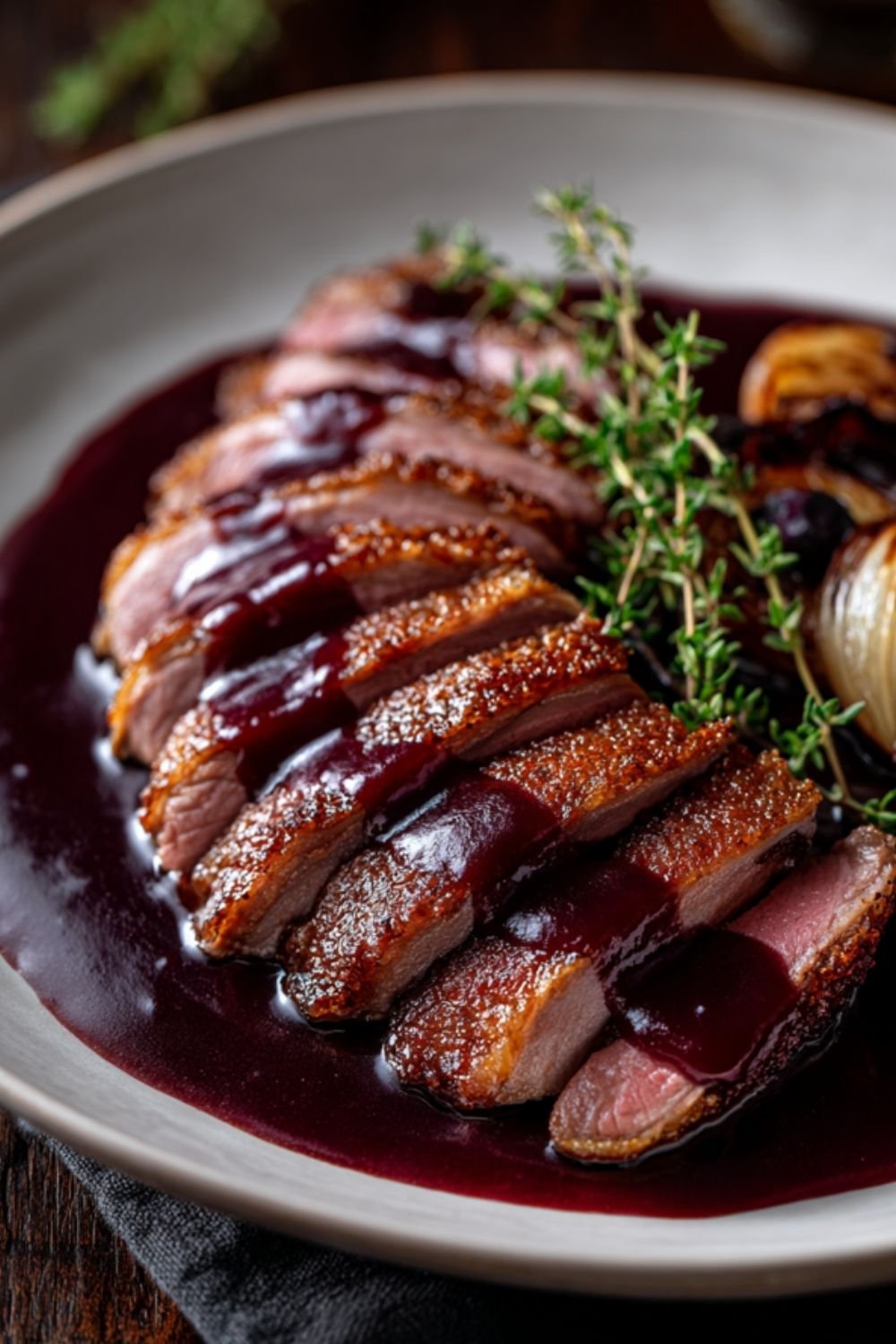
- Slice the rested duck breasts diagonally into thin pieces and arrange them attractively on warmed serving plates. Spoon the glossy sauce around the sliced duck, sprinkle with freshly chopped rosemary for garnish, and serve alongside boiled potatoes and green beans.
Red Wine Sauce For Duck Breasts Substitutions And Variations
Now that you’ve mastered the classic recipe, the fun part begins: making it your own. I’d swap the red wine for a bold Burgundy or even a Pinot Noir if I’m feeling adventurous. The beef stock? Port wine works beautifully, lending deeper sweetness.
Not a rosemary fan? Thyme or oregano’ll do the trick just fine. I’d experiment with balsamic vinegar ratios—go lighter if you prefer subtlety, heavier if you want that tangy punch. For extra richness, I’d add a splash of cream or substitute tomato paste with fig jam for something unexpected. Fresh berries stirred in at the end create complexity. The beauty here’s that duck’s forgiving enough to handle bold flavors, so don’t hold back experimenting.
What To Serve With Red Wine Sauce For Duck Breasts
Duck breasts don’t play well with wimpy sides, so you’ll want to pair them with something that can hold its own against that rich, wine-soaked sauce. I’d go with creamy mashed potatoes or polenta—they’re basically sauce sponges that won’t disappoint.
Roasted root vegetables like carrots, parsnips, and beets bring earthy sweetness that complements the wine beautifully. If you’re feeling fancy, try a simple arugula salad with lemon vinaigrette to cut through the richness and refresh your palate between bites.
Green peas work too, adding color and a gentle sweetness. Honestly, avoid anything too delicate or you’ll regret it. The duck demands respect, and your side dish needs to meet it halfway.
Final Thoughts
Making a red wine sauce for duck breasts isn’t some intimidating feat that requires years of culinary school, even though it might seem that way when you’re staring down those gorgeous duck breasts at the butcher counter. The truth is, you’ve got this. The marinade softens the meat while those flavors—garlic, balsamic, rosemary—do the heavy lifting. Then that red wine sauce comes together in minutes, transforming simple ingredients into something restaurant-quality. I’d encourage you to trust the process. Don’t overthink the butter or the tomato paste. They’re just supporting players in your duck’s success story. Once you nail this recipe, you’ll find yourself making it again and again, impressing whoever’s lucky enough to sit at your table.