
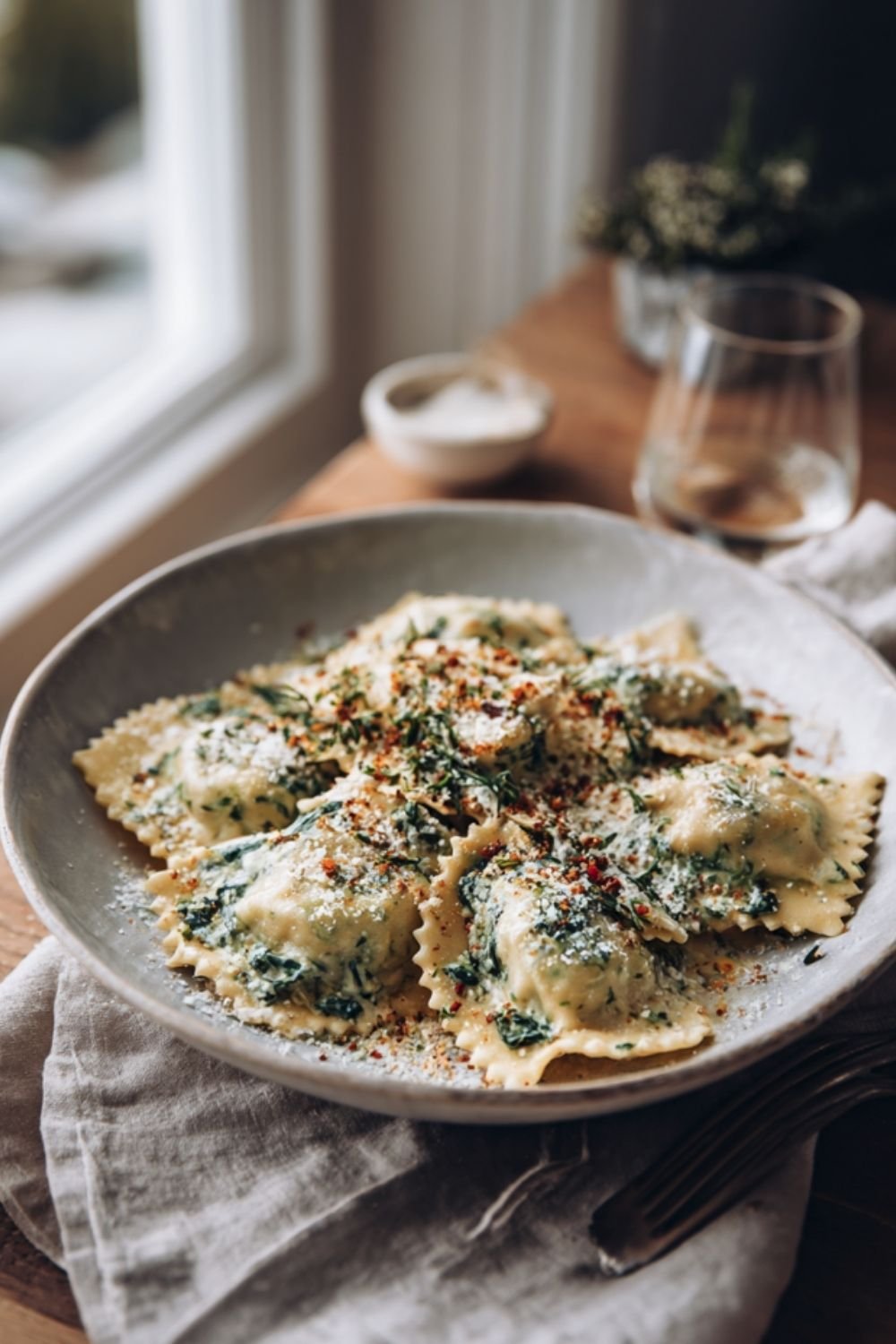
 Lucy M.
 Imagine your kitchen filled with the aroma of fresh pasta as you hand-roll delicate dough and carefully fill each ravioli with creamy spinach and ricotta. Spinach and ricotta ravioli connects you to generations of Italian home cooks who’ve crafted this beloved dish with love and skill. This timeless recipe represents culinary tradition passed down through families, creating moments of warmth and togetherness around the dinner table. Every homemade ravioli tells a story of care and dedication.
Why You’Ll Love This Spinach And Ricotta Ravioli
Because homemade ravioli hits different when you’re biting into those tender pasta pillows filled with creamy, nutmeg-kissed ricotta and bright spinach. I mean, store-bought versions can’t compete with what you’re about to make. The filling’s got this perfect balance—that warm nutmeg plays against the earthy spinach while the ricotta keeps everything silky smooth.
You’ll taste actual Parmesan, not some dusty powder situation. What really gets me is how simple the ingredient list is. Four components. That’s it for the filling. No weird additives or preservatives hiding in there. Plus, making ravioli from scratch feels fancy, but honestly, it’s just folding dough and sealing edges. Your friends won’t believe you made these yourself. Trust me, they’ll be asking for seconds.
While this ravioli showcases fresh, light flavors, Mary Berry’s Beef Stroganoff takes a more robust approach. Both dishes prove that whether vegetarian or meaty, a good sauce makes all the difference.
What Ingredients Are In Spinach And Ricotta Ravioli?
Making homemade spinach and ricotta ravioli requires just a handful of quality ingredients that come together to create something truly special. The beauty of this recipe lies in its simplicity—you don’t need a long shopping list or hard-to-find items. Everything here is straightforward and likely already in your pantry or easily accessible at any grocery store. The ingredient list is divided into three components: the pasta dough base, the filling, and the butter for serving.
Ingredients:
For the Pasta Dough:
- 1¾ cups bread flour
- 3 large eggs
- 1 tsp salt
- 1 tbsp olive oil
For the Filling:
- 4 oz (125 g) ricotta cheese
- 2 oz (60 g) grated Parmesan cheese
- 1 large beaten egg
- ¼ tsp grated nutmeg
- 8 oz (250 g) spinach leaves (cooked, squeezed dry, and chopped)
- Salt and black pepper to taste
For Serving:
– 2 tbsp butter
One important consideration when gathering these ingredients is the quality and preparation of the spinach. It must be cooked first, then thoroughly squeezed dry to remove excess moisture—this step is essential because wet spinach will make the filling soggy and difficult to work with. Additionally, freshly grated nutmeg makes a noticeable difference compared to pre-ground varieties, as it provides a warmer, more aromatic flavor. Similarly, using freshly grated Parmesan rather than pre-packaged versions will elevate the overall taste and texture of your ravioli.
How To Make This Spinach And Ricotta Ravioli
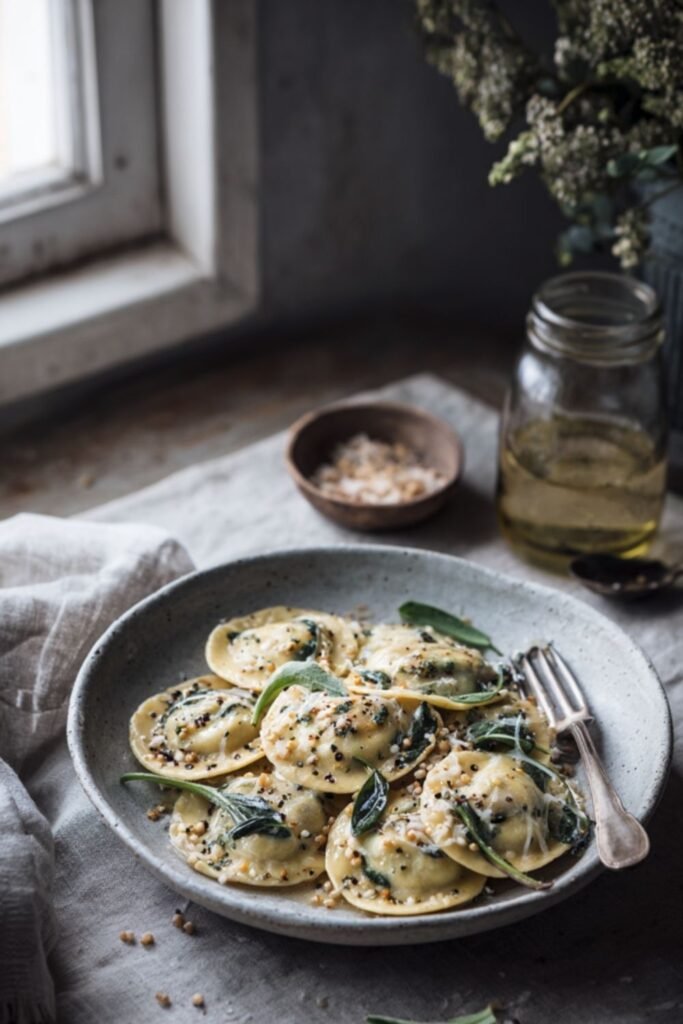
- Sift the flour onto a clean work surface, creating a mound with a flat top. Use your fingers to make a deep well in the center of the flour, then crack the eggs into this well. Add the salt and oil to the eggs. Using your fingertips, begin gradually incorporating the flour from the inner walls of the well into the egg mixture, working in a circular motion. Continue mixing until a sticky, shaggy ball of dough begins to form.
- Transfer the dough to a lightly floured work surface and knead it vigorously for about 10 minutes. Use the heels of your hands to push the dough away from you, then fold it back over itself and rotate it a quarter turn. Repeat this process until the pasta dough becomes perfectly smooth, elastic, and no longer sticks to your work surface or hands.
- Shape the kneaded dough into a smooth ball and place it inside a lightly oiled plastic bag to prevent it from drying out. Let it rest at room temperature for approximately 30 minutes—this resting period allows the gluten to relax, making the dough easier to roll. After resting, roll out the dough on a lightly floured work surface, working from the center outward and rotating frequently, until you achieve a very thin 15 in (37 cm) square sheet. Leave this pasta sheet uncovered on the counter for about 20 minutes to dry out slightly, which will help prevent the ravioli from becoming soggy.
- While the pasta is resting, prepare the filling: in a mixing bowl, beat together the ricotta cheese, half of the grated Parmesan, the egg, a pinch of nutmeg, and the well-drained spinach. Mix until everything is thoroughly combined and smooth. Season the filling generously with salt and pepper to taste.
- Once your pasta sheet is ready, spoon small portions of filling onto one half of the pasta, spacing them evenly. Fold the other half over, press around each mound to seal, and cut into individual ravioli squares. Cook the ravioli in a large pot of boiling salted water for 3–4 minutes until they float to the surface and are tender. Drain carefully using a slotted spoon. Serve the ravioli immediately, tossed with melted butter, a generous sprinkle of the remaining Parmesan cheese, and a good grinding of black pepper over the top.
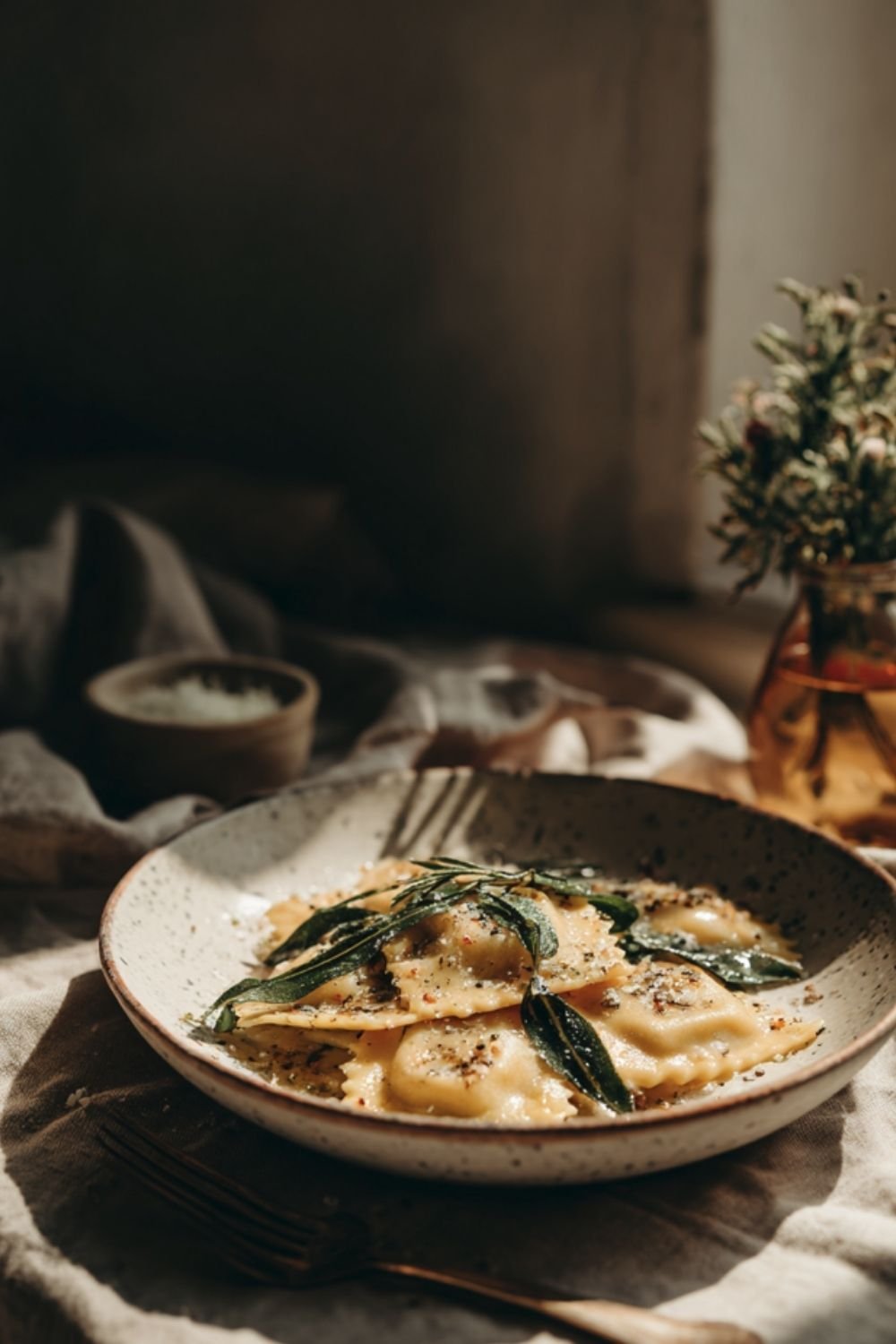
Spinach And Ricotta Ravioli
Ingredients
Method
- Sift the flour onto a clean work surface, creating a mound with a flat top. Use your fingers to make a deep well in the center of the flour, then crack the eggs into this well. Add the salt and oil to the eggs. Using your fingertips, begin gradually incorporating the flour from the inner walls of the well into the egg mixture, working in a circular motion. Continue mixing until a sticky, shaggy ball of dough begins to form.
- Transfer the dough to a lightly floured work surface and knead it vigorously for about 10 minutes. Use the heels of your hands to push the dough away from you, then fold it back over itself and rotate it a quarter turn. Repeat this process until the pasta dough becomes perfectly smooth, elastic, and no longer sticks to your work surface or hands.
- Shape the kneaded dough into a smooth ball and place it inside a lightly oiled plastic bag to prevent it from drying out. Let it rest at room temperature for approximately 30 minutes—this resting period allows the gluten to relax, making the dough easier to roll. After resting, roll out the dough on a lightly floured work surface, working from the center outward and rotating frequently, until you achieve a very thin 15 in (37 cm) square sheet. Leave this pasta sheet uncovered on the counter for about 20 minutes to dry out slightly, which will help prevent the ravioli from becoming soggy.
- While the pasta is resting, prepare the filling: in a mixing bowl, beat together the ricotta cheese, half of the grated Parmesan, the egg, a pinch of nutmeg, and the well-drained spinach. Mix until everything is thoroughly combined and smooth. Season the filling generously with salt and pepper to taste.
- Once your pasta sheet is ready, spoon small portions of filling onto one half of the pasta, spacing them evenly. Fold the other half over, press around each mound to seal, and cut into individual ravioli squares. Cook the ravioli in a large pot of boiling salted water for 3–4 minutes until they float to the surface and are tender. Drain carefully using a slotted spoon. Serve the ravioli immediately, tossed with melted butter, a generous sprinkle of the remaining Parmesan cheese, and a good grinding of black pepper over the top.
Notes
Is Spinach And Ricotta Ravioli Healthy?
Spinach and ricotta ravioli offers genuine nutritional benefits alongside culinary pleasure. Spinach provides iron, calcium, and vitamins, while ricotta delivers protein and probiotics. Eggs contribute quality protein and nutrients. The combination creates a balanced meal with substantial nutritional value, though the butter and Parmesan add calories and fat that should be enjoyed in moderation. This dish becomes healthier with portion control and mindful serving suggestions. Pair ravioli with light salads or steamed vegetables to increase nutritional density. Using less butter and Parmesan reduces calories while maintaining authentic flavor. Homemade ravioli allows control over ingredients, making it a nutritious choice compared to processed store-bought versions.Is Spinach And Ricotta Ravioli Healthy?
Spinach and ricotta ravioli offers genuine nutritional benefits alongside culinary pleasure. Spinach provides iron, calcium, and vitamins, while ricotta delivers protein and probiotics. Eggs contribute quality protein and nutrients. The combination creates a balanced meal with substantial nutritional value, though the butter and Parmesan add calories and fat that should be enjoyed in moderation.
This dish becomes healthier with portion control and mindful serving suggestions. Pair ravioli with light salads or steamed vegetables to increase nutritional density. Using less butter and Parmesan reduces calories while maintaining authentic flavor. Homemade ravioli allows control over ingredients, making it a nutritious choice compared to processed store-bought versions.
Spinach And Ricotta Ravioli Substitutions And Variations
One of the best things about ravioli is how forgiving it is when you want to switch things up. I’d swap the spinach for kale or chard if I’m feeling adventurous—they bring earthier notes to the filling. Want to bump up the flavor?
I’d mix in fresh herbs like basil or oregano. Ricotta’s pretty versatile, but I could use mascarpone for something creamier, or goat cheese for tanginess. You could add pine nuts or walnuts for crunch, though that’s not for everyone.
The nutmeg’s optional if you’re nutmeg-phobic. For serving, brown butter with sage elevates things wonderfully, or try a light cream sauce instead of plain butter. Really, there’s no wrong direction here.
What To Serve With Spinach And Ricotta Ravioli
Now that you’ve got all these delicious filling options at your fingertips, let’s talk about what actually goes on the plate alongside your ravioli. I’d keep things simple since the filling’s already packed with flavor.
A light butter sauce with fresh sage works beautifully, letting those spinach and ricotta notes shine through without competing. You could also go for a basic tomato sauce, nothing too heavy or complicated. Maybe toss in some garlic and fresh basil if you’re feeling it. A drizzle of quality olive oil and grated Parmesan never hurt anybody either.
The key here’s balance, you know. Let the ravioli be the star. Pair it with a crisp salad or roasted vegetables on the side, and you’ve got yourself a genuinely impressive meal that doesn’t scream “I spent all day cooking.”
Final Thoughts
Making homemade spinach ricotta ravioli isn’t some impossible feat that requires a culinary degree, even though it might seem that way when you’re staring down a pasta sheet for the first time. Once you get the hang of it, you’ll realize it’s just folding, sealing, and boiling. The filling’s already done, the dough comes together in minutes, and suddenly you’re plating something restaurant-quality on a Tuesday night. Sure, your first batch might look like lumpy pillows, but they’ll taste just as good. I find that embracing the imperfection actually makes the whole thing more enjoyable. You’re not competing with professionals; you’re creating something delicious with your own hands. That’s what makes homemade ravioli worth the effort.


