
 Lucy M.
 You know that feeling when you’re craving something warm, filling, and actually good for you? That’s where vegetable minestrone comes in. It’s the kind of soup that doesn’t require fancy techniques or hard-to-find ingredients, yet somehow tastes like you’ve been simmering it all day. But here’s the thing—there’s more to making it stellar than just tossing vegetables in a pot. Want to know what separates a bland bowl from one you’ll crave?
Why You’Ll Love This Vegetable Minestrone
Vegetable minestrone exemplifies the beauty of simple, nourishing cuisine. This recipe showcases fresh vegetables at their finest, allowing each ingredient to contribute its unique characteristics to the final dish. Beans provide essential protein, tomatoes offer acidity and depth, while rice adds satisfying substance.
The versatility of this soup is remarkable. Ingredient substitutions integrate seamlessly without compromising flavor or quality. From a practical standpoint, the recipe excels in both economy and efficiency. With minimal investment in ingredients and just 30 minutes of preparation time, you achieve a wholesome, comforting meal that satisfies on every level.
What’S The Difference Between Minestrone And Vegetable Soup?
Minestrone is a specific type of Italian vegetable soup with distinct characteristics that set it apart from generic vegetable soup. Traditional minestrone always includes beans (usually cannellini or kidney beans) and pasta or rice, creating a heartier, more substantial dish.
It features a tomato-based broth and typically incorporates Italian vegetables like zucchini, cabbage, and fresh herbs such as basil. The soup is finished with Parmesan cheese and olive oil. In contrast, basic vegetable soup can use any vegetables, any type of broth, and doesn’t require beans or starch.
Minestrone follows Italian culinary traditions, while vegetable soup is more flexible and adaptable to various cuisines and preferences.
What Ingredients Are In Vegetable Minestrone?
This vegetable minestrone brings together a collection of simple, wholesome ingredients that combine to create a deeply satisfying soup. The base starts with aromatics like onion, celery, and garlic, which are sautéed in olive oil to build flavor.
Canned tomatoes and tomato paste provide the soup’s characteristic tangy richness, while a quality stock—chicken or vegetable—forms the liquid foundation. The addition of beans, rice, and fresh vegetables transforms this into a complete, protein-rich meal.
Ingredients:
- 2 tbsp olive oil
- 1 onion, chopped
- 2 celery stalks, chopped
- 2 carrots, finely diced
- 1 garlic clove, crushed
- 1 × 14oz (400g) can chopped Italian plum tomatoes
- 1 tbsp tomato paste
- 6¼ cups chicken or vegetable stock
- 1 × 14oz (400g) can cannellini or red kidney beans, drained
- 8oz (250g) leeks, trimmed and finely sliced
- 4oz (125g) Savoy cabbage, finely shredded
- 2 tbsp arborio (risotto) rice
- Salt and black pepper to taste
- Grated Parmesan cheese for serving
When shopping for ingredients, opt for canned tomatoes labeled “Italian plum” for the best flavor profile, and don’t skip the arborio rice—its starch content creates a naturally creamy texture without added cream. Feel free to adjust vegetables based on what’s available or your preferences, as minestrone is inherently adaptable.
The leeks and cabbage can be substituted with zucchini, green beans, or spinach if needed, making this recipe an excellent way to use up whatever fresh produce you have on hand.
Serve this rustic minestrone with crusty Italian bread for dipping. For a Mediterranean-inspired meal, start with our Homemade Hummus and vegetables as a fresh, healthy appetizer.
How To Make This Vegetable Minestrone

- Begin by heating 2 tbsp of olive oil in a large saucepan over medium heat. Add the chopped onion, 2 celery stalks, and 2 carrots to the pan, cooking gently while stirring for about 5 minutes until the vegetables begin to soften and release their flavors.
- Next, add the 14oz can of chopped Italian plum tomatoes, 1 tbsp of tomato paste, and the crushed garlic clove. Season the mixture generously with salt and black pepper, stirring to combine all the ingredients thoroughly.
- Pour in the 6¼ cups of chicken or vegetable stock and bring the mixture to a boil over high heat. Once boiling, cover the pan and reduce the heat to maintain a gentle simmer.
- Allow the soup to cook for 15 minutes, stirring periodically to guarantee even cooking and flavor development. After this initial simmering period, add the drained 14oz can of cannellini or red kidney beans, along with the 8oz of trimmed and finely sliced leeks, 4oz of finely shredded Savoy cabbage, and 2 tbsp of arborio rice.
- Continue simmering the soup for another 20 minutes, allowing the vegetables to become tender and the rice to cook through.
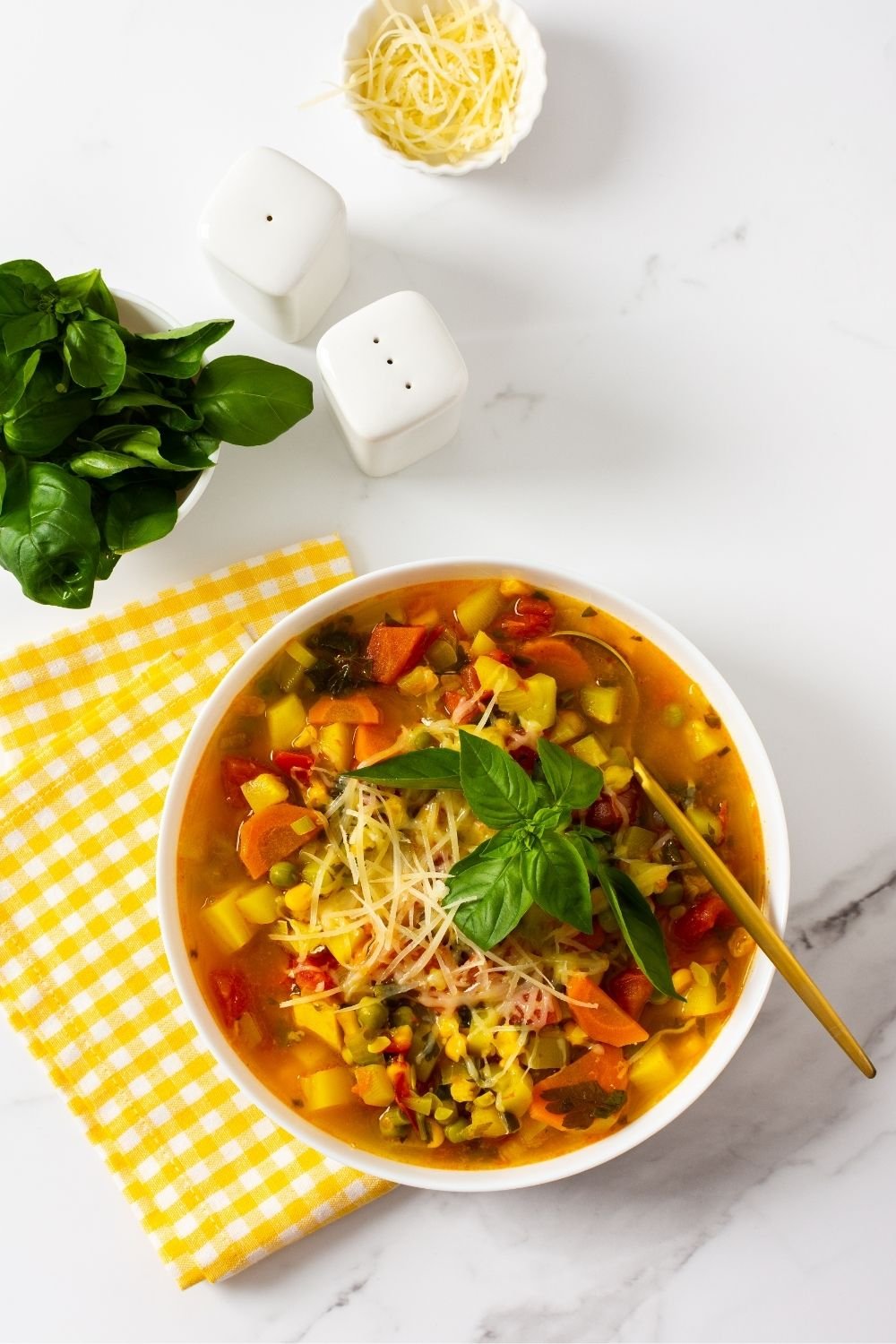
- Taste the soup and adjust the seasoning with additional salt and pepper as needed. Serve the minestrone hot in bowls, topping each serving with a generous handful of grated Parmesan cheese for a finishing touch of richness and flavor.

Vegetable Minestrone Recipe
Ingredients
Method
- Begin by heating 2 tbsp of olive oil in a large saucepan over medium heat. Add the chopped onion, 2 celery stalks, and 2 carrots to the pan, cooking gently while stirring for about 5 minutes until the vegetables begin to soften and release their flavors.
- Next, add the 14oz can of chopped Italian plum tomatoes, 1 tbsp of tomato paste, and the crushed garlic clove. Season the mixture generously with salt and black pepper, stirring to combine all the ingredients thoroughly.
- Pour in the 6¼ cups of chicken or vegetable stock and bring the mixture to a boil over high heat. Once boiling, cover the pan and reduce the heat to maintain a gentle simmer.
- Allow the soup to cook for 15 minutes, stirring periodically to guarantee even cooking and flavor development. After this initial simmering period, add the drained 14oz can of cannellini or red kidney beans, along with the 8oz of trimmed and finely sliced leeks, 4oz of finely shredded Savoy cabbage, and 2 tbsp of arborio rice.
- Continue simmering the soup for another 20 minutes, allowing the vegetables to become tender and the rice to cook through.
- Taste the soup and adjust the seasoning with additional salt and pepper as needed. Serve the minestrone hot in bowls, topping each serving with a generous handful of grated Parmesan cheese for a finishing touch of richness and flavor.
Notes
What’S The Difference Between Minestrone And Vegetable Soup?
Minestrone is a specific type of Italian vegetable soup with distinct characteristics that set it apart from generic vegetable soup. Traditional minestrone always includes beans (usually cannellini or kidney beans) and pasta or rice, creating a heartier, more substantial dish. It features a tomato-based broth and typically incorporates Italian vegetables like zucchini, cabbage, and fresh herbs such as basil. The soup is finished with Parmesan cheese and olive oil. In contrast, basic vegetable soup can use any vegetables, any type of broth, and doesn’t require beans or starch. Minestrone follows Italian culinary traditions, while vegetable soup is more flexible and adaptable to various cuisines and preferences.Vegetable Minestrone Substitutions And Variations
If you’ve got different veggies hanging around your kitchen or you’re trying to avoid certain ingredients, minestrone’s honestly one of the most forgiving soups out there—it practically begs you to swap things around.
Don’t have leeks. Use green beans instead. Hate Savoy cabbage. Toss in zucchini or spinach without guilt. The beauty here is that minestrone doesn’t care what vegetables you choose, really. I’d swap the cannellini beans for chickpeas or lentils if that’s what’s in your pantry.
Want to make it heartier. Add small pasta shapes like ditalini alongside the rice. Prefer a thicker consistency. Just increase the rice amount. The stock-to-vegetable ratio matters more than exact ingredients, so feel free to improvise based on what you’ve actually got available.
What To Serve With Vegetable Minestrone
Since minestrone‘s already packed with vegetables and beans, you’d think it could stand alone on the plate, but here’s the thing—a few simple sides can transform it from a solid weeknight dinner into something that feels actually special.
I’d recommend starting with crusty bread, toasted with garlic butter for dipping into those savory broth pools. A crisp green salad with lemon vinaigrette cuts through the soup’s richness nicely. For something heartier, focaccia works wonderfully.
You could also serve grated Parmesan on the side since some folks prefer controlling their cheese situation. A simple arugula salad dressed with olive oil and balsamic adds peppery contrast. These pairings aren’t fancy, just practical ways to round out your bowl and make dinner feel intentional.
Final Thoughts
Vegetable minestrone tends to be one of those soups that gets better the longer it sits in your fridge, which means you’re basically getting a bonus meal out of your effort—and honestly, that’s kind of the whole appeal of minestrone, right? The flavors deepen, the vegetables soften further, and everything melds into this cozy, satisfying bowl of comfort. I’d recommend storing it in airtight containers for up to four days, though you might need to add extra stock when reheating since the rice absorbs liquid over time. Top each serving with fresh Parmesan and crusty bread for maximum coziness. This soup represents everything I love about cooking: simple ingredients, big flavors, and meals that just keep giving back.