Ingredients
Method
- Heat the oven and line the tin. Set your oven to 180ºC, or 160ºC fan, and line a 9″x13″ traybake tin with parchment paper. Letting the paper overhang the long sides gives you something to lift the finished slab out with later.
- Melt the chocolate and butter. Combine the unsalted butter and dark chocolate in a heatproof bowl and melt them together over a pan of boiling water, or in the microwave for 1 to 2 minutes until melted. Stir until the mixture is smooth and no lumps of chocolate remain.
- Let it cool. Set the bowl aside for 5 to 10 minutes to come down to room temperature. Skipping this is what causes the eggs to scramble in the next stage.
- Whisk the eggs and sugar. In a separate bowl, whisk the eggs and caster sugar together for a few minutes until the colour has turned pale, the mixture looks very mousse-like, and it has doubled its original volume. This is the aeration the recipe depends on, so keep going until all three signs are there.
- Fold in the chocolate. Pour the cooled chocolate mixture over the whisked eggs and fold the two together carefully. Cut down and turn the mixture over rather than stirring, so you keep as much volume as possible.
- Add the flour and cocoa. Once the chocolate is completely combined, tip the cocoa powder and plain flour on top and fold everything together again. Stop as soon as you can no longer see dry patches or streaks of flour.
- Fill the tin. Pour the batter into the prepared tin and spread it evenly into the corners, so the tray bakes at the same rate all the way across.
- Bake. Bake for 20 to 25 minutes or more, until there is a small wobble in the middle. The edges should be set and the surface dry and papery.
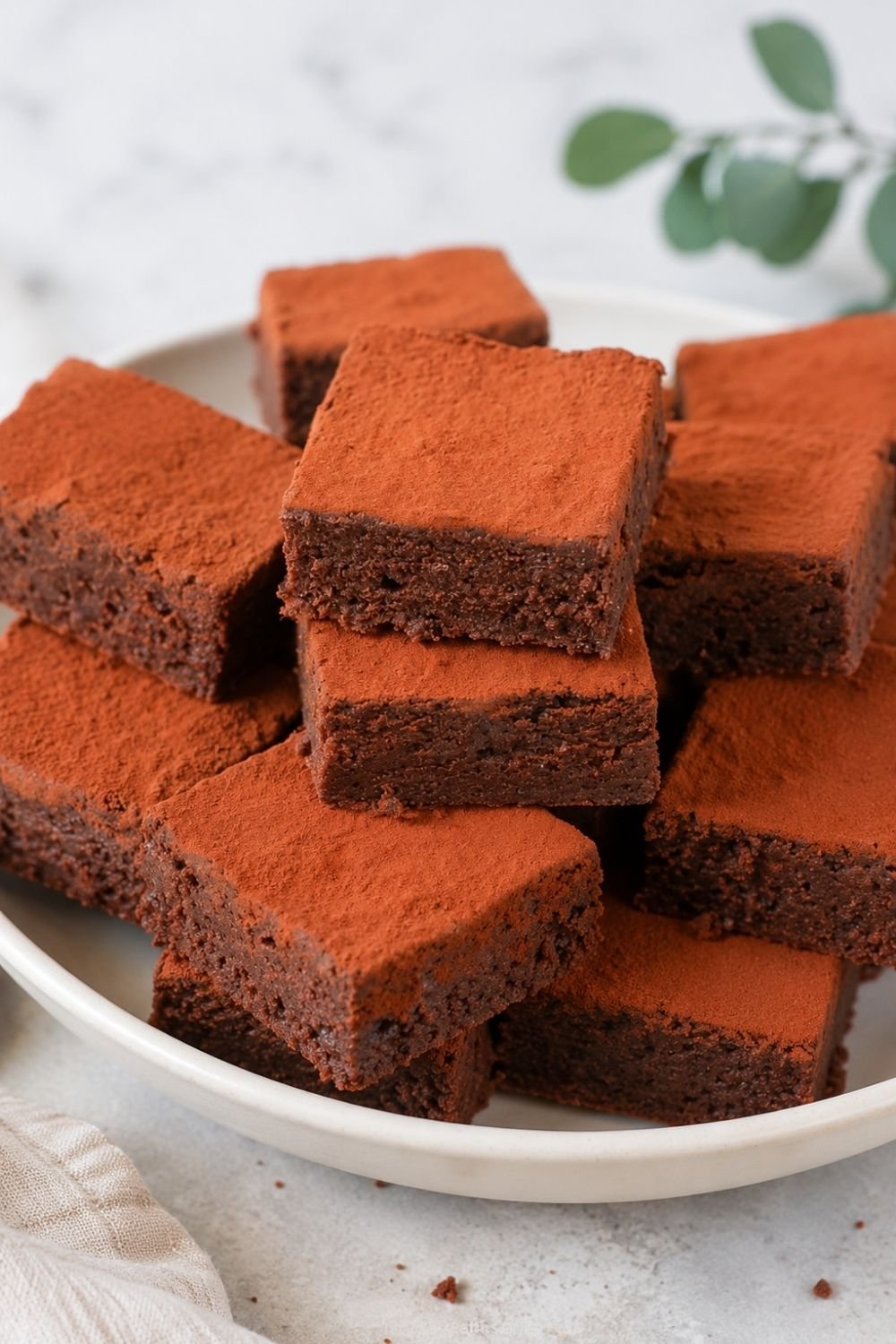
- Cool, then chill. Leave the brownies to cool in the tin completely, then transfer them to the fridge for 3 hours or more for the best results. The chilling firms the cocoa butter and is what lets you cut sharp squares.
Notes
A few practical points worth knowing before or after baking.
Pan size matters more than usual here. The 9″x13″ tin is what makes this batter bake thin enough for a chewy edge and a soft middle. A smaller tin would give you a much deeper slab that needs longer in the oven, and the timing above would no longer apply.
Melting method is flexible. Both the bain-marie and the microwave get you to the same place. If you use the microwave, work in short bursts and stir between them so the chocolate doesn’t scorch at the edges of the bowl.
For the cleanest cut, chill first and use a large, sharp knife. Wiping the blade between cuts stops the fudgy centre dragging through the next slice.