Prepare the pans and oven. Preheat the oven to 350°F (177°C). Grease three 9-inch cake pans, fit parchment paper rounds into the bottoms, then grease the parchment as well.
Combine the dry ingredients. Whisk the cake flour, salt, baking powder, and baking soda together until evenly distributed, then set the mixture aside.
Cream the butter and sugar. Using a handheld mixer or stand mixer fitted with a paddle or whisk attachment, beat the butter and sugar on high speed for about 3 minutes, until smooth and creamy. Scrape the sides and bottom of the bowl with a silicone spatula whenever needed.
Add the eggs and vanilla. Beat in the 3 eggs, 2 additional egg whites, and vanilla extract on high speed for about 2 minutes. The mixture may look curdled at this point. Scrape the sides and bottom of the bowl again as needed.
Finish the batter. Turn the mixer to low and add the dry ingredients, mixing only until combined. Keep the mixer running on low while pouring in the buttermilk, then mix just until incorporated. If you find lumps or unmixed batter at the bottom, whisk gently by hand. The finished batter will be slightly thick.
Divide and bake. Pour the batter evenly between the prepared pans. You can weigh the pans for accuracy if desired. Bake for around 23-26 minutes, or until the cakes are baked through. Insert a toothpick into the centre to check them. When it comes out clean, they’re done.
Cool completely. Set the pans on a wire cooling rack and allow the cakes to cool completely before you attempt to frost or assemble them.
Make the buttercream. In a large bowl, use a handheld mixer or a stand mixer fitted with a whisk or paddle attachment to beat the butter on medium speed for about 2 minutes, until creamy. With the mixer on low, add the confectioners’ sugar, milk, vanilla extract, and salt. Increase to high speed and beat for 2 minutes. If the frosting is too thin, add more confectioners’ sugar. If it’s too thick, add more milk. If it’s too sweet, add an extra pinch of salt.
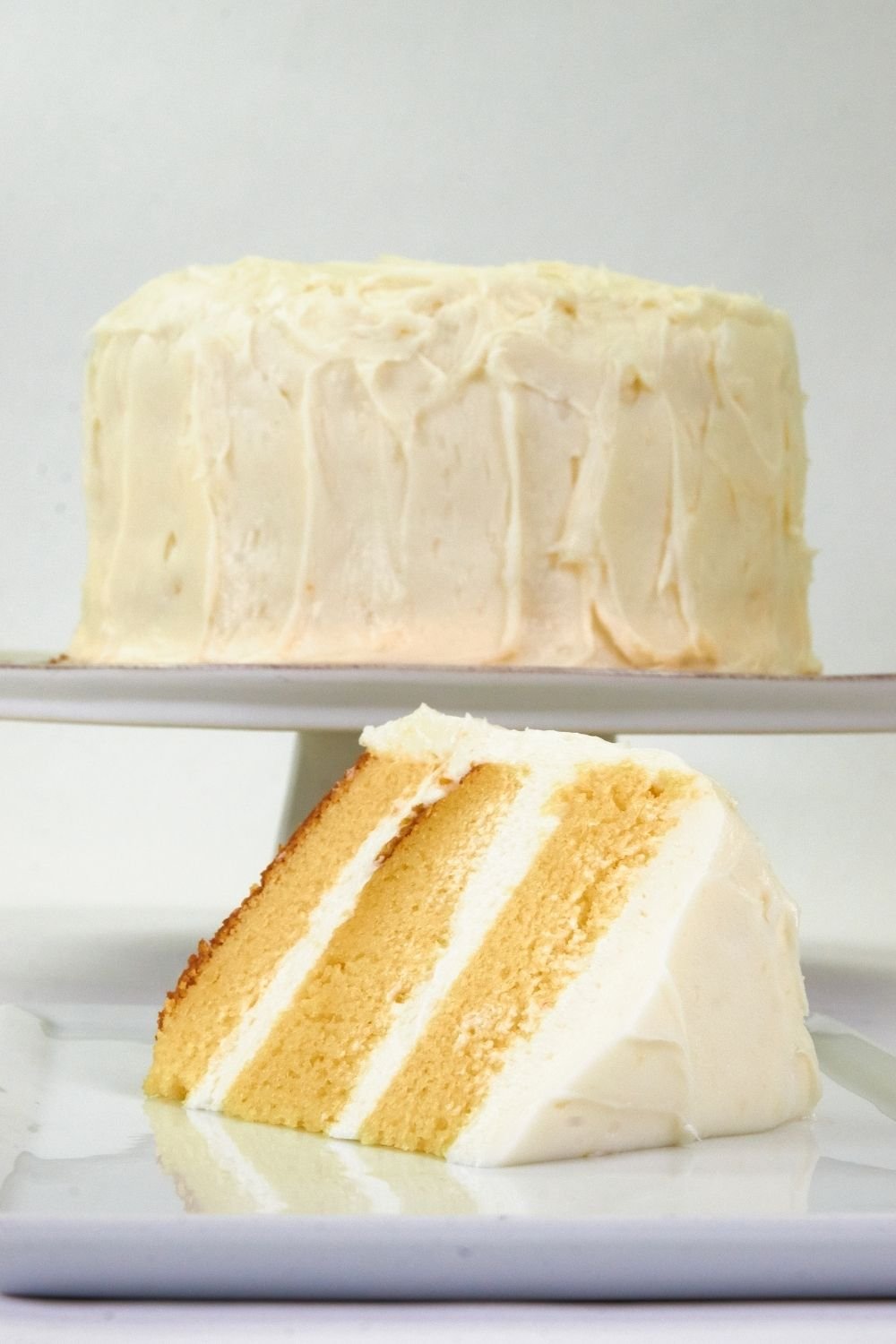
Level and stack the cake. Use a large serrated knife to slice a thin layer from the tops of the cakes so each one has a flat surface. Place the first layer on a cake stand, cake turntable, or serving plate and spread about 1 and 1/2 cups of frosting over the top. Add the second cake layer and cover it with about 1 and 1/2 cups of frosting.
Finish the frosting. Place the third cake layer on top, then spread the remaining buttercream over the top and around the sides. An icing spatula can be used to apply and smooth the frosting.
Chill before slicing. Refrigerate the assembled cake for at least 1 hour before cutting it. Keep leftover cake tightly covered in the refrigerator for up to 5 days.