

Soft, buttery crumb is the defining feature of this Vanilla Cake recipe. Cake flour keeps the texture delicate, while softened butter, buttermilk, whole eggs, extra egg whites, and a full tablespoon of vanilla create a cake that feels rich without becoming heavy.
The method is straightforward, but a few details make a real difference. You cream the butter and sugar thoroughly, add the eggs and vanilla, then bring in the dry ingredients and buttermilk gently. The batter is divided between three 9-inch pans, giving you tall, even layers that can hold plenty of vanilla buttercream.
Here are the main reasons this version works so well.
- Cake flour helps produce a softer, finer crumb than a higher-protein flour would.
- Buttermilk contributes moisture while supporting the leavening already built into the batter.
- Whole eggs provide richness and structure, while the additional egg whites help support the cake layers.
- Creaming the softened butter and sugar for about 3 minutes builds the foundation for a lighter texture.
- Three separate layers create plenty of surface area for the smooth vanilla buttercream.
What Gives This Vanilla Cake Its Soft Crumb
The ingredients are familiar, but several of them are doing more than simply adding flavour. The balance between flour, butter, eggs, buttermilk, and the two leavening agents determines how the finished cake rises and how tender the crumb feels.
Cake flour is particularly important. Its lower protein level supports a finer, more delicate texture, which suits a classic layer cake. The recipe also uses both baking powder and baking soda, rather than relying on one leavener alone.
A few ingredients deserve extra attention before you begin.
- Cake flour: Keeps the crumb finer and softer, which is especially useful in a tall three-layer cake.
- Unsalted butter: Provides richness and structure. Bringing it to room temperature allows it to cream properly with the sugar.
- Whole eggs and egg whites: Whole eggs add richness, while the additional whites contribute structure without adding more yolk.
- Buttermilk: Adds moisture and acidity, working alongside the baking soda in the batter.
- Pure vanilla extract: One Tablespoon goes into the cake itself, making vanilla a clear flavour rather than a background note.
The ingredient temperatures matter as well. The butter is softened to room temperature, and the eggs, egg whites, and buttermilk are also used at room temperature. That makes it easier for the ingredients to combine into a consistent batter.
Creaming And Mixing Without Losing The Texture
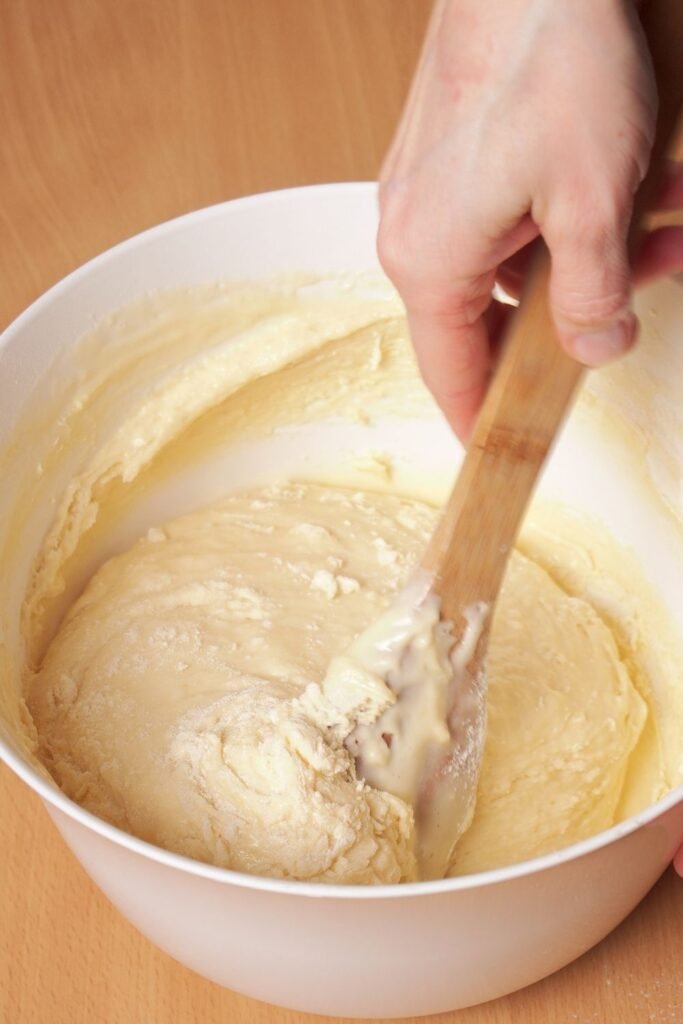
The creaming stage is one of the highest-impact parts of this recipe. Butter and granulated sugar are beaten together on high speed for about 3 minutes, until the mixture is smooth and creamy. Rushing this step changes the starting texture of the batter before the flour has even been added.
After the eggs, extra egg whites, and vanilla go in, the mixture may look curdled. That appearance is specifically expected here because you’re combining egg liquid with solid butter. Scraping the bowl thoroughly helps bring everything together evenly before you move on.
The biggest place to show restraint is after the dry ingredients enter the bowl. Keep the mixer on low and stop once they’re combined, then pour in the buttermilk while continuing on low. The finished batter should be slightly thick.
This is also why scraping the sides and bottom of the bowl matters throughout the early stages. Small pockets of butter, egg, or flour can leave the batter uneven even when the top appears fully mixed.
Getting Three Even Cake Layers
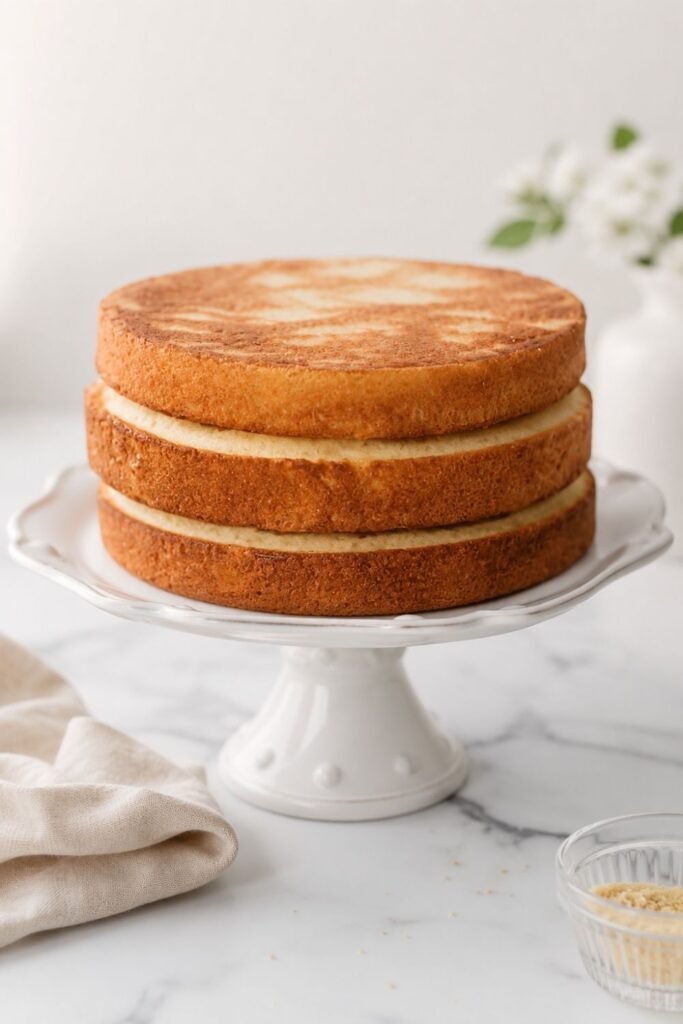
This recipe is built for three 9-inch cake pans. Start by greasing each pan, placing a parchment paper round in the bottom, and greasing the parchment as well. That combination gives the baked layers extra protection when it’s time to release them from the pans.
Once the batter is ready, divide it evenly between all three pans. Weighing the filled pans is optional, but it can help you distribute the batter more accurately. More even quantities give the layers a better chance of baking at a similar rate.
Bake them at 350°F (177°C) for around 23-26 minutes. The supplied doneness check is simple: insert a toothpick into the centre, and the cakes are done when it comes out clean.
Cooling is just as important as baking here. Leave the cakes in their pans on a wire cooling rack until they’re completely cool. Frosting warm layers would make the buttercream much harder to control during assembly.
Making The Vanilla Buttercream Smooth And Spreadable
The buttercream is substantial enough to fill both spaces between the cake layers and cover the outside. It begins with softened unsalted butter beaten on medium speed for about 2 minutes, which gives you a creamy base before the sugar and liquid are added.
Confectioners’ sugar, milk or heavy cream, vanilla extract, and salt are then mixed in on low speed. Starting slowly is useful here because you’re incorporating a large amount of confectioners’ sugar. Once everything is combined, increase the mixer to high speed and beat for 2 minutes.
The recipe also gives you a way to correct the consistency without changing the basic frosting. Add more confectioners’ sugar if it feels too thin, add more milk if it’s too thick, or use an extra pinch of salt if the sweetness needs balancing.
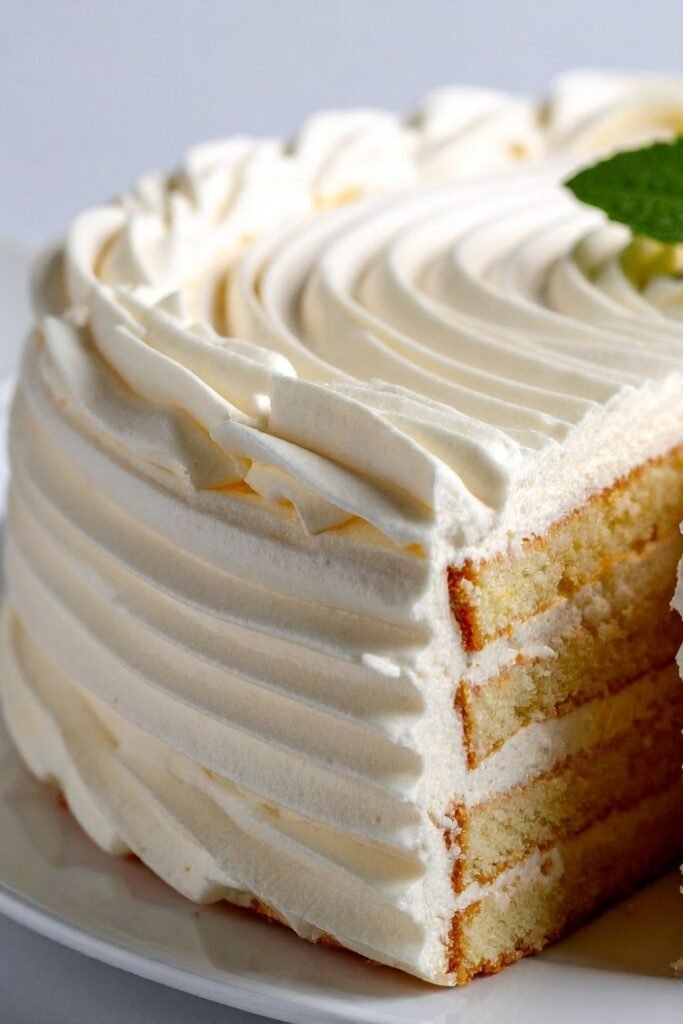
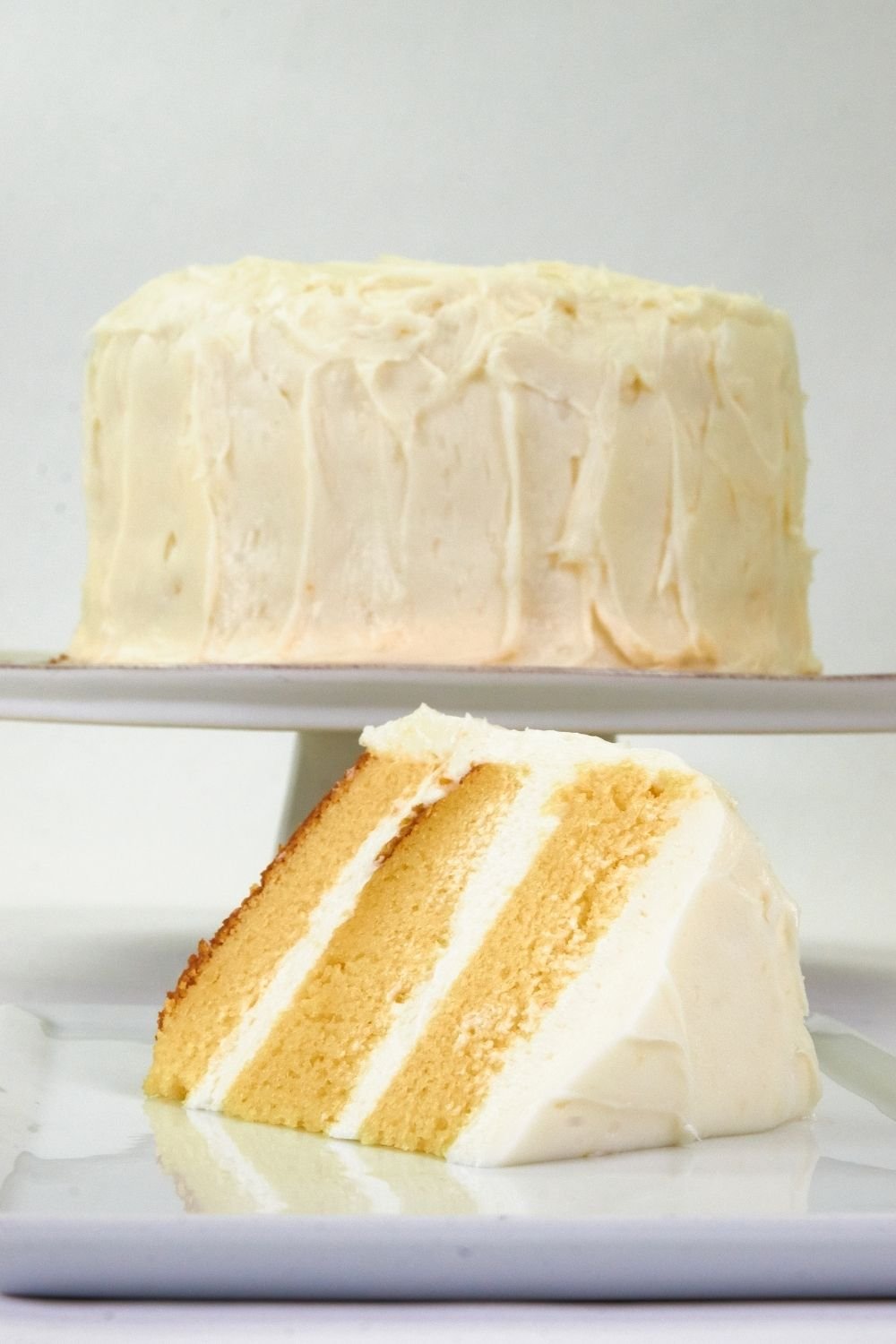
When the cake layers are completely cool, trim a thin layer from their tops with a large serrated knife so the surfaces are flat. Spread about 1 and 1/2 cups of frosting over the first layer, repeat with another 1 and 1/2 cups over the second, then place the third layer on top.
The remaining buttercream covers the top and sides. An icing spatula is the recommended tool for spreading it over the assembled cake.
Ingredients
The cake and frosting are easiest to follow when they’re kept as two distinct components. Pay particular attention to the room-temperature ingredients in the cake and the softened butter in both components, since those details affect how smoothly everything combines.
For the Vanilla Cake
Use the cake ingredients exactly as measured below.
- 3 and 2/3 cups (433g) cake flour, spooned & leveled
- 1 teaspoon salt
- 2 teaspoons baking powder
- 3/4 teaspoon baking soda
- 1 and 1/2 cups (340g) unsalted butter, softened to room temperature
- 2 cups (400g) granulated sugar
- 3 large eggs + 2 additional egg whites, at room temperature*
- 1 Tablespoon pure vanilla extract
- 1 and 1/2 cups (360ml) buttermilk, at room temperature*
For the Vanilla Buttercream
The frosting uses a second portion of softened butter along with confectioners’ sugar, milk or cream, vanilla, and salt.
- 1 and 1/2 cups (340g) unsalted butter, softened to room temperature
- 5 and 1/2 cups (650g) confectioners’ sugar
- 1/3 cup (80ml) whole milk or heavy cream
- 1 and 1/2 teaspoons pure vanilla extract
- 1/8 teaspoon salt
These are the quantities supplied for both the cake and buttercream.
Instructions
The process moves from pan preparation to batter mixing, baking, cooling, buttercream, and final assembly. Keep that order intact so the cake layers are fully cooled by the time you begin frosting.
- Prepare the pans and oven. Preheat the oven to 350°F (177°C). Grease three 9-inch cake pans, fit parchment paper rounds into the bottoms, then grease the parchment as well.
- Combine the dry ingredients. Whisk the cake flour, salt, baking powder, and baking soda together until evenly distributed, then set the mixture aside.
- Cream the butter and sugar. Using a handheld mixer or stand mixer fitted with a paddle or whisk attachment, beat the butter and sugar on high speed for about 3 minutes, until smooth and creamy. Scrape the sides and bottom of the bowl with a silicone spatula whenever needed.
- Add the eggs and vanilla. Beat in the 3 eggs, 2 additional egg whites, and vanilla extract on high speed for about 2 minutes. The mixture may look curdled at this point. Scrape the sides and bottom of the bowl again as needed.
- Finish the batter. Turn the mixer to low and add the dry ingredients, mixing only until combined. Keep the mixer running on low while pouring in the buttermilk, then mix just until incorporated. If you find lumps or unmixed batter at the bottom, whisk gently by hand. The finished batter will be slightly thick.
- Divide and bake. Pour the batter evenly between the prepared pans. You can weigh the pans for accuracy if desired. Bake for around 23-26 minutes, or until the cakes are baked through. Insert a toothpick into the centre to check them. When it comes out clean, they’re done.
- Cool completely. Set the pans on a wire cooling rack and allow the cakes to cool completely before you attempt to frost or assemble them.
- Make the buttercream. In a large bowl, use a handheld mixer or a stand mixer fitted with a whisk or paddle attachment to beat the butter on medium speed for about 2 minutes, until creamy. With the mixer on low, add the confectioners’ sugar, milk, vanilla extract, and salt. Increase to high speed and beat for 2 minutes. If the frosting is too thin, add more confectioners’ sugar. If it’s too thick, add more milk. If it’s too sweet, add an extra pinch of salt.
- Level and stack the cake. Use a large serrated knife to slice a thin layer from the tops of the cakes so each one has a flat surface. Place the first layer on a cake stand, cake turntable, or serving plate and spread about 1 and 1/2 cups of frosting over the top. Add the second cake layer and cover it with about 1 and 1/2 cups of frosting.
- Finish the frosting. Place the third cake layer on top, then spread the remaining buttercream over the top and around the sides. An icing spatula can be used to apply and smooth the frosting.
- Chill before slicing. Refrigerate the assembled cake for at least 1 hour before cutting it. Keep leftover cake tightly covered in the refrigerator for up to 5 days.
The baking, frosting, assembly, chilling, and storage sequence follows the supplied method and timing.
Vanilla Cake Made Simple
Ingredients
Method
- Prepare the pans and oven. Preheat the oven to 350°F (177°C). Grease three 9-inch cake pans, fit parchment paper rounds into the bottoms, then grease the parchment as well.
- Combine the dry ingredients. Whisk the cake flour, salt, baking powder, and baking soda together until evenly distributed, then set the mixture aside.
- Cream the butter and sugar. Using a handheld mixer or stand mixer fitted with a paddle or whisk attachment, beat the butter and sugar on high speed for about 3 minutes, until smooth and creamy. Scrape the sides and bottom of the bowl with a silicone spatula whenever needed.
- Add the eggs and vanilla. Beat in the 3 eggs, 2 additional egg whites, and vanilla extract on high speed for about 2 minutes. The mixture may look curdled at this point. Scrape the sides and bottom of the bowl again as needed.
- Finish the batter. Turn the mixer to low and add the dry ingredients, mixing only until combined. Keep the mixer running on low while pouring in the buttermilk, then mix just until incorporated. If you find lumps or unmixed batter at the bottom, whisk gently by hand. The finished batter will be slightly thick.
- Divide and bake. Pour the batter evenly between the prepared pans. You can weigh the pans for accuracy if desired. Bake for around 23-26 minutes, or until the cakes are baked through. Insert a toothpick into the centre to check them. When it comes out clean, they’re done.
- Cool completely. Set the pans on a wire cooling rack and allow the cakes to cool completely before you attempt to frost or assemble them.
- Make the buttercream. In a large bowl, use a handheld mixer or a stand mixer fitted with a whisk or paddle attachment to beat the butter on medium speed for about 2 minutes, until creamy. With the mixer on low, add the confectioners’ sugar, milk, vanilla extract, and salt. Increase to high speed and beat for 2 minutes. If the frosting is too thin, add more confectioners’ sugar. If it’s too thick, add more milk. If it’s too sweet, add an extra pinch of salt.
- Level and stack the cake. Use a large serrated knife to slice a thin layer from the tops of the cakes so each one has a flat surface. Place the first layer on a cake stand, cake turntable, or serving plate and spread about 1 and 1/2 cups of frosting over the top. Add the second cake layer and cover it with about 1 and 1/2 cups of frosting.
- Finish the frosting. Place the third cake layer on top, then spread the remaining buttercream over the top and around the sides. An icing spatula can be used to apply and smooth the frosting.
- Chill before slicing. Refrigerate the assembled cake for at least 1 hour before cutting it. Keep leftover cake tightly covered in the refrigerator for up to 5 days.
Notes
Making The Vanilla Buttercream Smooth And Spreadable
The buttercream is substantial enough to fill both spaces between the cake layers and cover the outside. It begins with softened unsalted butter beaten on medium speed for about 2 minutes, which gives you a creamy base before the sugar and liquid are added. Confectioners’ sugar, milk or heavy cream, vanilla extract, and salt are then mixed in on low speed. Starting slowly is useful here because you’re incorporating a large amount of confectioners’ sugar. Once everything is combined, increase the mixer to high speed and beat for 2 minutes. The recipe also gives you a way to correct the consistency without changing the basic frosting. Add more confectioners’ sugar if it feels too thin, add more milk if it’s too thick, or use an extra pinch of salt if the sweetness needs balancing. When the cake layers are completely cool, trim a thin layer from their tops with a large serrated knife so the surfaces are flat. Spread about 1 and 1/2 cups of frosting over the first layer, repeat with another 1 and 1/2 cups over the second, then place the third layer on top. The remaining buttercream covers the top and sides. An icing spatula is the recommended tool for spreading it over the assembled cake.How To Get Cleaner Layers And Slices
A polished layer cake depends as much on temperature as it does on frosting technique. Completely cooled cakes are firmer and easier to level, while room-temperature buttercream is easier to spread without dragging at the crumb.
Flattening each cake before stacking also gives you a more stable base. Remove only a thin layer from the top, then centre each cake carefully as you build upward.
The final refrigeration period is part of the method, not just a storage step. Keep the assembled cake in the refrigerator for at least 1 hour before slicing. This allows the cake to hold its shape more effectively when you cut through the three frosted layers.
Leftovers should be tightly covered and kept in the refrigerator for up to 5 days.
Vanilla is the focus here, but texture is what makes the cake memorable. A soft cake-flour crumb, slightly thick buttermilk batter, three tender layers, and creamy vanilla buttercream come together in a classic cake that keeps the method clear while still delivering the structure you need for a proper layered finish.