

Rhubarb on its own can be fiercely sour and a little stringy, while apples alone can bake into something sweet but one-note. Put them together and each fixes the other’s weakness.
That contrast is the whole point of this Mary Berry apple and rhubarb crumble: the rhubarb brings sharpness and holds its shape, while the apples soften into a fluffy, sauce-like base that pulls the filling together.
A teaspoon of ground ginger adds gentle warmth underneath the fruit, and golden caster sugar tames the rhubarb’s acidity without masking it.
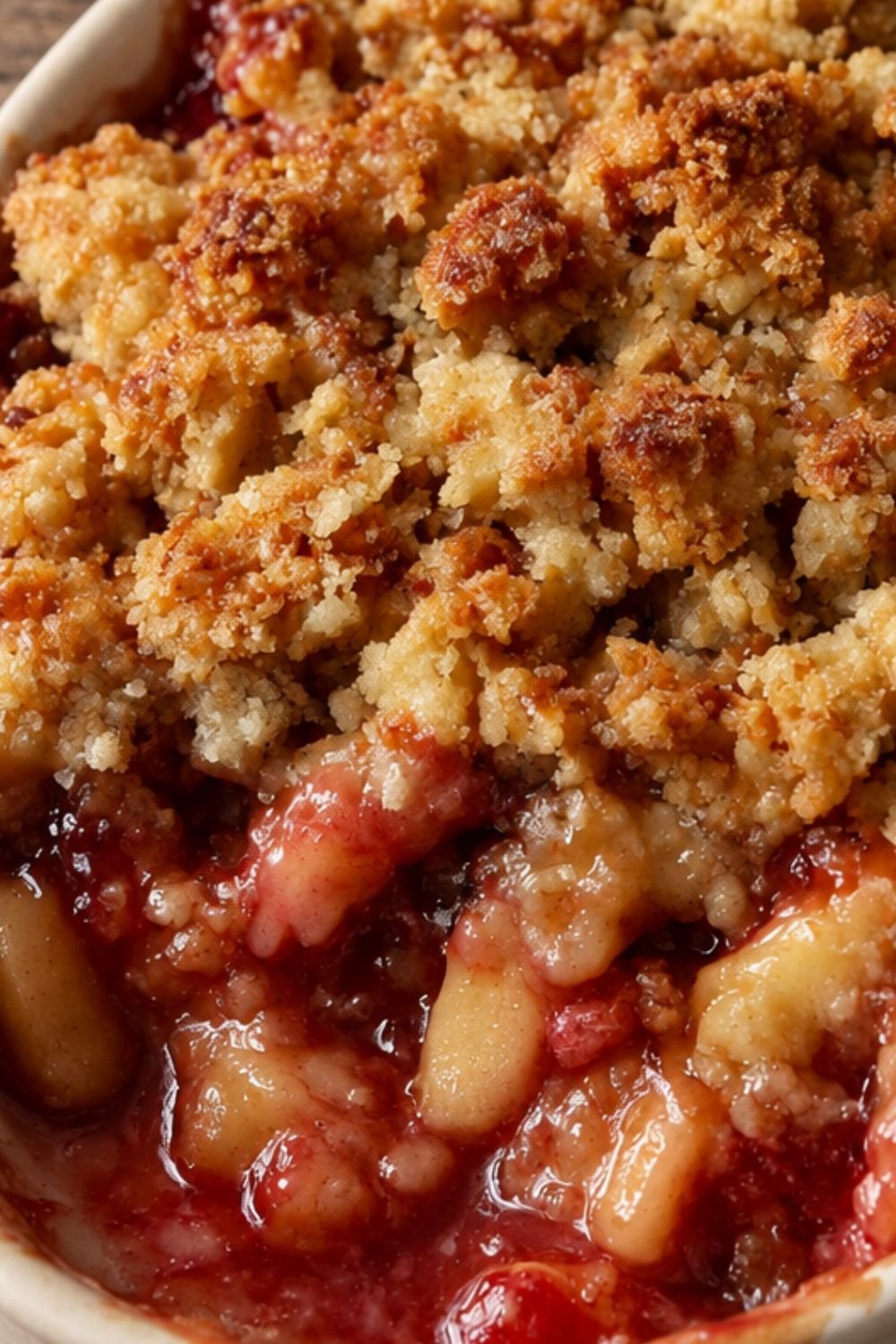
On top sits a classic rubbed-in crumble made with salted butter, light brown sugar and a splash of vanilla, which bakes into a crisp, golden layer with a faint caramel edge.
The method is refreshingly simple. There’s no pre-cooking of the fruit and no fiddly pastry, just a tossed filling, a hand-rubbed topping and 35 to 40 minutes in the oven.
The one step that really decides the result is how you handle the butter, and that’s where most of the attention in this recipe goes.
Here’s a quick look at what this version does well.
A few details set this crumble apart from a basic fruit-and-topping bake.
- Two fruits with different textures: rhubarb keeps its bite while the apples break down into a soft, fluffy layer around it.
- No pre-cooking. The raw fruit goes straight into the dish, so the filling takes minutes to prepare.
- Ground ginger adds quiet warmth that suits rhubarb particularly well.
- Salted butter and light brown sugar give the topping a lightly savoury, toffee-like finish rather than plain sweetness.
- It can be assembled a day ahead or frozen unbaked, then baked when you need it.
Why Apple And Rhubarb Belong In The Same Dish
Rhubarb is mostly water held in a fibrous structure. When it heats, it releases a lot of juice and turns very tart, but the pieces tend to keep a recognisable shape. That’s great for texture, but on its own it can leave the filling thin and sharp.
Cooking apples behave differently. A Bramley has a loose, airy flesh that collapses in the oven into a soft, almost whipped purée. That purée absorbs some of the rhubarb’s juice and gives the filling body, so you get tender chunks of rhubarb suspended in a thick, spoonable base rather than a pool of pink liquid.
If you can’t find Bramleys, a Granny Smith is the best stand-in. It won’t collapse as completely, so your filling will have more distinct apple pieces, but its tartness keeps the balance with the rhubarb and stops the whole thing tipping into over-sweetness.
The Ingredients Behind The Filling And The Crumb
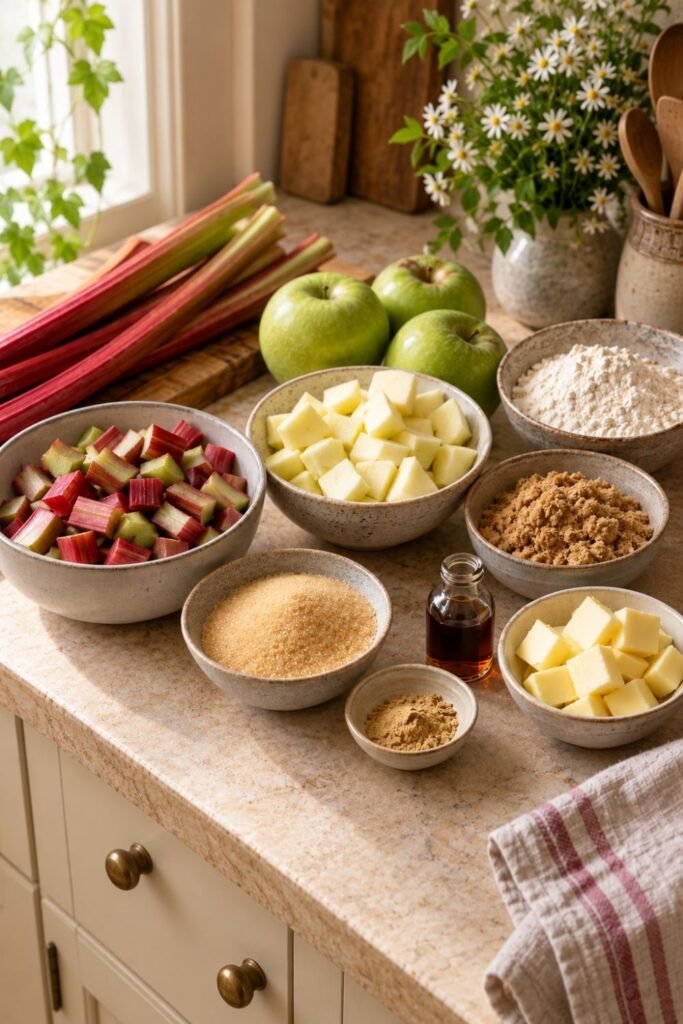
Only a handful of ingredients go into this pudding, and almost every one has a job beyond flavour.
These are the ones that shape how the crumble turns out.
- Rhubarb: Provides the sharp, fruity backbone. Cutting it into even 2.5cm pieces means every chunk softens at the same rate, so you don’t end up with some pieces mushy and others still firm.
- Bramley or Granny Smith apples: Bulk out the filling and thicken it. Bramleys fall into a fluffy purée, while Granny Smiths hold more shape and add a cleaner tartness.
- Golden caster sugar: Its fine grains dissolve quickly into the fruit juices, and its light molasses note rounds out the rhubarb’s acidity more softly than plain white sugar would.
- Ground ginger: A small amount adds warmth without heat, lifting the fruit and giving the filling a little depth.
- Cold salted butter: The fat that coats the flour and gives the topping its short, crumbly texture. Keeping it cold is what stops the mixture turning into a paste, and the salt sharpens the sweetness.
- Plain flour: Forms the bulk of the crumble. Once coated in butter, it bakes into crisp, sandy clusters rather than a bready layer.
- Light brown sugar: Brings a gentle caramel flavour, and its slight moisture helps the crumbs cling into small clumps as they bake.
- Vanilla extract: Added with the sugar, it gives the topping a warm, rounded aroma that bridges the buttery crumb and the tart fruit.
Rubbing In: The Step That Makes Or Breaks The Topping
The texture of the crumble depends almost entirely on how you combine the butter and flour. Rubbing in means lifting small amounts of the mixture and pressing the butter into the flour between your fingertips and thumbs, letting it fall back into the bowl as you go.
What you’re doing is coating the flour particles in fat. That fat coating limits how much the flour can bind together, which is why a well-made crumble bakes up short, crisp and crumbly instead of tough. The cold butter also leaves tiny flecks that melt in the oven and create a lighter, more open crumb.
Stop as soon as the mixture looks like coarse breadcrumbs. You should still see a range of sizes, from fine sand to small pea-sized pieces, and the mixture should feel dry and loose rather than damp. If it starts clumping into a dough when you squeeze it, you’ve gone far enough and then some.
How To Avoid A Heavy, Pasty Crumble
The most common disappointment with crumble is a topping that bakes into a dense, doughy lid instead of crisp clusters. It almost always starts at the rubbing-in stage, when the butter is too warm or the mixture is worked for too long.
Warm butter doesn’t coat the flour, it smears into it. Combined with overworking, that creates a soft paste that bakes into something closer to a biscuit layer, often pale and damp underneath where it meets the fruit.
The fix is simple. Take the butter straight from the fridge, cube it, and work quickly. When you add the topping to the dish, scatter it loosely over the fruit rather than pressing it down, so steam from the filling can escape through the gaps instead of soaking the crumb.
Reading The Oven: Golden Top, Bubbling Edges
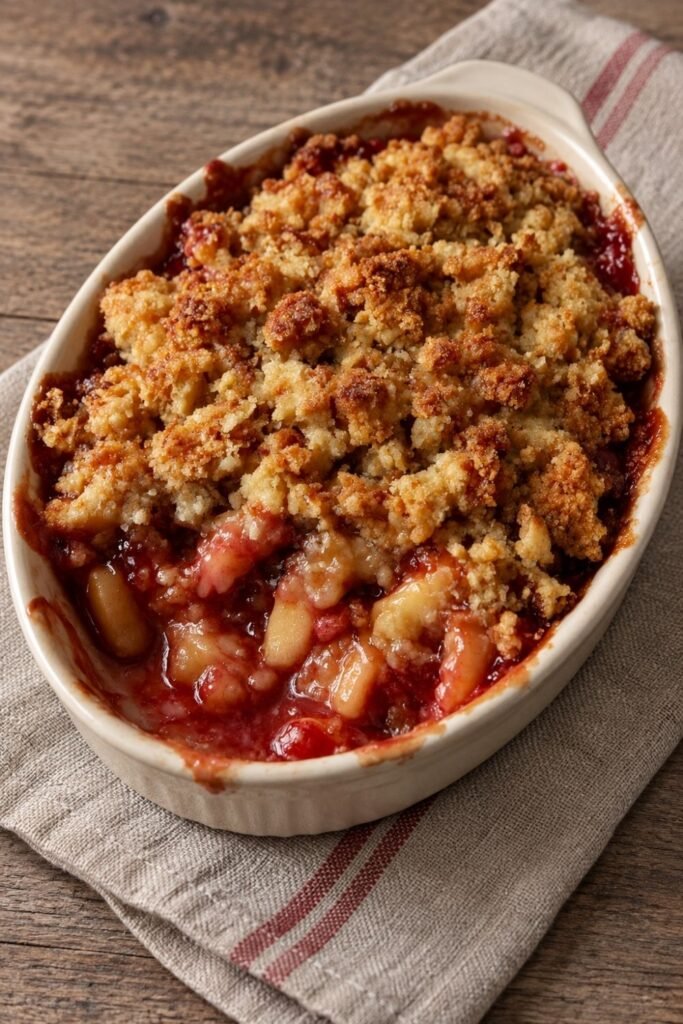
This crumble gives you two clear signals that it’s ready, and you want both. The first is colour: the topping should be an even golden brown, with no pale, floury patches left.
The second is the filling. Look at the edges of the dish, where you should see thick, jammy juices bubbling up around the sides of the crumble. That bubbling tells you the fruit is fully softened and the juices have heated through and thickened. A crumble that’s golden on top but quiet at the edges may still have firm fruit underneath.
Using a shallow dish helps both happen at the same time. A wider surface gives the topping more room to crisp and lets the filling heat evenly, so the fruit is soft by the time the crumble has browned.
After baking, give it a few minutes to stand. The filling is extremely hot straight from the oven, and a short rest lets the juices settle slightly so each spoonful holds together better.
Mary Berry Apple And Rhubarb Crumble Ingredients
The two components are listed separately below. Pay the most attention to the butter, which must be cold, and to the rhubarb, which should be cut into even pieces so it cooks at a steady rate. For readers in the US, caster sugar is sold as superfine sugar, and plain flour is all-purpose flour.
For the Fruit Filling
Everything here gets tossed together in one bowl.
- 450g (1lb) rhubarb, trimmed and cut into 2.5cm (1in) pieces (even pieces soften evenly)
- 350g (12oz) Bramley or Granny Smith apples, peeled, cored and chunked (Bramleys give the softest, fluffiest result)
- 120g (4½oz) golden caster sugar
- 1 tsp ground ginger
For the Crumble Topping
The flour and butter are rubbed together first, with the sugar and vanilla stirred in afterwards.
- 200g (7oz) plain flour
- 100g (3½oz) salted butter, cold and cubed (keep it in the fridge until the moment you need it)
- 70g (2½oz) light brown sugar
- 1 tsp vanilla extract
Serves: 6
Prep time: 15 minutes
Cook time: 40 minutes
How To Make It
The method moves from filling to topping to oven in a straight line, with the rubbing-in step deserving the most care.Follow these steps in order.
- Heat the oven. Set it to 200°C/180°C Fan/Gas 6 so it’s fully up to temperature by the time the crumble is assembled.
- Coat the fruit. Put the rhubarb, apples, golden caster sugar and ground ginger into a large bowl and toss everything together. Keep going until every piece of fruit has a light coating of sugar and spice, with no dry clumps of ginger left at the bottom.
- Fill the dish. Tip the coated fruit into a 1.5-litre (2½ pint) shallow ovenproof dish. Spread it into an even layer so the topping sits level and the fruit cooks at the same rate across the dish.
- Rub in the butter. In a separate large, clean bowl, combine the flour with the cold, cubed butter. Work the butter into the flour with your fingertips, lifting the mixture as you go, and stop once it looks like coarse breadcrumbs. It should feel loose and dry, not doughy.
- Stir in the flavourings. Add the light brown sugar and vanilla extract to the crumbs and stir them through with a spoon or fork, which keeps the butter cool and the texture light.
- Top the fruit. Scatter the crumble evenly across the fruit, reaching right to the edges. Leave it loose rather than pressing it down, so it bakes crisp.
- Bake until golden and bubbling. Bake for 35-40 minutes. It’s ready when the topping is an even golden brown and thick fruit juices are bubbling up around the edges of the dish.
- Rest and serve. Leave the crumble to stand for a few minutes so the bubbling filling settles, then serve it warm.
Mary Berry Apple And Rhubarb Crumble
Ingredients
Method
- Heat the oven. Set it to 200°C/180°C Fan/Gas 6 so it’s fully up to temperature by the time the crumble is assembled.
- Coat the fruit. Put the rhubarb, apples, golden caster sugar and ground ginger into a large bowl and toss everything together. Keep going until every piece of fruit has a light coating of sugar and spice, with no dry clumps of ginger left at the bottom.
- Fill the dish. Tip the coated fruit into a 1.5-litre (2½ pint) shallow ovenproof dish. Spread it into an even layer so the topping sits level and the fruit cooks at the same rate across the dish.
- Rub in the butter. In a separate large, clean bowl, combine the flour with the cold, cubed butter. Work the butter into the flour with your fingertips, lifting the mixture as you go, and stop once it looks like coarse breadcrumbs. It should feel loose and dry, not doughy.
- Stir in the flavourings. Add the light brown sugar and vanilla extract to the crumbs and stir them through with a spoon or fork, which keeps the butter cool and the texture light.
- Top the fruit. Scatter the crumble evenly across the fruit, reaching right to the edges. Leave it loose rather than pressing it down, so it bakes crisp.
- Bake until golden and bubbling. Bake for 35-40 minutes. It’s ready when the topping is an even golden brown and thick fruit juices are bubbling up around the edges of the dish.
- Rest and serve. Leave the crumble to stand for a few minutes so the bubbling filling settles, then serve it warm.
Notes
How To Avoid A Heavy, Pasty Crumble
The most common disappointment with crumble is a topping that bakes into a dense, doughy lid instead of crisp clusters. It almost always starts at the rubbing-in stage, when the butter is too warm or the mixture is worked for too long. Warm butter doesn’t coat the flour, it smears into it. Combined with overworking, that creates a soft paste that bakes into something closer to a biscuit layer, often pale and damp underneath where it meets the fruit. The fix is simple. Take the butter straight from the fridge, cube it, and work quickly. When you add the topping to the dish, scatter it loosely over the fruit rather than pressing it down, so steam from the filling can escape through the gaps instead of soaking the crumb.Making It Ahead And Baking From Frozen
This is a helpful pudding to prepare in advance. You can assemble the whole crumble and keep it in the fridge for up to a day before baking, then put it straight into the preheated oven when you’re ready.
It also freezes well before baking. Assemble it in a freezer-safe, ovenproof dish, freeze it unbaked, and bake it from frozen when needed, adding 10-15 minutes to the baking time. Use the same visual checks as usual: a golden top and juices bubbling at the edges tell you the centre has heated through.
Frequently Asked Questions
These are the questions that tend to come up when making this crumble.
Can I use frozen rhubarb?
Yes. There’s no need to thaw it first. Add it straight to the bowl with the apples, sugar and ginger. Because it goes into the oven colder, you may need an extra 5-10 minutes of baking, so rely on the bubbling edges rather than the timer alone.
Why use cooking apples instead of eating apples?
Cooking apples such as Bramleys break down into a soft, fluffy purée that thickens the filling and sits nicely against the firmer rhubarb. If you can’t find them, a tart eating apple like Granny Smith is a good alternative. It keeps more of its shape, so the filling will be chunkier.
Why does my crumble topping turn out dense instead of crumbly?
Usually the butter was too warm or the mixture was worked too much. Both cause the butter to smear into the flour and form a paste. Use butter straight from the fridge, rub it in with your fingertips only, and stop as soon as the mixture resembles coarse breadcrumbs.
Why is the filling watery?
Rhubarb releases a lot of juice as it cooks. The apples help absorb and thicken it, which is why the full quantity of apple matters. Make sure the crumble bakes until the juices are visibly bubbling at the edges, and give it a few minutes to stand before serving so the filling can settle.
A Pudding Built On Contrast
The appeal of this crumble comes down to balance: tart rhubarb against soft, sweet apple, a hint of ginger beneath, and a crisp, buttery topping with just enough brown sugar to taste of caramel. Keep the butter cold, scatter the crumbs loosely, and wait for those bubbling edges, and you’ll have a warm, golden pudding ready to spoon straight from the dish.