

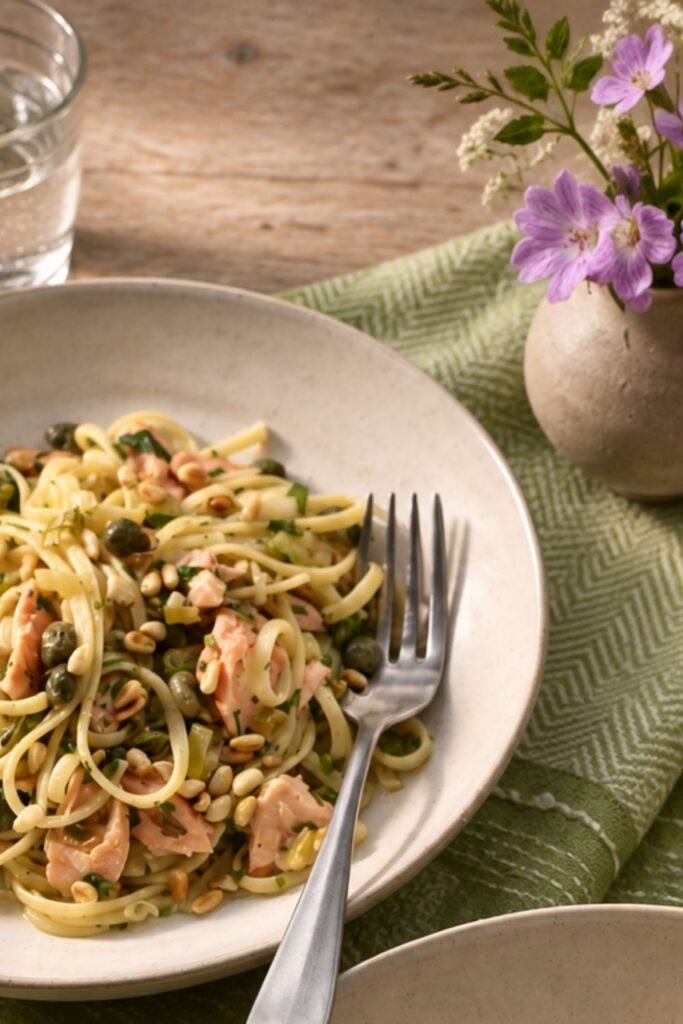
Most of the flavour in this pasta comes from one ingredient you don’t cook at all. Hot-smoked salmon arrives already cooked, flaky and deeply savoury, so it only needs to be warmed through in the pan with the linguine. This Mary Berry salmon linguine builds a sharp, glossy sauce around it from lemon juice, olive oil, capers and a splash of starchy pasta water. Nothing simmers or reduces.
The result is bright rather than creamy. Lemon and capers cut through the richness of the smoked fish, a small bunch each of chives and parsley keeps it fresh, and toasted pine nuts scattered over the top add a buttery crunch against the soft strands of pasta.
The method is also unusually quick. Once the pasta is drained, the pan work happens in three bursts of roughly 30 seconds each, followed by a gentle toss. Everything depends on having your ingredients ready before the heat goes on, and on using that reserved pasta water to turn oil and lemon into something that actually clings to the linguine.
- Hot-smoked salmon brings a savoury, smoky depth without any raw fish to cook through.
- The sauce is built in a single frying pan in about a minute and a half of active cooking.
- Lemon juice and capers give sharp, salty contrast, so the dish tastes lively rather than heavy.
- Reserved pasta water binds the oil and lemon into a light coating instead of a greasy puddle.
- Toasted pine nuts go on at the very end, so they stay crisp against the soft linguine.
What Gives Mary Berry’S Salmon Linguine Its Bright Flavour
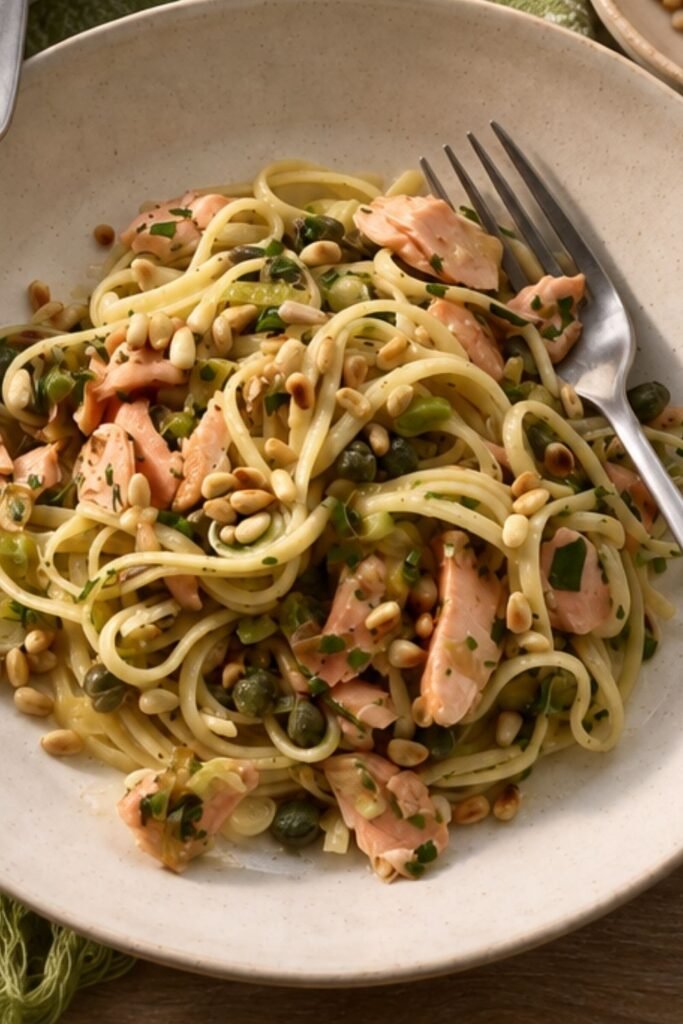
Every ingredient here earns its place, but a handful do most of the work. The balance between smoke, acid, salt and fat is what keeps the dish from tasting flat or oily.
These are the ingredients that shape the final plate, and what each one contributes.
- Hot-smoked salmon: Already cooked during smoking, so it flakes into firm, meaty pieces that hold together when tossed. Its smokiness seasons the whole dish.
- Capers: A generous amount by weight, supplying bursts of briny salt and acidity. They also mean the dish needs less added salt than you might expect.
- Lemon juice: The main source of brightness. Warming it briefly with the oil softens its raw edge while keeping it sharp enough to cut through the fish.
- Olive oil: Forms the body of the sauce. On its own it would slick the pasta, but combined with lemon and pasta water it becomes a loose, glossy coating.
- Reserved pasta water: Carries dissolved starch that helps the oil and lemon juice stay blended and cling to each strand.
- Pine nuts: Toasting brings out their natural oils and a nutty, almost buttery flavour, plus a crunch the rest of the dish lacks.
- Chives and parsley: Added at the end so they wilt only slightly. Chives echo the spring onions with a mild oniony note, while parsley adds a clean, grassy finish.
The butter and spring onions are small players by volume, but they matter. The butter gives the spring onions a softer, rounder base to fry in, and a few seconds of frying takes the harsh bite off the onions without losing their colour.
Hot-Smoked Salmon Is Not The Same As Smoked Salmon
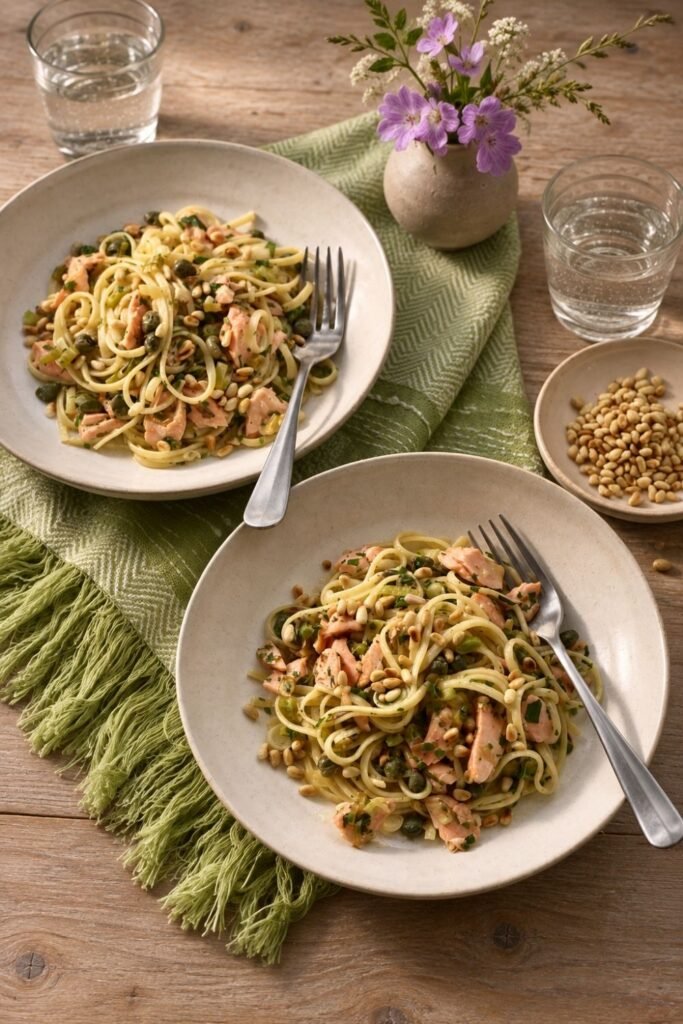
This is the detail most likely to trip up a shopper. Hot-smoked salmon is smoked at a temperature high enough to cook the fish, so it looks opaque and pale pink, and it breaks into chunky flakes. It’s usually sold as fillets or pre-flaked in packs, often near the smoked salmon slices.
Cold-smoked salmon, the silky, translucent slices you’d put on a bagel, is a different product. It’s cured and smoked at a low temperature rather than cooked. It behaves very differently in a hot pan, turning pale and slightly firm at the edges rather than flaking.
For readers in the United States, hot-smoked salmon is sometimes labelled kippered salmon, while the cold-smoked style is often sold as lox or nova. Check the texture described on the pack: you want fish that is firm and flaky rather than sliced paper thin.
Because the salmon is already cooked, your only job in the pan is to warm it. Toss gently so the flakes stay in recognisable pieces. Stirring hard breaks it down into fine shreds that disappear into the pasta.
The Fast Pan Sauce That Holds Everything Together
The decisive part of this recipe is the sequence in the frying pan. It moves quickly, and each stage is only around 30 seconds, so there’s no time to juice lemons or chop herbs once the pan is hot.
Before you start the pasta, have everything prepared and within reach. Slice the spring onions, juice the lemons, drain the capers, chop the chives and parsley, and break the salmon into flakes if you bought whole fillets.
The pine nuts go into the pan first, on their own, over a high heat. They toast fast. Within about 30 seconds they should be golden brown and smell noticeably nutty. Take them out straight away, because they’ll keep darkening from the heat of the pan if you leave them in.
Next come the butter and spring onions. You’re looking for the butter to foam and the onions to soften slightly and turn glossy, not to brown. Then the oil, lemon juice and capers go in for a further 30 seconds. The mixture will sizzle and spit briefly as the lemon juice hits the hot fat. This short heating blends the flavours and warms the liquid so it’s ready to meet the pasta.
How To Keep The Linguine Glossy Instead Of Dry Or Oily
The most common disappointment with an oil-based pasta sauce is a split result: oil pooling at the bottom of the bowl while the pasta itself tastes dry. It starts at the draining stage, if the pasta water goes down the sink before any is saved.
The 75ml/2½fl oz of reserved pasta water is the fix. Pasta releases starch into its cooking water, and that starch helps hold oil and liquid together in a loose emulsion. When you toss the pasta, water and oil together over the heat, the sauce thickens slightly and coats each strand with a light sheen.
Tossing matters as much as the water. Use tongs or two forks to lift and turn the linguine over the heat, which moves the liquid around every strand and helps it come together. You’ll see the sauce go from thin and separate to cloudy and clinging. Do this gently so the salmon stays in pieces.
Serve the moment it’s done. As the pasta sits, it keeps absorbing liquid, and the sauce tightens and dulls. That’s why the method calls for serving at once.
A final word on seasoning: with a generous quantity of capers, salted pasta water and smoked fish all in the pan, the dish can easily become too salty. Taste a strand before adding any salt, and lean on black pepper first.
Ingredients
The shopping list is short, but three items deserve extra care. Buy hot-smoked salmon rather than cold-smoked slices, drain the capers well so their brine doesn’t water down the sauce, and juice the lemons in advance since the pan stage moves too quickly to stop.
The ingredients are grouped below by the stage of the method where you’ll use them. This recipe serves 4.
- 225g/8oz linguine
- 75g/3¾oz pine nuts, toasted in the dry pan before anything else goes in
- Small knob of butter
- 6 spring onions, trimmed and finely sliced, known as scallions in the US
- 6 tbsp olive oil
- 2 lemons, juice only, squeezed before you start cooking
- 115g/4oz capers from a jar, drained
- Small bunch fresh chives, chopped
- Small bunch fresh parsley, leaves chopped
- 200g/7oz hot-smoked salmon flakes or fillets, broken into bite-sized flakes if using whole fillets
- Salt and freshly ground black pepper, salt is also used for the pasta cooking water
Instructions
Read through these steps before you turn on the hob. Once the pasta is drained, the rest moves in quick succession.
- Boil the linguine. Bring a large pan of salted water to the boil and cook the linguine for the time given on the packet, until tender but still with a slight bite.
- Save some cooking water, then drain. Before draining, ladle out 75ml/2½fl oz of the starchy pasta water and set it aside. Then drain the linguine.
- Toast the pine nuts. Set a frying pan over a high heat and add the pine nuts. Cook for 30 seconds, until they turn golden brown and smell toasty, then lift them out and keep them to one side so they don’t scorch.
- Fry the spring onions. Drop the butter into the same pan along with the spring onions and fry for 30 seconds, just long enough for the butter to foam and the onions to soften and turn glossy.
- Warm the sauce base. Pour in the olive oil, lemon juice and capers and let everything heat for another 30 seconds. Expect a brief sizzle as the lemon juice meets the hot fat.
- Bring pasta and salmon together. Tip in the cooked linguine, the reserved pasta water, the chives and parsley, and the salmon. Taste before seasoning, since the capers are already salty, then add salt and black pepper and toss gently over the heat until the sauce turns glossy and clings to the pasta. Keep the movement light so the salmon stays in flakes.
- Serve straight away. Divide between plates, scatter the toasted pine nuts over the top and eat immediately, while the sauce is still loose and shiny.
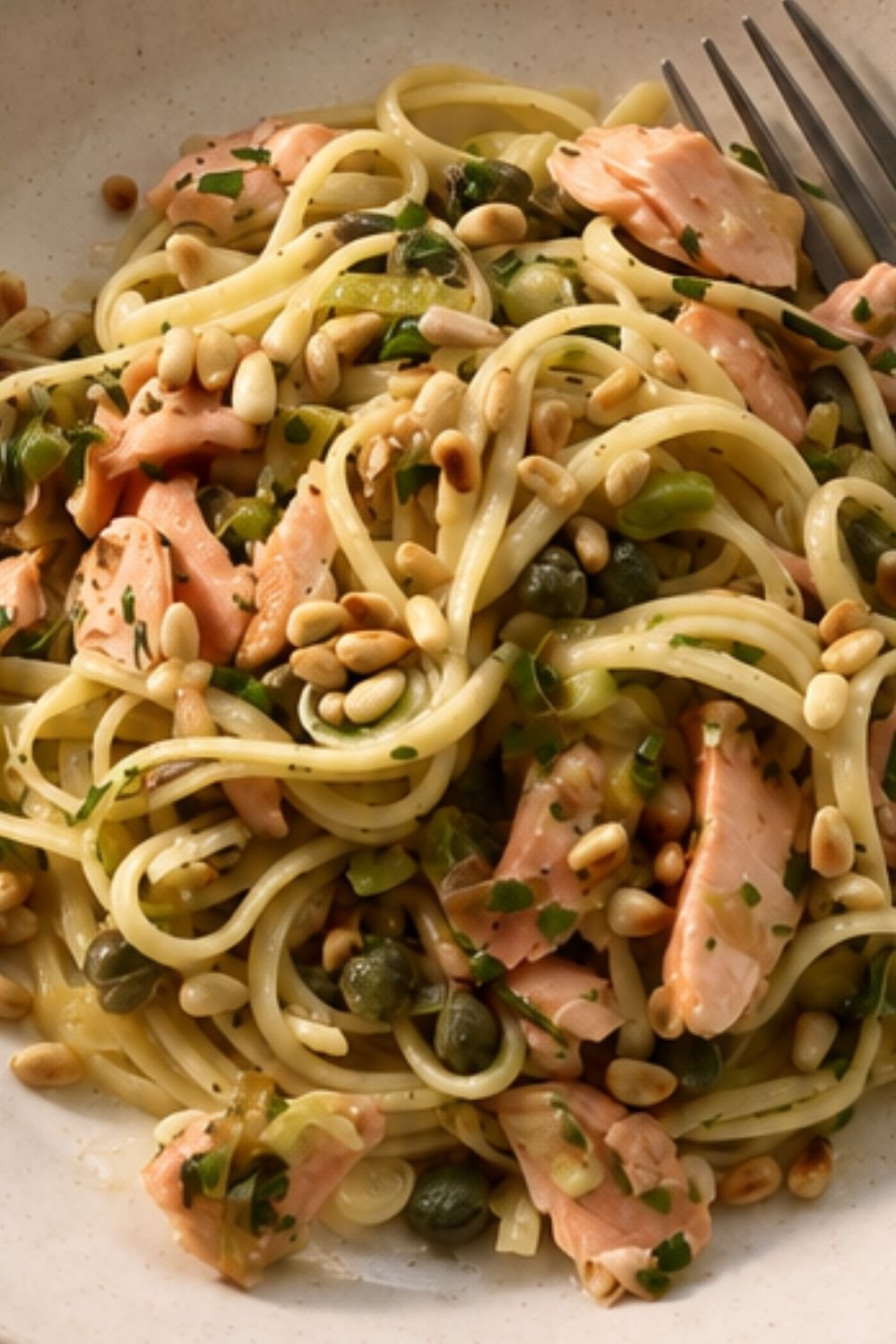
Mary Berry Salmon Linguine
Ingredients
Method
- Boil the linguine. Bring a large pan of salted water to the boil and cook the linguine for the time given on the packet, until tender but still with a slight bite.
- Save some cooking water, then drain. Before draining, ladle out 75ml/2½fl oz of the starchy pasta water and set it aside. Then drain the linguine.
- Toast the pine nuts. Set a frying pan over a high heat and add the pine nuts. Cook for 30 seconds, until they turn golden brown and smell toasty, then lift them out and keep them to one side so they don’t scorch.
- Fry the spring onions. Drop the butter into the same pan along with the spring onions and fry for 30 seconds, just long enough for the butter to foam and the onions to soften and turn glossy.
- Warm the sauce base. Pour in the olive oil, lemon juice and capers and let everything heat for another 30 seconds. Expect a brief sizzle as the lemon juice meets the hot fat.
- Bring pasta and salmon together. Tip in the cooked linguine, the reserved pasta water, the chives and parsley, and the salmon. Taste before seasoning, since the capers are already salty, then add salt and black pepper and toss gently over the heat until the sauce turns glossy and clings to the pasta. Keep the movement light so the salmon stays in flakes.
- Serve straight away. Divide between plates, scatter the toasted pine nuts over the top and eat immediately, while the sauce is still loose and shiny.
Notes
Recipe Notes
Prep and cook time. The supplied timings are 30 minutes prep and 30 minutes cook. In practice, most of the preparation is chopping and juicing, and much of it can be done while the pasta water comes to the boil.
Why the pan must be ready. Each stage of the sauce takes around 30 seconds over a high heat. Having every ingredient measured and prepared before the pine nuts go in is the difference between a calm finish and burnt nuts.
Toasting in a dry pan. The pine nuts go into the empty frying pan first, before the butter. Their own oil is enough to toast them, and keeping them separate means they stay crisp until serving.
Choosing capers. The recipe calls for capers from a jar, which are packed in brine. Drain them thoroughly so excess liquid doesn’t thin the sauce.
Leftovers. This dish is designed to be eaten as soon as it’s made, as the pasta soaks up the sauce and the pine nuts soften on standing. If you do have leftovers, cool them promptly, keep them covered in the fridge and follow general food safety guidance for cooked fish and pasta.
A possible swap. Other long pasta shapes such as spaghetti or tagliatelle could work in place of linguine, though this hasn’t been tested with this recipe. Follow the packet cooking time for whichever pasta you use.
Questions Cooks Ask About This Salmon Linguine
Do I need to cook the hot-smoked salmon?
No. Hot-smoked salmon is cooked during the smoking process, so it only needs warming through when you toss it with the pasta. Adding it at the end with the herbs keeps it moist and in distinct flakes.
Can I use regular smoked salmon slices instead?
The recipe is written for hot-smoked salmon, and cold-smoked slices will give a different result. They’re softer and silkier, and in a hot pan they firm up and lose their delicate texture rather than flaking. If you try it, treat it as a variation and expect a different dish.
Why keep the pasta water?
The starch released by the linguine as it cooks helps the olive oil and lemon juice bind together. Without it, the oil tends to separate and the pasta can taste dry. The saved water also loosens the sauce enough to coat every strand.
My pine nuts burned. What went wrong?
Pine nuts are high in oil and brown very quickly over a high heat. They’re ready in around 30 seconds, and they’ll carry on darkening if left in the hot pan. Lift them out as soon as they turn golden and move straight on to the butter and spring onions.
Is this dish very salty?
It can be if you season on autopilot. The capers, the salted cooking water and the smoked salmon all bring salt, so taste the finished pasta before adding more and use black pepper generously instead.
Smoky flakes of salmon, sharp lemon, briny capers and a scatter of golden pine nuts make this linguine feel far more considered than its few minutes at the stove suggest. Get everything ready before the pan heats, save that pasta water, and you’ll have a glossy, bright plate of pasta on the table almost as soon as the linguine is cooked.