

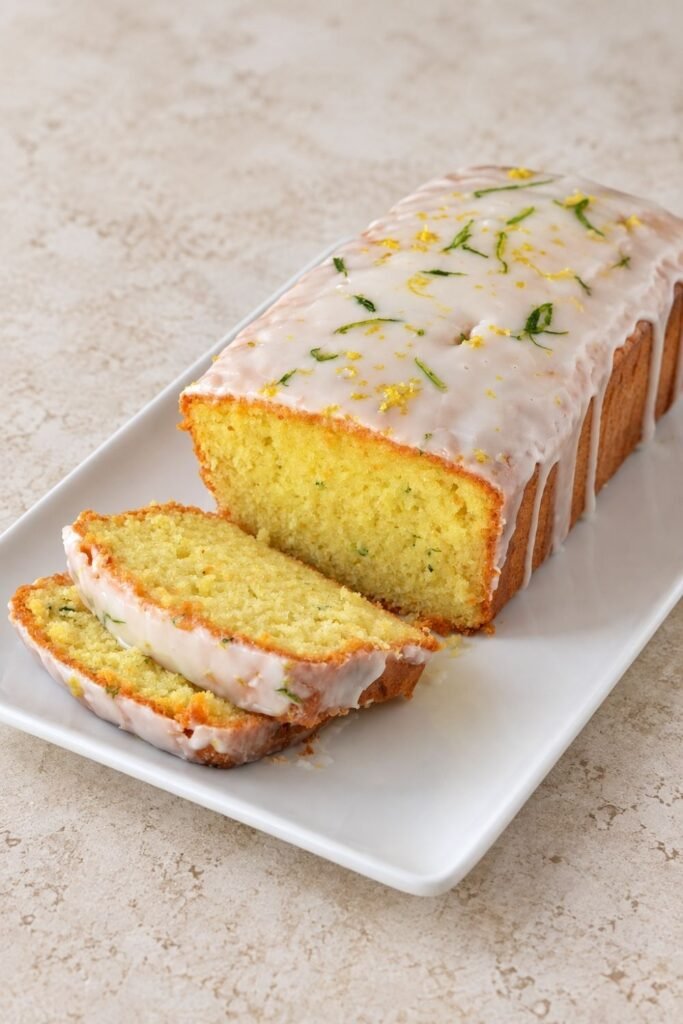
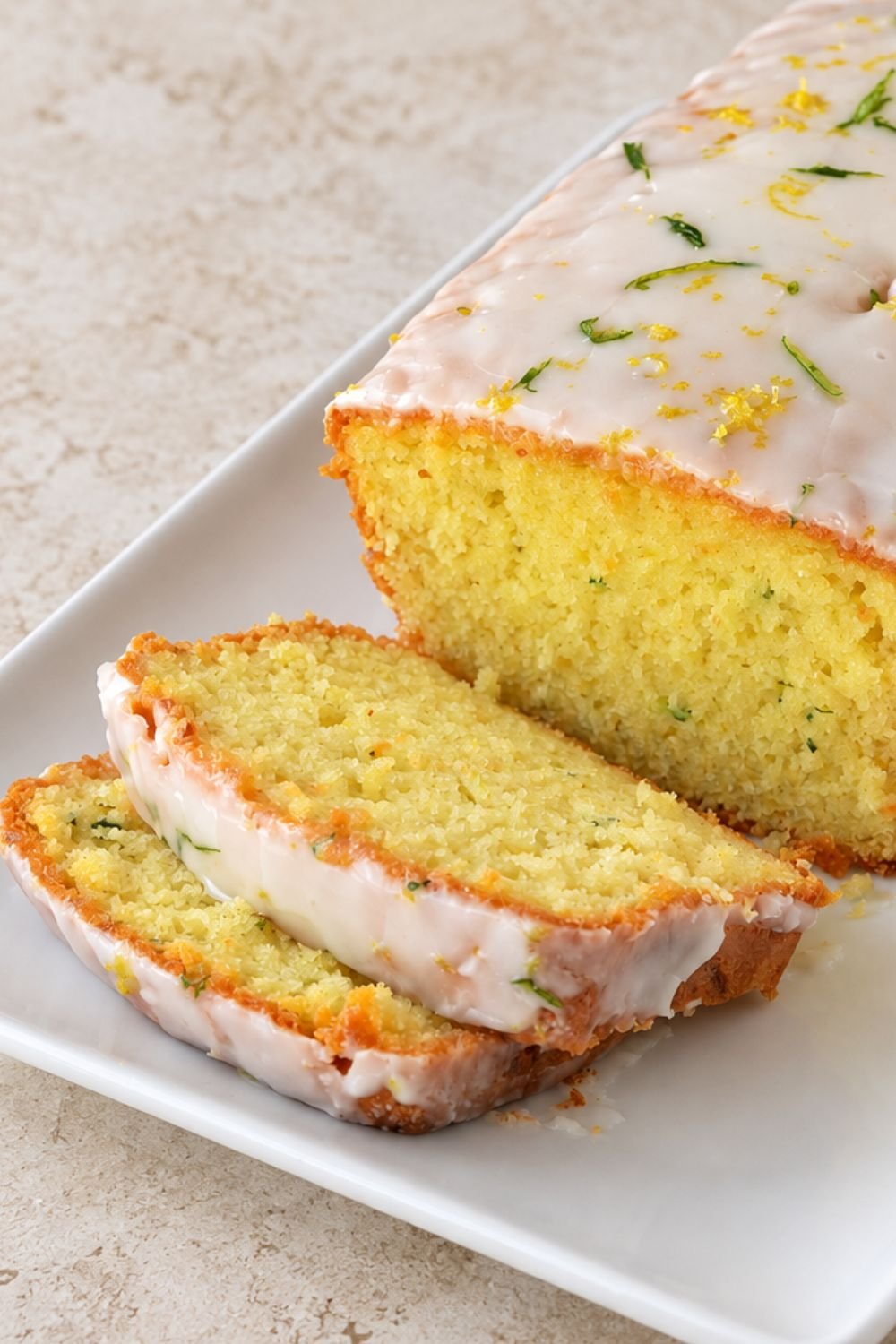
A whole large courgette goes into this loaf, and you won’t taste it. What you will notice is the crumb. It stays soft, tender and slightly springy long after the cake has cooled. This courgette cake in the Mary Berry style uses the grated vegetable the way carrot cake uses carrot: as a steady source of moisture that bakes quietly into the sponge rather than announcing itself.
The flavour belongs to the lemons. There’s zest from two in the batter, plus juice, and then a sharp drizzle poured over the loaf straight from the oven. Because the drizzle uses granulated sugar rather than icing sugar, it doesn’t fully dissolve. It soaks into the top of the cake and leaves a thin, crackly crust.
The method is refreshingly low effort. There’s no butter to soften and no creaming stage. You beat oil, sugar and eggs by hand, stir in the courgette and lemon, fold in the flour, and let the oven do the rest. The only real skill involved is knowing when to stop mixing and when the loaf is truly baked through.
- Oil and grated courgette together give a moist, close crumb that stays soft even when the cake is completely cold.
- The whole thing comes together in one bowl with a wooden spoon or whisk, so there’s no mixer to wash.
- Lemon appears three times, in the batter, the drizzle and a final scatter of zest, so the citrus flavour is layered rather than flat.
- Granulated sugar in the drizzle gives a crunchy, sugary top instead of a sticky glaze.
- It uses up a large courgette, which is handy when the garden or veg box is producing more than you can eat.
The Ingredients Behind The Moist Crumb
Nothing in this list is unusual, but a few ingredients are doing more work than they appear to. The balance between oil, courgette and raising agents is what keeps the loaf light rather than heavy and damp.
These are the ingredients that most affect how the finished cake turns out.
- Courgette: It’s mostly water, and that water turns to steam in the oven and then settles back into the crumb as moisture. The mild flavour means it adds softness without any vegetable taste.
- Vegetable oil: Oil stays liquid at room temperature, unlike butter, so an oil-based sponge feels moist and tender even straight from the tin. It also carries the lemon flavour without competing with it.
- Bicarbonate of soda: Self-raising flour already contains a raising agent, but the courgette makes this a heavy, wet batter. The bicarb reacts with the acidic lemon juice to give extra lift, which helps the loaf rise and keeps the crumb from turning dense.
- Lemon zest: Most of the lemon flavour lives in the oils in the zest, not the juice. Zesting two lemons for the batter is what makes the sponge taste of lemon on its own, before the drizzle goes on.
- Caster sugar: Its fine grains dissolve quickly when you beat it with the oil and eggs. That’s why a quick hand whisk is enough to get a smooth, glossy base.
- Granulated sugar (drizzle): The larger crystals only partly dissolve in the lemon juice. The undissolved sugar sets on the surface as the cake cools, which is where the crunch comes from.
Grating The Courgette The Right Way
The recipe calls for the courgette to be coarsely grated, and that detail matters more than it looks. Coarse strands hold their shape through mixing and spread evenly through the batter as fine green flecks. A fine grater breaks the courgette down into a watery pulp, which releases its liquid all at once and can leave damp, heavy patches in the crumb.
Use the large holes on a box grater and grate straight into a bowl. You’ll see a little liquid pool at the bottom as it sits. That’s normal. The recipe is balanced to include the courgette as it comes, so add it along with its juices rather than squeezing it dry.
Aim for a large courgette of about 200g. If yours is enormous, weigh the grated amount rather than using the whole thing, since extra courgette means extra water, and the flour quantity won’t stretch to cover it.
Why A Gentle Fold Matters Here
The stage that most decides the texture of this loaf is the moment the flour goes in. Up to that point, you can beat as much as you like. Once the self-raising flour and bicarb are added, the job changes from mixing to folding.
Stirring flour into a wet batter develops gluten, and the more you work it, the tougher and more rubbery the crumb becomes. In a cake this moist, overmixing also tends to create long tunnels and a chewy, dense texture. Fold with a large spoon or spatula, cutting down through the middle and turning the batter over from the bottom of the bowl. Stop as soon as you can’t see any dry streaks of flour. The batter will be quite loose and speckled with courgette, and a few lumps are fine.
How To Avoid A Damp, Sunken Middle
The most common problem with courgette loaves is a centre that looks done on top but is still gummy inside, often with a dip that appears as the cake cools. All that courgette moisture means the middle of the loaf takes longer to set than the edges.
The bake time is 55 to 60 minutes, so the loaf is in the oven long enough for the top to turn golden well before the inside finishes. Don’t trust colour alone. Push a skewer into the thickest part of the centre, right down to the base. It should come out clean. If you see wet batter clinging to it, the cake needs longer.
Set a timer too. It’s easy to lose track of a long bake, and overshooting by a significant margin dries out the sponge that you’ve worked to keep moist.
The Lemon Drizzle And Its Timing
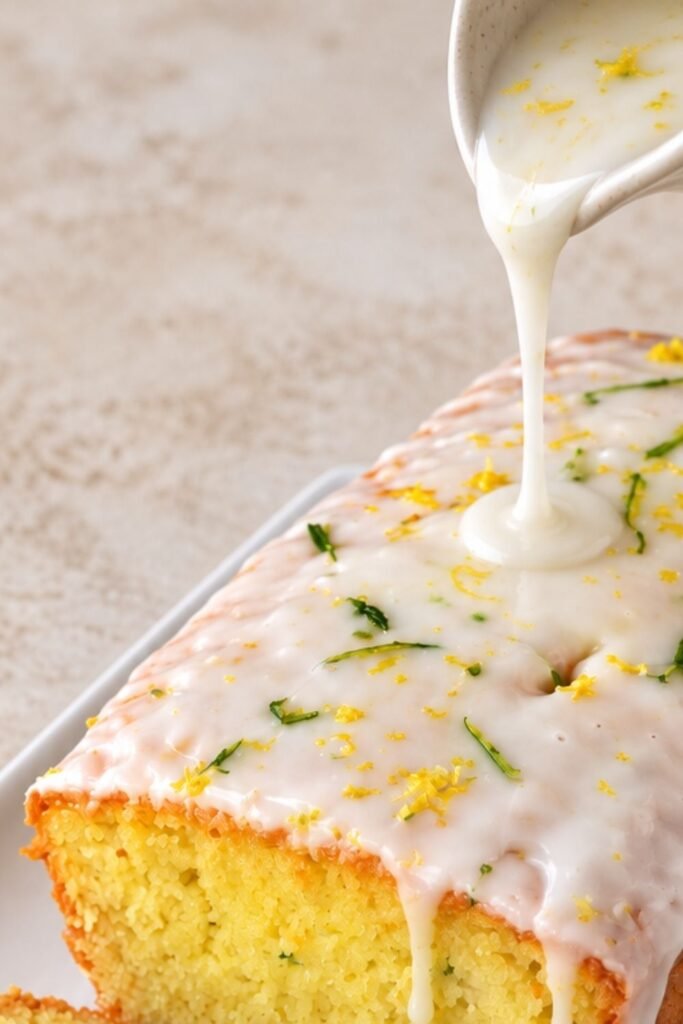
The drizzle is only lemon zest, lemon juice and granulated sugar, but when you add it makes all the difference. It has to go onto the cake while the loaf is still hot.
A hot sponge is open and porous, so the lemony syrup gets drawn down through the holes you poke with a skewer and seeps into the top layer of cake. The heat also helps the surface dry out, which lets the partly dissolved sugar set into a crisp crust. Pour the same drizzle over a cold cake and it sits on top as a wet, grainy layer.
Poke plenty of holes all over the surface, including near the edges. Then spoon or pour the drizzle over slowly, giving it a moment to soak in before you add more. If you rush it, the syrup runs straight off the sides and pools in the tin.
Leaving the cake to cool completely in the tin helps as well. The crust sets undisturbed, and the soft, moist loaf firms up enough to lift out without cracking.
Courgette Cake Mary Berry Style: Ingredients
Two things deserve a moment before you start weighing: how big your courgette is, and how you split up the lemons. Zest two lemons for the batter and keep a third for the drizzle. Hold back a pinch of the drizzle zest if you want some for the finishing scatter at the end. Accurate weighing helps too. A digital scale is the easiest way to get the flour, sugar and courgette right, particularly if you’re used to cup measures.
Makes 8 servings. Prep time 15 minutes, cook time 1 hour.
Everything for the sponge goes into one bowl, in the order given in the method below.
- Vegetable oil: 150 ml (sunflower oil or any other neutral oil works just as well)
- Caster sugar: 200 g (sold as superfine sugar in the US)
- Medium eggs: 3
- Lemons: finely grated zest of 2, plus the juice of 1
- Courgette: 1 large (about 200g), coarsely grated (called zucchini in the US)
- Self-raising flour: 250 g
- Bicarbonate of soda: 1/2 tsp (baking soda in the US)
The drizzle is mixed separately in a small bowl while the cake is baking or just out of the oven.
- Lemon: zest and juice of 1 (save a little zest for the finishing sprinkle)
- Granulated sugar: 75 g (don’t swap in icing sugar, or you’ll lose the crunch)
Method: From Bowl To Crackly Top
The work is front-loaded. Once the loaf is in the oven, all that’s left is the drizzle and some patience while the cake cools.
Follow these steps in order.
- Heat the oven and prepare the tin. Set the oven to 180°C (160°C fan). Grease a 900g loaf tin and line it with parchment paper. Leaving the paper slightly overhanging on the long sides makes it easier to lift the cooled loaf out later.
- Beat the wet base. Put the oil, caster sugar and eggs in a large mixing bowl. Beat them with a wooden spoon or balloon whisk until the mixture is smooth and glossy, with no separate streaks of oil.
- Add the courgette and lemon. Stir in the grated courgette along with the lemon zest and juice until the green strands are evenly spread through the mixture.
- Fold in the flour. Sift the self-raising flour and bicarbonate of soda over the bowl. Fold everything together gently, stopping as soon as there are no dry patches of flour. Stirring past this point toughens the crumb.
- Fill the tin and bake. Scrape the batter into the prepared tin and smooth the surface level. Bake for 55 to 60 minutes, until the loaf has risen and turned golden and a skewer pushed into the centre comes out clean. Set a timer so you don’t overbake it.
- Poke the hot cake. As soon as the loaf comes out of the oven, and while it’s still hot, prick holes all over the top with a skewer so the drizzle has a way in.
- Mix and pour the drizzle. In a small bowl, stir together the lemon zest, lemon juice and granulated sugar. Pour it slowly over the hot cake, letting each addition soak in before adding more. It will leave a crisp, lemony layer on top as it sets.
- Cool, then finish. Leave the cake in its tin until it has cooled completely. Just before serving, scatter the remaining zest over the top.
Mary Berry Style Courgette Cake
Ingredients
Method
- Heat the oven and prepare the tin. Set the oven to 180°C (160°C fan). Grease a 900g loaf tin and line it with parchment paper. Leaving the paper slightly overhanging on the long sides makes it easier to lift the cooled loaf out later.
- Beat the wet base. Put the oil, caster sugar and eggs in a large mixing bowl. Beat them with a wooden spoon or balloon whisk until the mixture is smooth and glossy, with no separate streaks of oil.
- Add the courgette and lemon. Stir in the grated courgette along with the lemon zest and juice until the green strands are evenly spread through the mixture.
- Fold in the flour. Sift the self-raising flour and bicarbonate of soda over the bowl. Fold everything together gently, stopping as soon as there are no dry patches of flour. Stirring past this point toughens the crumb.
- Fill the tin and bake. Scrape the batter into the prepared tin and smooth the surface level. Bake for 55 to 60 minutes, until the loaf has risen and turned golden and a skewer pushed into the centre comes out clean. Set a timer so you don’t overbake it.
- Poke the hot cake. As soon as the loaf comes out of the oven, and while it’s still hot, prick holes all over the top with a skewer so the drizzle has a way in.
- Mix and pour the drizzle. In a small bowl, stir together the lemon zest, lemon juice and granulated sugar. Pour it slowly over the hot cake, letting each addition soak in before adding more. It will leave a crisp, lemony layer on top as it sets.
- Cool, then finish. Leave the cake in its tin until it has cooled completely. Just before serving, scatter the remaining zest over the top.
Notes
What To Serve Alongside
A slice on its own is lovely, but a few simple additions work especially well with the sharp lemon and soft crumb.- Whipped cream or crème fraîche: Something cool and silky contrasts nicely with the tangy sponge, and crème fraîche adds a gentle sourness of its own.
- Fresh raspberries or blueberries: Berries sit happily next to lemon and bring a juicy freshness to the plate.
- A hot cup of Earl Grey: The bergamot in the tea is itself a citrus, so it echoes the lemon in the cake.
What To Serve Alongside
A slice on its own is lovely, but a few simple additions work especially well with the sharp lemon and soft crumb.
- Whipped cream or crème fraîche: Something cool and silky contrasts nicely with the tangy sponge, and crème fraîche adds a gentle sourness of its own.
- Fresh raspberries or blueberries: Berries sit happily next to lemon and bring a juicy freshness to the plate.
- A hot cup of Earl Grey: The bergamot in the tea is itself a citrus, so it echoes the lemon in the cake.
Frequently Asked Questions
Will the cake taste of courgette?
No. Courgette has a very mild flavour, and once it’s baked into a lemon sponge it disappears completely. You might see small green flecks in the crumb, but the flavour comes from the lemon and sugar.
Why use bicarbonate of soda when the flour is already self-raising?
The courgette makes this a heavier, wetter batter than a plain sponge, so it benefits from extra lift. Bicarbonate of soda reacts with the acid in the lemon juice and produces more gas, which gives a fluffier crumb. Keep to the half teaspoon, though, because too much bicarb leaves a soapy aftertaste.
Can I use a different oil?
Yes. Sunflower oil works in place of vegetable oil, as does any neutral-tasting oil. Avoid strongly flavoured oils, which would compete with the lemon.
Can I pour the drizzle over once the cake has cooled?
It’s best not to. The drizzle relies on the heat of the freshly baked cake to soak in and set into a crisp top. On a cold loaf it stays wet and sugary on the surface instead of forming a crust.
Conclusion
A good slice of this cake has two textures: a soft, moist crumb kept tender by oil and courgette, and a thin, crunchy lemon crust on top. Fold the flour gently, trust the skewer rather than the colour, and get the drizzle on while the loaf is still hot. Do those three things and it comes out right.