
 Lucy M.
 Persian pilaf taught me that rice cooking goes far beyond boiling and draining. Mary Berry’s method layers dried fruit, nuts, and spices through basmati rice, building flavour as everything cooks together in stock. I measure carefully, toast the rice first, then add the aromatics and let the oven finish what the stovetop started. The result is something fragrant and complex that tastes nothing like the rice I grew up eating.
I’ve made this dish enough times now that I stop thinking about the steps and just move through them. The kitchen fills with cinnamon and cardamom as the rice cooks, and I find myself standing there longer than necessary just breathing it in. By the time I tip it onto a serving dish, the rice has absorbed all those flavours and turned into something that makes people ask for the method. It’s the kind of cooking that feels like showing off without actually being difficult.
What Is Persian Pilaf?
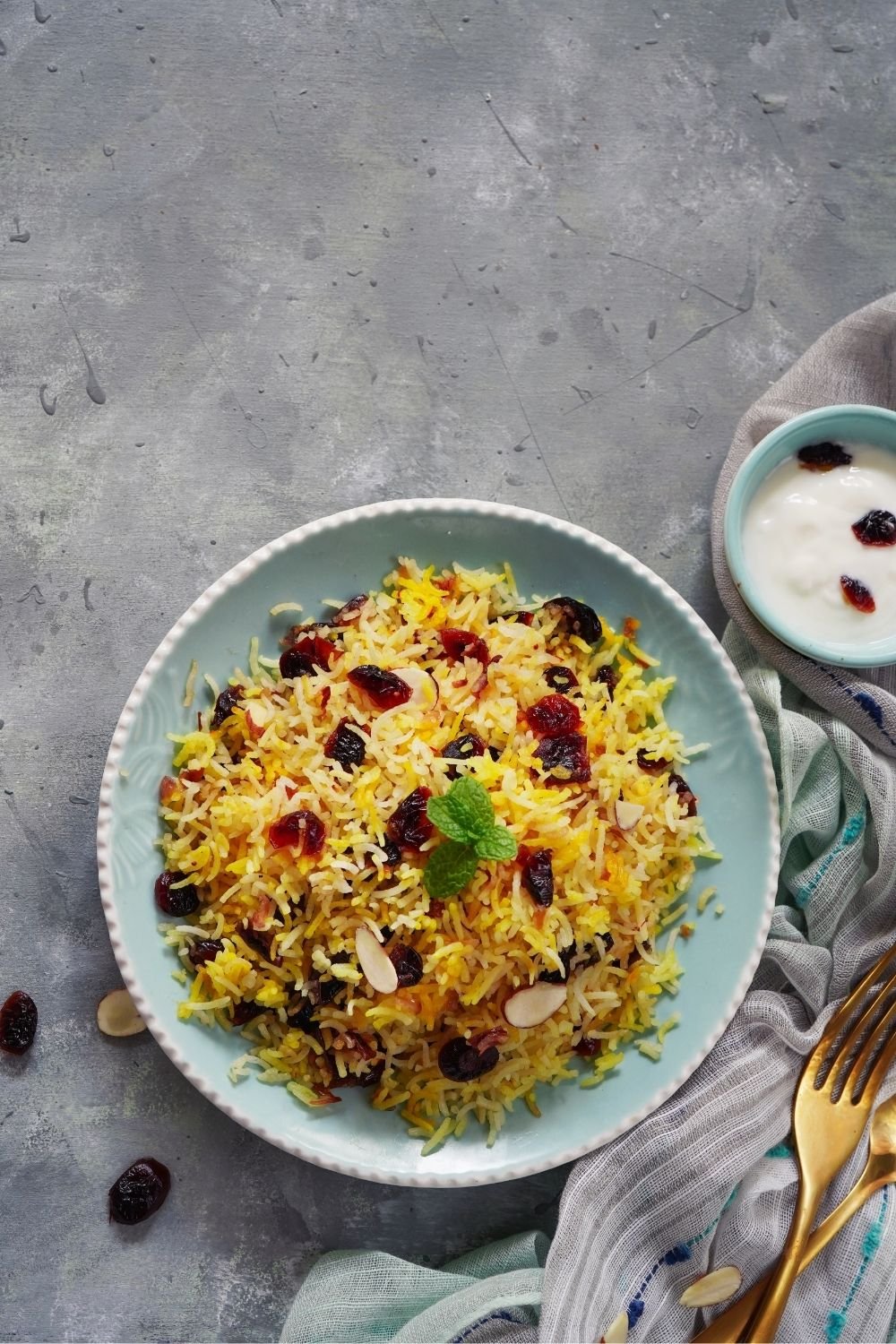
Persian pilaf, or “polo,” is a fragrant rice dish central to Iranian cuisine. Cooked in a traditional method, long-grain basmati rice is layered with aromatic spices like saffron, cardamom, and cinnamon, then steamed to create fluffy, individual grains. Often studded with dried fruits, nuts, or meat, each serving offers complex flavors and textures. The signature crispy bottom layer, called “tahdig,” adds delightful crunch. This celebratory dish represents Persian culinary artistry, requiring patience and skill to master its delicate balance of fragrance and taste.
For a homemade bake that tastes truly spectacular, check out Mary Berry’s mixed bean bake. This effortless recipe delivers rich, satisfying results without any specialist equipment needed—just your oven and basic kitchen essentials.
Why You’Ll Love This Mary Berry Persian Pilaf
Why wouldn’t you want to make this stunning dish? I’m drawn to Mary Berry’s Persian pilaf because it’s genuinely impressive yet surprisingly manageable. The dry-fried spices create an aromatic foundation that fills your kitchen with incredible fragrance. I love how the recipe balances warm spices—cinnamon, cardamom, and cumin—without overwhelming the delicate rice.
What really sells me is the texture. The pilaf emerges fluffy and perfectly cooked, with each grain remaining separate. The pistachios and raisins add pops of color and contrasting flavors that elevate the dish beyond basic rice.
It’s also genuinely forgiving. Once you’ve added the stock, you can step back and let it cook untouched. You’ll have an elegant side dish that looks restaurant-quality and tastes authentically Persian, making any meal feel special.
What Ingredients Are In Mary Berry Persian Pilaf?
Mary Berry’s Persian pilaf combines aromatic spices with simple pantry staples to create a dish that’s far more complex in flavor than its ingredient list suggests.
The magic lies in the careful selection and dry-frying of whole spices, which release their essential oils and create the foundation for this elegant dish. You’ll need both dry goods and fresh components to bring this authentic Persian recipe to life.
Ingredients:
- 1 small cinnamon stick
- 2 tsp cumin seeds
- 6 black peppercorns
- Seeds of 4 cardamom pods, crushed
- 3 cloves
- 2 tbsp sunflower oil
- 1 small onion, chopped
- 1 tsp turmeric
- 1½ cups long-grain rice
- 5¼ cups hot vegetable or chicken stock
- 2 bay leaves, torn into pieces
- Salt and black pepper to taste
- 2 oz (60g) shelled pistachios, coarsely chopped
- 1 oz (30g) raisins
- Fresh cilantro for garnish
When sourcing ingredients, guarantee your spices are fresh for maximum flavor impact—older spices will be less aromatic and won’t deliver the same depth.
Long-grain rice varieties like basmati work best for this pilaf, as they maintain their structure during cooking. If you prefer a vegetarian version, simply use vegetable stock instead of chicken stock without any other adjustments.
How To Make This Mary Berry Persian Pilaf
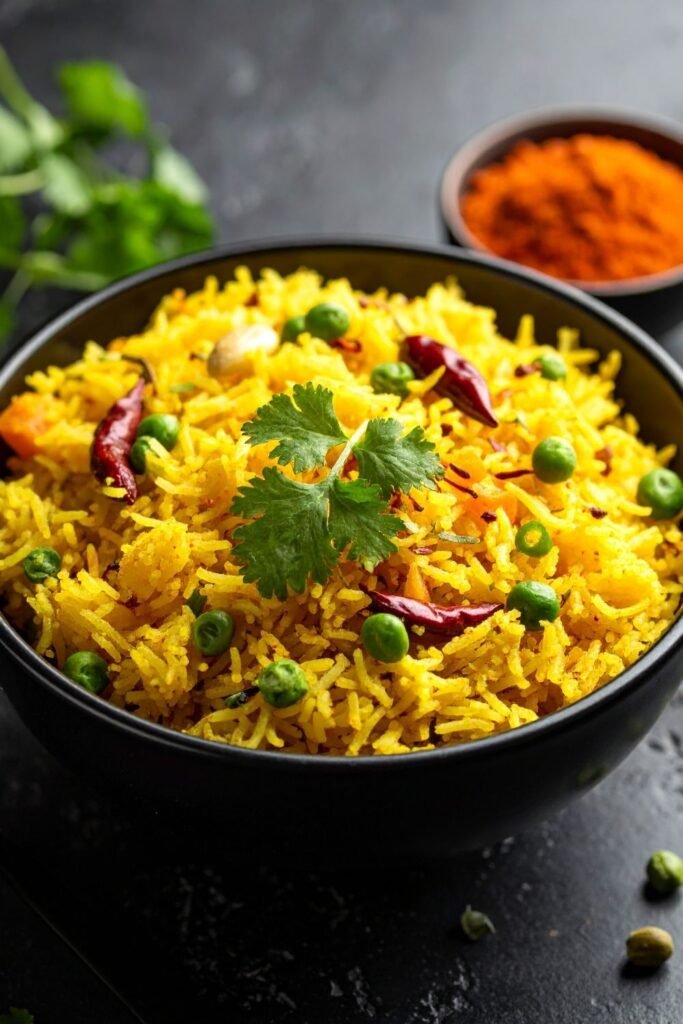
- Begin by toasting your whole spices to liberate their aromatic potential. Heat a heavy pan over medium heat and add 1 small cinnamon stick, 2 tsp cumin seeds, 6 black peppercorns, the seeds of 4 cardamom pods (crushed), and 3 cloves.
- Dry-fry these spices for 2–3 minutes until they begin to release their aromas—this essential step builds the flavor foundation of your pilaf. Once fragrant, add 2 tbsp sunflower oil to the pan and, when hot, add 1 small chopped onion along with 1 tsp turmeric.
- Cook gently, stirring occasionally, for about 10 minutes until the onion is completely softened and has absorbed the spice flavors.
- Next, incorporate the rice into the aromatic base. Add 1½ cups long-grain rice to the pan and stir thoroughly to coat each grain with the oil and spice mixture.
- Slowly pour in 5¼ cups of hot vegetable or chicken stock, then add 2 bay leaves (torn into pieces) and season generously with salt and black pepper to taste.
- Bring the mixture to a boil, then immediately lower the heat, cover the pan tightly, and cook very gently for about 10 minutes without lifting the lid—this allows the rice to steam evenly and absorb the liquid properly.
- Remove the saucepan from the heat and let it stand, still covered, for about 5 minutes. This resting period allows the rice to finish cooking and the grains to become light and fluffy.
- Finally, add 2 oz (60g) of coarsely chopped shelled pistachios and 1 oz (30g) of raisins to the pilaf, gently forking them through to fluff up the rice without crushing the grains.
- Garnish generously with fresh cilantro and serve immediately while the pilaf is still warm.
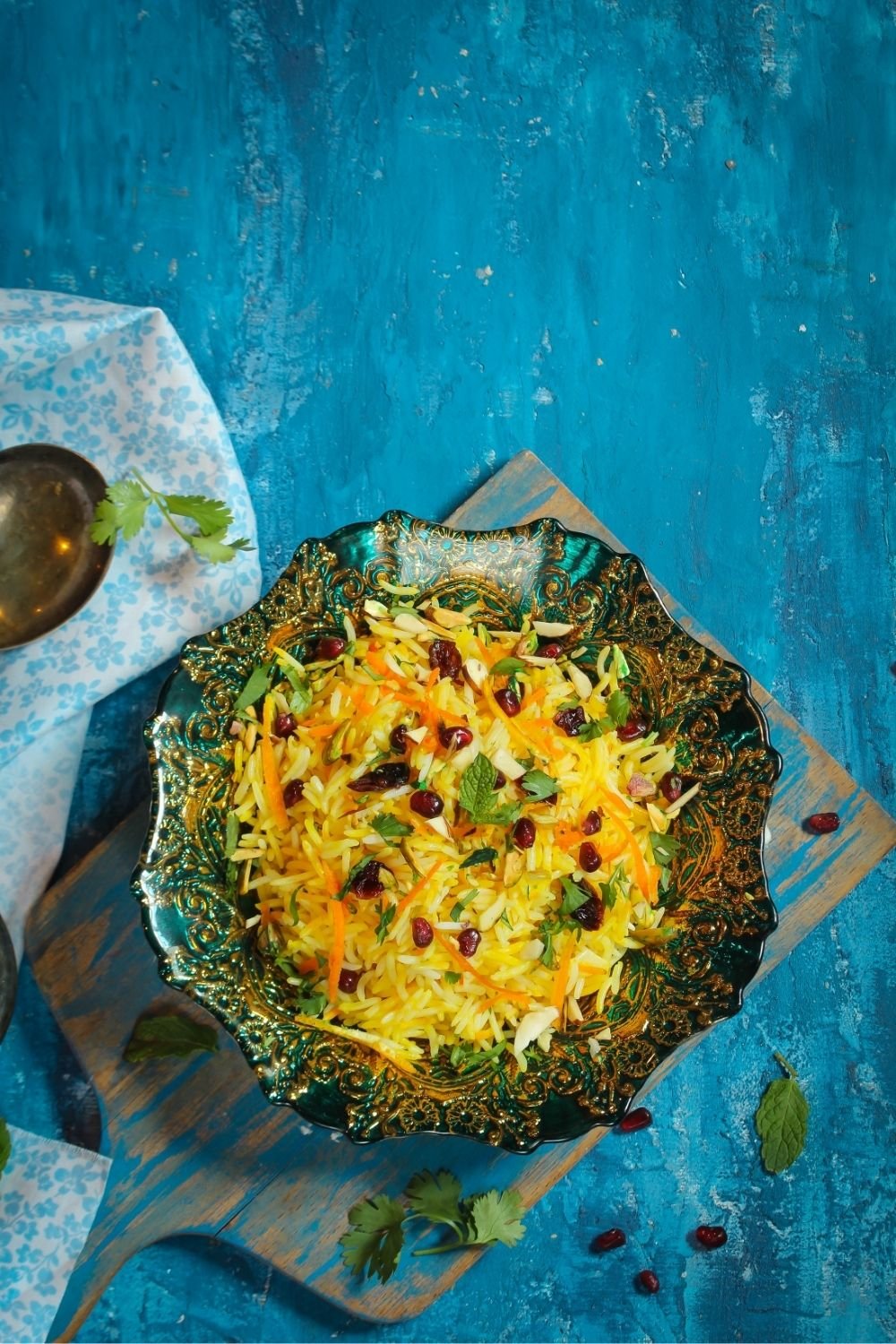
Mary Berry Persian Pilaf Recipe
Ingredients
Method
- Begin by toasting your whole spices to liberate their aromatic potential. Heat a heavy pan over medium heat and add 1 small cinnamon stick, 2 tsp cumin seeds, 6 black peppercorns, the seeds of 4 cardamom pods (crushed), and 3 cloves.
- Dry-fry these spices for 2–3 minutes until they begin to release their aromas—this essential step builds the flavor foundation of your pilaf. Once fragrant, add 2 tbsp sunflower oil to the pan and, when hot, add 1 small chopped onion along with 1 tsp turmeric.
- Cook gently, stirring occasionally, for about 10 minutes until the onion is completely softened and has absorbed the spice flavors.
- Next, incorporate the rice into the aromatic base. Add 1½ cups long-grain rice to the pan and stir thoroughly to coat each grain with the oil and spice mixture.
- Slowly pour in 5¼ cups of hot vegetable or chicken stock, then add 2 bay leaves (torn into pieces) and season generously with salt and black pepper to taste.
- Bring the mixture to a boil, then immediately lower the heat, cover the pan tightly, and cook very gently for about 10 minutes without lifting the lid—this allows the rice to steam evenly and absorb the liquid properly.
- Remove the saucepan from the heat and let it stand, still covered, for about 5 minutes. This resting period allows the rice to finish cooking and the grains to become light and fluffy.
- Finally, add 2 oz (60g) of coarsely chopped shelled pistachios and 1 oz (30g) of raisins to the pilaf, gently forking them through to fluff up the rice without crushing the grains.
- Garnish generously with fresh cilantro and serve immediately while the pilaf is still warm.
Notes
Mary Berry Persian Pilaf Substitutions And Variations
While the classic Persian pilaf recipe delivers authentic flavor, you can easily adapt it to suit your pantry, dietary preferences, or taste preferences. If you’re missing cardamom pods, substitute equal amounts of allspice or nutmeg for similar warmth. Swap pistachios for almonds or cashews if you prefer, or use dried cranberries instead of raisins for tanginess. For a vegetable-forward version, I’d recommend adding diced carrots, peas, or dried apricots during cooking. You can replace sunflower oil with ghee for richer flavor. If you’re avoiding nuts entirely, simply omit them without affecting the pilaf’s texture. Brown rice works as a substitute for long-grain white rice, though it’ll require additional cooking time. These variations maintain the dish’s essential character while personalizing it to your preferences.Mary Berry Persian Pilaf Flavor Variations And Adaptations
While the classic Persian pilaf recipe delivers authentic flavor, you can easily adapt it to suit your pantry, dietary preferences, or taste preferences. If you’re missing cardamom pods, substitute equal amounts of allspice or nutmeg for similar warmth. Swap pistachios for almonds or cashews if you prefer, or use dried cranberries instead of raisins for tanginess. For a vegetable-forward version, I’d recommend adding diced carrots, peas, or dried apricots during cooking. You can replace sunflower oil with ghee for richer flavor. If you’re avoiding nuts entirely, simply omit them without affecting the pilaf’s texture. Brown rice works as a substitute for long-grain white rice, though it’ll require additional cooking time. These variations maintain the dish’s essential character while personalizing it to your preferences.
What To Serve With Mary Berry Persian Pilaf
This aromatic rice dish pairs beautifully with a variety of complementary dishes that’ll enhance your dining experience. I’d recommend serving it alongside grilled or roasted lamb, which complements the warm spices wonderfully. Chicken kebabs work exceptionally well too, their charred exterior contrasting nicely with the fragrant rice.
For vegetarian options, I suggest pairing it with roasted vegetables like eggplant, zucchini, or bell peppers. A tangy yogurt sauce or tzatziki provides a cooling counterbalance to the pilaf’s richness.
Don’t overlook fresh side salads featuring tomatoes, cucumbers, and red onions dressed with lemon vinaigrette. They’ll add brightness and freshness to your plate.
Finally, warm naan or flatbread helps you scoop up every flavorful grain, making the meal more interactive and satisfying.
Final Thoughts
Mary Berry’s Persian pilaf stands as proof of how simple ingredients, when thoughtfully combined and properly executed, can create something truly extraordinary. I’ve found that this recipe rewards patience and attention to detail—toasting the spices genuinely transforms the dish’s depth of flavor, while refraining from the urge to peek under the lid safeguards perfectly cooked grains.
What makes this pilaf remarkable isn’t complexity; it’s balance. The warm spices, nutty pistachios, and sweet raisins work in harmony, creating layers of flavor that feel both elegant and comforting. Whether you’re cooking for yourself or entertaining guests, you’ll appreciate how this dish elevates any meal without demanding hours in the kitchen. I’d encourage you to make it regularly—it’s a recipe that deserves a permanent spot in your rotation.