

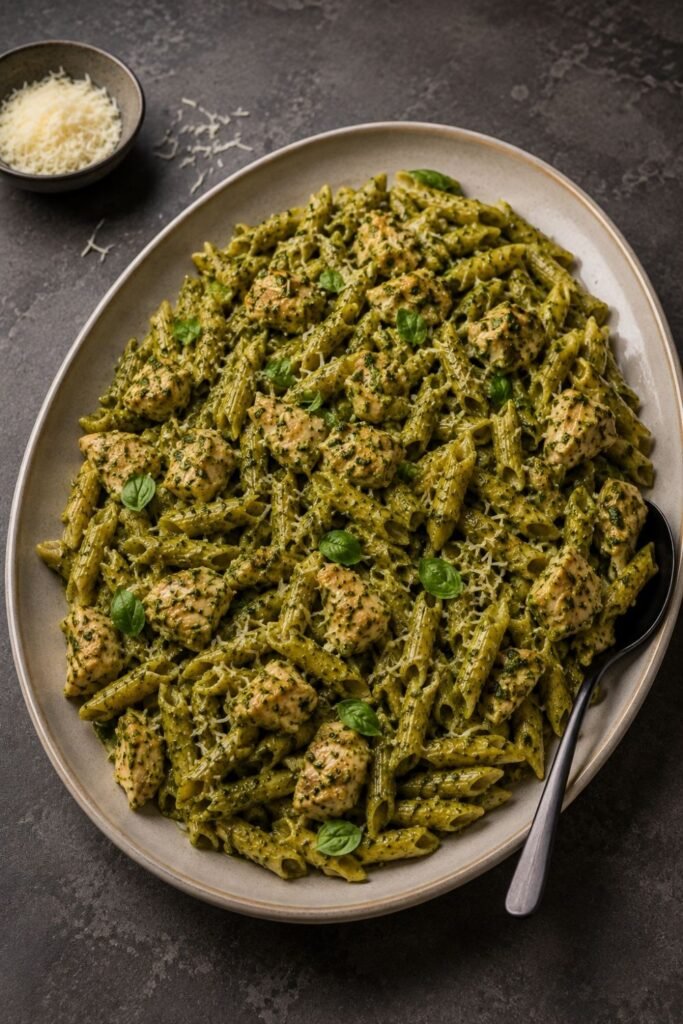
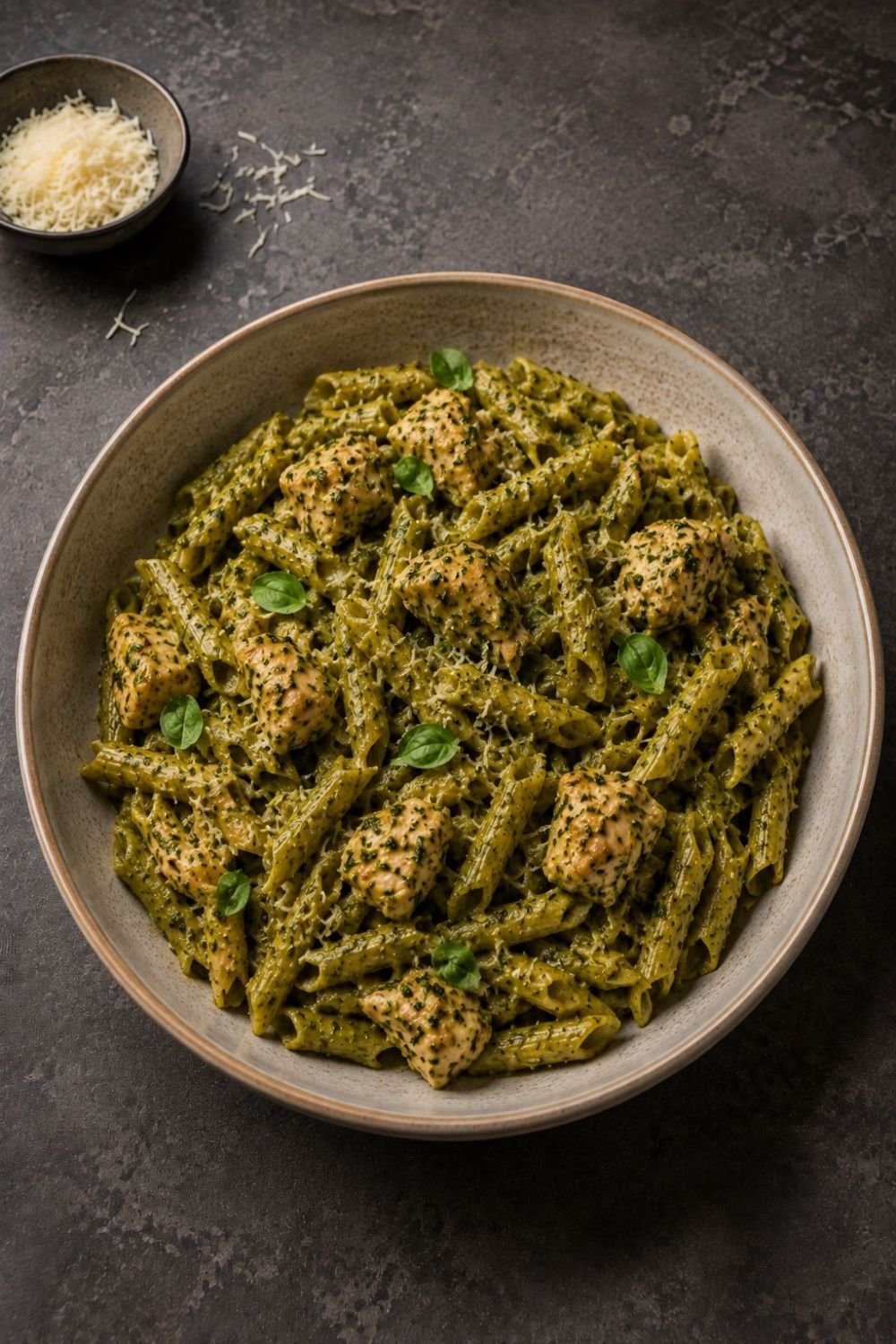
Chicken pesto pasta brings together juicy pieces of browned chicken, tender penne and a creamy basil pesto sauce in one skillet. Instead of boiling the pasta separately, the penne cooks directly in water and heavy cream, releasing starch as the liquid reduces into a sauce that naturally coats every piece.
Parmesan adds savoury richness, garlic gives the sauce its aromatic base, and crushed red pepper flakes provide a gentle background heat. The pesto is folded through only after the skillet comes off the heat, keeping its fresh basil character at the centre of the finished dish. With just 10 minutes of prep and a 30-minute total time, it works particularly well when you want a creamy pasta dinner without managing several pans at once.
A few details make this simple method particularly effective.
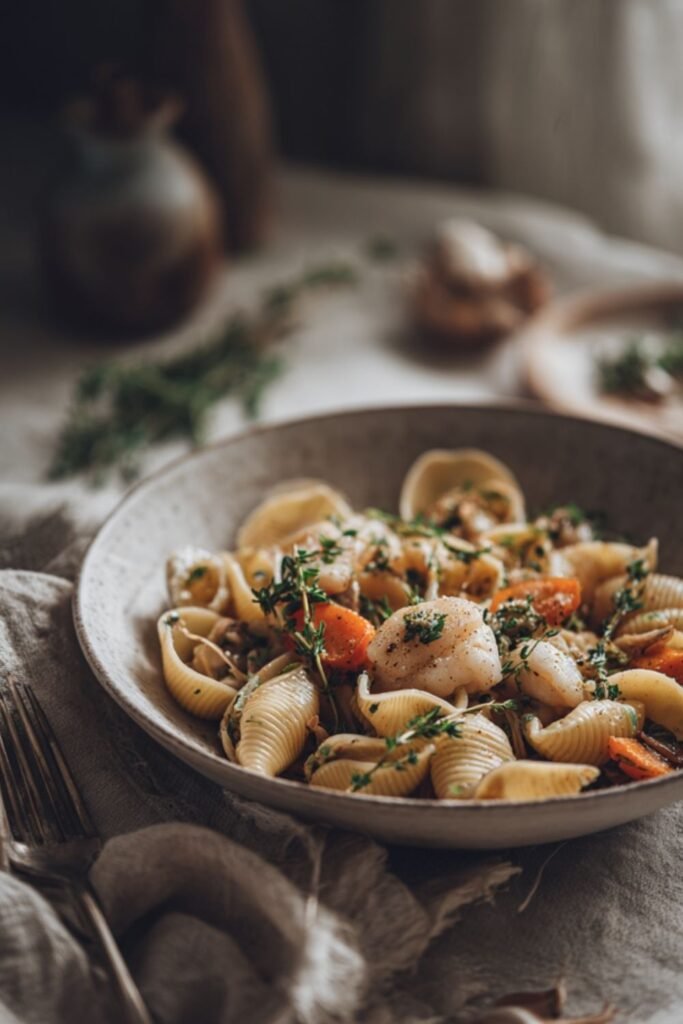
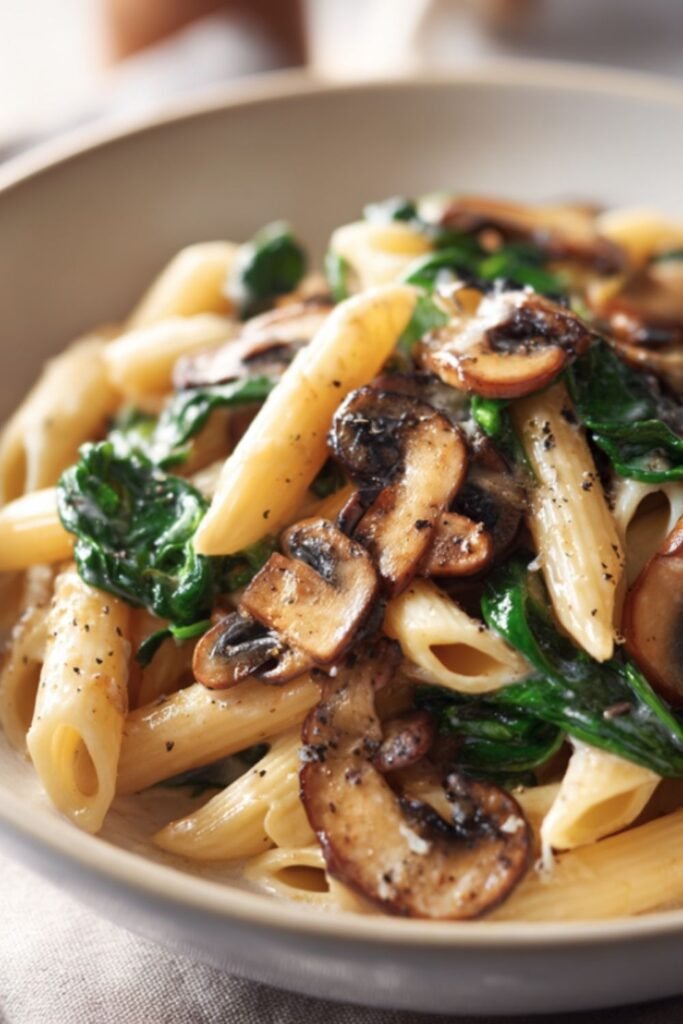
- The chicken is browned first, giving it colour and flavour before the sauce is built in the same skillet.
- The penne cooks directly in the cream and water, so its starch helps thicken the cooking liquid.
- Parmesan melts into the reduced sauce for extra body and savoury flavour.
- Pesto is folded through away from direct heat so its basil flavour stays prominent.
- The entire pasta comes together in one skillet, keeping the cooking process straightforward.
What Gives Chicken Pesto Pasta Its Creamy Sauce
The sauce starts differently from many creamy pasta recipes. There is no separate roux and no second pan for boiling the penne. Instead, water and heavy cream simmer directly in the skillet before the dry pasta is added.
As the penne cooks for 8 to 10 minutes, it absorbs some of the liquid while releasing starch into what remains. At the same time, the liquid reduces. Those two things turn a relatively loose mixture of water and cream into a sauce capable of clinging to the pasta.
Parmesan goes in only after the penne reaches al dente. It melts through the reduced cooking liquid and adds another layer of richness before the pesto is introduced.
The pesto itself plays a slightly different role. Rather than being cooked throughout the entire process, the 2/3 cup is folded through after the skillet has been removed from the heat. This keeps the pesto from becoming the base cooking liquid and allows its basil, cheese and oil character to remain noticeable in the final sauce.
Several ingredients do most of the technical work.
- Heavy cream: The 3/4 cup provides richness while reducing with the pasta cooking liquid into the creamy base.
- Penne: Cooking the 8 oz. directly in the skillet releases starch into the sauce rather than leaving it behind in a separate pot of water.
- Parmesan: The finely grated cheese melts easily into the hot pasta and gives the sauce more savoury depth and body.
- Pesto: A generous 2/3 cup provides the defining basil flavour and is added after the skillet leaves the heat.
- Garlic: Four finely chopped cloves are briefly cooked before the liquid is introduced, creating the aromatic foundation of the sauce.
- Crushed red pepper flakes: The 1/4 tsp. adds mild heat without overpowering the pesto or Parmesan.
Brown The Chicken Before Building The Pasta Sauce
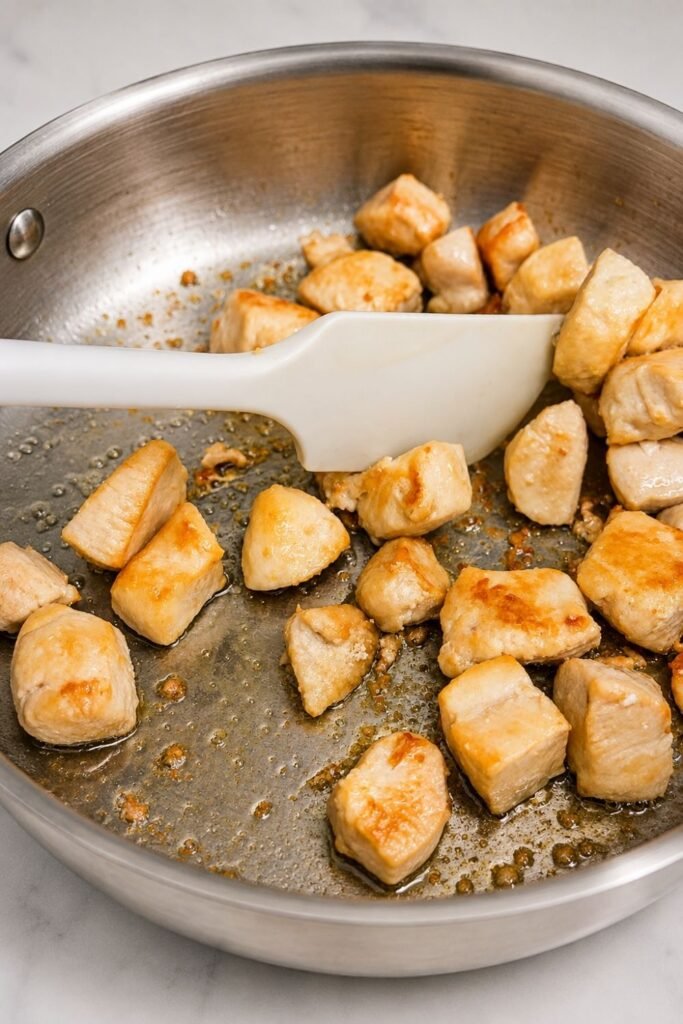
Cutting the chicken into 1-inch pieces gives you small portions that can brown quickly in the skillet. The chicken is seasoned with 3/4 tsp. salt once it enters the hot oil, then cooked over medium heat for 4 to 5 minutes total.
Stir occasionally rather than constantly. Leaving the pieces against the hot surface for short stretches gives them time to develop some browning before you turn them.
The supplied method calls for transferring the chicken to a plate when an instant-read thermometer registers 160°. It returns to the hot pasta later and cooks for about another 2 minutes while the Parmesan melts and the chicken warms through.
Because chicken should reach a safe serving temperature, check the thickest pieces again before serving and make sure they reach 165°F/74°C.
Removing the chicken after its initial sear also prevents it from remaining in the skillet during the full 8 to 10 minutes required for the pasta. The same pan can then be used for the garlic, pepper flakes and creamy cooking liquid.
Let The Penne Cook Directly In The Sauce
Once the chicken leaves the skillet, the garlic and 1/4 tsp. crushed red pepper flakes need only about 30 seconds over medium heat. This brief stage gives the garlic time to become fragrant without leaving it over direct heat for several minutes.
Next come 1 3/4 cups water, 3/4 cup heavy cream and 1/2 tsp. salt. Bring this mixture to a simmer before adding the penne.
The pasta then cooks directly in that creamy liquid for 8 to 10 minutes. Stir it occasionally so the penne cooks evenly and doesn’t settle against the bottom of the skillet.
Two changes should happen at roughly the same time. The penne should reach al dente, while the liquid should reduce enough to become a sauce that coats the pasta.
Don’t judge the sauce before the pasta has had time to cook and release its starch. The initial liquid needs to be considerably looser because it must both cook the dry penne and leave enough moisture behind for the finished sauce.
Once the pasta reaches the correct texture and the liquid has reduced, the Parmesan and chicken can go back into the skillet.
Why The Pesto Goes In After Cooking
The order at the end of the recipe is intentional. Parmesan and chicken return to the hot skillet first and are tossed for about 2 minutes, giving the cheese time to melt and the chicken time to warm through.
Only after that stage is complete do you remove the skillet from the heat and fold in 2/3 cup pesto.
Pesto already contains ingredients designed to create a concentrated sauce, so it doesn’t need a long cooking stage here. Folding it through the finished creamy pasta spreads its basil flavour throughout the dish while keeping it distinct from the garlic and Parmesan base.
The sauce may become thicker once the Parmesan and pesto are incorporated. If it feels dry, the recipe specifically calls for adding water 1 Tbsp. at a time until the sauce becomes creamy again.
Using such small additions gives you much more control than pouring in a larger amount. Toss after each tablespoon and assess the sauce before adding more.
Fresh basil is optional and can be scattered over the pasta immediately before serving.
How This One-Skillet Pasta Comes Together
The recipe follows a compact sequence, with each stage preparing the skillet for the next. First, the chicken is browned in extra-virgin olive oil and transferred to a plate.
Garlic and red pepper flakes then go straight into the same skillet. Water and cream are added, followed by the dry penne, which cooks until al dente while the liquid reduces around it.
Parmesan and the cooked chicken are returned once the pasta is ready. After about 2 minutes, the skillet comes off the heat and the pesto is folded through.
If the finished sauce needs loosening, water is added only 1 Tbsp. at a time. The dish can then be tasted for salt and topped with fresh basil if you’re using it.
That progression means the pasta water, cream, starch, Parmesan and pesto all contribute to the final texture without requiring a separate sauce pot.
Ingredients
There aren’t many ingredients here, but the order in which they’re used matters. Keep the chicken ingredients separate from the pasta and sauce ingredients before you begin so everything is ready when the skillet is hot.
For the Chicken
These ingredients are used first to brown and season the chicken.
- 2 Tbsp. extra-virgin olive oil
- 2 (8-oz.) boneless, skinless chicken breasts, cut into 1” pieces
- Kosher salt
For the Creamy Pesto Pasta
The remaining ingredients create the garlic cream sauce and finish the pasta.
- 4 garlic cloves, finely chopped
- 1/4 tsp. crushed red pepper flakes
- 1 3/4 cups water
- 3/4 cup heavy cream
- 8 oz. penne
- 1 oz. Parmesan, finely grated (about 1/2 cup)
- 2/3 cup store-bought or homemade pesto
- Fresh basil, for serving (optional)
Instructions
Have the ingredients measured and the chicken cut before heating the skillet. The pasta cooks directly in the sauce, so the steps move quickly once the garlic reaches the pan.
- Heat the oil. Place a medium skillet over medium heat and add 2 Tbsp. extra-virgin olive oil.
- Brown the chicken. Add the 2 (8-oz.) boneless, skinless chicken breasts cut into 1” pieces and season them with 3/4 tsp. salt. Cook for 4 to 5 minutes total, stirring occasionally, until the chicken is browned and an instant-read thermometer registers 160°. Transfer the chicken to a plate.
- Cook the aromatics. Keep the same skillet over medium heat. Add the 4 finely chopped garlic cloves and 1/4 tsp. crushed red pepper flakes. Stir for about 30 seconds, until fragrant.
- Create the pasta cooking liquid. Pour in 1 3/4 cups water and 3/4 cup heavy cream, then add 1/2 tsp. salt. Bring the mixture to a simmer.
- Cook the penne in the skillet. Add 8 oz. penne to the simmering liquid. Cook for 8 to 10 minutes, stirring occasionally, until the pasta is al dente and the liquid has reduced into a sauce that coats the penne.
- Return the chicken and add Parmesan. Stir in 1 oz. finely grated Parmesan, about 1/2 cup, along with the cooked chicken. Toss everything together for about 2 minutes, until the Parmesan has melted and the chicken is warmed through. Before serving, confirm that the chicken has reached a safe internal temperature of 165°F/74°C.
- Fold in the pesto. Remove the skillet from the heat and fold in 2/3 cup store-bought or homemade pesto until evenly distributed throughout the creamy pasta.
- Adjust the sauce. If the sauce feels dry, add water 1 Tbsp. at a time, tossing after each addition, until a creamy consistency forms. Taste and season with more salt if needed.
- Finish with basil. Top the chicken pesto pasta with fresh basil if using, then serve.
Chicken Pesto Pasta
Ingredients
Method
- Heat the oil. Place a medium skillet over medium heat and add 2 Tbsp. extra-virgin olive oil.
- Brown the chicken. Add the 2 (8-oz.) boneless, skinless chicken breasts cut into 1” pieces and season them with 3/4 tsp. salt. Cook for 4 to 5 minutes total, stirring occasionally, until the chicken is browned and an instant-read thermometer registers 160°. Transfer the chicken to a plate.
- Cook the aromatics. Keep the same skillet over medium heat. Add the 4 finely chopped garlic cloves and 1/4 tsp. crushed red pepper flakes. Stir for about 30 seconds, until fragrant.
- Create the pasta cooking liquid. Pour in 1 3/4 cups water and 3/4 cup heavy cream, then add 1/2 tsp. salt. Bring the mixture to a simmer.
- Cook the penne in the skillet. Add 8 oz. penne to the simmering liquid. Cook for 8 to 10 minutes, stirring occasionally, until the pasta is al dente and the liquid has reduced into a sauce that coats the penne.
- Return the chicken and add Parmesan. Stir in 1 oz. finely grated Parmesan, about 1/2 cup, along with the cooked chicken. Toss everything together for about 2 minutes, until the Parmesan has melted and the chicken is warmed through. Before serving, confirm that the chicken has reached a safe internal temperature of 165°F/74°C.
- Fold in the pesto. Remove the skillet from the heat and fold in 2/3 cup store-bought or homemade pesto until evenly distributed throughout the creamy pasta.
- Adjust the sauce. If the sauce feels dry, add water 1 Tbsp. at a time, tossing after each addition, until a creamy consistency forms. Taste and season with more salt if needed.
- Finish with basil. Top the chicken pesto pasta with fresh basil if using, then serve.
Notes
How This One-Skillet Pasta Comes Together
The recipe follows a compact sequence, with each stage preparing the skillet for the next. First, the chicken is browned in extra-virgin olive oil and transferred to a plate. Garlic and red pepper flakes then go straight into the same skillet. Water and cream are added, followed by the dry penne, which cooks until al dente while the liquid reduces around it. Parmesan and the cooked chicken are returned once the pasta is ready. After about 2 minutes, the skillet comes off the heat and the pesto is folded through. If the finished sauce needs loosening, water is added only 1 Tbsp. at a time. The dish can then be tasted for salt and topped with fresh basil if you’re using it. That progression means the pasta water, cream, starch, Parmesan and pesto all contribute to the final texture without requiring a separate sauce pot.Frequently Asked Questions
Can I use store-bought pesto for chicken pesto pasta?
Yes. The recipe specifically allows either store-bought or homemade pesto. Whichever you choose, keep the amount at 2/3 cup and fold it in only after removing the skillet from the heat.
Why is the pasta cooked directly in the skillet?
Cooking the 8 oz. penne in the water and cream allows starch released from the pasta to remain in the sauce. As the liquid reduces during the 8 to 10 minute cooking time, it develops the creamy consistency needed to coat the pasta.
Why does the pesto go in after removing the skillet from the heat?
The recipe uses pesto as the final component rather than simmering it with the pasta. Parmesan and chicken are incorporated first, then the skillet is removed from direct heat before the 2/3 cup pesto is folded through.
What should I do if the pesto sauce becomes too thick?
Follow the supplied method and add water 1 Tbsp. at a time. Toss the pasta after each addition and stop once the sauce has returned to a creamy consistency.
How do I know when the penne is ready?
The pasta should be al dente after cooking for 8 to 10 minutes. At the same point, the water and cream mixture should have reduced enough to form a sauce that coats the penne rather than sitting as a thin liquid at the bottom of the skillet.
Conclusion
Chicken pesto pasta gets its creamy texture without requiring a separate pot of pasta water or a complicated sauce. Browning the chicken first, cooking the penne directly in the cream mixture, melting in Parmesan and folding the pesto through away from direct heat creates a rich, basil-forward pasta that comes together in a total time of 30 minutes.