

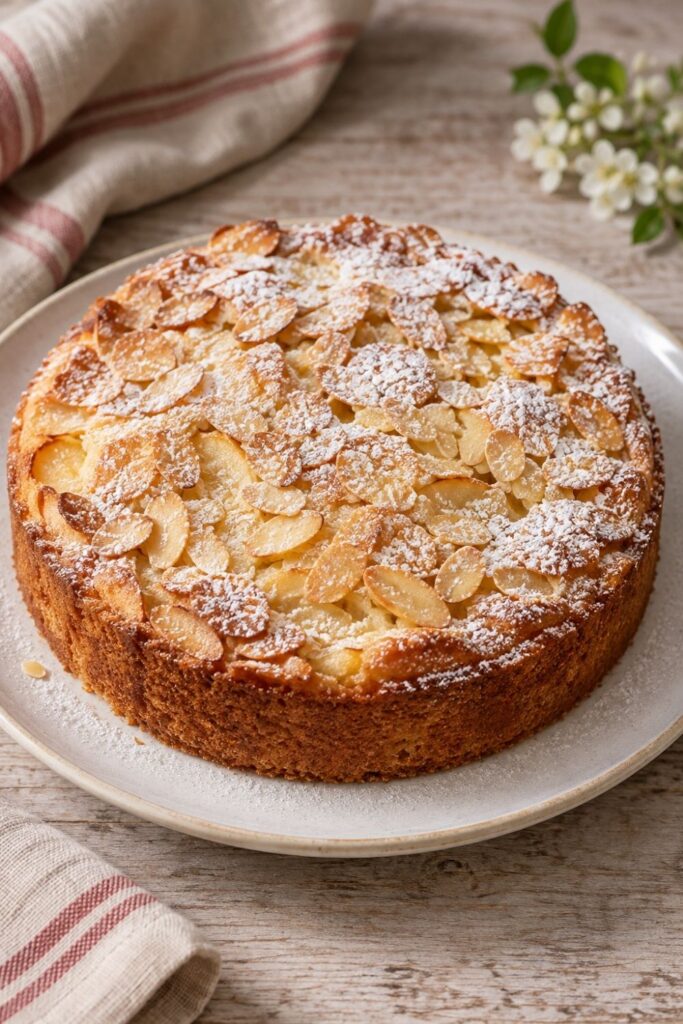
The whole character of this cake comes from one move: burying a thick layer of apple slices between two layers of batter. The fruit steams gently inside the sponge as it bakes, softening into sharp, tender pockets while the cake around it rises and turns golden. Cut a wedge and you get a stripe of apple running through the middle of a buttery, almond-scented crumb.
This Mary Berry apple cake uses the all-in-one method, so there’s no creaming butter and sugar and no folding in stages. Everything for the batter goes into one bowl, gets mixed until blended, and then beaten for just a minute. The fiddliest part is spooning the second layer of batter over the apples, and even that doesn’t need to look neat.
Cooking apples do most of the flavour work. Their sharpness cuts through the sweet sponge, and a small amount of almond extract along with a scattering of flaked almonds adds a gentle nutty note. A long, low bake lets the centre cook through without the top scorching, and the almonds end up toasted and crisp.
- A hidden layer of apple gives every slice a moist, fruity centre instead of fruit scattered unevenly through the crumb.
- The batter is an all-in-one mix made with melted butter, so you don’t need soft butter or an electric mixer.
- Sharp cooking apples balance the sweet sponge, which keeps the cake from tasting sugary.
- Flaked almonds toast on top during the long bake and give a crisp, golden finish with no extra step.
- It’s best served warm but can be made a day ahead, and once cold it freezes well.
What Each Ingredient Brings To The Cake
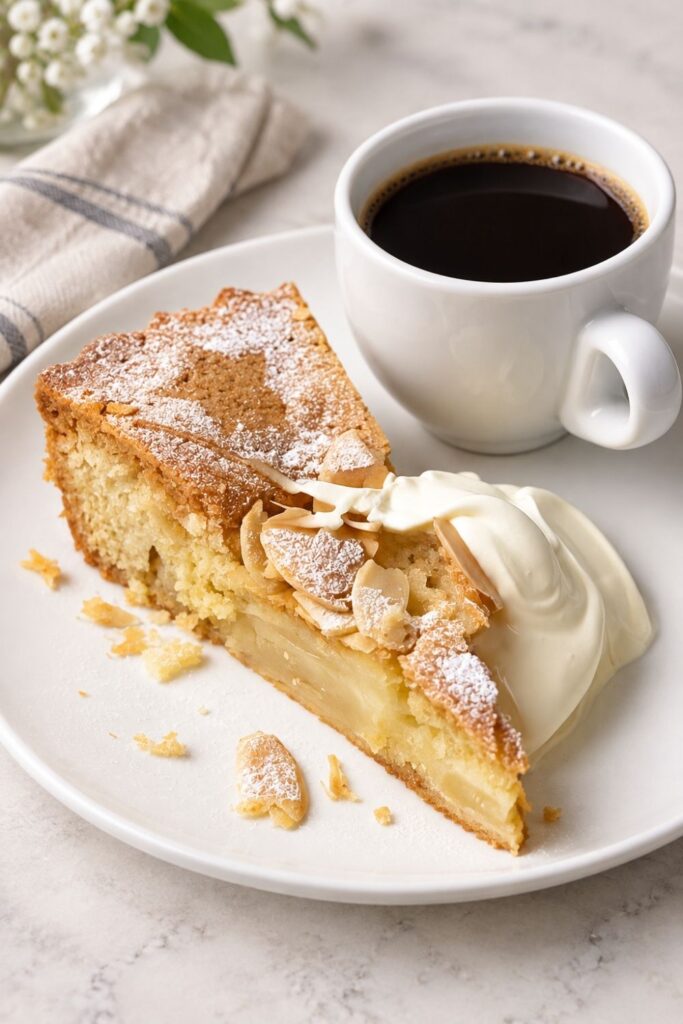
The ingredient list is short, and each item has a clear job. It helps to understand a few of them, especially the apples and the raising agents, because they explain why the method works the way it does.
These ingredients have the biggest effect on the finished cake.
- Cooking apples: Varieties such as Bramley are tart and break down to a soft, fluffy texture when heated. Inside the cake they turn tender and slightly jammy, and their acidity balances the sugar in the sponge.
- Melted butter: Melting the butter makes an all-in-one batter possible, since there’s nothing to cream. It also gives a denser, moister crumb than a creamed sponge, which is sturdy enough to hold a heavy layer of fruit.
- Self-raising flour and baking powder: Melted butter can’t trap air the way creamed butter does, so the batter relies on raising agents for lift. The extra teaspoon of baking powder helps a thick batter rise around the apples rather than baking up flat and heavy.
- Almond extract: Just half a teaspoon perfumes the whole cake. Almond goes naturally with apple, but it’s a strong flavour, so measure carefully rather than adding an extra splash.
- Caster sugar: Its fine grains dissolve easily into the batter during a short beating, so the finished sponge has an even, tender texture.
- Flaked almonds: They sit on the surface for the whole bake, so they toast slowly and turn crisp. That crunch contrasts with the soft apple layer underneath.
How The Cake Comes Together
The process has three stages: a quick batter, a layered assembly, and a long bake at a low temperature. The batter takes almost no time. Most of your attention goes into assembly, because how the apples and the top layer are arranged decides whether the cake bakes evenly.
The oven is set lower than you might expect for a sponge, at 160C (fan 140C, gas 3). That’s deliberate. A deep cake with a wet layer of fruit in the middle needs time for heat to reach the centre, and a gentler temperature gives it that time without the outside overbrowning.
Layering The Apples: The Step That Decides Everything
Assembly is where this cake is won or lost. Spread half the batter in the tin to make a base, then lay thickly sliced apples over it, piling most of them towards the centre. The remaining batter goes on top, spooned roughly with two dessert spoons.
Piling the apples in the middle matters because the batter spreads outwards as it bakes. The edges of the cake set first, and the batter from the middle flows towards the sides. If the apples were packed right up against the tin wall, they’d poke out of the sides and leave gaps. Keeping them central means they end up fully enclosed.
The top layer is the awkward part. The batter is thick and won’t pour, so you’ll be dropping spoonfuls over a bumpy surface of apple. It won’t look smooth, and it doesn’t need to. What matters is that the centre is well covered, since the oven heat will spread the batter out to fill the gaps.
Cut the apple slices thickly. Thin slices collapse into a purée and can turn the middle of the cake soggy, while thick slices soften but keep some shape, which gives you that distinct fruity layer.
Avoiding A Raw Centre In A Deep Apple Cake
The most likely problem with this cake is an underbaked middle. A deep tin, a pile of juicy apple in the centre and a thick batter all mean the middle takes much longer to cook than the edges. That’s why the bake time runs to 1¼ to 1½ hours.
Watch for two signs that it’s done. The top should be golden all over, and the cake should have started coming away from the sides of the tin. If you want to be sure, push a skewer into the centre of the cake. It should come out clean of raw batter. You may hit a piece of soft, moist apple, so test in a couple of spots if the first one is ambiguous.
Using the right tin helps as well. The recipe calls for a deep 20cm loose-bottomed tin, and the depth is important. A shallower tin would struggle to hold both batter layers plus the apples, and it could overflow as the cake rises.
Mary Berry Apple Cake Ingredients
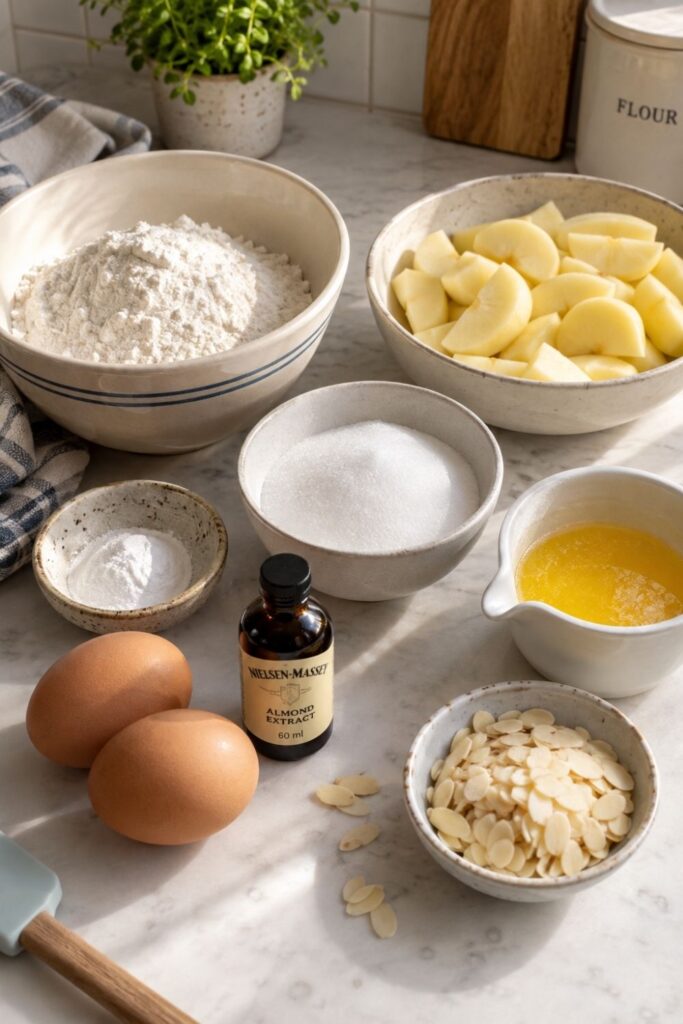
Two things are worth checking before you start. Make sure your cooking apples add up to 250g once they’re peeled and cored, not before, since the peel and core account for a surprising amount of weight. And let the melted butter cool for a few minutes so it isn’t piping hot when it meets the eggs.
Serves 8. Bake time 1¼ to 1½ hours.
The Batter
All of these go into one bowl together.- 225g self-raising flour
- 1 level tsp baking powder, levelled off with a knife rather than heaped
- 225g caster sugar, called superfine sugar in the US
- 2 large eggs
- ½ tsp almond extract
- 150g butter, melted, cooled slightly before mixing
The Fruit and Topping
The apples go in the middle of the cake and the almonds go on top.- 250g cooking apples, peeled and cored, such as Bramley
- 25g flaked almonds
Step-By-Step Method
The batter is quick. Take your time over the layering in step 4.- Get the oven and tin ready. Heat the oven to 160C (fan 140C, gas 3). Lightly grease a deep 20cm loose-bottomed cake tin.
- Make the all-in-one batter. Put the flour, baking powder, caster sugar, eggs, almond extract and melted butter into a mixing bowl. Mix until everything is blended, then beat for one minute. The batter will be thick and smooth, with no pockets of dry flour.
- Lay down the base. Spread half of the batter over the bottom of the prepared tin, pushing it out to the edges in an even layer.
- Add the apples. Cut the apples into thick slices and arrange them over the batter, heaping most of them in the centre. This stops the fruit from breaking through the sides once the batter spreads.
- Cover with the rest of the batter. With two dessert spoons, drop the remaining batter over the apples in rough spoonfuls. Focus on covering the centre well. It will look uneven, but the batter spreads out as it bakes.
- Scatter the almonds. Sprinkle the flaked almonds evenly over the top of the cake.
- Bake low and slow. Bake in the preheated oven for 1¼ to 1½ hours. It’s ready when the top is golden and the cake has begun to shrink away from the sides of the tin.
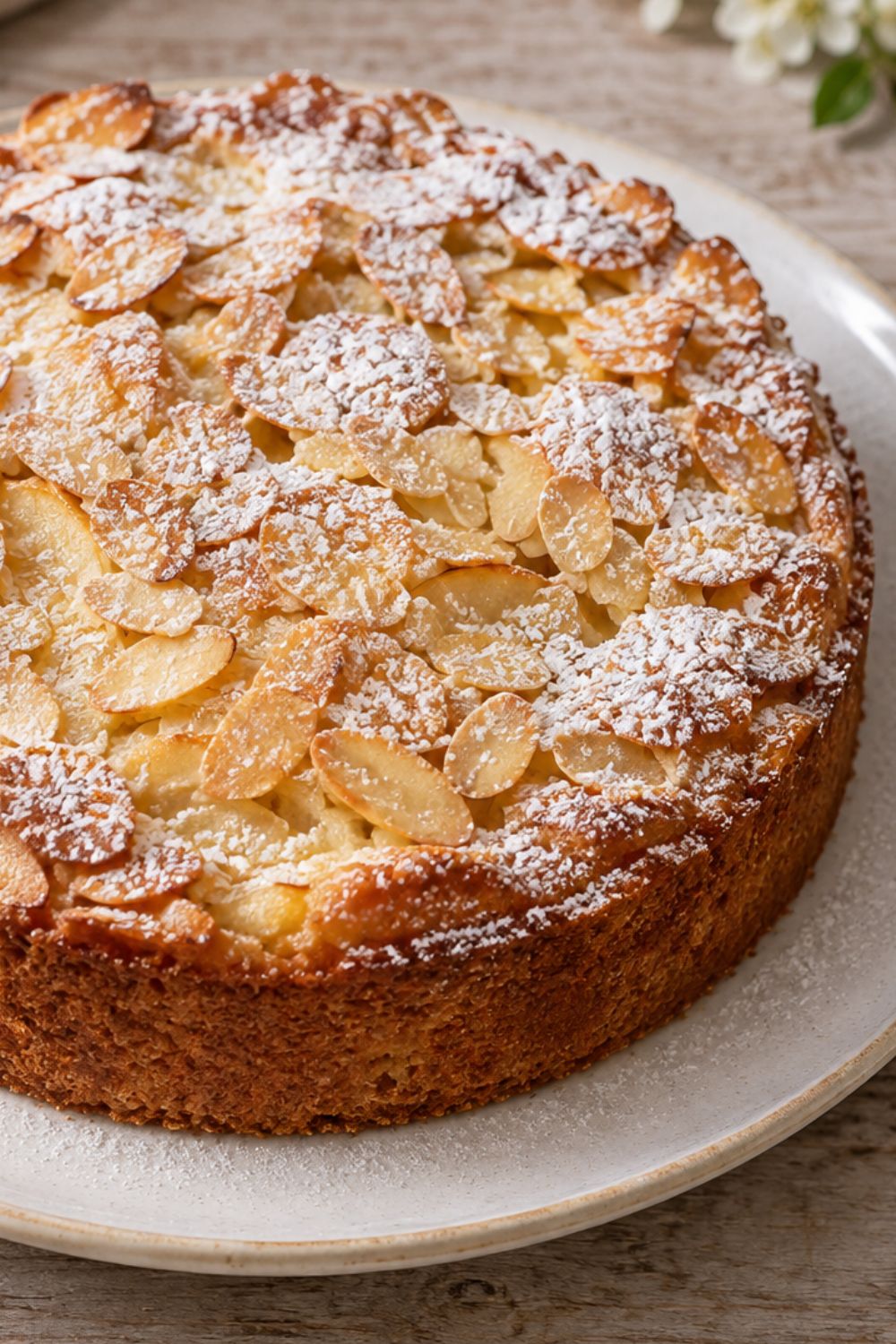
Mary Berry Apple Cake
Ingredients
Method
- Get the oven and tin ready. Heat the oven to 160C (fan 140C, gas 3). Lightly grease a deep 20cm loose-bottomed cake tin.
- Make the all-in-one batter. Put the flour, baking powder, caster sugar, eggs, almond extract and melted butter into a mixing bowl. Mix until everything is blended, then beat for one minute. The batter will be thick and smooth, with no pockets of dry flour.
- Lay down the base. Spread half of the batter over the bottom of the prepared tin, pushing it out to the edges in an even layer.
- Add the apples. Cut the apples into thick slices and arrange them over the batter, heaping most of them in the centre. This stops the fruit from breaking through the sides once the batter spreads.
- Cover with the rest of the batter. With two dessert spoons, drop the remaining batter over the apples in rough spoonfuls. Focus on covering the centre well. It will look uneven, but the batter spreads out as it bakes.
- Scatter the almonds. Sprinkle the flaked almonds evenly over the top of the cake.
- Bake low and slow. Bake in the preheated oven for 1¼ to 1½ hours. It’s ready when the top is golden and the cake has begun to shrink away from the sides of the tin.
Notes
AGA Instructions
An AGA bake works in two stages: a short burst in the roasting oven to set and colour the cake, followed by a gentle finish in the simmering oven.- Put the grid shelf on the floor of the roasting oven and slide the cold plain shelf onto the second set of runners. Bake the cake for about 20 minutes, or until it’s pale golden brown, keeping a close eye on it.
- Move the plain shelf to the middle of the simmering oven. It will be extremely hot, so use thick oven gloves.
- Carefully lift the cake onto the plain shelf and bake for a further 30-40 minutes, until a skewer pushed into the centre comes out clean.
Making It Ahead And Baking In An Aga
The cake is at its best served warm, but it copes well with a little forward planning. If you cook in an AGA, the method changes because of the way the ovens work.
Preparing Ahead and Freezing
You can bake the cake the day before you plan to serve it. For longer storage, let it cool completely, then wrap it and freeze it for up to 3 months. Freezing it cold and well wrapped stops ice crystals from forming on the surface and keeps the sponge moist.
AGA Instructions
An AGA bake works in two stages: a short burst in the roasting oven to set and colour the cake, followed by a gentle finish in the simmering oven.
- Put the grid shelf on the floor of the roasting oven and slide the cold plain shelf onto the second set of runners. Bake the cake for about 20 minutes, or until it’s pale golden brown, keeping a close eye on it.
- Move the plain shelf to the middle of the simmering oven. It will be extremely hot, so use thick oven gloves.
- Carefully lift the cake onto the plain shelf and bake for a further 30-40 minutes, until a skewer pushed into the centre comes out clean.
Frequently Asked Questions
Can I use eating apples instead of cooking apples?
The recipe is written for cooking apples, which are sharp and soften well. Eating apples could work as an alternative, but expect a sweeter cake with a less tangy apple layer, and slices that hold their shape more firmly instead of turning soft. In the US, where Bramleys are hard to find, a tart apple such as Granny Smith is the closest option to try.
Why is the batter beaten for a full minute?
The initial mix just brings the ingredients together. Beating for a minute afterwards makes the batter smooth and even and helps it hold together around the apples. Stop at a minute, though, because working it for longer can make the crumb tough.
Does the tin need to be loose-bottomed?
A loose base lets you push the cake up and out of the tin without turning it upside down, which matters here because flipping it would crush the almond topping. Whatever tin you use, it needs to be deep enough to hold both layers of batter and the apples as the cake rises.
Can I serve it cold?
Yes. It’s lovely warm, but at room temperature the crumb firms up slightly and slices more neatly. If you’ve made it the day before and want to serve it warm, gently rewarm it in a low oven.
Conclusion
This apple cake rewards a little care at the assembly stage with a slice that has a soft almond sponge, a sharp layer of tender apple through the middle, and a crisp toasted top. Keep the apples piled in the centre, give the cake its full time in a low oven, and it will come out moist and cooked right through.