

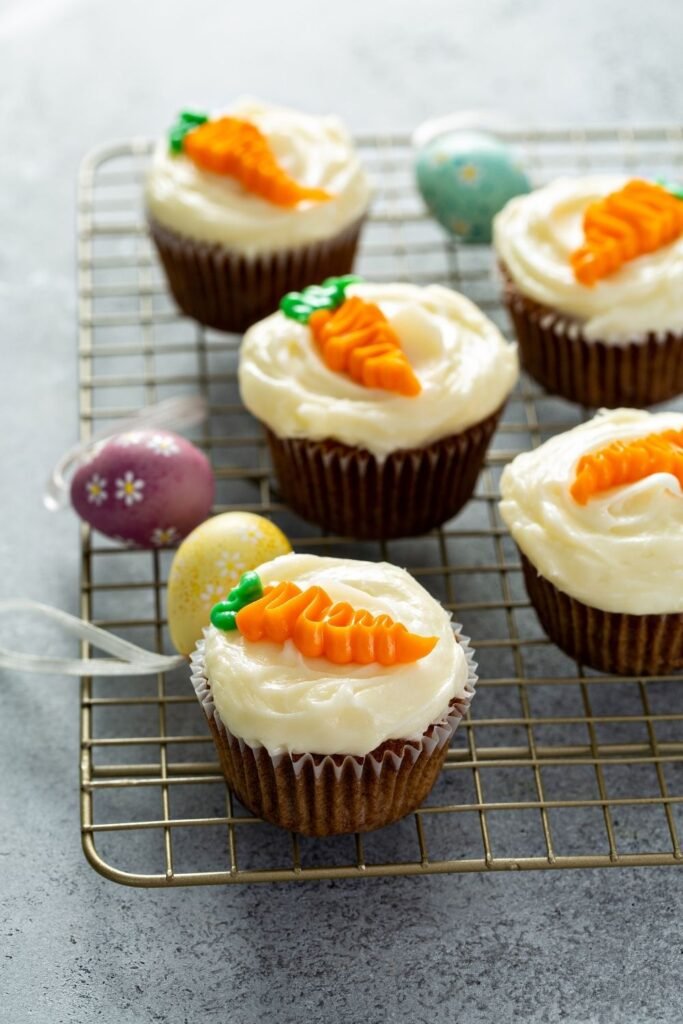
Most cupcake batters start with creaming, but these carrot cake cupcakes start in reverse. The flour, both sugars, the leaveners, the salt, and the spices all get whisked together first, and the oil goes in afterward.
That single change in order is what keeps them so soft. The oil coats the flour before the eggs and milk arrive, limiting gluten development from the very first stir.
The result is a tender, close crumb that stays moist for days, carrying warm cinnamon and nutmeg alongside the natural sweetness of grated carrot. Brown sugar deepens the flavour toward caramel, and walnuts or pecans add a bit of bite if you want them.
A batch of cream cheese frosting on top brings the tang that keeps the whole thing from tasting flat. There’s no creaming stage, no waiting for butter to soften, and no stand mixer required if you’d rather work with a hand mixer.
Here’s what sets this version apart before you start.
- Oil instead of butter gives a crumb that stays soft rather than firming up as it cools
- Two sugars do different jobs, with brown sugar adding moisture and a caramel note
- Everything is mixed in one bowl, so there’s no separate dry bowl to wash
- No softened butter means you can start the moment you decide to bake
- Cinnamon and nutmeg season the batter directly, so the spice isn’t left to the frosting
- The batter bakes in 20 minutes, which is a fraction of the time a full carrot layer cake needs
The Ingredients That Decide the Crumb
Carrot cake lives or dies on moisture balance. There’s a lot of liquid in this batter relative to the flour, and each ingredient has a specific job in holding that structure together without turning gummy.
- Oil: Stays liquid at room temperature, so the crumb feels soft straight from the fridge instead of waxy the way a butter cake can. Avocado, vegetable, and canola oil all work here because none of them carry a strong flavour of their own.
- Grated carrots: Release moisture into the batter as they bake and leave behind fine strands that break up the crumb. They’re also the main reason the cupcakes keep well, since that released water keeps the interior from drying out.
- Light brown sugar: Brings its own moisture and a slight acidity from the molasses, which gives the baking soda something to react with and adds depth behind the spice.
- Granulated sugar: Keeps the sweetness clean and helps the tops set with a fine, even surface rather than a sticky one.
- Baking soda and baking powder together: The soda handles the acidity from the brown sugar and gives browning, while the powder provides reliable lift regardless of how much acid is actually present.
- Eggs: Added one at a time so each can emulsify into the oil properly. That emulsion is what stops the baked crumb from feeling greasy in patches.
- Cinnamon and nutmeg: Cinnamon carries the warmth, nutmeg supplies the slightly resinous background note. The quarter teaspoon of nutmeg is small on purpose, because it dominates quickly.
- Walnuts or pecans: Optional, but they add a firm contrast against a very soft crumb. Leave them out and the texture is uniformly tender rather than lacking.
Why the Carrots Should Be Grated Fresh and Fine
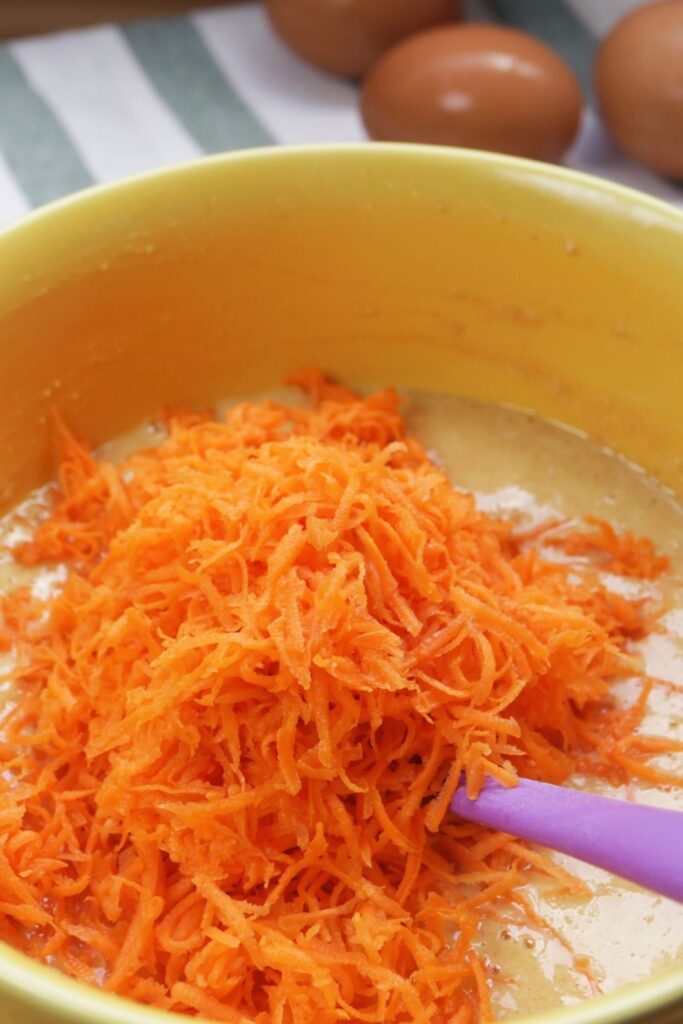
This is the step that separates a good batch from a disappointing one, and it happens before you touch the mixer.
Bagged pre-shredded carrots are cut thick and dry out on the shelf. Thick shreds don’t soften fully in 20 minutes of baking, so you end up biting into firm strips of raw-tasting carrot inside an otherwise soft cupcake. They also hold less water, which means less moisture released into the crumb.
Grate the carrots yourself on the small or medium holes of a box grater. You’re looking for fine, damp, feathery shreds that look almost fluffy in the measuring cup rather than stiff sticks. At that size, they collapse into the batter during baking and disappear into the crumb, leaving flavour and moisture behind instead of texture you have to chew through.
Measure them after grating, not before. Carrots vary enormously in size, so a set number of carrots means very little. The 1 ½ cups (170 g) is the figure that matters.
How the Batter Comes Together
The order of operations here is worth understanding, because it isn’t the sequence most cupcake recipes use.
You start dry. Flour, both sugars, both leaveners, salt, cinnamon, and nutmeg go into the mixing bowl together and get whisked until the spices are evenly distributed and no pockets of baking soda remain. Because the sugars join the dry ingredients rather than being creamed with fat, this stage doubles as your sifting step.
The oil goes in next, before any of the other liquids. It coats the flour particles and limits how much gluten can form once the watery ingredients arrive, which is a large part of why the finished crumb is so tender.
Eggs follow one at a time. Adding them individually and scraping the bowl between them gives each egg the chance to work into the oil and flour mixture rather than sitting on top of it. The batter may look slightly thick or uneven at this point, which is normal.
Vanilla and milk loosen everything into a pourable batter. Then the carrots and nuts fold in last, when the mixing is nearly done and the flour has had the least possible chance to develop.
Getting the Fill Level Right
Filling the liners is where most uneven batches begin. Underfill and the cupcakes bake up shallow with a sunken look under the frosting. Overfill and the batter runs over the rim, glues itself to the pan, and leaves you with flat, spreading tops that won’t hold frosting cleanly.
Aim for ⅔ to ¾ full and stop there. A scoop or a measuring cup makes this far easier than a spoon, because you can see immediately whether the liners match. Go around the pan once at a conservative level, then divide anything left over between them rather than filling the first few generously and running short at the end.
The batter is loose enough to settle on its own, so there’s no need to level or tap the pan aggressively.
Judging Doneness Without Overbaking
At 350F (175C), these bake for 20 minutes. That’s a short window for a batter this wet, so check rather than assume.
Insert a toothpick into the centre of a cupcake near the middle of the pan, since those bake slightly slower than the ones at the edges. You want it to come out clean or with a few moist crumbs clinging to it. Wet batter means more time. A completely dry toothpick with no crumbs at all is a sign you’ve gone slightly past the ideal point.
The tops should feel set and spring back lightly when touched, and the surface should look matte rather than glossy. Carrot cupcakes brown modestly because of the brown sugar, so colour alone isn’t a reliable guide here.
The Cream Cheese Frosting
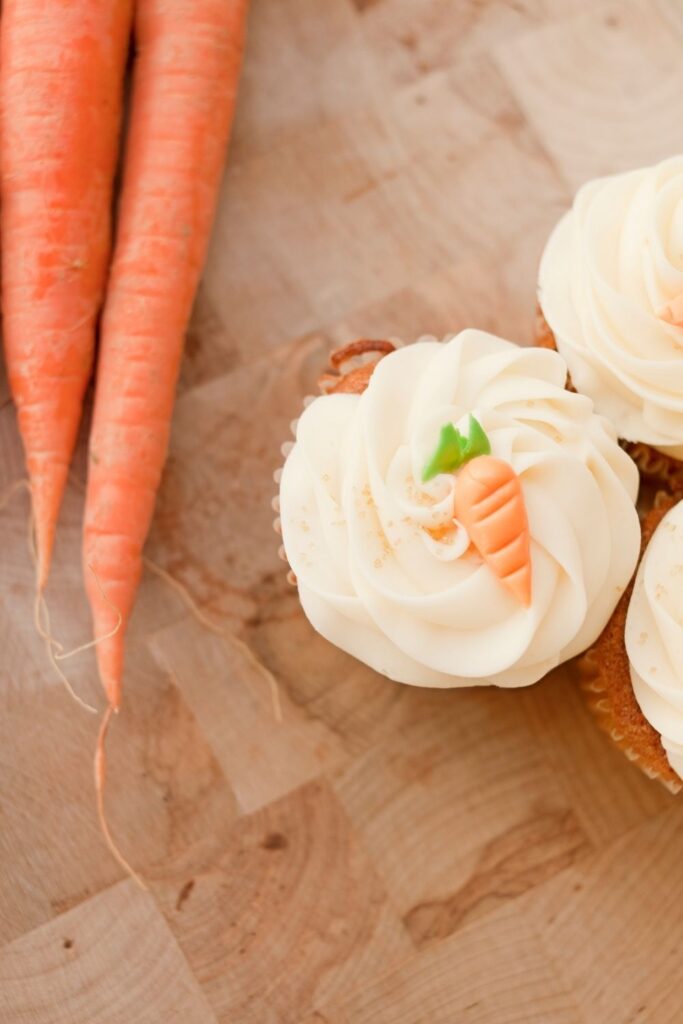
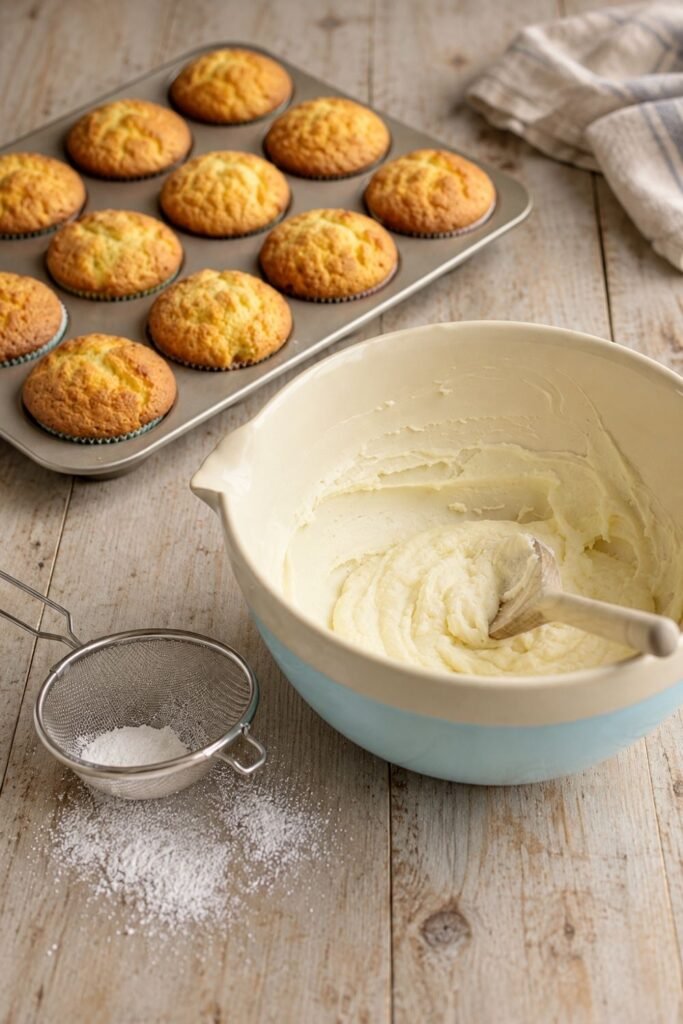
Cream cheese frosting isn’t a decorative afterthought on a carrot cupcake. Its lactic tang cuts through the sweetness of two sugars and the richness of the oil, and without it the cupcakes read as noticeably sweeter and heavier. Prepare a batch while the cupcakes bake and cool.
Because the frosting is softened by warmth and thinned by moisture, timing matters. A cupcake that still holds heat in the centre will melt the base of the frosting on contact, and it will slide rather than sit. Give the cupcakes the full 5 minutes in the tin, then move them to a rack and let them come down to room temperature completely before you pipe or spread anything on top.
Chopped nuts, if you used them in the batter, work well pressed lightly around the edge of the frosting for a bit of extra crunch.
Ingredients
Two items deserve attention before you shop. The carrots need to be grated by you rather than bought pre-shredded, and the oil should be a neutral one so it stays in the background. Everything else is standard baking stock.
The Dry Mix and Sugars
These all go into the bowl together at the start, so the sugars sit in this group rather than with the wet ingredients.
- 1 ¼ cups (157 g) all-purpose flour
- ½ cup (100 g) granulated sugar
- ½ cup (100 g) light brown sugar, packed firm enough to hold its shape when tipped out of the cup
- ¾ teaspoon baking soda
- ½ teaspoon baking powder
- ½ teaspoon salt
- 1 teaspoon cinnamon
- ¼ teaspoon nutmeg freshly grated if you have a whole nutmeg, though pre-ground is fine
The Wet Ingredients
These go in one after another, in the order listed below.
- ¾ cups (180 ml) avocado, vegetable, or canola oil any neutral oil works, since none of these compete with the spices
- 2 large eggs, room temperature they blend into the oil more readily than fridge cold eggs
- 1 ½ teaspoons vanilla extract
- 2 Tablespoons milk
The Stir-Ins and Topping
The carrots and nuts join at the very end, once the batter is otherwise finished.
- 1 ½ cups (170 g) grated carrots measured after grating, on the small or medium holes of a box grater
- ½ cup (60 g) chopped walnuts or pecans, optional
- 1 batch Cream Cheese Frosting
Instructions
Read through the steps once before starting, since the mixing order runs differently from most cupcake recipes.
- Heat the oven and line the pan. Set the oven to 350F (175C) and line a 12-count muffin pan with paper liners.
- Whisk the dry ingredients and sugars. In the bowl of a stand mixer, or a large bowl if you’re using an electric hand mixer, whisk together the flour, granulated sugar, light brown sugar, baking powder, baking soda, salt, cinnamon, and nutmeg. Break up any lumps of brown sugar now, because they won’t dissolve later.
- Work in the oil, then the eggs. Stir the oil into the dry mixture. Add the eggs one at a time, scraping down the sides of the bowl after each addition, and beat until the mixture is well combined and no dry flour remains at the bottom.
- Add the vanilla and milk. Stir in the vanilla extract and the milk. The batter should loosen noticeably and turn smooth and pourable.
- Fold in the carrots and nuts. Add the grated carrots along with the walnuts or pecans if you’re using them, and stir just until they’re evenly distributed. Stop mixing at that point rather than beating the batter smooth again.
- Fill the liners and bake. Divide the batter evenly among the cupcake liners, filling each one ⅔ to ¾ of the way full. Bake at 350F (175C) for 20 minutes, or until a toothpick inserted into the centre comes out clean or with moist crumbs attached.
- Cool completely before frosting. Let the cupcakes sit in the baking tin for 5 minutes, then carefully lift them onto a cooling rack and let them cool completely. Decorate with cream cheese frosting only once there’s no warmth left in them.
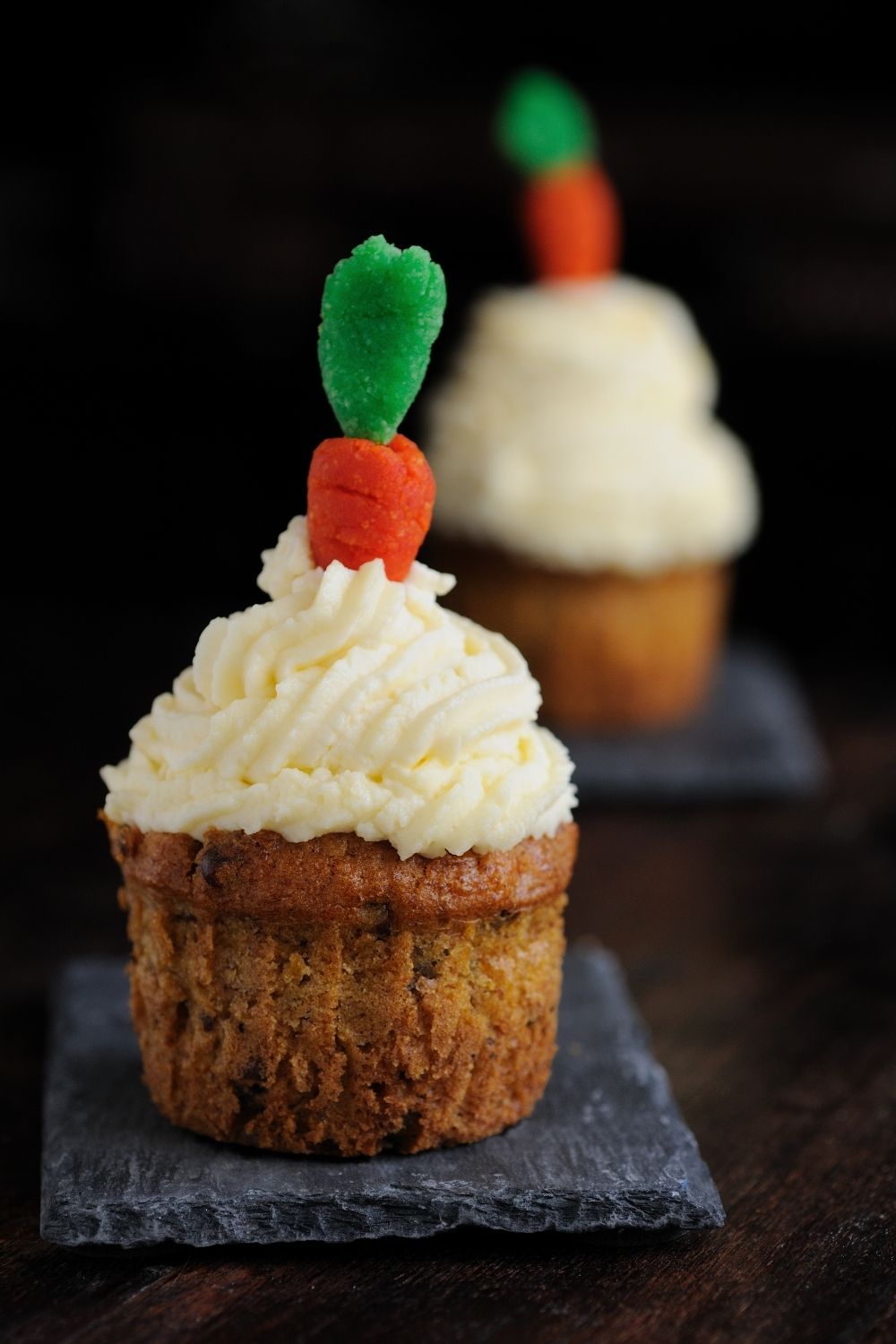
Carrot Cake Cupcakes
Ingredients
Method
- Heat the oven and line the pan. Set the oven to 350F (175C) and line a 12-count muffin pan with paper liners.
- Whisk the dry ingredients and sugars. In the bowl of a stand mixer, or a large bowl if you’re using an electric hand mixer, whisk together the flour, granulated sugar, light brown sugar, baking powder, baking soda, salt, cinnamon, and nutmeg. Break up any lumps of brown sugar now, because they won’t dissolve later.
- Work in the oil, then the eggs. Stir the oil into the dry mixture. Add the eggs one at a time, scraping down the sides of the bowl after each addition, and beat until the mixture is well combined and no dry flour remains at the bottom.
- Add the vanilla and milk. Stir in the vanilla extract and the milk. The batter should loosen noticeably and turn smooth and pourable.
- Fold in the carrots and nuts. Add the grated carrots along with the walnuts or pecans if you’re using them, and stir just until they’re evenly distributed. Stop mixing at that point rather than beating the batter smooth again.
- Fill the liners and bake. Divide the batter evenly among the cupcake liners, filling each one ⅔ to ¾ of the way full. Bake at 350F (175C) for 20 minutes, or until a toothpick inserted into the centre comes out clean or with moist crumbs attached.
- Cool completely before frosting. Let the cupcakes sit in the baking tin for 5 minutes, then carefully lift them onto a cooling rack and let them cool completely. Decorate with cream cheese frosting only once there’s no warmth left in them.
Notes
Recipe Notes
A few practical points worth knowing before you bake.
Room temperature eggs incorporate more smoothly into the oil and flour mixture. If yours are cold, sit them in a bowl of warm water for a few minutes while you measure the dry ingredients.
The nuts are genuinely optional. Leaving them out changes nothing about the mixing, the fill level, or the bake time.
If you’re grating carrots in a food processor, use the fine shredding disc rather than the standard one, and check the texture before measuring.
The cupcakes need to reach room temperature before frosting, so factor that cooling time into your schedule rather than treating it as a formality.
Frequently Asked Questions
Can I use pre-shredded carrots from a bag?
You can, but the texture suffers. Those shreds are cut much thicker and have lost moisture in packaging, so they stay firm in the finished cupcake and contribute less liquid to the crumb. Grating your own takes a few minutes and makes a visible difference.
Why do the dry ingredients and sugars go in together?
Because there’s no creaming stage. Without softened butter to beat air into, the sugars have nothing to cream with, so they’re treated as part of the dry mixture and dissolve once the oil and liquids arrive.
My batter looks thinner than a normal cupcake batter. Is that right?
Yes. Oil-based batters with this much liquid pour rather than scoop, and the grated carrot adds more moisture as it sits. The leaveners and flour will set it during baking.
Can I bake this as a cake instead?
The recipe as written is built for a 12-count muffin pan at 350F (175C) for 20 minutes. Baking it in another format is possible in principle, but the timing and pan size would need to be worked out, and neither is specified here.
How do I stop the frosting sliding off?
Wait longer. Residual heat in the centre of a cupcake is enough to soften cream cheese frosting even when the top feels cool to the touch, so give them the full cooling time on the rack.
A Final Word
These deliver the flavour of a full carrot layer cake in a batch that mixes in one bowl and bakes in 20 minutes. Grate the carrots fine, stop stirring once they’re in, and let the cupcakes cool completely before the frosting goes on, and you’ll get a soft, spiced crumb that holds its moisture well past the day you bake it.