

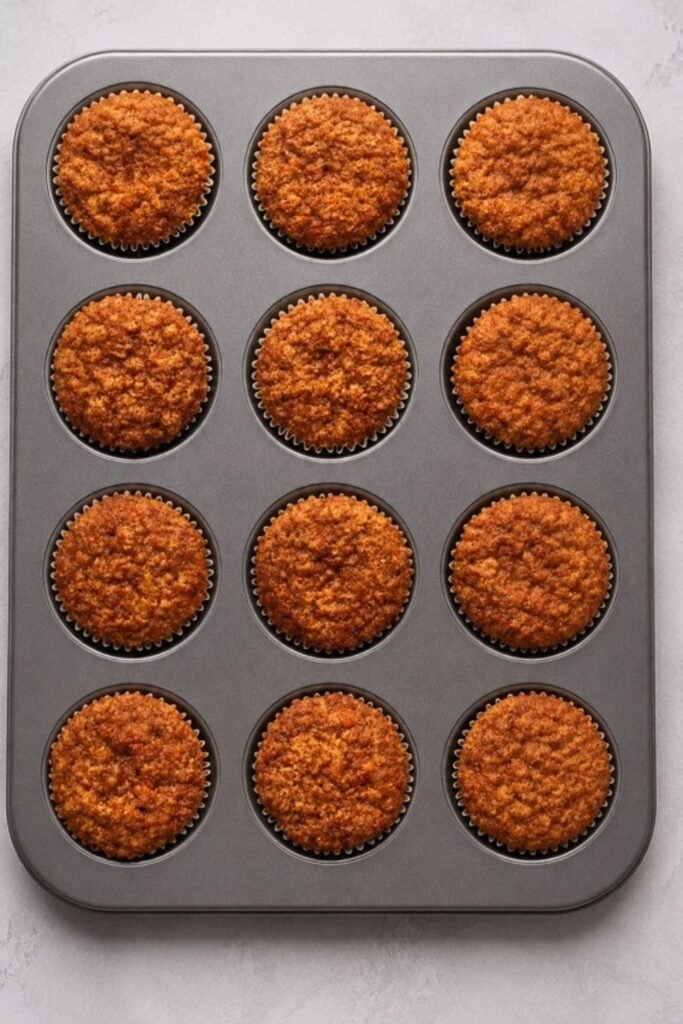
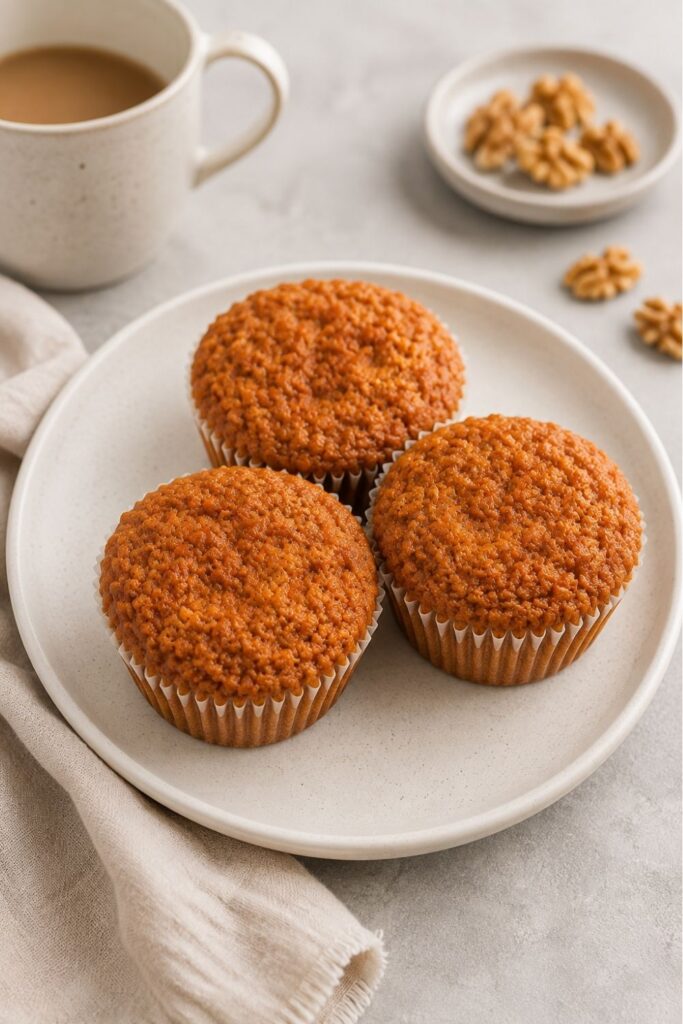
Most muffin recipes start by creaming butter or by dumping everything into one bowl and hoping for the best. These Carrot Cake Muffins do neither. The oil goes into the large bowl with brown sugar, eggs, and vanilla, the granulated sugar goes into the dry bowl with the flour and spices, and the carrots get folded into the wet mixture before the two ever meet. That split does real work, and it explains why these muffins bake up soft and close-grained rather than dry and crumbly.
The flavour is carrot cake pared back to its essentials: cinnamon, vanilla, and two cups of freshly grated carrot in only a cup and a half of flour. There’s no frosting, no pineapple, no nuts. What you get instead is a moist, lightly spiced muffin that tastes like the inside of a carrot cake without the sweetness of a topping competing with it.
They bake in 20 to 22 minutes and keep for days, which makes them a genuinely practical thing to have in the kitchen on a weekday morning.
A quick look at why this version is worth the twenty minutes.

- Two cups of carrot to a cup and a half of flour means the crumb stays moist without any dairy in the batter
- Oil instead of butter, so there’s nothing to soften and nothing to cream
- Granulated and brown sugar each do a different job, giving sweetness and softness at the same time
- Everything comes together in two bowls with a whisk and a spoon
- They keep for three days on the counter and two weeks in the fridge, and reheat well
The Ingredients That Shape the Crumb
There are only eleven items on this list, and most of them are pulling more weight than their quantity suggests. These are the ones worth understanding before you start.
- Finely grated carrots: Two cups against a cup and a half of flour is a high ratio. The carrots release moisture as they bake, and that steam is the only thing standing between you and a dry muffin, since there’s no milk, yoghurt, or sour cream in this batter.
- Granulated sugar: This one sits in the dry bowl rather than the wet. Sugar is hygroscopic, so mixed through the flour it holds onto moisture and interferes with gluten forming, which is part of why the crumb stays tender.
- Brown sugar: The molasses in brown sugar brings a faint caramel note and extra moisture, and it’s also mildly acidic, which gives the baking soda something to react with.
- Vegetable oil: Oil stays liquid at room temperature and coats flour proteins more thoroughly than solid fat does. That’s why an oil muffin still tastes soft on day three, while a butter one has firmed up.
- Baking soda and baking powder together: The soda reacts with the acidity in the brown sugar for an immediate lift, while the powder holds some of its rise back for the oven. Using both gives you a dome without an overly coarse, tunnelled crumb.
- Eggs, at room temperature: Cold eggs hitting oil can leave the wet mixture looking separated and streaky. At room temperature they blend in smoothly and hold the batter together.
- Cinnamon: Only half a teaspoon, which is deliberate. It’s there to frame the carrot rather than dominate it, so these read as carrot muffins rather than spice muffins.
- Salt: Half a teaspoon in a sweet batter isn’t there to taste salty. It sharpens the vanilla and keeps a cup and a third of combined sugar from tasting flat.
Why the Carrots Have to Be Freshly Grated
This is the one substitution the recipe rules out, and the reason is structural rather than fussy.
Pre-shredded bagged carrots are cut on thick industrial blades and then held in packaging for days, which dries their surfaces out. Dropped into this batter, they behave more like solid pieces than like a moisture source. They stay firm through the bake, they don’t soften into the crumb, and crucially they don’t release the water this recipe is counting on to keep the muffins moist.
Freshly grated carrot on the small or medium holes of a box grater gives you fine, damp shreds that practically dissolve into the batter. You’ll see the difference before baking: fresh carrot makes the wet mixture look loose and slightly wet, while bagged shreds leave it looking dry and chunky.
Grate them just before you mix. Carrot grated an hour ahead and left uncovered starts drying at the edges, which puts you partway back toward the bagged problem.
Wet Bowl First, Then the Dry Goes In
The mixing order here runs opposite to the usual muffin method, where dry ingredients wait in the big bowl and wet ingredients get poured over. Here the large bowl holds the wet mixture, the carrots go in with it, and the dry ingredients are stirred in last.
Build the wet base properly before anything else happens. Oil, brown sugar, eggs, and vanilla need to be mixed well, until the brown sugar has dissolved into the oil and the eggs are fully incorporated with no streaks of yolk visible. Then the carrots go in and get stirred through so they’re evenly suspended.
Once the dry mixture joins the party, everything changes pace. Flour begins developing gluten the moment it hydrates, and gluten in a muffin means a tough, chewy crumb with tunnels running through it. Stir until the flour is completely incorporated and no dry pockets remain at the bottom of the bowl, then stop. Not one turn more.
The finished batter should look thick and heavily loaded with carrot, closer to a spoonable mixture than a pourable one. That’s exactly right.
Two Thirds Full, and Why That Number Matters
Filling the liners two thirds full sounds like an arbitrary instruction, but it’s the difference between a domed muffin and a spilled one.
This batter contains both baking soda and baking powder, and with the soda reacting against the brown sugar immediately, the rise starts the moment the two bowls are combined. Fill past two thirds and the batter climbs over the rim, spreads across the top of the tin, and sets into a flat connected sheet with the muffins buried underneath. Fill well below it and there isn’t enough batter to push up into a dome at all.
An ice cream scoop or a large spoon makes this easier to judge than pouring. Aim for the same amount in every cavity so they finish baking at the same time, and get the tray into the oven promptly once the batter is mixed, so you don’t lose the leavening reaction to the countertop.
If your tin has empty cavities left over, that’s fine. There’s no need to add water to them.
Reading the Muffins at 20 Minutes
The bake window is 20 to 22 minutes at 350 degrees, which is a narrow range, and with this much carrot in the batter the centres take longer to set than the tops suggest.
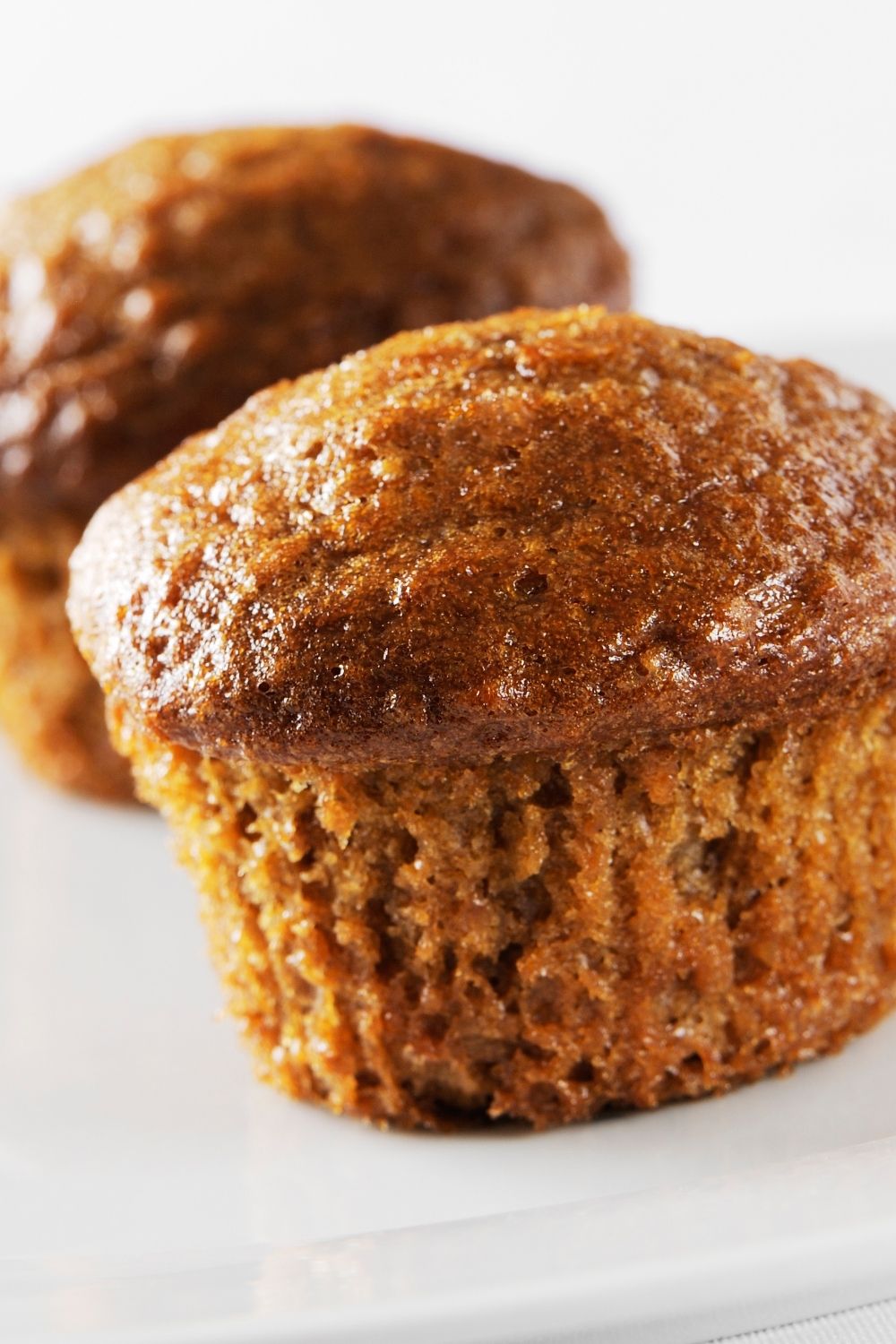
Test with a toothpick inserted into the middle of a muffin, not the edge. It should come out clean. Damp batter clinging to it means they need the rest of the window, so give them the extra minutes and test in a fresh spot. Don’t read the browned tops as a doneness signal, since sugar and cinnamon darken well before the interior finishes.
Once they’re out, let them sit in the tin for 5 minutes before moving them. This short rest lets the structure firm up enough to survive being lifted. Go straight to the rack and warm muffins tend to tear or leave their bases behind. After the 5 minutes, transfer them to a cooling rack so steam escapes from underneath instead of condensing and turning the bottoms soggy.
How Long They Keep
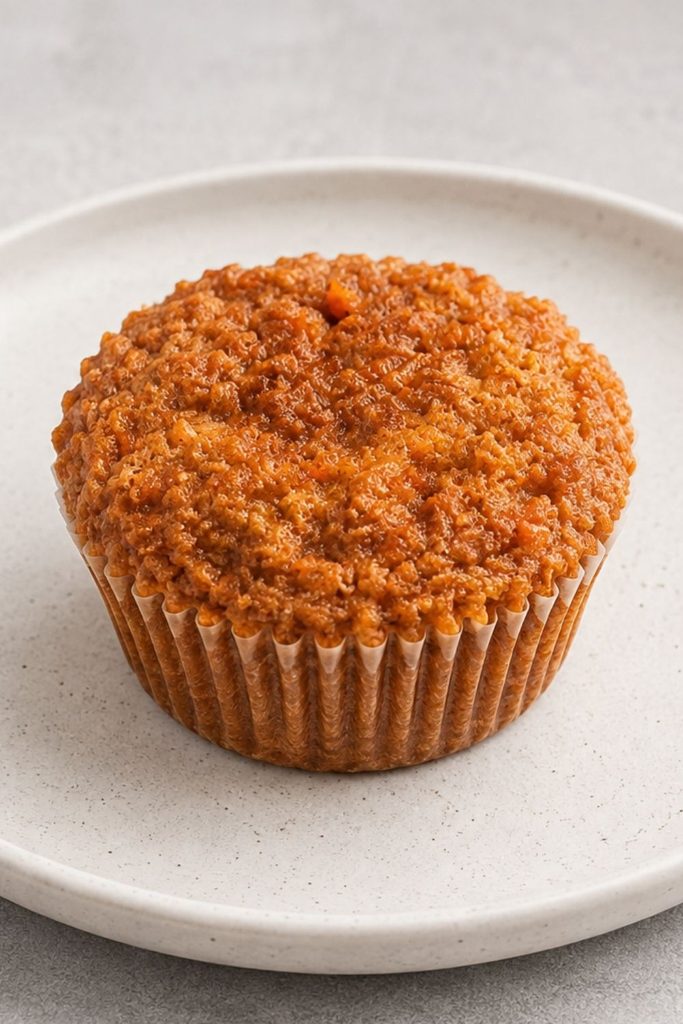
The storage window here is unusually generous for a muffin, and that comes down to the oil and the carrot moisture working together.
Serve them fresh if you can, or store them in an airtight container at room temperature for up to 3 days. In the fridge they’ll hold for up to 2 weeks, which makes a single batch worth making on a Sunday.
Fridge-cold muffins taste firmer than they really are, so it’s worth warming them. About 15 seconds in the microwave brings back the soft texture, and a little butter spread on top while they’re still warm turns them into a proper breakfast rather than a snack.
Everything You’ll Need
Two ingredients are worth a second look before you shop. The carrots need to be freshly grated rather than pre-shredded, and the sugars are split across both bowls, so read carefully before you tip anything in.
- Flour, 1 ½ cups
- Sugar, 1 cup (the granulated sugar belongs here, not with the wet ingredients)
- Cinnamon, ½ teaspoon
- Baking soda, ½ teaspoon
- Baking powder, ½ teaspoon
- Salt, ½ teaspoon
- Vegetable oil, ½ cup
- Brown sugar, ⅓ cup
- Large eggs, 2, at room temperature (cold eggs can make the oil mixture look separated)
- Vanilla extract, 2 teaspoons
- Finely grated carrots, 2 cups, not pre-shredded carrots, they should be freshly grated
How to Make Them
- Heat the oven and prepare the tin. Set the oven to 350 degrees and line a muffin tin with paper or silicone cupcake liners. If you’d rather skip liners, grease the tin well with cooking spray, reaching into the corners of each cavity.
- Whisk the dry ingredients. In a medium bowl, whisk the flour, sugar, cinnamon, baking soda, baking powder, and salt together. Whisking rather than stirring breaks up any clumps of soda or powder, which matters because half a teaspoon of leavening left in a lump will leave a bitter spot in a finished muffin.
- Build the wet mixture and add the carrots. In a large bowl, combine the oil, brown sugar, eggs, and vanilla, and mix well until the brown sugar has dissolved and the eggs are fully blended in with no streaks left. Stir in the grated carrots so they’re evenly distributed through the mixture.
- Bring the two bowls together. Stir the dry ingredients into the wet ingredients until completely incorporated. Work only until the flour disappears and no dry pockets remain at the base of the bowl, because every extra stir past that point builds gluten and toughens the crumb.
- Portion the batter. Fill the muffin liners 2/3 full, keeping the amounts even so every muffin bakes on the same schedule. Any higher and the batter will spill over the rim as it rises.
- Bake and cool. Bake in the preheated oven for 20 to 22 minutes, until a toothpick inserted in the center of the muffins comes out clean. Cool for 5 minutes in the tin before transferring them to a cooling rack to continue cooling, which lets steam escape from underneath rather than softening the bases.
- Serve or store. Serve fresh, or store in an airtight container at room temperature for up to 3 days, or in the fridge for up to 2 weeks. To bring stored muffins back, reheat them in the microwave for about 15 seconds and spread a little butter on top.

Carrot Cake Muffins For Breakfast Or An Easy Snack
Ingredients
Method
- Heat the oven and prepare the tin. Set the oven to 350 degrees and line a muffin tin with paper or silicone cupcake liners. If you’d rather skip liners, grease the tin well with cooking spray, reaching into the corners of each cavity.
- Whisk the dry ingredients. In a medium bowl, whisk the flour, sugar, cinnamon, baking soda, baking powder, and salt together. Whisking rather than stirring breaks up any clumps of soda or powder, which matters because half a teaspoon of leavening left in a lump will leave a bitter spot in a finished muffin.
- Build the wet mixture and add the carrots. In a large bowl, combine the oil, brown sugar, eggs, and vanilla, and mix well until the brown sugar has dissolved and the eggs are fully blended in with no streaks left. Stir in the grated carrots so they’re evenly distributed through the mixture.
- Bring the two bowls together. Stir the dry ingredients into the wet ingredients until completely incorporated. Work only until the flour disappears and no dry pockets remain at the base of the bowl, because every extra stir past that point builds gluten and toughens the crumb.
- Portion the batter. Fill the muffin liners 2/3 full, keeping the amounts even so every muffin bakes on the same schedule. Any higher and the batter will spill over the rim as it rises.
- Bake and cool. Bake in the preheated oven for 20 to 22 minutes, until a toothpick inserted in the center of the muffins comes out clean. Cool for 5 minutes in the tin before transferring them to a cooling rack to continue cooling, which lets steam escape from underneath rather than softening the bases.
- Serve or store. Serve fresh, or store in an airtight container at room temperature for up to 3 days, or in the fridge for up to 2 weeks. To bring stored muffins back, reheat them in the microwave for about 15 seconds and spread a little butter on top.
Notes
Recipe Notes
A few points from the method are worth carrying into the kitchen with you.
Grate the carrots just before mixing rather than earlier in the day, so they still carry the moisture the batter depends on.
Get the tray into the oven promptly once the two bowls are combined. The baking soda begins reacting with the brown sugar immediately, and batter left sitting on the counter loses some of that lift before it ever sees heat.
If you’re baking a second tray from the same batch, keep the batter covered and use it as soon as the first tray comes out.
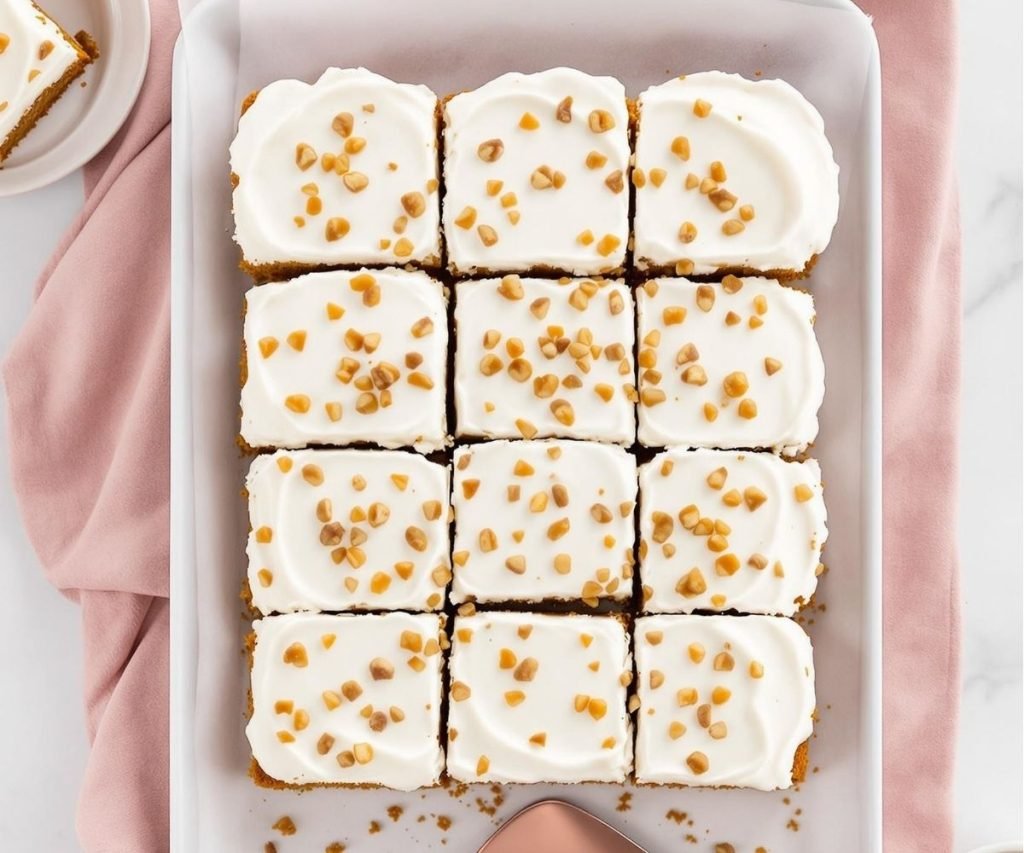
There’s no frosting in this recipe, and the muffins are built to work without one. If you want them richer, warming a muffin and adding butter is the route the recipe itself suggests.
These land somewhere between a breakfast muffin and a slice of cake, sweet enough to feel like a treat but not so sweet that you can’t eat one at seven in the morning. Made with freshly grated carrot and a light hand at the mixing bowl, the crumb stays soft for days, and a fifteen second warm-up brings them right back.