

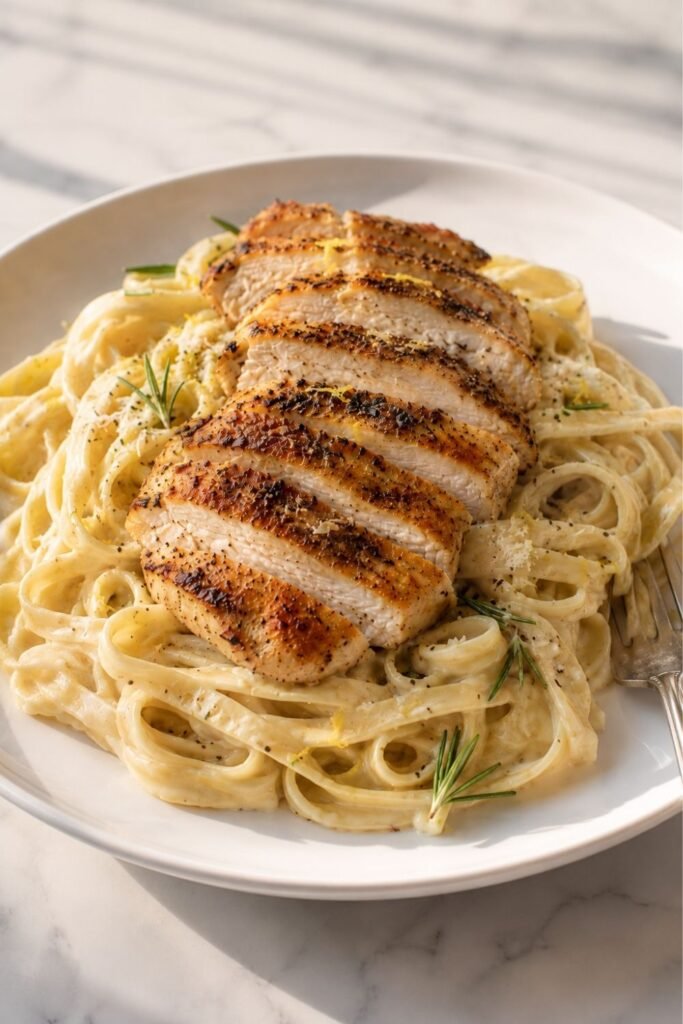
Creamy chicken pasta works best when the sauce feels rich without becoming heavy or pasty. Here, thin pieces of seasoned chicken are lightly coated in flour and seared until golden, then the same skillet becomes the base for a creamy garlic sauce with Parmesan and Romano cheeses.
The white wine lifts the browned flavour from the pan, while chicken broth, half and half, butter and a small amount of flour build a sauce that clings naturally to the pasta. Reserving pasta water gives you control over the final consistency, and an optional squeeze of lemon can brighten everything just before serving.
Here are the main reasons this version works so well.
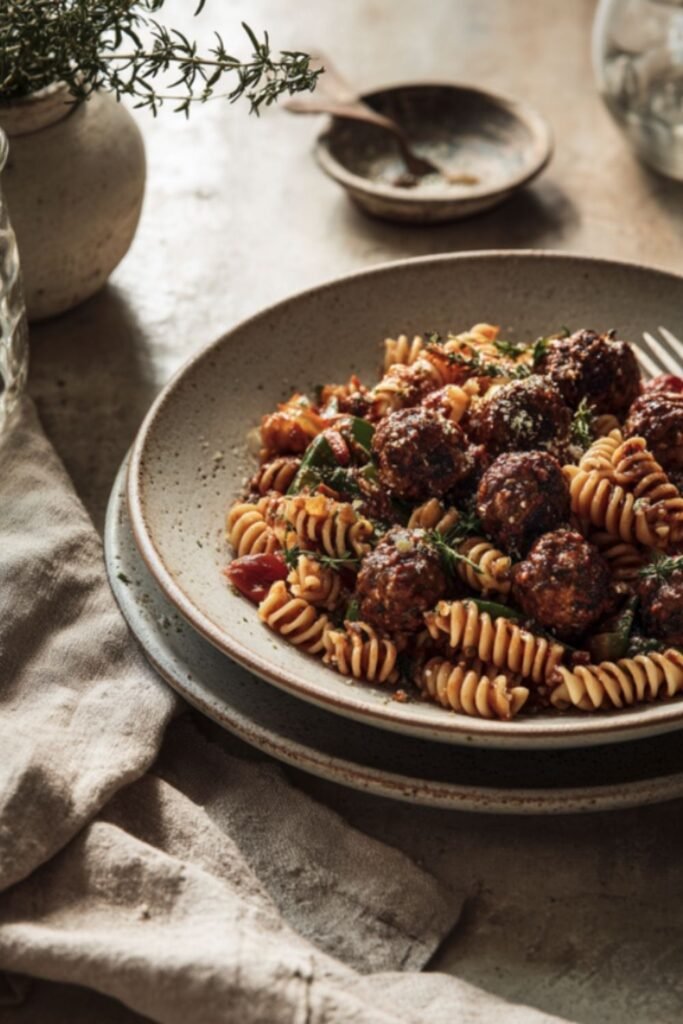
- The chicken develops a lightly textured golden surface from its thin flour coating.
- White wine loosens the browned bits in the skillet so their flavour becomes part of the sauce.
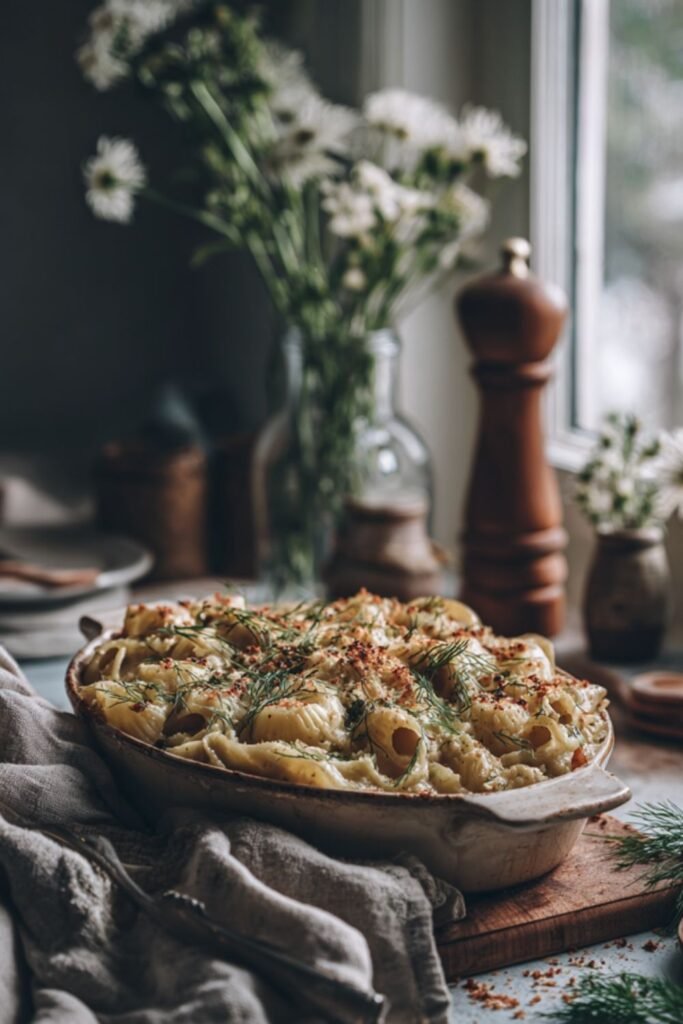
- Parmesan and Romano provide richness and savoury depth without relying on cream alone.
- Adding the liquid gradually helps the roux stay smooth and gives the sauce an even consistency.
- Reserved pasta water lets you loosen the finished sauce only when it actually needs it.
What Gives The Sauce Its Creamy Texture
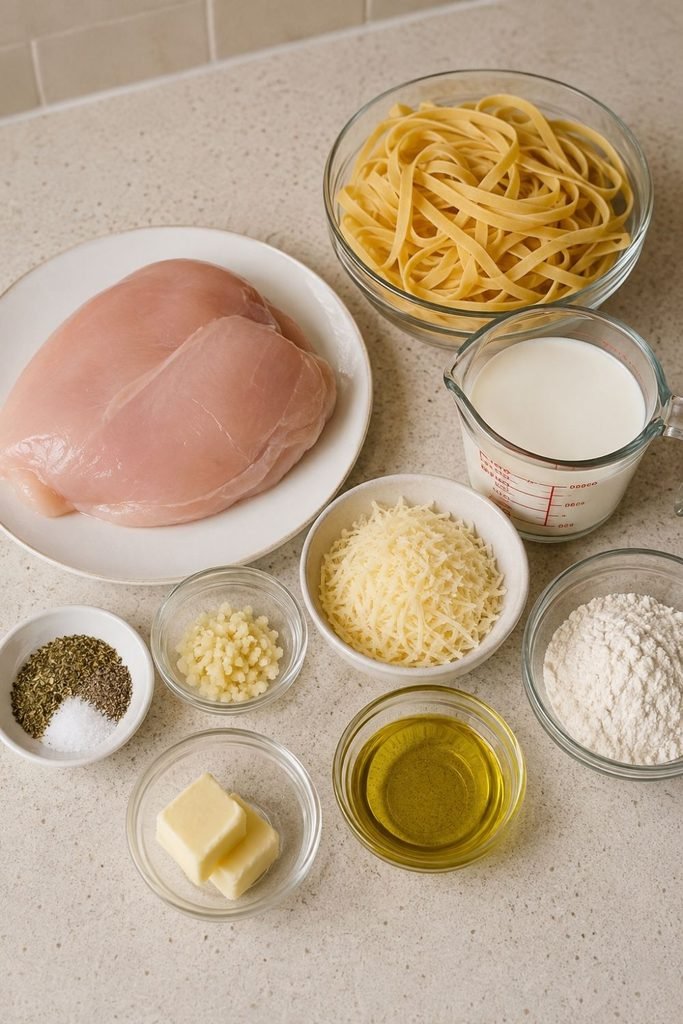
This sauce gets its body from several ingredients working together rather than from one especially heavy ingredient. The flour, butter and dairy establish the structure, while broth keeps the finished sauce from tasting excessively rich.
The cheeses are added near the end, after the sauce base has already formed. That matters because their role is to bring flavour and additional body rather than to do all the thickening themselves.
A few ingredients deserve particular attention before you begin.
- Half and half: This provides the creamy base while the chicken broth supplies additional savoury flavour and loosens the dairy.
- Flour and butter: These create the roux that gives the sauce enough body to cling to the pasta.
- Dry white wine: It deglazes the skillet and brings the browned flavour from the chicken into the sauce.
- Parmesan and Romano: The two grated cheeses add saltiness, richness and a deeper savoury character.
- Chicken bouillon: Half a cube intensifies the chicken flavour already supplied by the broth.
- Pasta water: The reserved cooking water is optional, but it gives you a simple way to adjust a sauce that becomes thicker than you want.
Combining the half and half, broth and dried seasonings before you start cooking also makes the sauce easier to manage. Once the roux is ready, you can add that mixture gradually instead of stopping to measure several separate ingredients.
Building Flavour From The Chicken Skillet
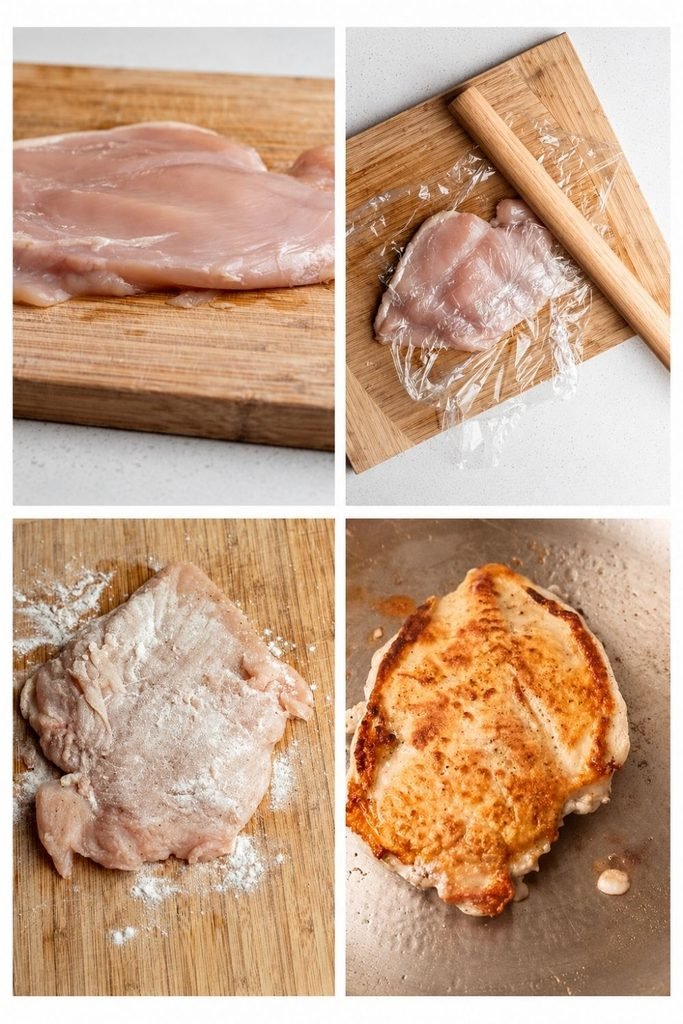
The chicken does more than provide protein for this pasta. Searing it first creates the browned layer on the skillet that becomes the foundation of the sauce.
Slice the breast lengthwise so you have 2-4 thinner pieces, then pound them to about 1-inch thick. Drying the surface before seasoning helps the flour adhere more evenly, while the light flour coating gives the chicken additional texture during searing.
The olive oil should be hot enough for the chicken to begin browning once it reaches the skillet. The supplied method calls for 3-4 minutes per side, followed by a 10-minute rest before slicing. Because poultry safety can’t be determined reliably from colour alone, check the thickest part with a thermometer and make sure the chicken reaches a safe internal temperature of 165°F/74°C.
The browned residue left behind should stay in the pan. When the wine goes in, scrape the bottom and sides with a silicone spatula so that concentrated flavour dissolves into the liquid instead of being left behind.
Why The Roux Needs Slow, Gradual Liquid
Once the wine has reduced by half, the butter and garlic go into the same skillet. After 1 minute, the flour is stirred in and cooked continuously for 2 minutes.
That short flour-cooking stage matters. You want the flour incorporated into the fat before the dairy and broth mixture arrives. Pouring all the liquid in at once makes it harder to keep that structure intact.
Instead, add the chicken broth and half-and-half mixture in small splashes while stirring continuously. Each addition should blend into the thickened base before you continue.
Once the liquid is incorporated, stir in the ½ chicken bouillon cube. Bring everything only to a gentle bubble, then reduce the heat to low and partially cover the skillet.
Keeping the sauce gentle from this point also prepares it for the cheese added later. Parmesan and Romano should be sprinkled in gradually while you stir, rather than being dumped into a rapidly boiling sauce.
How To Keep Creamy Chicken Pasta From Turning Dry
The pasta is intentionally cooked no further than al dente. It still has to be tossed through the hot sauce, so cooking it too far in the water gives you less control over its final texture.
Before draining, reserve 1 cup of pasta water. The original method even recommends placing a measuring cup in the colander beforehand as a reminder, which is useful because this step is easy to forget once the pasta is ready.
Don’t automatically pour the whole cup into the sauce. Add only small splashes if the pasta needs loosening after it has been combined with the sauce and chicken.
This is particularly useful because creamy cheese sauces naturally thicken as they sit. The supplied recipe also notes that reserved pasta water can help smooth the sauce again when reheating leftovers.
The optional lemon belongs at the very end. A squeeze over the finished pasta adds acidity without changing the structure of the sauce while it cooks.
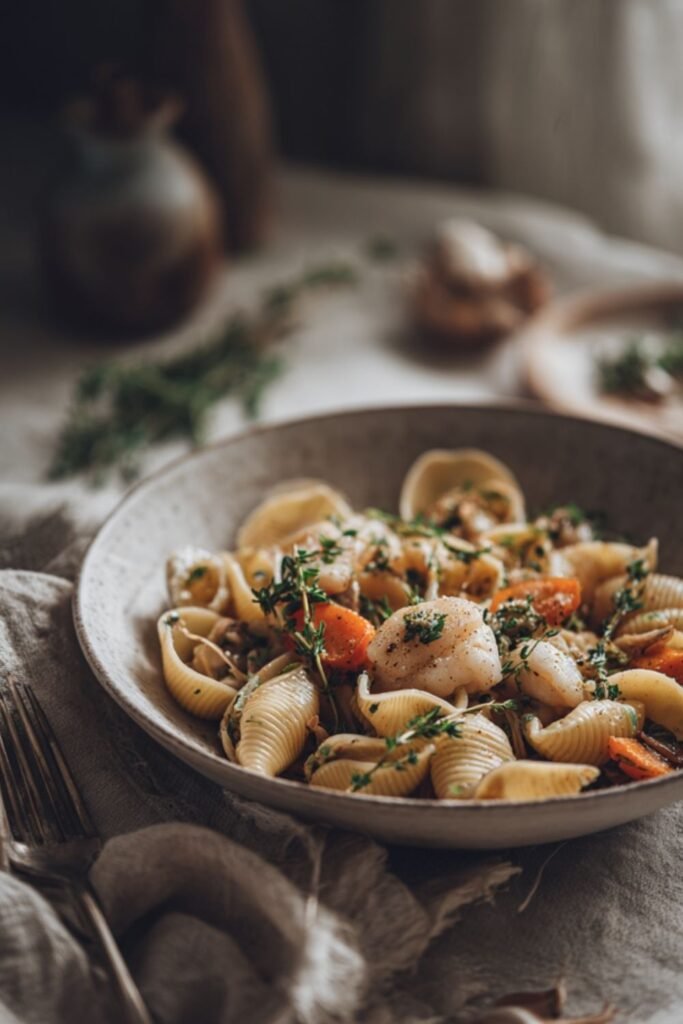
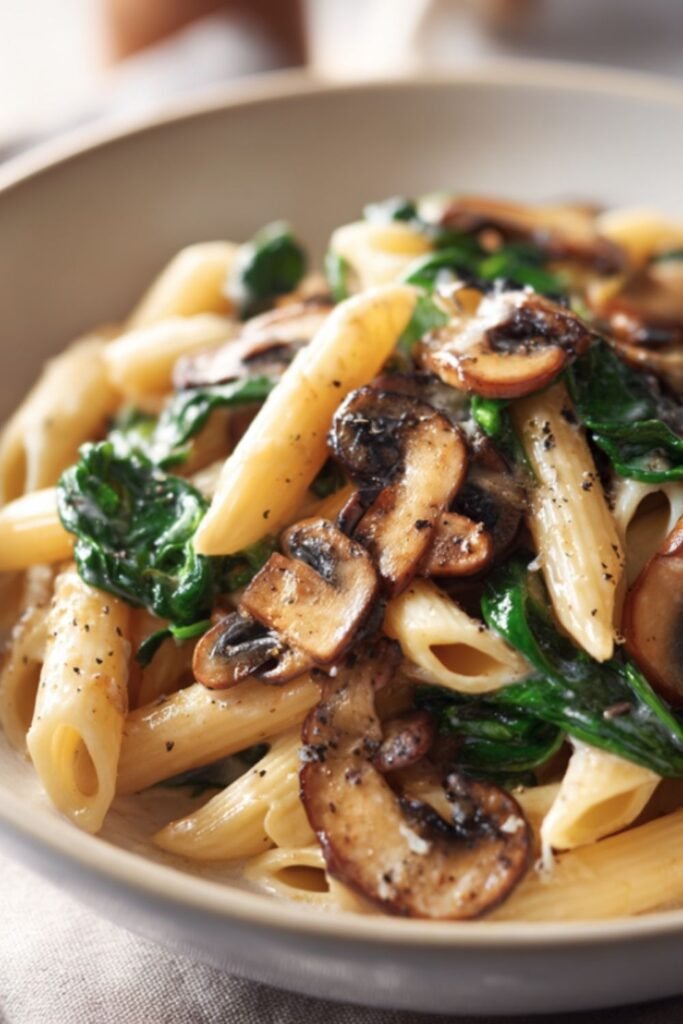
How The Dish Comes Together
The recipe moves through a few connected stages, but most of them happen in the same skillet. First you prepare the seasoned dairy and broth mixture, then season and sear the chicken.
While the chicken rests, the skillet is deglazed with wine. Butter, garlic and flour turn the deglazed pan into the base of the cream sauce, then the prepared liquid mixture is incorporated gradually.
The pasta cooks separately while the sauce gently bubbles. Once both are ready, the cheeses go into the sauce first, followed by the pasta and finally the sliced chicken with any juices that collected while it rested.
That order keeps the chicken from spending unnecessary time in the sauce and gives you a chance to adjust the pasta’s consistency only after everything has been combined.
Ingredients
The chicken coating, sauce base and dried seasoning mixture are easiest to follow when kept in their original preparation groups. Pay particular attention to the flour because it appears in both the chicken coating and the sauce.
For the Chicken
These ingredients prepare the chicken before it is seared.
- 1 large boneless skinless chicken breast
- Salt/pepper
- 2 teaspoons Italian seasoning
- ¼ cup flour, for the light surface coating
- 1-2 tablespoons olive oil, for searing
For the Pasta and Sauce
The wine, butter, garlic, dairy, broth and cheeses form the sauce that coats the pasta.
- ½ cup dry white wine, see notes
- 3 tbsp butter
- 3 cloves garlic, minced
- 3 tbsp flour
- 1 ¼ cups half and half, (half light cream, half milk)
- ¾ cups chicken broth
- ½ chicken bouillon cube
- 1/3 cup Parmesan cheese, grated
- 1/3 cup Romano cheese, grated, see notes
- ½ lb. pasta, any kind
- 1 cup pasta water, optional
- 1 lemon, optional
For the Seasoning Mixture
These dried seasonings are combined with the half and half and chicken broth during the prep stage.
- ½ teaspoon EACH: onion powder, garlic salt, oregano, basil, mustard powder, parsley, all dried seasonings
- 1/8 teaspoon smoked paprika
Instructions
The method is easiest to manage when everything is measured before the chicken reaches the skillet. Keep the working order below unchanged so the sauce, pasta and rested chicken are ready at the right points.
- Prepare the sauce mixture. Pour the half and half and chicken broth into a large measuring cup with a spout, then mix in the seasonings. Measure the remaining ingredients before you start cooking. Put a measuring cup inside the colander you’ll use for the pasta so you remember to save some cooking water later.
- Cut and flatten the chicken. Slice the chicken breast in half lengthwise to create 2-4 thinner slices. Cover the pieces with plastic wrap and pound each side until about 1-inch thick, remembering that the chicken will plump up as it cooks.
- Season the chicken. Pat each piece dry, then season both sides with salt/pepper and Italian seasoning. Sprinkle the ¼ cup flour over both sides and rub it across the surface to create the light coating used for searing.
- Sear and rest. Heat 1-2 tablespoons olive oil in a large skillet over medium-high heat. Add the chicken and cook for 3-4 minutes per side, until a golden crust forms. Check that the chicken has reached a safe internal temperature of 165°F/74°C, then set it aside for 10 minutes before cutting it into strips.
- Start the pasta water. Bring water to a boil for the pasta while you move on to the sauce.
- Deglaze with the wine. Pour ½ cup dry white wine into the chicken skillet and lower the heat to medium. Scrape the bottom and sides with a silicone spatula to loosen the fond. Let the wine bubble gently for 3-4 minutes, until reduced by half.
- Build the roux. Add 3 tbsp butter and 3 cloves garlic, minced, and cook for 1 minute. Stir in 3 tbsp flour and keep stirring continuously for 2 minutes so the raw flour smell cooks away.
- Add the creamy liquid gradually. Pour the prepared chicken broth/half and half mixture into the skillet in small splashes, stirring continuously as you go. Work slowly so the roux remains intact and the sauce keeps its thick consistency.
- Add the bouillon. Stir in the ½ chicken bouillon cube. Bring the sauce to a gentle bubble, then turn the heat to low and partially cover the skillet.
- Cook the pasta. Salt the boiling water and add ½ lb. pasta, any kind. Cook only until no more than al dente, using a timer to avoid overcooking and stirring occasionally. Drain the pasta and reserve 1 cup pasta water.
- Melt in the cheeses. Gradually sprinkle 1/3 cup Parmesan cheese, grated, and 1/3 cup Romano cheese, grated, into the sauce while stirring continuously.
- Combine the pasta and chicken. Add the drained pasta to the skillet and gently toss it through the sauce with a silicone spatula. Add the sliced chicken along with any juices that have collected on its resting plate, then toss again to combine.
- Adjust the consistency. If the sauce needs loosening, add the reserved pasta water in small splashes and toss gently until the consistency is where you want it.
- Finish and serve. If desired, squeeze fresh lemon over the pasta just before serving. Garnish with parsley and serve.
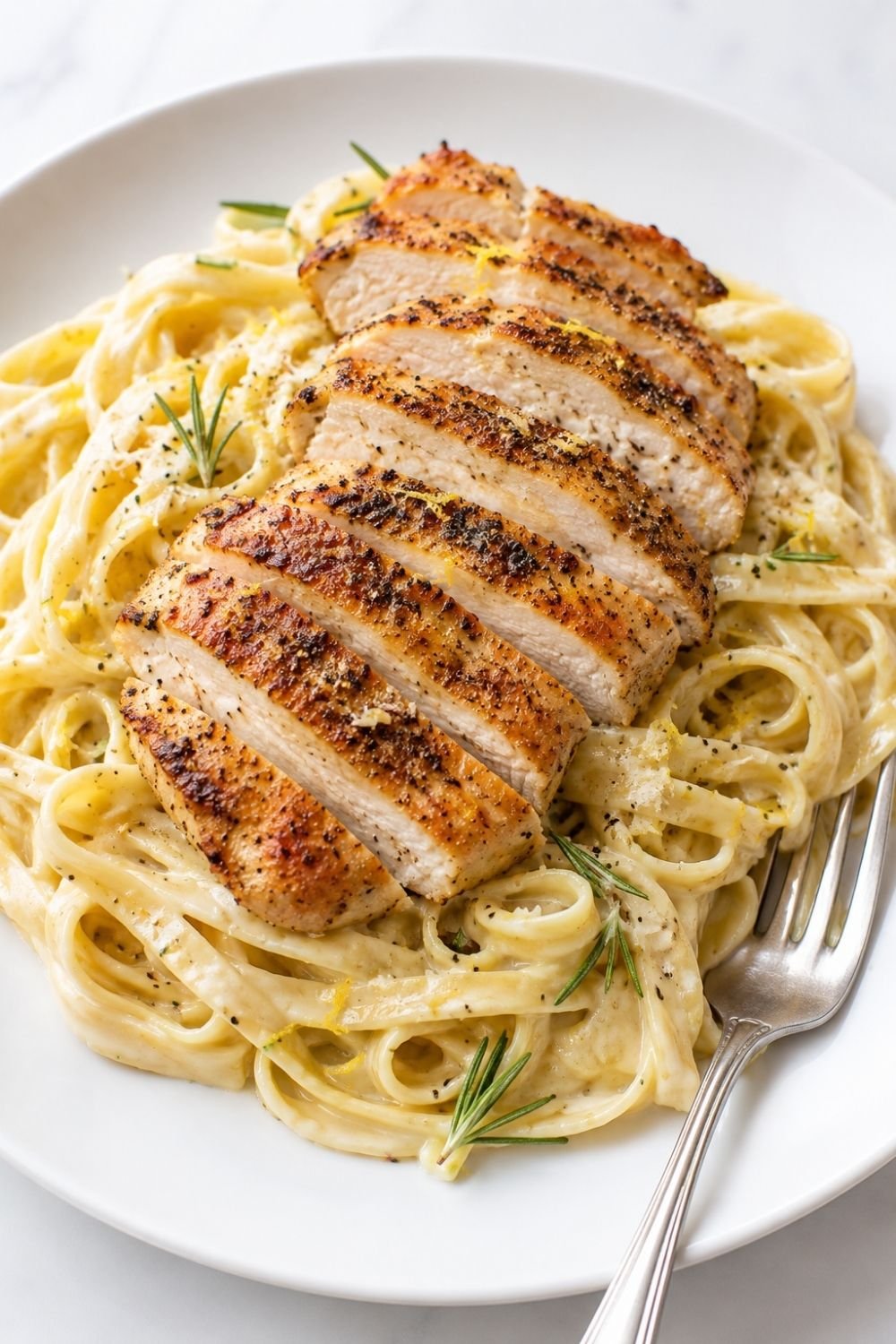
Creamy Chicken Pasta
Ingredients
Method
- Prepare the sauce mixture. Pour the half and half and chicken broth into a large measuring cup with a spout, then mix in the seasonings. Measure the remaining ingredients before you start cooking. Put a measuring cup inside the colander you’ll use for the pasta so you remember to save some cooking water later.
- Cut and flatten the chicken. Slice the chicken breast in half lengthwise to create 2-4 thinner slices. Cover the pieces with plastic wrap and pound each side until about 1-inch thick, remembering that the chicken will plump up as it cooks.
- Season the chicken. Pat each piece dry, then season both sides with salt/pepper and Italian seasoning. Sprinkle the ¼ cup flour over both sides and rub it across the surface to create the light coating used for searing.
- Sear and rest. Heat 1-2 tablespoons olive oil in a large skillet over medium-high heat. Add the chicken and cook for 3-4 minutes per side, until a golden crust forms. Check that the chicken has reached a safe internal temperature of 165°F/74°C, then set it aside for 10 minutes before cutting it into strips.
- Start the pasta water. Bring water to a boil for the pasta while you move on to the sauce.
- Deglaze with the wine. Pour ½ cup dry white wine into the chicken skillet and lower the heat to medium. Scrape the bottom and sides with a silicone spatula to loosen the fond. Let the wine bubble gently for 3-4 minutes, until reduced by half.
- Build the roux. Add 3 tbsp butter and 3 cloves garlic, minced, and cook for 1 minute. Stir in 3 tbsp flour and keep stirring continuously for 2 minutes so the raw flour smell cooks away.
- Add the creamy liquid gradually. Pour the prepared chicken broth/half and half mixture into the skillet in small splashes, stirring continuously as you go. Work slowly so the roux remains intact and the sauce keeps its thick consistency.
- Add the bouillon. Stir in the ½ chicken bouillon cube. Bring the sauce to a gentle bubble, then turn the heat to low and partially cover the skillet.
- Cook the pasta. Salt the boiling water and add ½ lb. pasta, any kind. Cook only until no more than al dente, using a timer to avoid overcooking and stirring occasionally. Drain the pasta and reserve 1 cup pasta water.
- Melt in the cheeses. Gradually sprinkle 1/3 cup Parmesan cheese, grated, and 1/3 cup Romano cheese, grated, into the sauce while stirring continuously.
- Combine the pasta and chicken. Add the drained pasta to the skillet and gently toss it through the sauce with a silicone spatula. Add the sliced chicken along with any juices that have collected on its resting plate, then toss again to combine.
- Adjust the consistency. If the sauce needs loosening, add the reserved pasta water in small splashes and toss gently until the consistency is where you want it.
- Finish and serve. If desired, squeeze fresh lemon over the pasta just before serving. Garnish with parsley and serve.
Notes
How To Keep Creamy Chicken Pasta From Turning Dry
The pasta is intentionally cooked no further than al dente. It still has to be tossed through the hot sauce, so cooking it too far in the water gives you less control over its final texture. Before draining, reserve 1 cup of pasta water. The original method even recommends placing a measuring cup in the colander beforehand as a reminder, which is useful because this step is easy to forget once the pasta is ready. Don’t automatically pour the whole cup into the sauce. Add only small splashes if the pasta needs loosening after it has been combined with the sauce and chicken. This is particularly useful because creamy cheese sauces naturally thicken as they sit. The supplied recipe also notes that reserved pasta water can help smooth the sauce again when reheating leftovers. The optional lemon belongs at the very end. A squeeze over the finished pasta adds acidity without changing the structure of the sauce while it cooks.Frequently Asked Questions
Can I use a different shape of pasta?
Yes. The supplied recipe specifies ½ lb. pasta, any kind, so you’re not limited to one particular shape. Keep the quantity unchanged and cook your chosen pasta no further than al dente before draining.
Why do I need to reserve pasta water?
The pasta water is optional, but it gives you more control once the pasta, cheese sauce and chicken have been combined. Add it only in small splashes if the sauce needs loosening.
The recipe also specifically notes that pasta water can be useful when reheating leftovers because it helps smooth the sauce again.
Is the lemon required?
No. The 1 lemon is listed as optional. You can squeeze it over the completed pasta just before serving if you want a brighter finish.
Why is the liquid added to the roux slowly?
Adding the chicken broth and half-and-half mixture in small splashes helps the flour and butter base stay intact. Stirring continuously as you add it also supports the thick consistency specified in the method.
How do I know the chicken is safely cooked?
The recipe calls for searing the thinner chicken pieces for 3-4 minutes per side, but time and colour alone aren’t reliable food-safety tests. Check the thickest section with an instant-read thermometer and confirm an internal temperature of 165°F/74°C before resting and slicing the chicken.
Conclusion
This creamy chicken pasta gets its character from the combination of golden chicken, a wine-deglazed skillet and a smooth Parmesan-Romano sauce. Keeping the roux intact, cooking the pasta only to al dente and adjusting the finished sauce gradually with reserved pasta water are the details that keep every component working together.