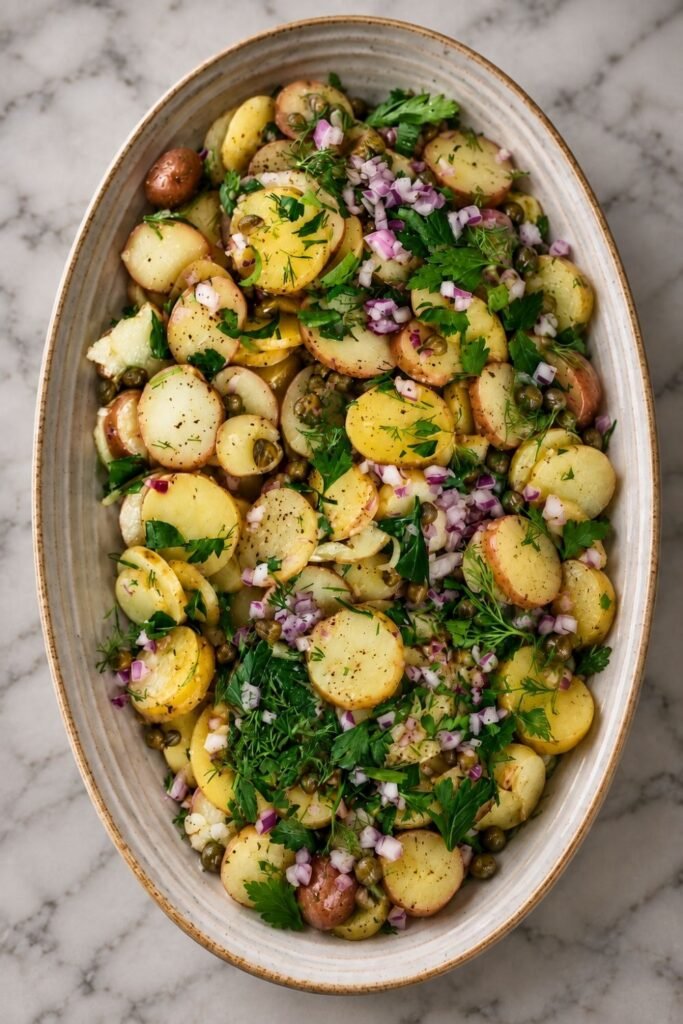



Greek potato salad is fresh, tangy, and packed with bold Mediterranean flavors. Tender potatoes are tossed with cherry tomatoes, red onion, olives, capers, fresh herbs, and crumbled feta, then coated in a simple olive oil and red wine vinegar dressing.
The key difference in this version is when the dressing goes on. You toss it with the potatoes while they’re still warm, which helps the dressing coat the soft edges before the tomatoes, feta, olives, and herbs are added. A little lemon zest, oregano, and mustard keep the flavor bright without making the salad heavy.
Here are a few reasons this salad is worth adding to your recipe rotation.
The ingredients are simple, but each one brings something different to the bowl.
- Warm potatoes are coated with the dressing before the other ingredients go in.
- Red wine vinegar and mustard give the dressing a bright, tangy flavor.
- Feta adds creamy, salty bites without using a mayonnaise-based dressing.
- Cherry tomatoes, olives, capers, and red onion add plenty of contrast.
- Parsley or dill adds a fresh herbal finish.
- You can serve the salad with potato skins on or peeled.

What Gives Greek Potato Salad Its Flavor

This salad relies on a mix of rich, salty, sharp, and fresh ingredients rather than a thick creamy dressing. Extra virgin olive oil provides the base, while red wine vinegar gives it plenty of acidity.
Mustard helps bring those flavors together and adds a little sharpness. Dried oregano gives the dressing its Mediterranean character, while lemon zest adds freshness without adding more liquid.
The vegetables and toppings do the rest of the work. Cherry tomatoes bring juicy sweetness. Olives and capers add salty, briny notes, while red onion provides a crisp bite.
Feta goes in near the end with the remaining ingredients. Its creamy texture contrasts with the potatoes and tomatoes, while its salty flavor works naturally with the olives and capers.
The fresh parsley can also be replaced with dill, as supplied in the recipe. Either option gives the salad a fresher finish.
A few ingredients have an especially strong effect on the finished dish.
These ingredients create the main texture and flavor balance in the salad.
- Potatoes: Small waxy potatoes are the preferred option, although the recipe allows any potatoes to be used.
- Extra virgin olive oil: This forms the rich base of the dressing without making the salad heavy.
- Red wine vinegar: The vinegar gives the dressing its main tang and balances the olive oil.
- Mustard: Dijon or yellow mustard adds sharpness and helps the dressing come together.
- Olives and capers: Both ingredients bring salty, briny flavor that works well with the mild potatoes.
- Feta: Crumbled feta provides creamy, salty pieces throughout the finished salad.
- Lemon zest: A small amount adds a fresh citrus aroma to the dressing.
Why You Should Dress The Potatoes While They’Re Warm

One of the most important steps happens immediately after the cooked potatoes are cut into bite-size chunks.
Instead of allowing them to cool completely, place the warm potatoes in the bowl and pour the dressing over them. Gently tossing them at this stage spreads the olive oil, vinegar, mustard, oregano, and lemon zest across the soft potato surfaces.
You don’t need every potato chunk to stay perfectly intact. The recipe specifically allows some of the potatoes to break apart while they’re tossed.
Those slightly broken edges can give the salad a softer, creamier texture without adding mayonnaise or another creamy dressing.
The other ingredients come later. This keeps the tomatoes, parsley, olives, feta, capers, and onion from being handled more than necessary while you’re coating the potatoes.
Soaking The Red Onion Makes A Difference
Raw red onion brings crisp texture and a sharp flavor to the salad, but this recipe softens that intensity before the onion reaches the bowl.
Slice one small red onion very thinly, then soak it in water or vinegar for 10 minutes.
That short resting period makes the onion easier to combine with the other strong ingredients. The salad already contains capers, olives, feta, mustard, and red wine vinegar, so the onion doesn’t need to dominate every bite.
After its 10-minute soak, the onion is ready to be added with the tomatoes and the rest of the finishing ingredients.
The Tangy Oregano Dressing
This dressing is quick because there is no cooking or blending required. Everything is simply whisked together in a small bowl.
Extra virgin olive oil and red wine vinegar create the base. Mustard, dried oregano, salt, and black pepper season it, while lemon zest adds a light citrus note.
The finely grated garlic is optional. If you decide to include it, the recipe calls for ½ clove.
Once whisked, the dressing goes directly onto the warm potato chunks rather than being held until the entire salad is assembled. That order is one of the defining details of the method.
Greek Potato Salad Ingredients
The ingredient list is divided naturally between the salad and its dressing. Pay particular attention to the potato texture, the 10-minute onion soak, and the balance between olives, capers, feta, and vinegar.
For the Potato Salad
The main mixture combines tender potatoes with fresh vegetables, herbs, briny ingredients, and feta.
Prepare these ingredients before the final gentle toss.
- 1½ pounds potatoes, small waxy potatoes are best, but any work
- 1½ cups cherry tomatoes, halved
- 1 small red onion, very thinly sliced and soaked in water or vinegar for 10 minutes
- ½ cup olives, Kalamata or Castelvetrano, pitted
- 2 tablespoons capers, rinsed
- ½ cup chopped parsley, or dill
- ½ cup crumbled feta
For the Dressing
The dressing uses olive oil and vinegar as its base, with mustard, oregano, lemon zest, and seasoning for flavor.
Whisk these ingredients together before adding the mixture to the warm potatoes.
- 4 tablespoons extra virgin olive oil
- 3 tablespoons red wine vinegar
- 2 teaspoons mustard, Dijon or yellow
- 1 teaspoon dried oregano
- ½ teaspoon salt
- ¼ teaspoon black pepper
- 1 teaspoon lemon zest
- ½ clove garlic, finely grated, optional
How To Make Greek Potato Salad
The recipe starts with whole potatoes in cold water. After cooking, the potatoes rest briefly before being cut and dressed while still warm.
The tomatoes, onion, olives, capers, parsley, and feta are added only after the potatoes have been coated.
Follow the working order below so the warm potatoes receive the dressing before the remaining ingredients are added.
- Start the potatoes. Place 1½ pounds whole potatoes in a pot and cover them with cold water.
- Boil until tender. Bring the water to a boil and add 1 tablespoon salt. Lower the heat and simmer for about 15–25 minutes, depending on the size of the potatoes. They’re ready when a fork slides in easily.
- Cool and cut. Drain the potatoes and leave them to cool for a few minutes. Cut them into bite-size chunks. Peel them if you prefer, or leave the skins on.
- Whisk the dressing. In a small bowl, combine 4 tablespoons extra virgin olive oil, 3 tablespoons red wine vinegar, 2 teaspoons mustard, 1 teaspoon dried oregano, ½ teaspoon salt, ¼ teaspoon black pepper, 1 teaspoon lemon zest, and ½ clove finely grated garlic if using. Whisk until combined.
- Dress the warm potatoes. Put the warm potato chunks into a large bowl. Pour the dressing over them and gently toss. Don’t worry if some pieces break apart, since the softer edges help make the salad creamier.
- Add the remaining ingredients. Add 1½ cups cherry tomatoes, 1 small red onion, ½ cup olives, 2 tablespoons capers, ½ cup chopped parsley, and ½ cup crumbled feta.
- Toss gently. Mix everything carefully until combined. Taste and adjust the salt, pepper, or vinegar if needed.
- Finish the salad. Transfer it to a serving platter. Sprinkle with a little extra oregano and finish with a light drizzle of olive oil.


Greek Potato Salad
Ingredients
Method
- Start the potatoes. Place 1½ pounds whole potatoes in a pot and cover them with cold water.
- Boil until tender. Bring the water to a boil and add 1 tablespoon salt. Lower the heat and simmer for about 15–25 minutes, depending on the size of the potatoes. They’re ready when a fork slides in easily.
- Cool and cut. Drain the potatoes and leave them to cool for a few minutes. Cut them into bite-size chunks. Peel them if you prefer, or leave the skins on.
- Whisk the dressing. In a small bowl, combine 4 tablespoons extra virgin olive oil, 3 tablespoons red wine vinegar, 2 teaspoons mustard, 1 teaspoon dried oregano, ½ teaspoon salt, ¼ teaspoon black pepper, 1 teaspoon lemon zest, and ½ clove finely grated garlic if using. Whisk until combined.
- Dress the warm potatoes. Put the warm potato chunks into a large bowl. Pour the dressing over them and gently toss. Don’t worry if some pieces break apart, since the softer edges help make the salad creamier.
- Add the remaining ingredients. Add 1½ cups cherry tomatoes, 1 small red onion, ½ cup olives, 2 tablespoons capers, ½ cup chopped parsley, and ½ cup crumbled feta.
- Toss gently. Mix everything carefully until combined. Taste and adjust the salt, pepper, or vinegar if needed.
- Finish the salad. Transfer it to a serving platter. Sprinkle with a little extra oregano and finish with a light drizzle of olive oil.
Notes
Easy Ways To Add Protein And Make It A Meal
The supplied recipe notes include several easy protein additions. These aren’t required for the original salad, but they can make it more substantial. Choose one of these options if you want to build the salad into a fuller meal.- Boiled eggs: Quarter hard-boiled eggs and gently toss them into the salad.
- Tuna: Drain a can of tuna and add it in large flakes.
- Shredded chicken: Fold in leftover or rotisserie chicken.
- Chickpeas: Stir in a drained can for a vegetarian option.
Easy Ways To Add Protein And Make It A Meal
The supplied recipe notes include several easy protein additions. These aren’t required for the original salad, but they can make it more substantial.
Choose one of these options if you want to build the salad into a fuller meal.
- Boiled eggs: Quarter hard-boiled eggs and gently toss them into the salad.
- Tuna: Drain a can of tuna and add it in large flakes.
- Shredded chicken: Fold in leftover or rotisserie chicken.
- Chickpeas: Stir in a drained can for a vegetarian option.
Add these gently so the potatoes, tomatoes, and feta don’t get overly broken up during mixing.
Greek Potato Salad Faq
This recipe leaves you with a few useful choices, including which potatoes to use, whether to peel them, and which fresh herb to add.
What potatoes are best for Greek potato salad?
Small waxy potatoes are the preferred choice in the supplied recipe. They tend to work well in a salad where you want bite-size potato chunks.
The recipe also states that any potatoes can work, so you don’t need to avoid making it if waxy potatoes aren’t available.
Should I peel the potatoes?
You can do either.
Once the cooked potatoes have cooled for a few minutes, the recipe allows you to peel them or leave their skins on before cutting them into bite-size chunks.
Can I use dill instead of parsley?
Yes. The recipe calls for ½ cup chopped parsley or dill.
Dill gives the salad a different herbal note, while still working with the lemon, feta, vinegar, olives, and potatoes.
Why are the potatoes dressed while warm?
Adding the dressing before the potatoes cool completely helps coat their surfaces while they’re soft.
The recipe also allows some of the potatoes to break slightly during tossing. Those soft edges contribute to the creamier texture of the salad.
Can I add protein?
Yes. The supplied notes suggest boiled eggs, tuna, shredded chicken, or chickpeas.
These are optional additions rather than ingredients in the original salad recipe.
This Greek potato salad combines soft potatoes with juicy tomatoes, salty feta, olives, capers, fresh herbs, and a sharp oregano dressing. Dressing the potatoes while they’re still warm and gently folding in the remaining ingredients gives you a fresh, flavorful salad with plenty of texture and no heavy mayonnaise dressing.