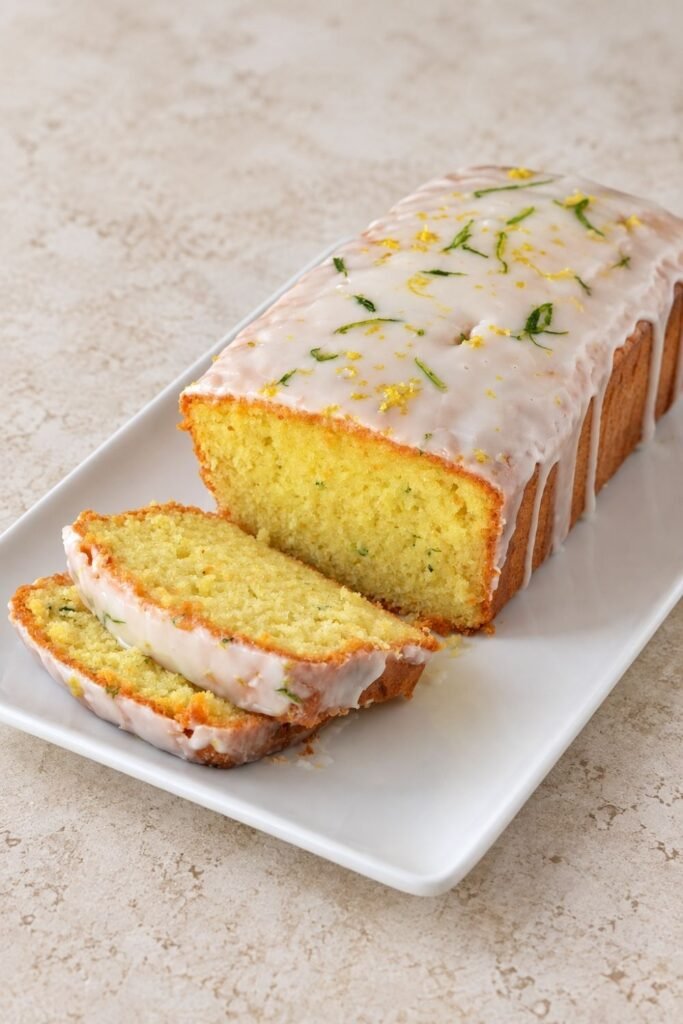


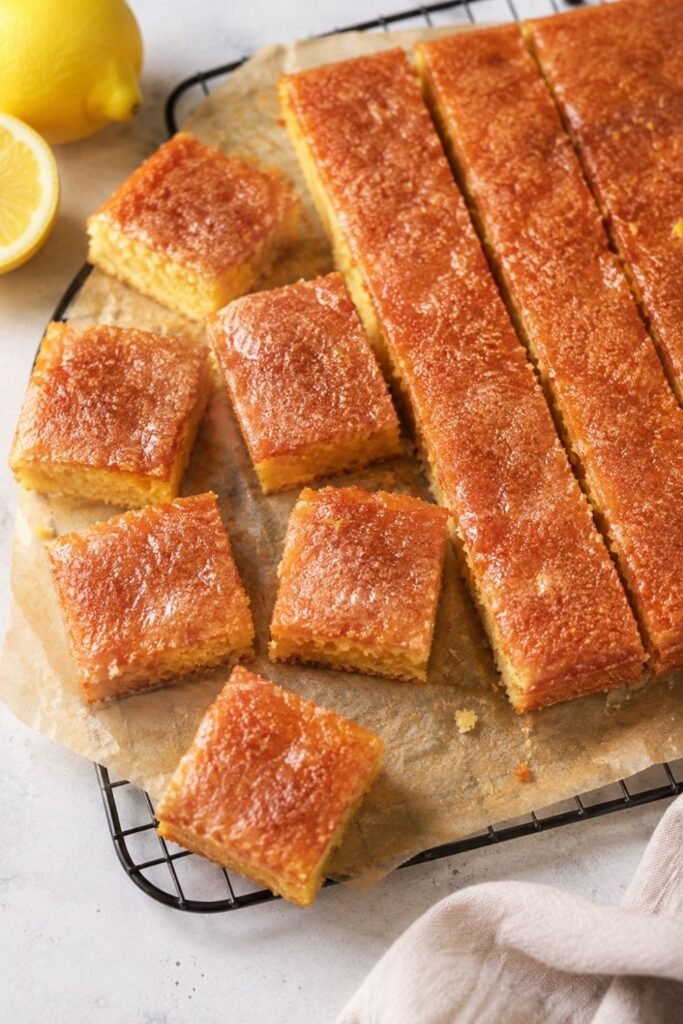
Pouring the glaze over a warm cake rather than a cool one is what turns a lemon drizzle traybake from a plain sponge into something with a crackly, sugary shell. The granulated sugar never fully dissolves in the lemon juice, so it sits on the surface and sets into a thin crust while the juice underneath soaks down into the crumb. Two lemons go into the sponge as zest and two more into the glaze as juice, which keeps the flavour bright at both ends.
The sponge itself is an all-in-one, meaning every ingredient goes into one bowl and gets beaten for two minutes. There’s no creaming stage and no folding, which is why the recipe leans on baking powder alongside self-raising flour to guarantee the lift. A 30x23cm tin bakes it thin and even, and the whole tray cuts into 18 squares.
- Granulated sugar in the glaze gives a crunchy top that icing sugar can’t replicate
- Everything for the sponge goes into one bowl and beats for two minutes flat
- Zest in the cake and juice in the glaze means lemon flavour in two different forms
- Bakes in 25 to 30 minutes and yields 18 squares from a single tray
- The glaze soaks in while the cake is warm, so the crumb stays moist for days
The Ingredients That Decide The Texture
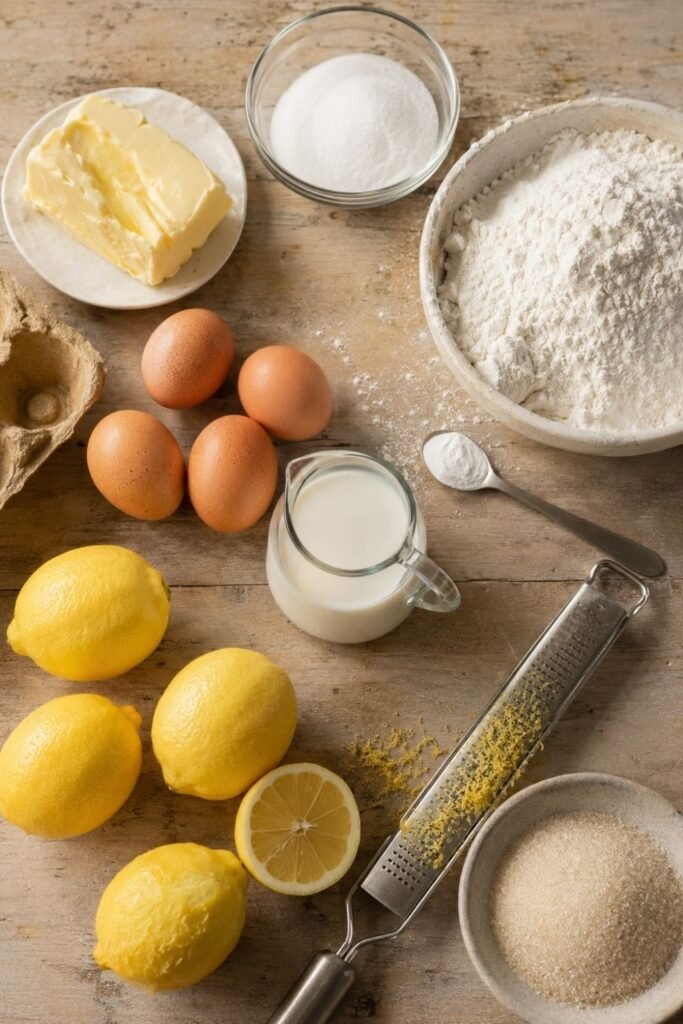
An all-in-one sponge asks a lot of its ingredients because there’s no creaming stage building air. Everything has to work in a single two-minute beat, which is why the temperature of the butter and the choice of flour matter more here than in a traditional method.
The two lemons in the sponge contribute zest only. Zest carries the aromatic oils and none of the acid, which is deliberate: adding lemon juice to the batter would react with the raising agents too early and can curdle the mixture. The acid stays in the glaze where it belongs.
- Butter or baking spread at room temperature: Soft fat disperses through the batter in the short beating time, coating flour proteins and keeping the crumb tender. Cold butter would stay in lumps and leave dense patches through the sponge.
- Caster sugar: Its fine grain dissolves quickly in a method with no creaming stage. It also holds moisture in the finished cake, which is part of why this keeps well.
- Self-raising flour: Carries its own raising agent evenly distributed through the flour, which matters when the batter is only mixed briefly. The higher flour weight relative to the fat and sugar gives the sponge enough structure to hold the glaze without going soggy.
- Baking powder: One level teaspoon on top of the self-raising flour compensates for the air the all-in-one method never beats in. Without it you’d get a noticeably flatter, tighter sponge.
- Eggs: Four eggs bind the batter and set as it bakes, giving the crumb its structure. Their moisture also helps the batter come together smoothly in a fast mix.
- Milk: Four tablespoons loosen the batter to a consistency that spreads level in a wide tin. A stiff batter would need pushing into the corners and would bake unevenly.
- Unwaxed lemons for zest: Unwaxed matters because you’re eating the outer skin. The zest holds the lemon oils that survive the oven, unlike juice, whose flavour fades with heat.
- Granulated sugar for the glaze: The coarse crystals are the whole point. They only partly dissolve in the juice, so they set on the surface as a crisp, sandy crust rather than a smooth icing.
Why The Glaze Goes On Warm
This is the step that decides whether you get a proper lemon drizzle or just a lemon sponge with icing on it. The cake comes out of the oven, cools in the tin for 5 minutes, then gets lifted onto a wire rack and brushed with glaze while still warm.
Warmth does two things at once. It thins the lemon juice enough to travel down into the open crumb, carrying acidity through the top layer of the sponge instead of leaving it all sitting on the surface. At the same time, the residual heat drives off some of that moisture as the glaze sets, concentrating the undissolved granulated sugar into the thin crust that gives the cake its signature texture.
Do it on a fully cooled cake and the glaze mostly stays put, setting into a sticky layer rather than a crisp one. Do it while the cake is still hot from the oven and the glaze runs straight off the sides. The 5-minute rest in the tin gets you to the middle ground, and setting the rack over a tray catches whatever does run so you can lift it back on with the brush.
How This Recipe Comes Together
The method is unusually short, so it helps to see where the effort actually sits.
The sponge is the easy part. Every ingredient goes into one large bowl and gets beaten for 2 minutes with an electric mixer until well blended, then goes straight into the lined tin and gets levelled off. That’s the entire preparation.
While it bakes, you mix the glaze: granulated sugar stirred into the juice of 2 lemons until it reaches a runny consistency. It won’t look smooth, and it shouldn’t. You’re aiming for a pourable mixture with sugar crystals still visible in it.
The final stage is the one that needs attention. Five minutes in the tin, out onto a rack over a tray, glaze brushed across the whole surface, then left alone to set before the paper comes off and it gets cut.
Getting The Sponge Baked Right
The most likely mistake with an all-in-one traybake is overbaking, because a wide, shallow tin bakes faster than the deep round tins most people are used to. Once the edges dry out, no amount of glaze brings them back.
Bake at 180C, 160C Fan, or Gas 4 for 25 to 30 minutes and start checking at 25. Two signs tell you it’s ready together rather than separately. The cake should have shrunk a little away from the sides of the tin, leaving a narrow gap around the edge, and the centre should spring back when you press it lightly with a fingertip. A dent that stays put means it needs a few minutes more.
The second most common problem happens earlier, during mixing. Two minutes is a real instruction, not an approximation. Under-beating leaves streaks of unmixed flour and pockets of butter; going well beyond it develops the gluten and tightens the crumb. Beat until the batter looks uniformly pale and smooth, then stop.
Ingredients
Two details are worth noting before you start. The butter needs to be at room temperature, since the two-minute all-in-one beat won’t soften it for you, and the lemons should be unwaxed because you’re grating the skin straight into the batter.
For the Sponge
- 225g/8oz butter or baking spread, at room temperature, plus extra for greasing the tin
- 225g/8oz caster sugar
- 275g/10oz self-raising flour
- 1 level tsp baking powder, level matters here, so scrape the spoon flat
- 4 free-range eggs
- 4 tbsp milk
- 2 unwaxed lemons, finely grated zest only, save the flesh, the glaze needs different lemons for their juice
For the Glaze
- 175g/6oz granulated sugar, granulated rather than caster or icing, for the crunch
- 2 lemons, juice only
Step By Step Instructions
The glaze gets made while the cake is in the oven, so read step 3 before you start rather than discovering it mid-bake.
- Heat the oven and prepare the tin. Set the oven to 180C, 160C Fan, or Gas 4. Grease a 30x23cm/12x9in traybake tin with butter and line the base with baking paper, which is what lets you lift the whole cake out later for glazing.
- Beat everything together. Measure all the cake ingredients into a large bowl and beat for 2 minutes with an electric mixer, or until well blended. The batter should look pale, smooth, and evenly mixed with no streaks of flour.
- Fill and level the tin. Turn the mixture into the prepared tin and level the top, working it right into the corners so the sponge bakes evenly across the tray.
- Bake. Bake for 25 to 30 minutes, until the cake has shrunk a little from the sides of the tin and springs back when you touch the centre lightly with a fingertip.
- Mix the glaze while it bakes. Stir the granulated sugar into the juice of the 2 lemons until you have a runny consistency. The sugar won’t dissolve completely, and that undissolved grain is what sets into the crust.
- Rest, then lift out. Leave the cake to cool in the tin for 5 minutes, then lift it out with the lining paper still attached and set it on a wire rack placed over a tray to catch any drips.
- Glaze the warm cake and leave to set. Brush the glaze over the entire surface while the cake is still warm, so the juice soaks in and the sugar sets on top. Leave it undisturbed until the surface has set firm.
- Cut into squares. Peel away the lining paper and cut the traybake into 18 squares to serve.
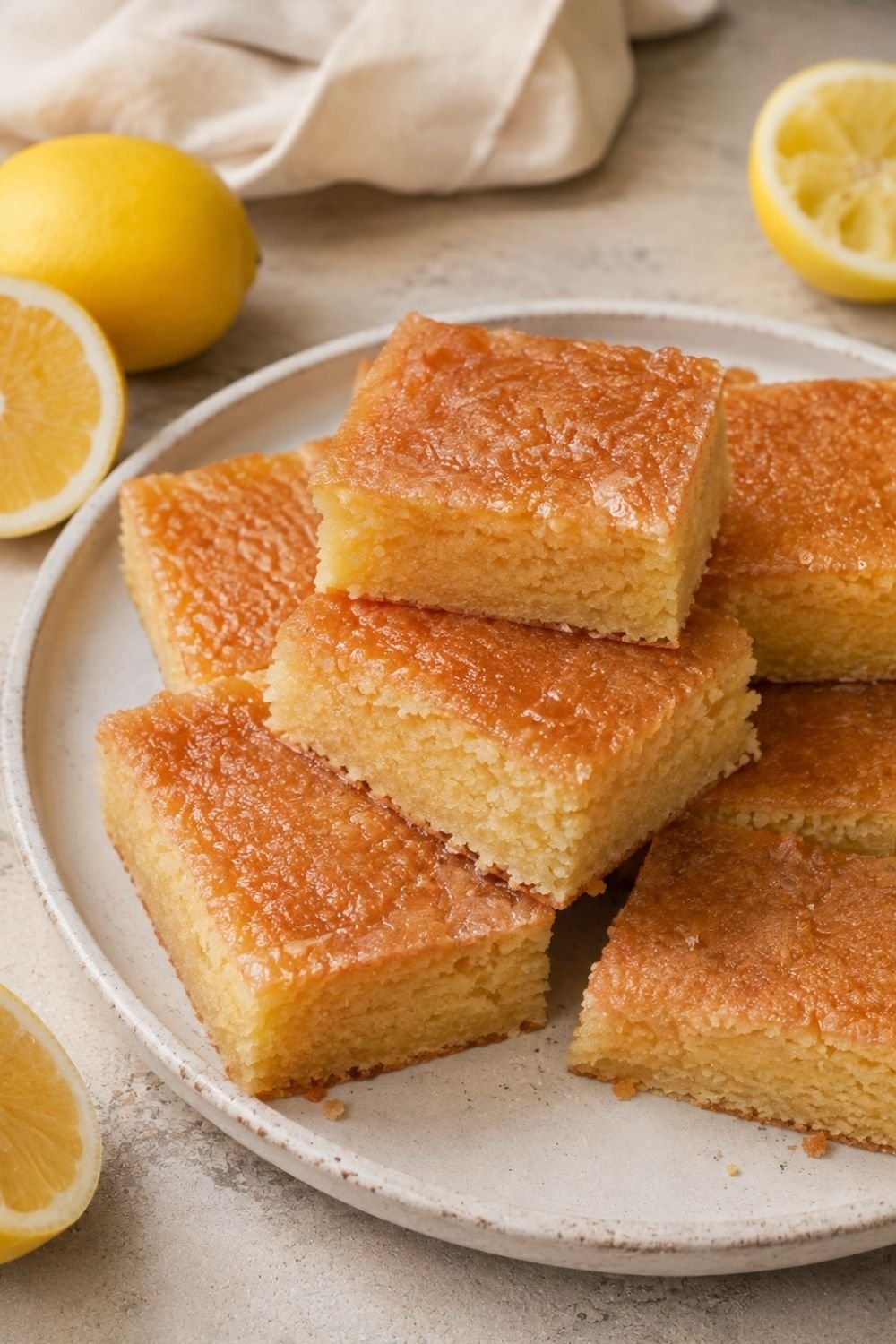
Lemon Drizzle Traybake With A Crisp Sugar Crust
Ingredients
Method
- Heat the oven and prepare the tin. Set the oven to 180C, 160C Fan, or Gas 4. Grease a 30x23cm/12x9in traybake tin with butter and line the base with baking paper, which is what lets you lift the whole cake out later for glazing.
- Beat everything together. Measure all the cake ingredients into a large bowl and beat for 2 minutes with an electric mixer, or until well blended. The batter should look pale, smooth, and evenly mixed with no streaks of flour.
- Fill and level the tin. Turn the mixture into the prepared tin and level the top, working it right into the corners so the sponge bakes evenly across the tray.
- Bake. Bake for 25 to 30 minutes, until the cake has shrunk a little from the sides of the tin and springs back when you touch the centre lightly with a fingertip.
- Mix the glaze while it bakes. Stir the granulated sugar into the juice of the 2 lemons until you have a runny consistency. The sugar won’t dissolve completely, and that undissolved grain is what sets into the crust.
- Rest, then lift out. Leave the cake to cool in the tin for 5 minutes, then lift it out with the lining paper still attached and set it on a wire rack placed over a tray to catch any drips.
- Glaze the warm cake and leave to set. Brush the glaze over the entire surface while the cake is still warm, so the juice soaks in and the sugar sets on top. Leave it undisturbed until the surface has set firm.
- Cut into squares. Peel away the lining paper and cut the traybake into 18 squares to serve.
Notes
Recipe Notes
A few practical points around timing, equipment, and the lemons.
You need four lemons in total, not two. The recipe calls for the zest of 2 unwaxed lemons in the sponge and the juice of 2 lemons in the glaze. Zesting first and juicing the same fruit would leave you short.
Tin size affects the timing. The 30x23cm/12x9in tin is what makes the sponge shallow enough to bake in 25 to 30 minutes and to cut into 18 even squares. A smaller or deeper tin changes both.
Baking spread works in place of butter here, and the recipe allows for either. Whichever you use, it needs to be at room temperature and soft enough to beat in straight away.
The lining paper stays attached through glazing and only comes off at the end. This is what stops the glazed cake sticking to the wire rack.
Frequently Asked Questions
Why is there baking powder as well as self-raising flour?
The all-in-one method doesn’t beat air into the batter the way creaming butter and sugar does, so the sponge needs extra chemical lift to rise properly in only two minutes of mixing. One level teaspoon on top of the self-raising flour covers that gap.
Can I use bottled lemon juice for the glaze?
Fresh juice from 2 lemons is what the recipe specifies, and fresh gives a brighter, less flat flavour. Bottled juice will set the glaze in the same way, but expect the lemon character to be duller.
What if I don’t have an electric mixer?
You can beat by hand with a wooden spoon, though you’ll need to work harder to get everything properly blended within a similar timeframe. The butter being genuinely soft matters even more without a mixer.
Why did my glaze run off the cake?
Usually because the cake was too hot when it was brushed. The 5-minute rest in the tin brings the surface down to a temperature where the glaze soaks in and sets rather than sliding away. Setting the rack over a tray means anything that does run can be brushed back on.
Conclusion
Zest in the sponge and juice in the glaze give this traybake lemon flavour in two distinct registers, one warm and aromatic, one sharp. The crunchy granulated sugar crust on top is what people remember, and it costs nothing more than mixing the glaze early and brushing it on at the right moment.