

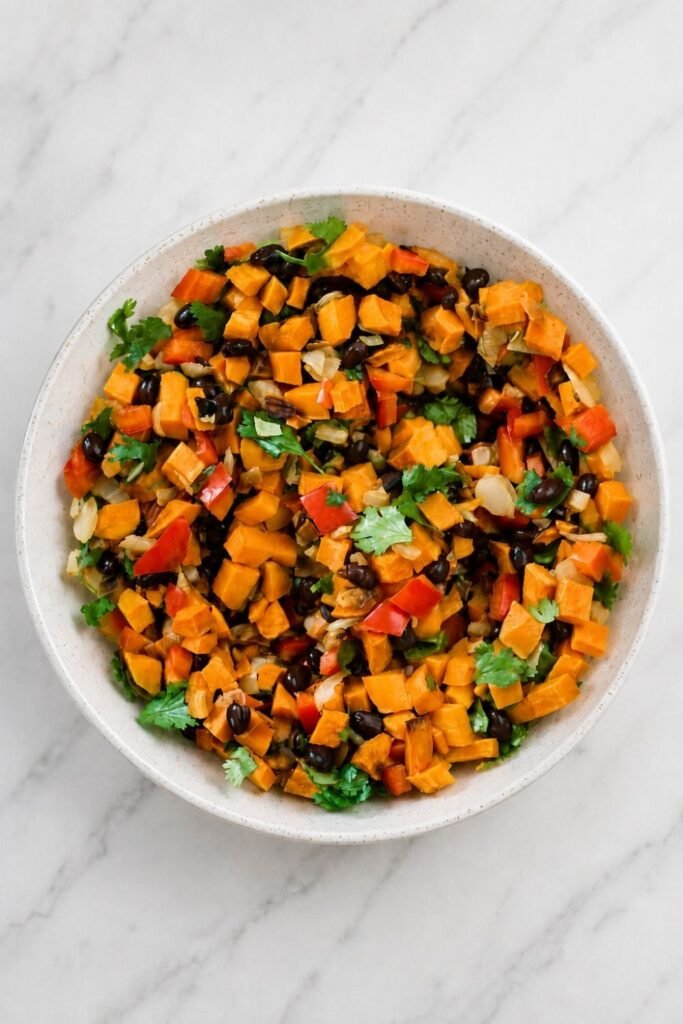
Allspice is the ingredient that turns this from a bowl of leaves with roasted vegetables into something with a real point of view. A single teaspoon goes onto the sweet potato cubes before they roast, and its warm, slightly clove-like character plays directly against the natural sweetness of the potato. Everything else in the bowl is built around that pairing.
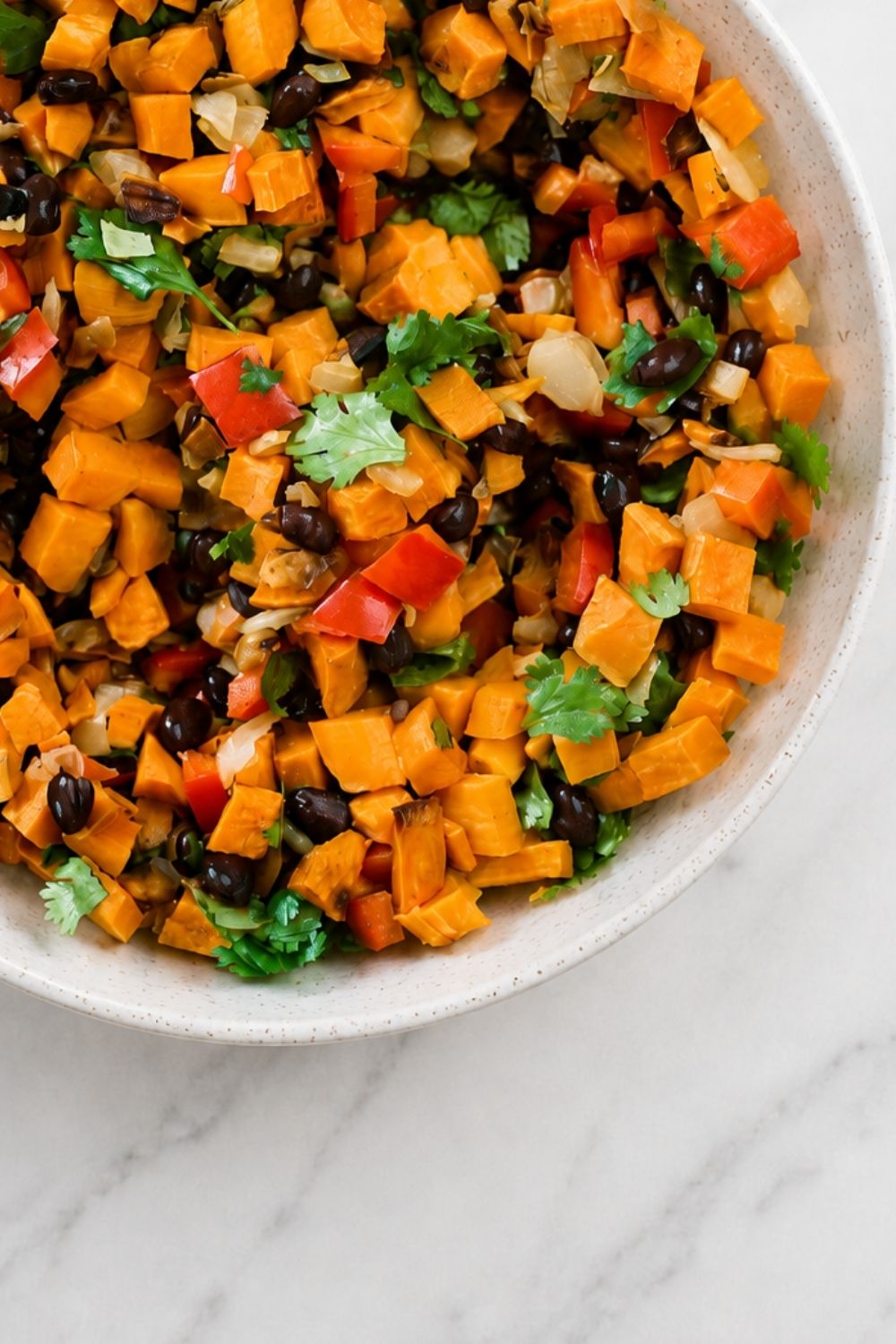
What lands on the plate is a study in contrasts. Warm, caramelized cubes against cold crisp lettuce. Salty feta against sweet dried cranberries. Crunchy walnuts against soft diced avocado. A maple Dijon dressing that’s shaken in a jar rather than whisked ties it together with just enough acid to keep the whole thing bright.
It’s also unusually well timed for something with a roasting step. The oven does its work while you assemble everything else, so the salad is finished and waiting by the time the sweet potato comes out.
Here’s how you can make a perfect Sweet Potato Salad ,follow this method below.
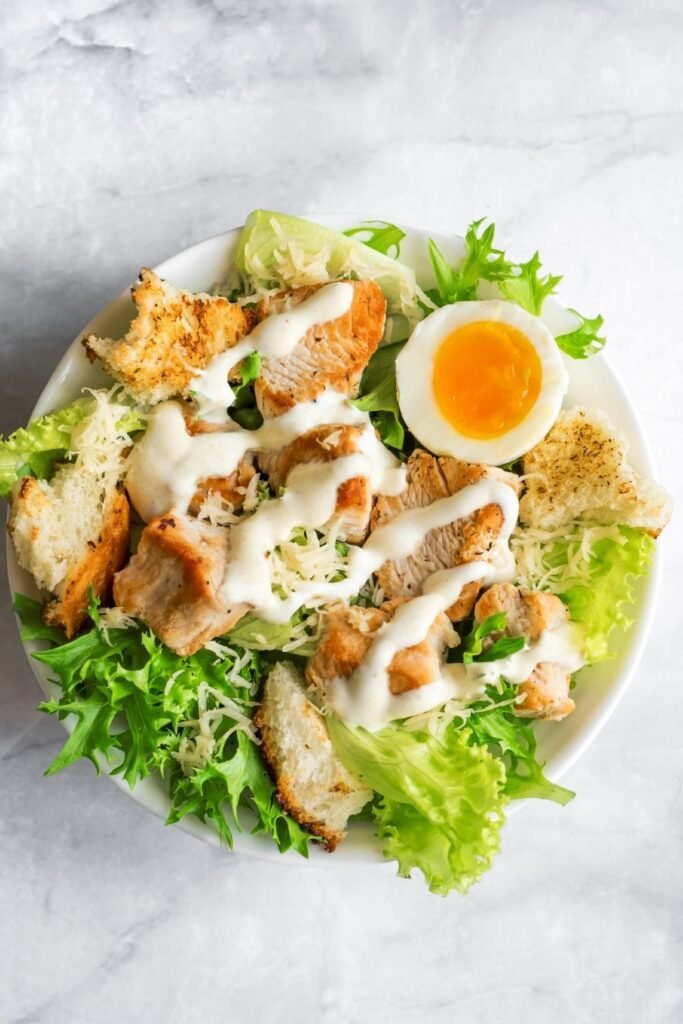
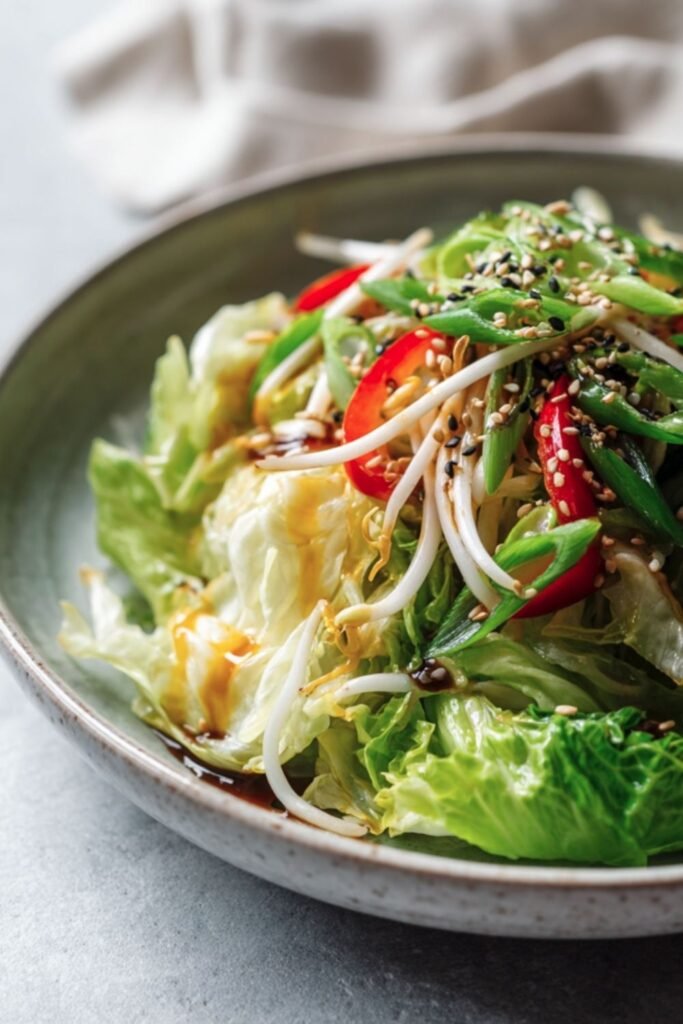
- Allspice on roasted sweet potato gives a warm, unexpected flavor most salads don’t have
- Preheating the baking sheet means the cubes sear on contact instead of sticking
- The dressing is shaken in a jar, which emulsifies it faster than whisking and leaves nothing to wash
- Everything else gets assembled while the potato roasts, so there’s no waiting at the end
- Warm potato and cold lettuce in the same bowl gives you temperature contrast in every forkful
Why The Baking Sheet Goes In Empty First
The recipe puts the baking sheet into the oven while it preheats to 400F, before any sweet potato touches it. That’s a small step with an outsized effect.
Sweet potatoes are high in sugar and moisture, which is a combination that loves to weld itself to metal. Dropping oiled cubes onto a cold pan means they sit in their own released moisture for the first few minutes, steaming rather than searing, and by the time the pan does get hot the sugars have already started bonding to the surface. Cubes then tear when you try to stir them.
A pan that’s already at temperature does the opposite. The oiled surface of each cube starts browning the instant it lands, forming a crust that separates the potato from the metal. You hear a faint sizzle when they hit, which is exactly the signal you want.
Use an oven mitt for this. A pan that’s been preheating at 400F is hot enough to catch you off guard, and you’re adding food to it away from the oven.
What Each Component Brings To The Bowl
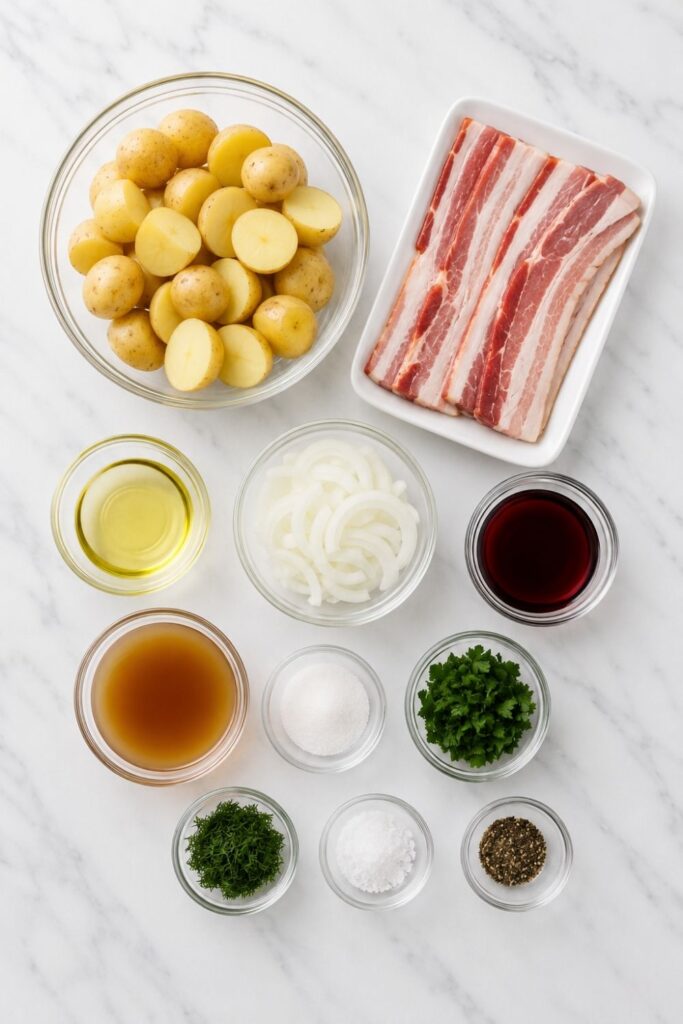
This salad has a lot of small parts, and they aren’t interchangeable garnishes. Each one is covering a specific gap in flavor or texture.
- Sweet potato: The anchor. Its sugars caramelize in the oven, which is where the deep roasted flavor and the soft interior both come from.
- Allspice: Warm and faintly peppery with notes that read as clove, cinnamon, and nutmeg at once. It pushes the sweet potato toward savory rather than dessert territory.
- Avocado oil: Coats the cubes for roasting and carries the allspice onto every surface. Its high smoke point suits the 400F oven without turning bitter.
- Feta: The salt counterweight. Against sweet potato, cranberries, and maple syrup, this salad needs something sharply salty and briny or it tips too sweet.
- Walnuts: Structural crunch that survives being dressed. Their slight bitterness also cuts through the sweetness from three different directions in this bowl.
- Dried cranberries: Chewy, tart pockets of concentrated fruit. They give a different kind of sweetness than the potato, sharper and more acidic.
- Fresh dill: A quarter cup is a bold amount, and it’s meant to be. Dill’s grassy, slightly anise flavor is what keeps this from tasting like an autumn side dish.
- Red onion: Sharp raw bite and color. Finely chopped so it distributes rather than dominating any single forkful.
- Avocado: The creamy element. It fills the role a mayonnaise or cream dressing would play in a different salad, without weighing anything down.
- Dijon mustard: The emulsifier. It holds the olive oil and apple cider vinegar together so the dressing stays combined instead of separating in the jar.
Read the feta, cranberries, and maple syrup as a group. There’s real sweetness coming from the potato, the cranberries, and the syrup, and the feta and walnuts are the two things standing against it. That’s why the recipe calls for a full 1/3 cup of feta rather than a light scattering.
Getting The Sweet Potato Right
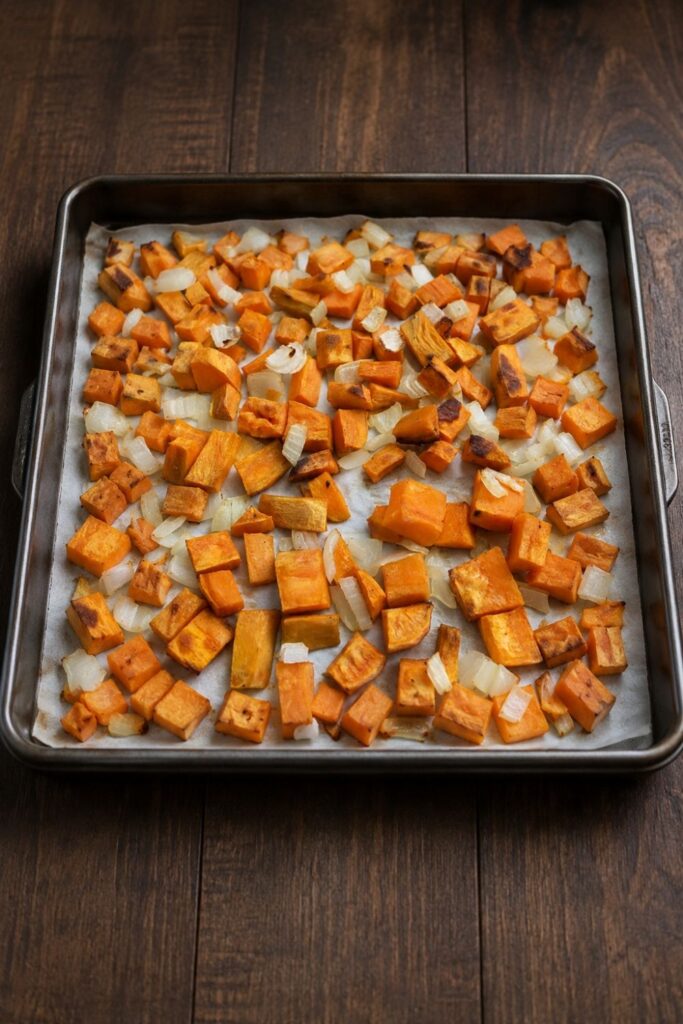
Cube the sweet potato after peeling, then season it in a shallow bowl with the avocado oil, allspice, sea salt, and pepper. The recipe asks you to work the seasoning in with your hands, and it’s worth doing exactly that rather than reaching for a spoon.
Ground spices clump in oil. Your fingers break those clumps apart and press the seasoning against the cut faces of every cube, which a spoon just pushes around. Half a tablespoon of oil across a whole sweet potato isn’t much, so distribution matters. Every surface should look faintly glossy and evenly dusted before the cubes go onto the pan.
Cube size matters more than the recipe spells out. Aim for consistency above all else, since a tray of mixed large and small pieces gives you some cubes that are still firm and others that have gone dark and dry in the same 20 to 25 minutes.
Roast at 400F for 20 to 25 minutes, stirring midway. That stir is not optional. The undersides in contact with the hot pan brown far faster than the exposed tops, and flipping them halfway is what gives you color on more than one face of each cube.
The Jar Dressing And Why It Emulsifies
Dijon mustard, apple cider vinegar, maple syrup, and olive oil go into a sealable jar and get shaken until well combined. Four ingredients, one container, no whisk.
Shaking works better than stirring here because of the physics involved. Oil and vinegar naturally separate, and combining them requires breaking the oil into droplets small enough to stay suspended in the vinegar. Vigorous shaking in a closed jar does that mechanically, far more effectively than stirring a bowl with a fork.
The Dijon then keeps it that way. Mustard contains compounds that coat those oil droplets and stop them re-merging, which is why a mustard-based vinaigrette holds together for minutes rather than seconds. That’s the difference between dressing that coats leaves evenly and dressing that leaves you with oily patches and sour patches.
You’ll know it’s ready when the mixture looks uniformly opaque and slightly thickened rather than showing distinct layers through the glass. If it starts separating while the sweet potato finishes roasting, just shake it again before pouring.
When To Add The Avocado
The recipe holds the avocado back until about 5 minutes before the sweet potato is done, which is later than everything else in the bowl.
There are two reasons for the delay. Cut avocado browns on exposure to air, and every extra minute it spends diced in the bowl is a minute closer to gray edges. Dicing it at the last moment keeps it green.
It’s also the most fragile thing in the salad. Avocado added early sits under a stir or two of assembly and starts breaking down into a paste that smears across the lettuce. Added last, it holds its cubes through the final toss.
Cut it into dice rather than slices, as the recipe specifies. Dice distribute through the bowl so you get creamy bites throughout instead of a few slices concentrated in one area.
The Order Everything Comes Together In
The structure of this recipe is really about overlapping tasks, not sequential ones.
The oven and the pan preheat first, which is dead time you spend peeling and cubing. The sweet potato then goes in and roasts for 20 to 25 minutes, and that window is when everything else happens. Lettuce, finely chopped onion, finely chopped dill, coarsely chopped walnuts, dried cranberries, and feta all go into a large salad bowl. The dressing gets shaken. The avocado gets diced near the end of the roast.
When the timer goes, everything is ready and waiting. Roasted sweet potato goes into the bowl, dressing goes over the top, and one good toss finishes it.
That final toss is the only moment where the warm and cold components meet, and it’s why this gets served right away.
Ingredients
The list breaks into three parts: what gets roasted, what goes in the bowl, and what gets shaken into the dressing. The allspice and the feta are the two to pay attention to, since they set the flavor balance.
- 1 medium sweet potato
- 1/2 Tbsp avocado oil
- 1 tsp all spice
- sea salt
- pepper
- 5 oz lettuce
- 1/4 red onion finely chopped so it spreads through the bowl
- 1/4 cup dill finely chopped
- 1/4 avocado diced at the last minute, not in advance
- 1/4 cup dried cranberries
- 1/4 cup coarsely chopped walnuts
- 1/3 cup crumbled feta
- 1 tsp Dijon mustard
- 1 Tbsp apple cider vinegar
- 1 tsp maple syrup
- 3 Tbsp olive oil
Instructions
The roasting time is your working window for everything else, so read through to the end before you start.
- Preheat the oven and the pan. Set the oven to 400F. Put your baking sheet into the oven while it preheats so the pan gets hot, which keeps the sweet potato from sticking.
- Season the sweet potato. While the oven heats, peel and cube the sweet potato. Put the cubes in a shallow bowl and season with the avocado oil, all spice, sea salt, and pepper, then work the seasoning in with your hands until every surface looks evenly coated.
- Roast. Add the seasoned cubes to the hot baking sheet and return it to the oven for 20 to 25 minutes, stirring midway so the cubes brown on more than one side.
- Build the salad bowl. While that roasts, add the lettuce, finely chopped onion, finely chopped dill, coarsely chopped walnuts, dried cranberries, and crumbled feta cheese to a large salad bowl.
- Shake the dressing. Add the Dijon mustard, apple cider vinegar, maple syrup, and olive oil to a sealable jar and shake until well combined. It should look uniformly cloudy rather than showing separate layers.
- Dice the avocado. About 5 minutes before the sweet potato will be done roasting, cut the 1/4 avocado into dice and add it to the salad as well. Leaving it this late keeps it green and intact.
- Combine and toss. Add the roasted sweet potato to the salad bowl, drizzle the dressing over everything, and give it a good toss.
Sweet Potato Salad
Ingredients
Method
- Preheat the oven and the pan. Set the oven to 400F. Put your baking sheet into the oven while it preheats so the pan gets hot, which keeps the sweet potato from sticking.
- Season the sweet potato. While the oven heats, peel and cube the sweet potato. Put the cubes in a shallow bowl and season with the avocado oil, all spice, sea salt, and pepper, then work the seasoning in with your hands until every surface looks evenly coated.
- Roast. Add the seasoned cubes to the hot baking sheet and return it to the oven for 20 to 25 minutes, stirring midway so the cubes brown on more than one side.
- Build the salad bowl. While that roasts, add the lettuce, finely chopped onion, finely chopped dill, coarsely chopped walnuts, dried cranberries, and crumbled feta cheese to a large salad bowl.
- Shake the dressing. Add the Dijon mustard, apple cider vinegar, maple syrup, and olive oil to a sealable jar and shake until well combined. It should look uniformly cloudy rather than showing separate layers.
- Dice the avocado. About 5 minutes before the sweet potato will be done roasting, cut the 1/4 avocado into dice and add it to the salad as well. Leaving it this late keeps it green and intact.
- Combine and toss. Add the roasted sweet potato to the salad bowl, drizzle the dressing over everything, and give it a good toss.
Notes
Recipe Notes
A few practical points on prep and handling.
Chop the dill finely, as specified. A quarter cup of coarsely torn dill would give you overwhelming mouthfuls in some bites and nothing in others, while fine chopping spreads that flavor evenly.
Coarse chopping is right for the walnuts for the opposite reason. You want pieces large enough to register as crunch, not walnut dust that disappears into the dressing.
Prep the dressing in a jar you can seal properly. A loose lid under vigorous shaking makes a mess, and the shaking is what does the actual work here.
Keep the avocado in its skin until the 5 minute mark. It stays fresher there than sitting cut on a board.
Common Questions
Can I use a different spice instead of allspice?
Allspice is what gives this salad its particular character, warm and slightly clove-like against the sweet potato. Other warm spices would take the flavor somewhere different, so treat any swap as a variation rather than a like-for-like exchange.
Should the sweet potato be hot or cooled when it goes into the salad?
The recipe adds it straight from the oven to the bowl, so the contrast between warm cubes and cold greens is part of the design. That’s also why it’s assembled and tossed right at the end rather than ahead of time.
Why preheat the baking sheet?
Sweet potato is sugary and sticks readily to cold metal. A hot pan starts browning the oiled surface of each cube on contact, which forms a crust and keeps them from bonding to the sheet.
Can I skip the feta?
You can, but understand what it’s doing. Between the sweet potato, the dried cranberries, and the maple syrup in the dressing, there’s substantial sweetness in this bowl, and the salty, briny feta is the main thing balancing it.
Why shake the dressing instead of whisking it?
Shaking in a closed jar breaks the olive oil into finer droplets than stirring does, and the Dijon then keeps those droplets suspended. You get a dressing that stays combined long enough to coat everything evenly.
Conclusion
Warm allspice-roasted cubes against cold crisp lettuce, salty feta against tart cranberries, crunchy walnuts against creamy avocado. Every element in this bowl is answering another one. The maple Dijon dressing just gives them all something to hold onto. Toss it at the last second and eat it right away, while the contrast is still at its sharpest.