

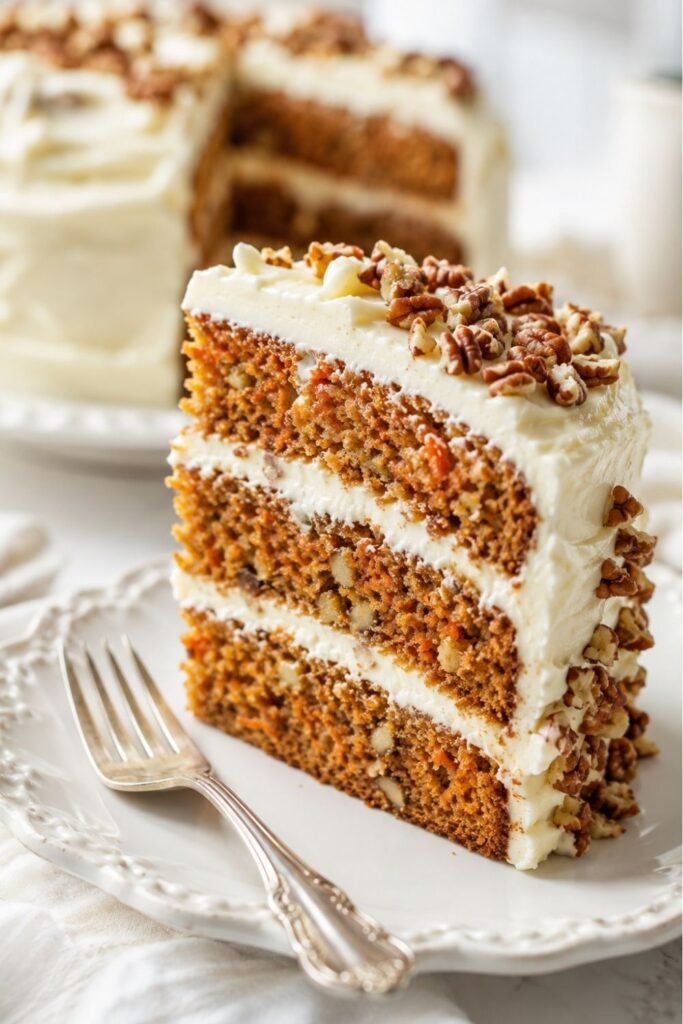
Crushed pineapple is the ingredient doing the quiet work in this carrot cake with cream cheese frosting. Stirred in undrained, juice and all, it pushes moisture into a batter that already carries three cups of grated carrot, and it keeps the crumb tender for days rather than hours.
The result is a soft, densely moist cake with warm spice running through it, closer to a spiced quick bread in texture than a light, airy layer cake.
The method is straightforward oil-based mixing. You beat sugar and oil together, add eggs one at a time, sift the dry ingredients separately, then bring the two together with a light hand. There’s no creaming butter, no whipped eggs, and no folding technique to master.
What matters is knowing when to stop mixing and how to read the cake as it bakes, since a batter this wet takes longer to set than most.
The frosting is a simple cream cheese and butter base with vanilla and powdered sugar, soft enough to spread but tangy enough to cut the sweetness of the cake underneath.
Here’s what makes this version worth your afternoon.
- Undrained crushed pineapple adds both moisture and gentle acidity, so the crumb stays soft well past the first day
- Four warm spices instead of cinnamon alone give the cake depth rather than one flat note
- Oil-based batter means no softened butter, no creaming stage, and no waiting for ingredients to come to temperature
- Walnuts, coconut, and raisins are all optional, so you can build the cake your household actually eats
- One batter bakes in a Bundt pan, a 9×13-inch dish, two 9-inch rounds, or three 8-inch rounds
The Ingredients That Decide the Texture
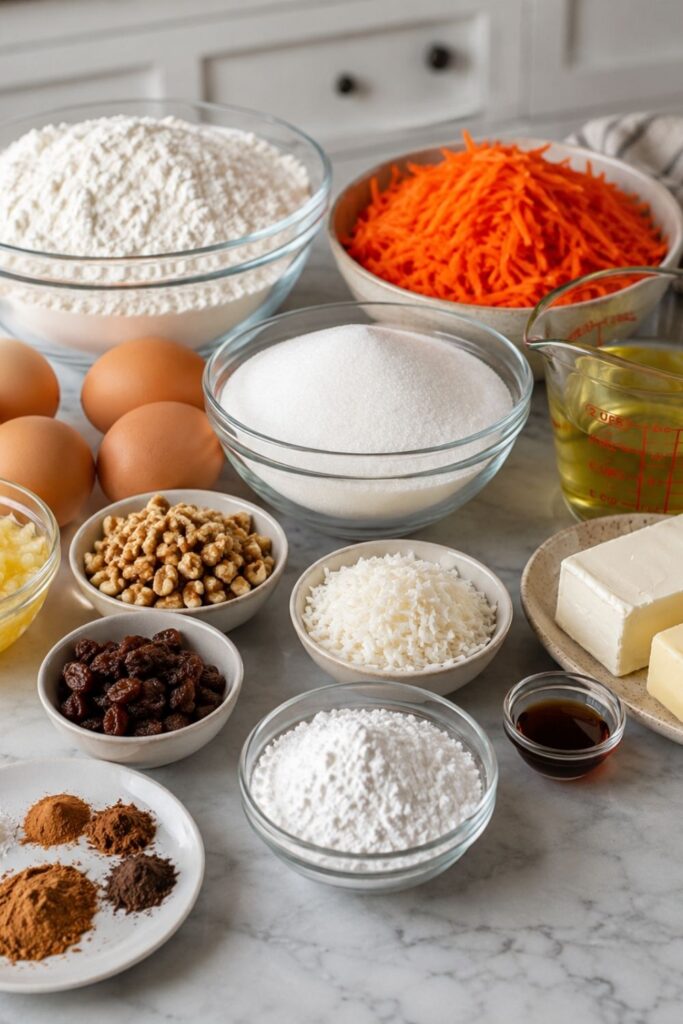
Most of this list is doing exactly what you’d expect. A handful of items, though, are responsible for why this cake behaves differently from a standard butter cake, and understanding them makes the mixing stage far less mysterious.
- Vegetable or canola oil: Oil stays liquid at room temperature, which is why an oil cake tastes moist straight from the fridge while a butter cake firms up and reads dry.
- Grated carrots: Three cups is a lot of vegetable, and it releases water as the cake bakes. That steam is what keeps the crumb tender, but it’s also why this cake needs a longer bake than its size suggests.
- Crushed pineapple, undrained: The fruit adds moisture and the juice adds a mild acidity that lifts the spices and keeps the sweetness from sitting heavy on the palate.
- All-purpose flour: Three and a half cups sounds excessive until you account for the carrots and the pineapple juice. The flour is there to give a very wet batter enough structure to hold its rise.
- Cinnamon, nutmeg, cloves, and allspice: Cloves and allspice are the assertive pair here. Used in the small amounts listed, they sit behind the cinnamon and give the cake a rounded warmth rather than a single sharp note.
- Eggs, at room temperature: Room temperature eggs blend into the sugar and oil without seizing the mixture, which is why they go in one at a time rather than all at once.
- Cream cheese and butter, softened: Both need to be genuinely soft. Cold cream cheese leaves lumps that no amount of beating will smooth out once the powdered sugar goes in.
- Powdered sugar: It dissolves instantly, so the frosting sets to a smooth, spreadable finish instead of turning grainy the way granulated sugar would.
An Overview of the Method
The whole process runs in three bowls and one direction. You build a wet base first, sift the dry ingredients separately so the spices and leavening distribute evenly, then combine the two and stop as soon as they’ve come together.
After that, everything bulky gets stirred in: carrots, pineapple with its juice, and whichever of the nuts, coconut, and raisins you’re using. The batter will look thick, wet, and heavily loaded, more like a spoonable mixture than a pourable one. That’s correct for this cake.
From there it’s into the prepared pan and into the oven, with the bake time depending entirely on which format you’ve chosen. The cooling stage matters more than people expect, because a warm cake and cream cheese frosting are a bad combination.
Pan Choice Changes Everything About the Timing
This batter is written for four different formats, and each one bakes on its own schedule. Deciding before you start saves you from guessing at doneness later.
A Bundt pan takes the longest at 60 to 75 minutes, because the batter sits deep and the centre column has to conduct heat all the way through. A 9×13-inch baking dish runs 40 to 50 minutes. Round layer pans, whether that’s two 9-inch or three 8-inch, come in fastest at 25 to 30 minutes since the batter spreads thin.
Whichever you choose, grease and flour it generously. This batter contains fruit and sugar that want to stick. For round pans, you can add a layer of insurance: grease the pan, line the base with parchment paper, then grease and flour the parchment. That combination releases cleanly every time.
Stopping the Mixing at the Right Moment
The single step that decides whether this cake is tender or tough is the moment the dry ingredients meet the wet ones. Flour starts developing gluten as soon as it hydrates, and with three and a half cups of it in the bowl, an extra thirty seconds of beating builds enough structure to turn a soft crumb rubbery.
Add the sifted dry mixture to the wet base and mix just until the flour disappears. A few faint streaks are better than a perfectly smooth batter at this stage, because the carrots and pineapple still have to go in and that stirring will finish the job.
When you fold in the add-ins, use a spatula or a wooden spoon rather than the mixer. You’re distributing, not blending. Stop as soon as the carrots and fruit are evenly spread through the batter and no dry pockets remain at the bottom of the bowl.
How to Tell When the Centre Is Actually Baked
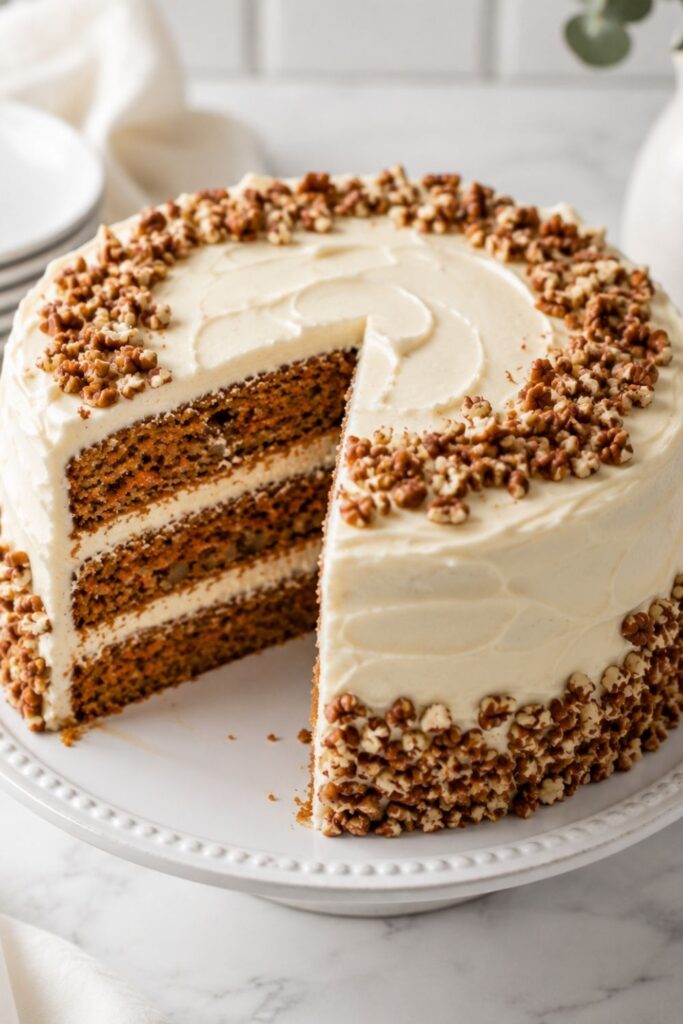
The most common failure with a carrot cake this wet is pulling it out while the middle is still raw, then discovering the sunken, gummy centre only after it’s cooled. All that carrot and pineapple juice turns to steam in the oven, and the middle of the cake stays cooler for longer than the timer suggests.
Test with a toothpick or a thin skewer inserted into the thickest part of the cake, not near the edge. It should come out clean. Damp crumbs clinging to it mean the cake needs more time, so give it another five minutes and test again in a fresh spot. The top browning early is not a doneness signal on a spiced cake, since the sugar and spices darken well before the interior sets.
Trust the range you’re given rather than the lower number. A Bundt cake at 60 minutes may well need the full 75.
Getting the Cream Cheese Frosting Smooth
Cream cheese frosting fails in one direction: lumps. The fix is entirely in the order of operations, which is why the cream cheese and butter get beaten together on their own before anything sweet joins them.
Beat the two until the mixture is uniform and no flecks of unmixed cream cheese remain around the sides of the bowl. Scrape down at least once. Once vanilla and powdered sugar go in, the sugar coats any remaining lumps and locks them in place, and you’ll be spreading a slightly bumpy frosting no matter how long you beat it.
Both dairy ingredients need to be properly softened, not straight from the fridge and not melting. Cold cream cheese resists the beater and stays in small pieces. If yours has been sitting out and looks glossy or slack, chill it for ten minutes before you start.
Everything You’ll Need
The list below is grouped by the stage each ingredient enters the bowl, which mirrors the mixing order exactly. The two items worth reading twice are the pineapple, which goes in undrained, and the eggs, which should be at room temperature before you start.
- 1 3/4 cups granulated sugar
- 1 cup vegetable or canola oil
- 4 large eggs, at room temperature, added one at a time so the mixture stays emulsified
- 1 tsp. vanilla extract
- 3 1/2 cups all-purpose flour
- 2 tsp. baking powder
- 1 tsp. salt
- 1 tsp. ground cinnamon
- 1/2 tsp. ground nutmeg
- 1/4 tsp. ground cloves
- 1/2 tsp. ground allspice
- 3 cups grated carrots
- 1 (8-oz) can crushed pineapple, undrained, juice included, so keep the can over the bowl
- 1 cup chopped walnuts, optional
- 1/2 cup flaked coconut, optional
- 1/2 cup raisins, optional
- 1 (8-oz) package cream cheese, softened, soft enough to dent easily with a fingertip
- 4 oz (1/2 stick) butter, softened
- 2 tsp. vanilla extract
- 2 cups powdered sugar
How to Make It
Carrot Cake
- Heat the oven and prepare the pan. Set the oven to 350°F. Grease and flour your chosen pan generously, whether that’s a Bundt pan, a 9″x13″ baking dish, two 9-inch round pans, or three 8-inch round pans, then set it aside. For rounds, you can grease the pan, line it with parchment paper, and grease and flour the parchment as well, which guarantees a clean release.
- Build the wet base. In a large mixing bowl, beat the sugar and oil together. Add the eggs one at a time, letting each disappear before the next goes in, then beat in the vanilla.
- Sift the dry ingredients. In a separate bowl, sift together the flour, baking powder, baking soda, salt, cinnamon, nutmeg, cloves, and allspice so the spices and leavening are evenly dispersed before they meet the batter.
- Combine, then load the batter. Add the dry mixture to the wet, mixing only until the two are combined and the flour has just disappeared. Stir in the carrots, the pineapple along with its juice, and the nuts, coconut, and raisins if you’re using them. Transfer the batter to your prepared pan or pans.
- Bake and cool completely. Bake for 60 to 75 minutes for a Bundt cake, 40 to 50 minutes for a 9×13-inch pan, or 25 to 30 minutes for round pans, until a toothpick inserted in the middle comes out clean. Let a Bundt cake rest in the pan for 15 minutes before turning it onto a wire rack, and give rounds or a 9×13-inch cake 10 minutes if you’re removing them from the pan. Once the cake is completely cool, frost it, scatter over extra chopped nuts if you like, and serve.
Cream Cheese Frosting
- Smooth the base. Beat the cream cheese and butter together until they’re fully blended and no lumps remain, scraping the bowl down as you go. Getting this smooth now is the only chance you have.
- Add the vanilla. Beat in the vanilla extract until it’s evenly worked through.
- Sweeten and finish. Add the powdered sugar and beat until the frosting is smooth and spreadable, then frost the cake or the individual layers.
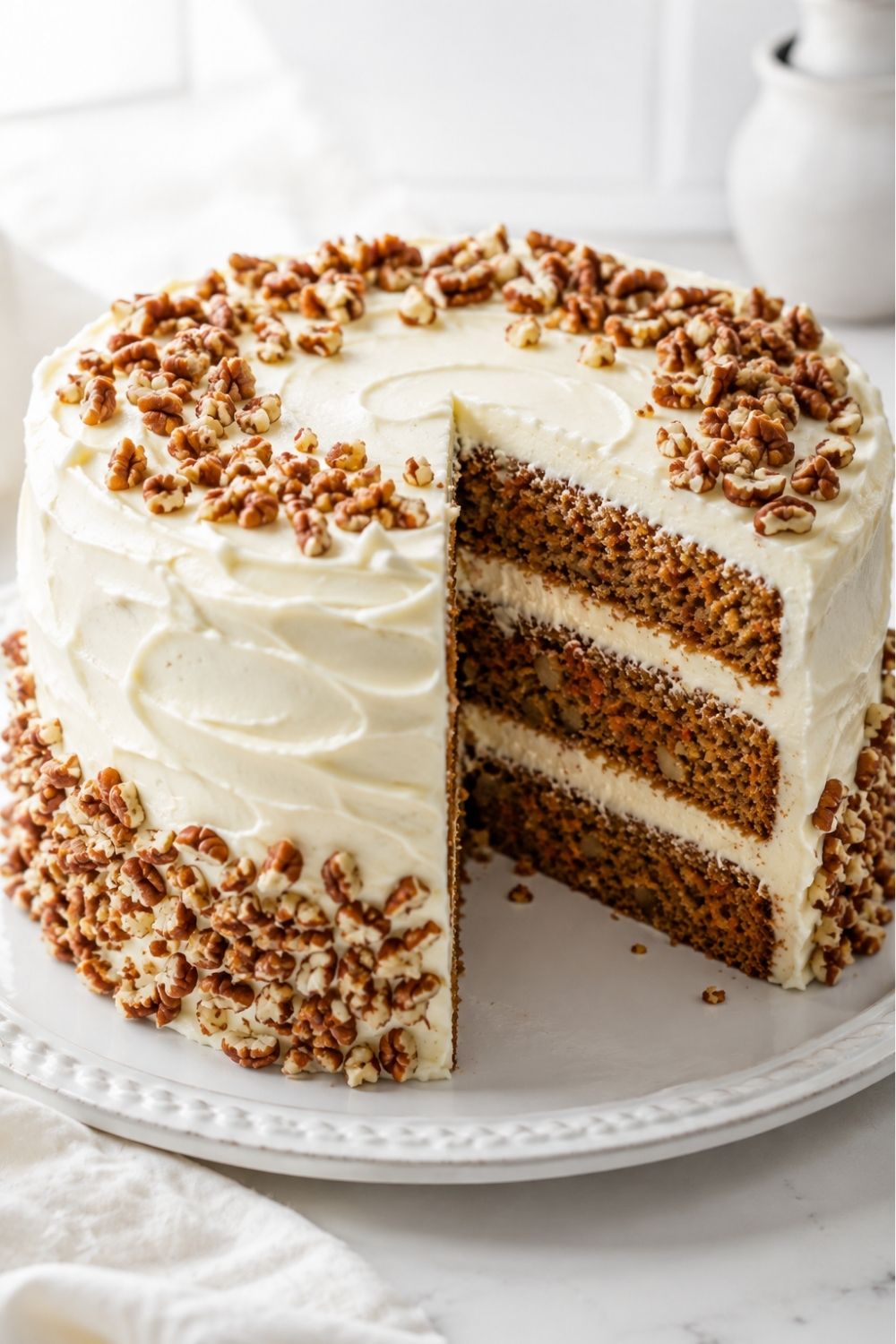
Carrot Cake With Cream Cheese Frosting
Ingredients
Method
- Heat the oven and prepare the pan. Set the oven to 350°F. Grease and flour your chosen pan generously, whether that’s a Bundt pan, a 9″x13″ baking dish, two 9-inch round pans, or three 8-inch round pans, then set it aside. For rounds, you can grease the pan, line it with parchment paper, and grease and flour the parchment as well, which guarantees a clean release.
- Build the wet base. In a large mixing bowl, beat the sugar and oil together. Add the eggs one at a time, letting each disappear before the next goes in, then beat in the vanilla.
- Sift the dry ingredients. In a separate bowl, sift together the flour, baking powder, baking soda, salt, cinnamon, nutmeg, cloves, and allspice so the spices and leavening are evenly dispersed before they meet the batter.
- Combine, then load the batter. Add the dry mixture to the wet, mixing only until the two are combined and the flour has just disappeared. Stir in the carrots, the pineapple along with its juice, and the nuts, coconut, and raisins if you’re using them. Transfer the batter to your prepared pan or pans.
- Bake and cool completely. Bake for 60 to 75 minutes for a Bundt cake, 40 to 50 minutes for a 9×13-inch pan, or 25 to 30 minutes for round pans, until a toothpick inserted in the middle comes out clean. Let a Bundt cake rest in the pan for 15 minutes before turning it onto a wire rack, and give rounds or a 9×13-inch cake 10 minutes if you’re removing them from the pan. Once the cake is completely cool, frost it, scatter over extra chopped nuts if you like, and serve.
Notes
Recipe Notes
A few practical points come out of the way this batter and frosting behave, and they’re worth knowing before you commit to a format. Bring the eggs, cream cheese, and butter out well ahead of time. Room temperature ingredients blend without resistance, and this is the one bit of preparation that can’t be rushed at the last minute. If you’re baking rounds, resist the urge to frost early. The 10-minute rest in the pan is only the start of cooling, and the layers need to reach room temperature all the way through before any cream cheese frosting touches them. The optional add-ins are genuinely optional. Leaving out all three gives you a plainer, smoother crumb that’s easier to slice neatly. Including all three gives you a chunkier, more textured cake.Recipe Notes
A few practical points come out of the way this batter and frosting behave, and they’re worth knowing before you commit to a format.
Bring the eggs, cream cheese, and butter out well ahead of time. Room temperature ingredients blend without resistance, and this is the one bit of preparation that can’t be rushed at the last minute.
If you’re baking rounds, resist the urge to frost early. The 10-minute rest in the pan is only the start of cooling, and the layers need to reach room temperature all the way through before any cream cheese frosting touches them.
The optional add-ins are genuinely optional. Leaving out all three gives you a plainer, smoother crumb that’s easier to slice neatly. Including all three gives you a chunkier, more textured cake.
Common Questions
Can I use pre-shredded carrots from a bag?
You can, but the texture will differ. Bagged shreds are cut thicker and have usually dried out slightly, so they hold their shape in the baked cake instead of softening into the crumb. Grating fresh carrots on a box grater gives you finer shreds that release more moisture.
Do I have to include the pineapple juice?
Yes. The recipe calls for the pineapple undrained, and the juice is part of the liquid balance of the batter. Draining it would leave the cake noticeably drier and change how the flour hydrates.
Why do the eggs go in one at a time?
Adding four eggs at once floods the sugar and oil mixture with more liquid than it can absorb, and the emulsion breaks. Adding them individually lets each one blend in fully, which keeps the base smooth and evenly mixed.
My frosting has small lumps in it. Can I fix it?
Once the powdered sugar is in, lumps are difficult to remove because the sugar has already coated them. Prevention is the answer: beat the cream cheese and butter together thoroughly before anything else joins them, and make sure both are properly softened first.
Which pan gives the best result?
They all work, and the choice depends on what you want. Rounds give you a proper layered cake with frosting between the tiers. A 9×13-inch dish is the simplest option and needs no assembly. A Bundt gives you the most dramatic shape but demands the longest bake and the most careful pan preparation.
Conclusion
Give this cake a full day and it improves, as the spices settle and the crumb takes on even more moisture from the carrots and pineapple. Cut a slice cold from the fridge and the oil-based crumb stays soft, with the tangy cream cheese frosting sitting cleanly against all that warm spice.