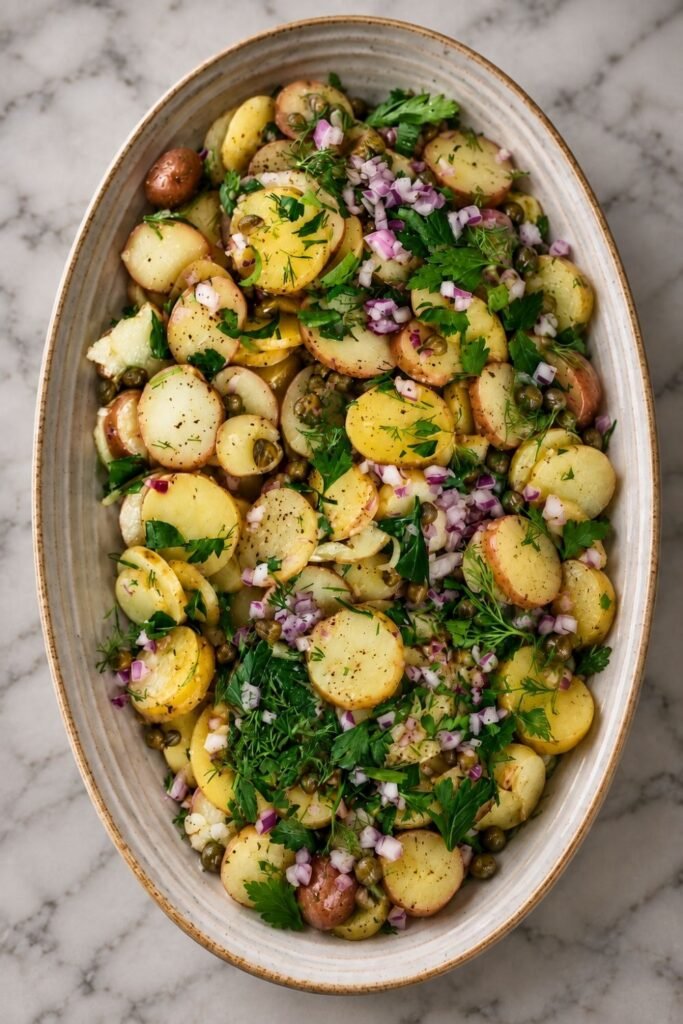


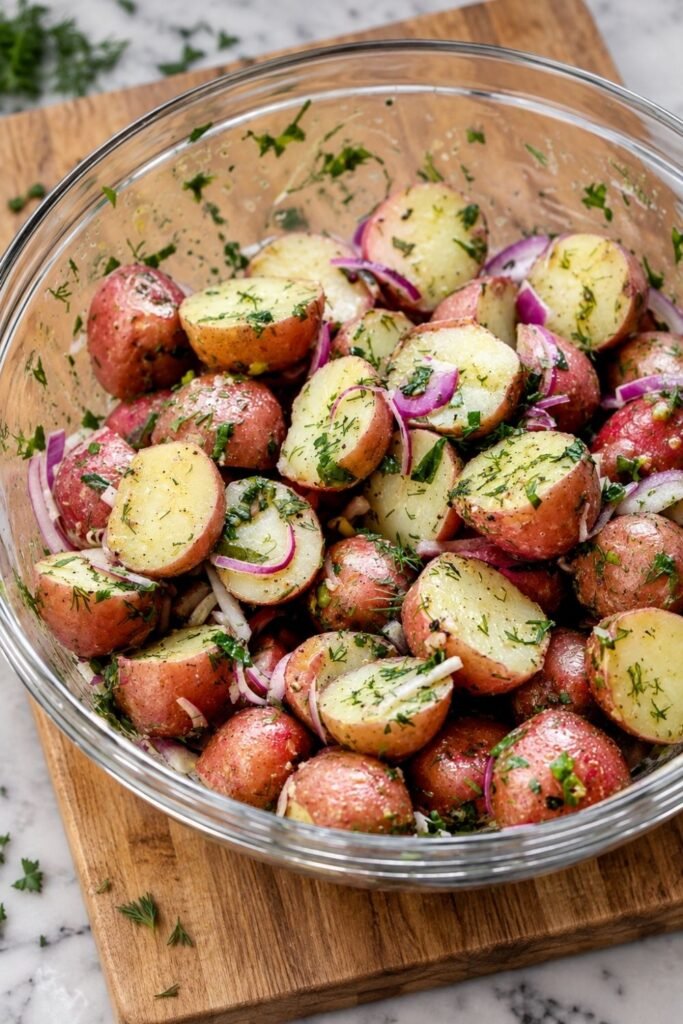
Five tablespoons of white wine vinegar, split across two separate stages, are what make this no mayo potato salad work. Three go onto the potatoes while they’re still hot, sinking in as they cool. The remaining two go into an olive oil and Dijon dressing that’s whisked in a small bowl and drizzled over afterwards. Nothing here is thick or creamy, and nothing needs to be.
That two-stage approach is why the salad tastes seasoned all the way into each potato half rather than just coated. Red potatoes hold their shape through boiling and tossing, sliced red onion runs through the bowl raw, and three different herbs go in together: dill, basil and flat leaf parsley, two tablespoons of each. The result is bright, sharp and green, and it improves noticeably after a day or two in the fridge.
Here’s what you get from this method.
Two Classic Creamy Versions
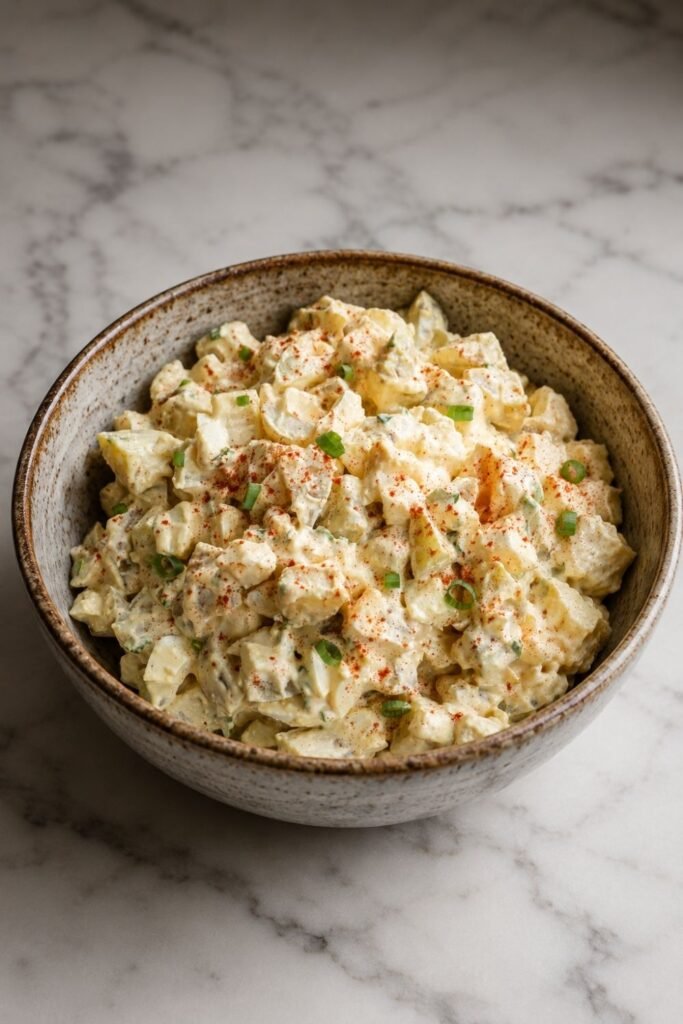
Both of these go the traditional route with a mayonnaise dressing and chopped hard-boiled eggs, and both season the potatoes with vinegar while they’re still hot. One leans on dill pickles and Dijon, the other on yellow mustard and relish.
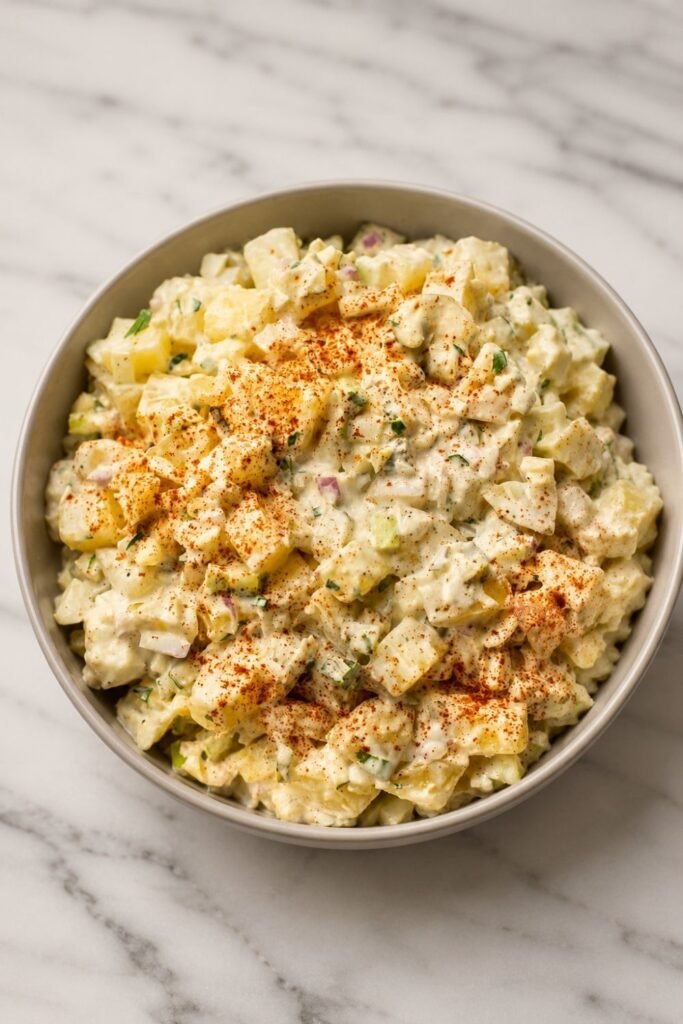
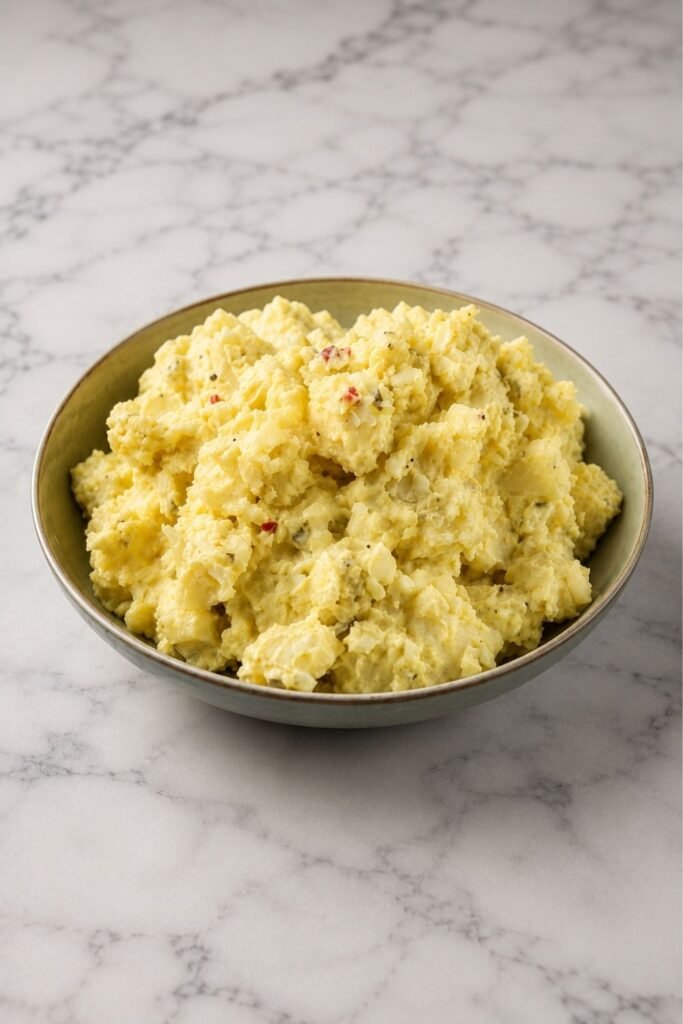
- Vinegar hits the potatoes while hot, which is when they actually absorb it
- No mayonnaise, so nothing dulls the Dijon, vinegar or herbs
- Three herbs instead of one, giving grassy, sweet and clean notes together
- Red potatoes stay in defined halves rather than breaking into mush
- It keeps 3 to 4 days and tastes better on day two or three
- Serve it warm, at room temperature, or chilled straight from the fridge
The Vinegar Goes On In Two Stages
Read the ingredient list again and you’ll notice the vinegar is described as divided. That word is carrying the whole recipe.
Three tablespoons go directly onto the halved potatoes while they’re still hot, with no oil involved at all. Hot potato flesh is porous, because the starch granules have swollen during boiling and haven’t yet tightened back up. Straight vinegar poured on at that moment travels into the interior of each half as the potatoes cool.
That absorption is the reason the instruction says to let them cool with the vinegar on them rather than dressing them immediately. The cooling period is the absorption period. Rush past it and the acid stays near the surface.
The remaining 2 tablespoons go into the dressing with the olive oil, where they do a different job. There, the vinegar is balanced by fat and emulsified by mustard, giving you a coating layer of acidity on the outside of the potatoes to sit alongside the acidity already inside them.
Doing it all in one go, with everything mixed together, would cost you the interior seasoning entirely. Oil coats potato surfaces and slows absorption, so whatever goes on first is what actually penetrates.
What Each Ingredient Contributes
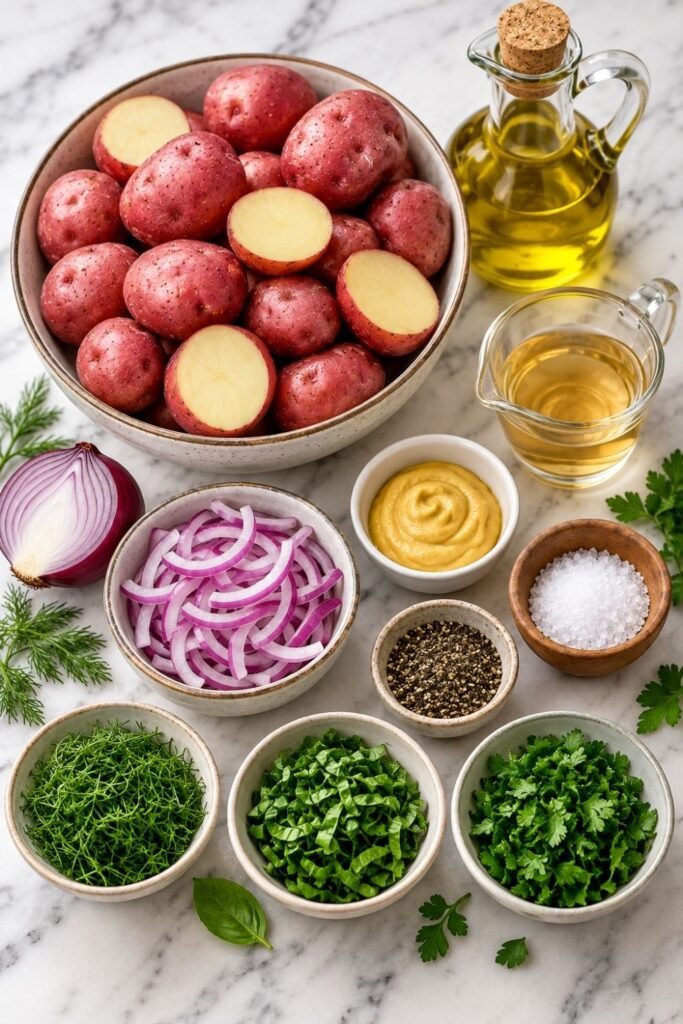
There’s nothing hidden in a list this short. With no mayonnaise smoothing things over, each component registers directly, which is why the balance between the acid, the oil and the herbs matters so much.
- Red potatoes: Waxy and low in starch, so their cells stay bound through boiling, halving and tossing. A thin dressing has no ability to hold broken potato together, which makes the variety choice more consequential here than in a creamy salad.
- White wine vinegar: The dominant flavour and, at 5 tablespoons, a significant volume. It’s clean and sharp rather than fruity, which lets the herbs and mustard stay legible instead of competing with a heavy vinegar note.
- Extra-virgin olive oil: Half a cup is the bulk of the dressing and the only source of richness in the bowl. In a vinaigrette this simple its fruity, peppery character comes through clearly, so the bottle you use matters.
- Dijon mustard: Two teaspoons, doing structural work as much as flavour work. Mustard’s emulsifying compounds are what hold half a cup of oil and 2 tablespoons of vinegar together instead of letting them separate in the bowl.
- Red onion: Sliced rather than chopped, so it threads through the salad in strips. Its sharp raw bite mellows as the salad sits, which is part of why day two tastes rounder than day one.
- Fresh dill: The grassy, faintly anise note that reads as classic potato salad. It’s the most assertive of the three herbs.
- Fresh basil: Sweeter and more aromatic, and an unusual choice against potato. It softens the dill and pulls the flavour in a Mediterranean direction alongside the olive oil.
- Italian flat leaf parsley: The neutral one. It adds clean green flavour and keeps either dill or basil from dominating, which is why all three are present in equal amounts.
The herbs are worth reading as a group rather than individually. Two tablespoons each of three different herbs gives you six tablespoons of fresh green in total, which is a lot for 3 pounds of potato. That quantity is what makes this taste herbal rather than simply acidic.
Cooking The Potatoes Whole, Then Halving Them
The potatoes go into the pan whole, covered with cold water by about 2 inches, and get cut only after they’ve cooked and cooled enough to handle. That order is deliberate.
Starting in cold water gives you even cooking. Drop potatoes into water that’s already boiling and the outsides begin cooking straight away while the centres are still cold, so by the time the middle is done the exterior has gone soft. Cold water heats gradually, bringing the whole potato up in temperature together.
Cooking them whole also keeps water out. A cut surface absorbs cooking water readily, and waterlogged potato dilutes any dressing you put on it. Intact skins act as a barrier for the full 15 to 20 minutes.
The salt goes in once the water reaches a boil, and it’s a full tablespoon of kosher salt. Most of it goes down the drain with the water, but the potatoes absorb some of it, and salted cooking water is the only opportunity to season them from the inside.
Test with a fork at the 15 minute mark. Fork tender means a fork slides in with only slight resistance at the very centre, not zero resistance. Overcooked red potatoes fall apart the moment you toss them with dressing.
Handling Hot Potatoes Without Breaking Them
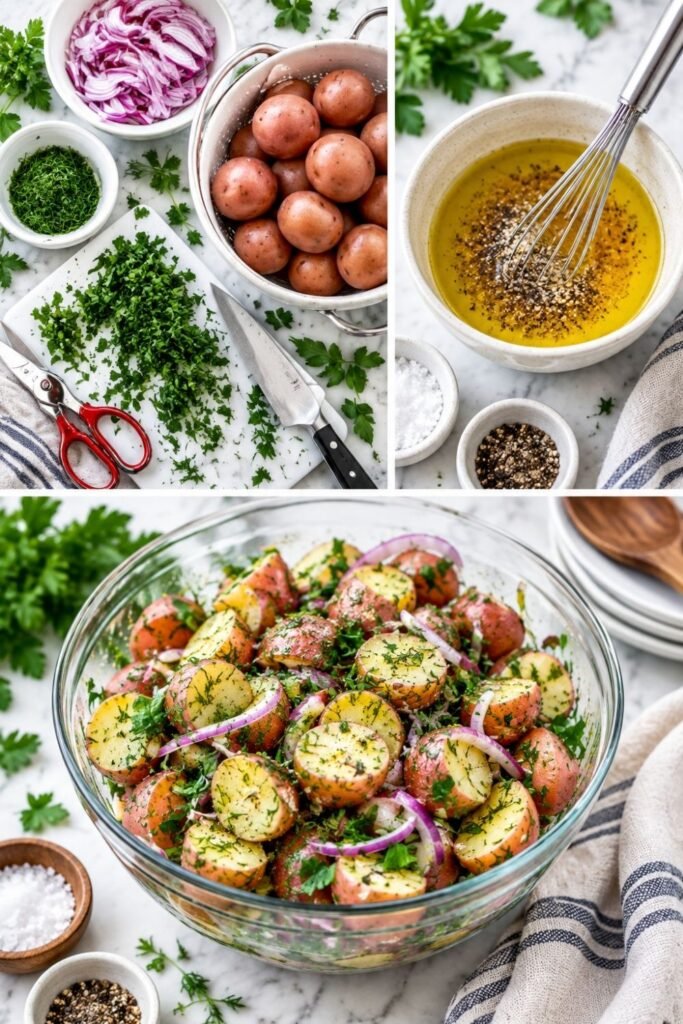
The instruction says to cut the potatoes as soon as they’re cool enough to handle, and then to sprinkle the vinegar while they’re still hot. That’s a narrow window, and it’s where the salad is most fragile.
A just-drained potato is at its softest. The structure is fully relaxed, and pressing down with a knife or dragging a spoon through the bowl will break halves into pieces. Cut with a gentle sawing motion rather than pushing straight down, and let the blade do the work.
There’s a balance to strike on timing. Wait too long and you lose the absorption benefit entirely, since cooled potato has retrograded starch and a tightened structure that vinegar mostly slides off. Move too fast and you’ll burn your hands and crush the halves. Aim for the moment you can pick one up and hold it.
Sprinkle rather than pour the 3 tablespoons of vinegar. Spreading it across the surface of the bowl reaches more potato than a single stream landing in one spot.
Whisking A Dressing That Doesn’t Split
The dressing is four ingredients plus seasoning, whisked together in a small bowl: olive oil, the remaining 2 tablespoons of vinegar, Dijon mustard, kosher salt and pepper.
The ratio here is worth noticing. Half a cup of oil against 2 tablespoons of vinegar is heavily weighted toward the fat, which is exactly right given the potatoes have already been seasoned with 3 tablespoons of straight vinegar. This dressing is there to add richness and coating, not more sharpness.
Two teaspoons of mustard is what keeps it together. Oil and vinegar separate on their own, and mustard contains compounds that coat oil droplets and stop them re-merging. Whisk until the mixture looks uniformly cloudy and slightly thickened rather than showing a distinct oil layer sitting on top.
If it separates while you’re finishing the potatoes, whisk it again before pouring. That’s normal rather than a failure.
Tossing Gently Is Part Of The Recipe
The dressing gets drizzled over and gently tossed, then the onion and herbs go in and it’s tossed again. Two separate tosses, both gentle, both specified.
Drizzling rather than pouring distributes the dressing across the surface before you start moving anything, so you need fewer passes with the spoon to get everything coated. Fewer passes means fewer opportunities to break potato halves.
Use a folding motion with a wide spatula, lifting from the bottom of the bowl and turning the mixture over rather than dragging a spoon in circles. Stop as soon as the dressing is distributed. Red potatoes are more forgiving than most, but they will still break down under aggressive stirring, and a vinaigrette can’t hide crumbled pieces the way mayonnaise can.
Season with more salt and pepper at the end, after tossing, and taste properly before you commit. Three pounds of potato absorbs far more salt than seems reasonable, and the reading you get after everything is combined is the reliable one.
Ingredients
The vinegar is the thing to keep straight here, since it’s divided across two different stages and the amounts aren’t equal. Measure it out before you start.
- 3 pounds red potatoes
- 5 tablespoons white wine vinegar, divided, 3 tablespoons go on the hot potatoes and 2 into the dressing
- ½ cup extra-virgin olive oil
- 2 teaspoons Dijon mustard
- 1 teaspoon kosher salt
- ½ teaspoon freshly ground black pepper
- ½ small red onion, sliced, about 1 cup
- 2 tablespoons minced fresh dill
- 2 tablespoons minced fresh basil
- 2 tablespoons minced Italian flat leaf parsley
A separate 1 tablespoon of kosher salt is used to season the cooking water, listed within the first step below.
Instructions
The potatoes cook whole and get halved afterwards, so nothing needs prepping before the pan goes on. Have the vinegar measured and divided before they come out of the water.
- Boil the potatoes whole. Put the potatoes in a medium saucepan and cover them with cold water by about 2 inches. Bring it to a boil over high heat, add 1 tablespoon of kosher salt, and cook for 15 to 20 minutes, until the potatoes are tender and a fork slides in easily. Drain them well.
- Halve and splash with vinegar. As soon as the potatoes are cool enough to handle, cut them in half and put them in a large mixing bowl. While they’re still hot, sprinkle them with 3 tablespoons of the vinegar and let them cool so the vinegar is absorbed.
- Whisk the dressing. In a small bowl, whisk together the olive oil, the remaining 2 tablespoons of vinegar, the Dijon mustard, kosher salt and pepper, until the mixture looks cloudy and combined rather than separated.
- Dress and toss. Drizzle the dressing over the potato mixture and toss gently so the halves stay intact.
- Add the onion and herbs. Add the sliced onion along with the minced dill, basil and parsley, then toss again. Season with more salt and pepper to taste.
- Serve. Serve warm, at room temperature, or chilled. It keeps in the refrigerator for 3 to 4 days.
When A Plain Bowl Won’t Do
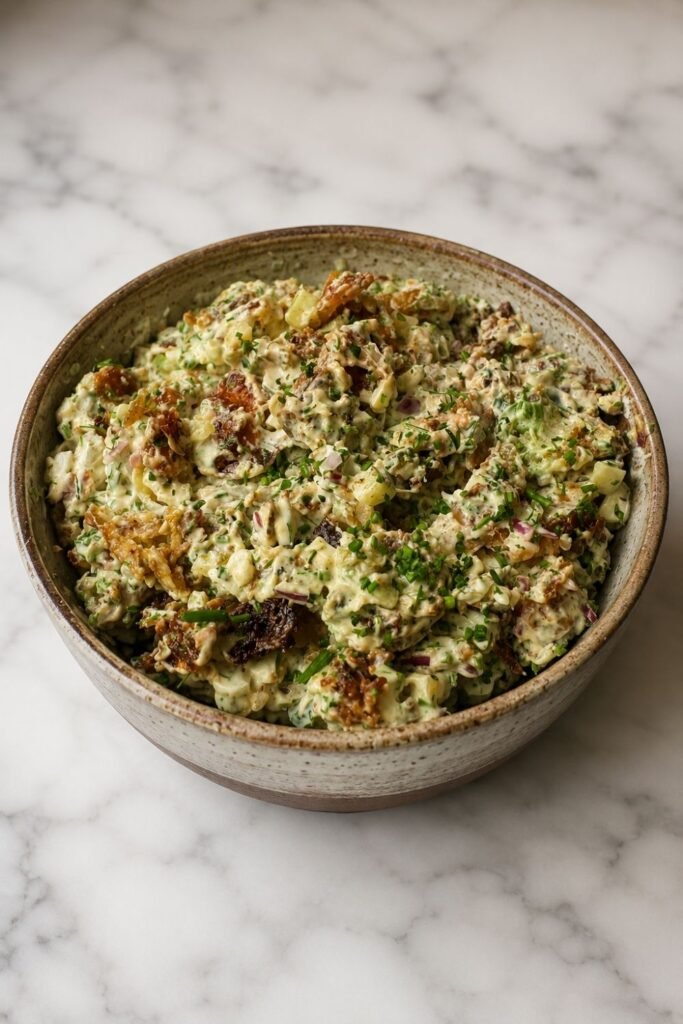
Two versions that change the format rather than just the dressing. One smashes the potatoes flat for crisp edges under a herby cream. The other borrows its dressing wholesale from deviled eggs, mashed yolks and all.
No Mayo Potato Salad That Tastes Better On Day Two
Ingredients
Method
- Boil the potatoes whole. Put the potatoes in a medium saucepan and cover them with cold water by about 2 inches. Bring it to a boil over high heat, add 1 tablespoon of kosher salt, and cook for 15 to 20 minutes, until the potatoes are tender and a fork slides in easily. Drain them well.
- Halve and splash with vinegar. As soon as the potatoes are cool enough to handle, cut them in half and put them in a large mixing bowl. While they’re still hot, sprinkle them with 3 tablespoons of the vinegar and let them cool so the vinegar is absorbed.
- Whisk the dressing. In a small bowl, whisk together the olive oil, the remaining 2 tablespoons of vinegar, the Dijon mustard, kosher salt and pepper, until the mixture looks cloudy and combined rather than separated.
- Dress and toss. Drizzle the dressing over the potato mixture and toss gently so the halves stay intact.
- Add the onion and herbs. Add the sliced onion along with the minced dill, basil and parsley, then toss again. Season with more salt and pepper to taste.
- Serve. Serve warm, at room temperature, or chilled. It keeps in the refrigerator for 3 to 4 days.
Notes
Common Questions
Can I use a different potato variety?
Red potatoes are specified because they’re waxy and hold their halves through boiling and two rounds of tossing. Starchy varieties like russets break down readily, and a thin olive oil dressing has no thickening power to hold crumbled pieces together. Yukon Golds sit between the two and would work, with slightly softer edges.Do I need to peel the potatoes?
The recipe doesn’t ask you to. Red potato skins are thin and tender enough to eat, and leaving them on holds each half together during tossing and adds colour to the bowl.Why is the vinegar divided instead of all going in the dressing?
The 3 tablespoons that go onto hot potatoes are absorbed into the flesh as it cools, seasoning each half from the inside. The 2 tablespoons in the dressing sit on the outside, balanced by olive oil. Putting all 5 tablespoons into the dressing would mean the oil coats the potatoes first and blocks that interior absorption.Recipe Notes
A couple of practical points on storing and refreshing it.
This potato salad gets even better on the second or third day after it’s been made, as the dressing continues working into the potatoes and the raw onion mellows.
To freshen it up as the days go by, add more fresh herbs if you’d like. The herbs already in the bowl lose some of their brightness after sitting in an acidic dressing, so a handful of newly minced dill, basil or parsley stirred through before serving brings the colour and aroma back.
Common Questions
Can I use a different potato variety?
Red potatoes are specified because they’re waxy and hold their halves through boiling and two rounds of tossing. Starchy varieties like russets break down readily, and a thin olive oil dressing has no thickening power to hold crumbled pieces together. Yukon Golds sit between the two and would work, with slightly softer edges.
Do I need to peel the potatoes?
The recipe doesn’t ask you to. Red potato skins are thin and tender enough to eat, and leaving them on holds each half together during tossing and adds colour to the bowl.
Why is the vinegar divided instead of all going in the dressing?
The 3 tablespoons that go onto hot potatoes are absorbed into the flesh as it cools, seasoning each half from the inside. The 2 tablespoons in the dressing sit on the outside, balanced by olive oil. Putting all 5 tablespoons into the dressing would mean the oil coats the potatoes first and blocks that interior absorption.
Can I substitute a different vinegar?
White wine vinegar is what’s called for, and its clean, neutral sharpness is part of why the herbs and Dijon stay prominent. A more assertive vinegar would push itself forward at 5 tablespoons, so treat any swap as a variation rather than a straight exchange.
Can I make this ahead?
It’s arguably better made ahead. The salad keeps for 3 to 4 days in the refrigerator and improves on day two or three. Add fresh herbs before serving if it needs livening up.
Conclusion
Sharp, herby and dressed in olive oil rather than mayonnaise, this is a potato salad that stays light no matter how much of it you eat. The vinegar does its work while the potatoes cool, and time in the fridge only makes it better.