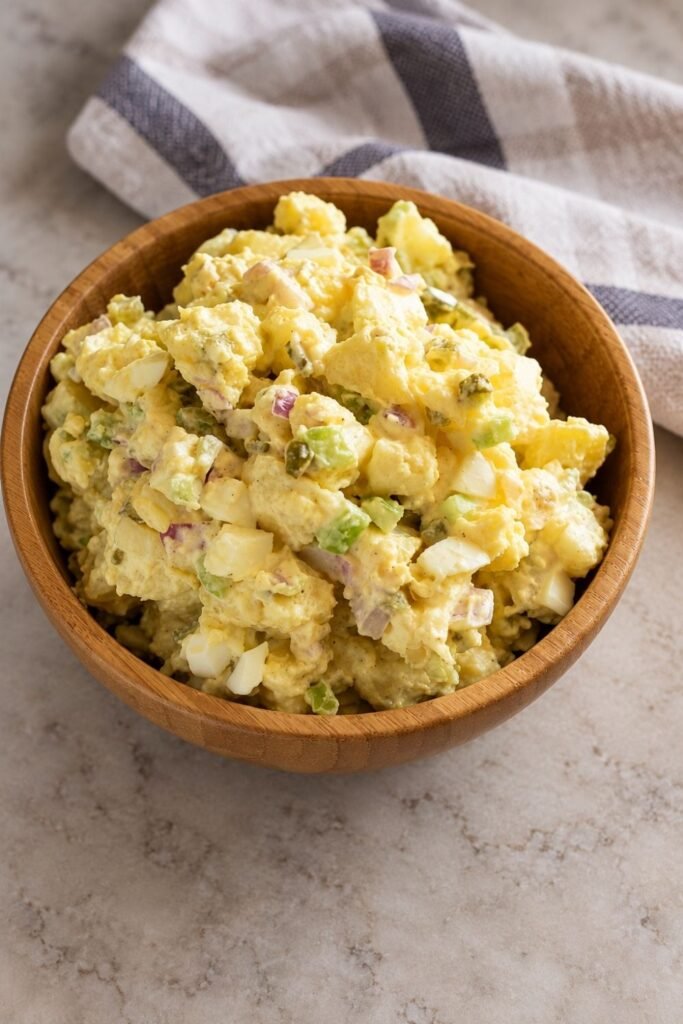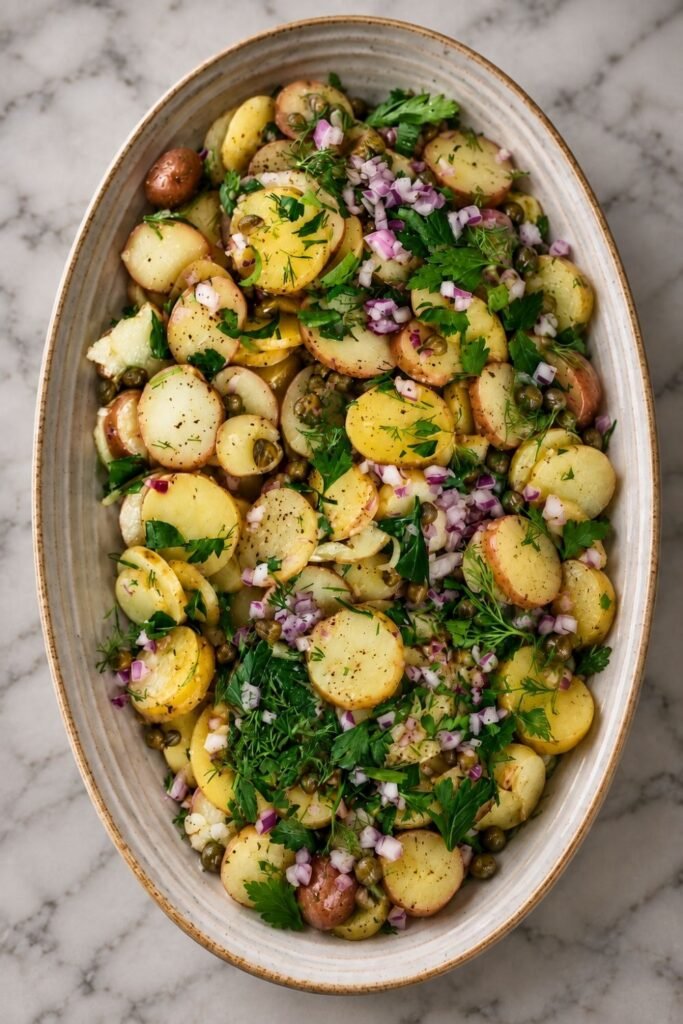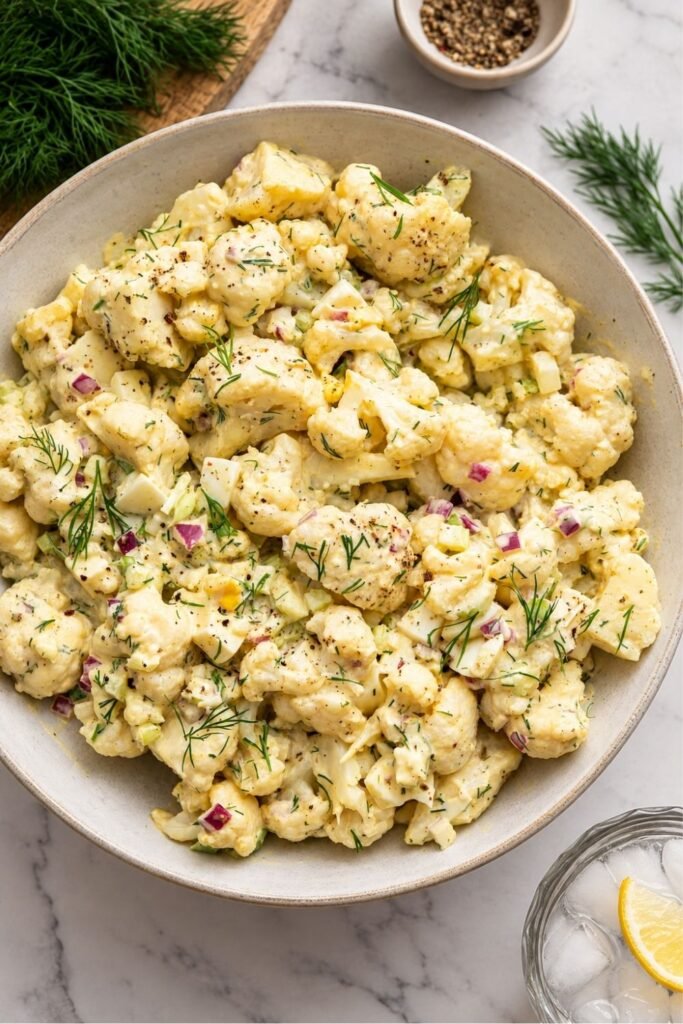


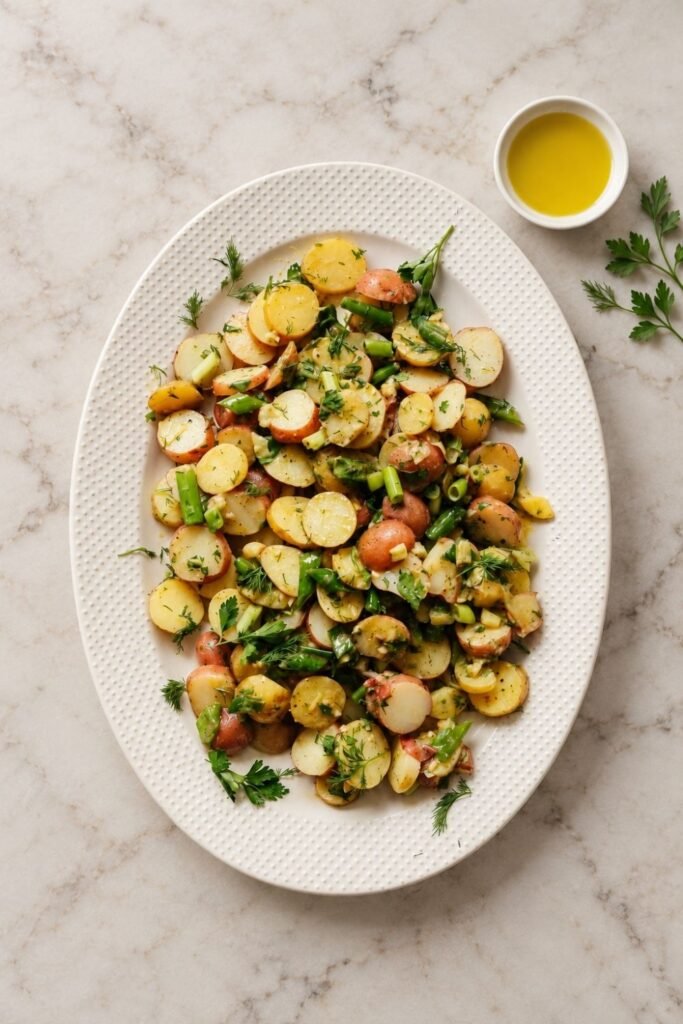
Where a classic deli-style bowl coats potatoes in something thick and creamy, French potato salad does the opposite.
The dressing here is a thin, sharply acidic vinaigrette built on spicy brown mustard, two kinds of vinegar, garlic and a generous quarter cup of fresh dill, whisked with olive oil until it emulsifies into something that clings rather than pools. Nothing about it is heavy.
That difference in dressing changes what the potatoes themselves need to do. They’re sliced into rounds rather than cubed, cooked until properly soft, then seasoned with a tablespoon of apple cider vinegar before the dressing ever touches them.
Green onion runs through the whole bowl in quantity, and parsley goes in if you want another layer of green. The result tastes bright and mustardy rather than rich, and it works served warm, chilled, or somewhere in between.
Here’s what this method gives you.
Not Everything Needs Mayonnaise And A Cold Fridge
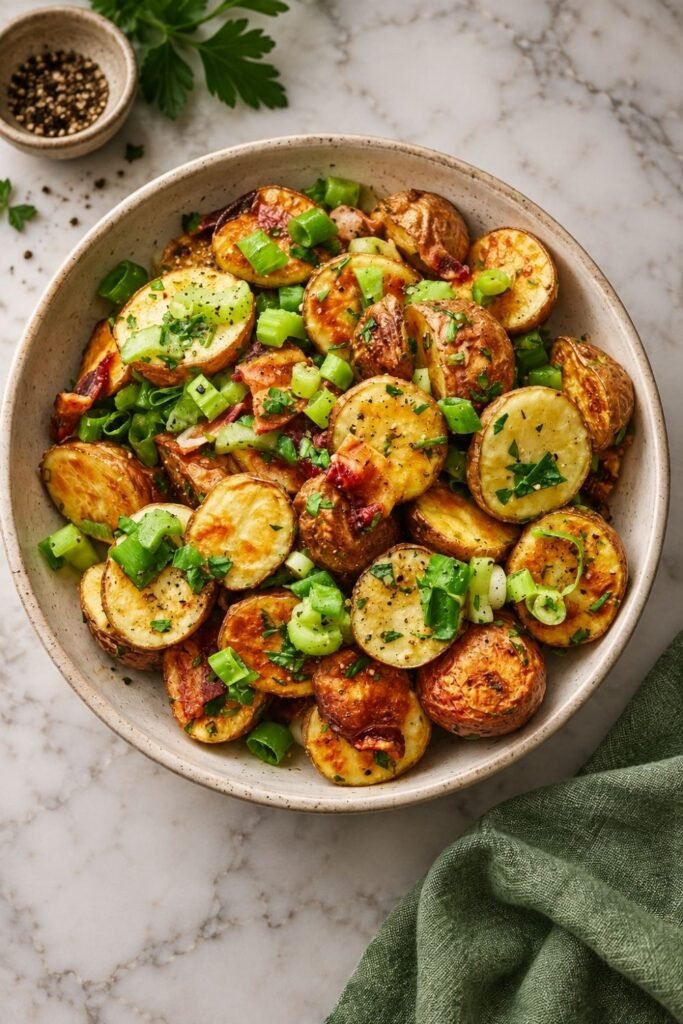
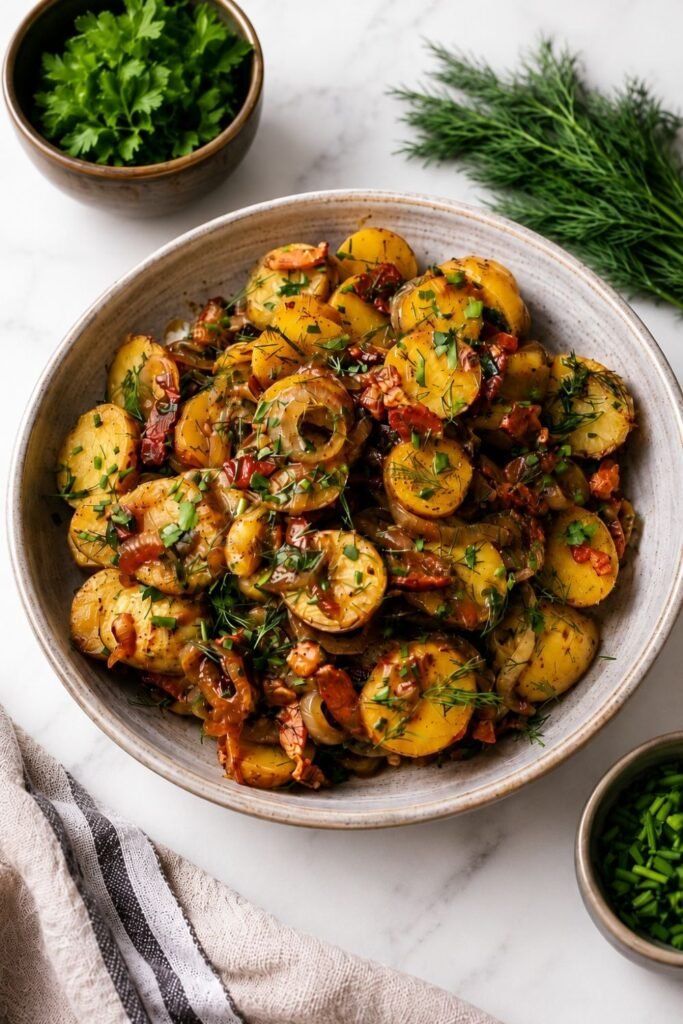
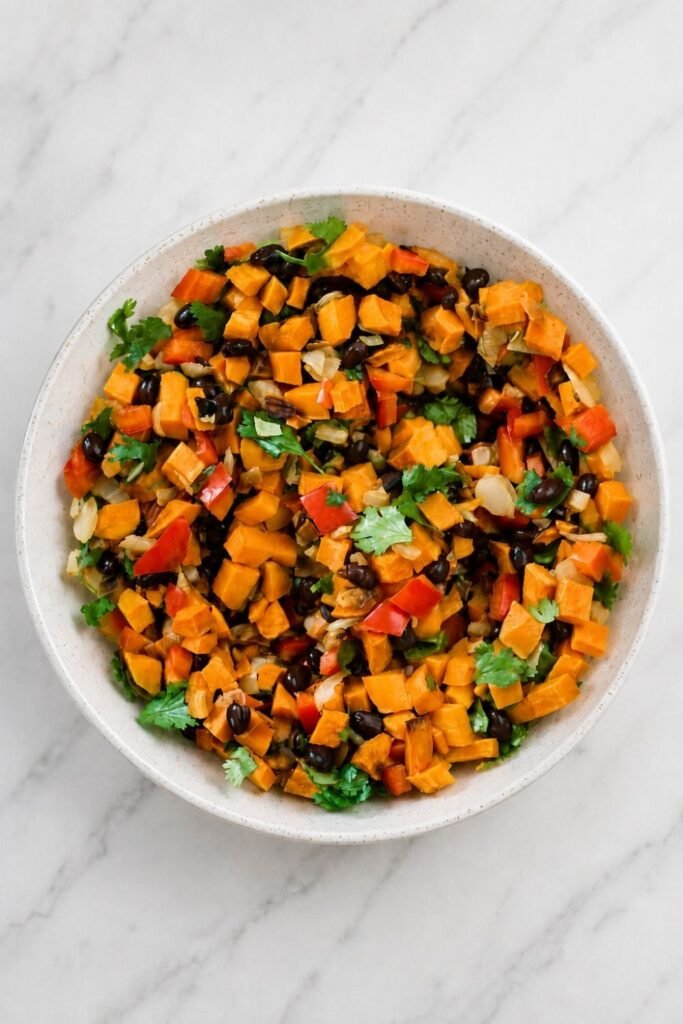
Both of these are served warm rather than chilled, and neither uses a creamy dressing. One leans savoury with bacon fat and red wine vinegar, the other goes warm and spiced with allspice, feta and maple Dijon.
- No mayonnaise, so nothing dulls the mustard, garlic or dill
- Potatoes get seasoned with vinegar first, then dressed, giving two layers of acidity
- The vinaigrette is emulsified by hand, so it coats instead of separating in the bowl
- A full cup of green onion means allium flavour in every forkful, not occasional bites
- It keeps for up to 4 days and tastes stronger after sitting
- Works served warm, chilled, or at room temperature
Slicing Instead Of Cubing, And Why It Matters Here
The potatoes go into quarter-inch slices rather than chunks, and that shape is doing real work for a vinaigrette-based salad.
Thin rounds have far more surface area per unit of potato than cubes do. With a thin dressing, surface area is everything, because the vinaigrette isn’t thick enough to build up a coating the way mayonnaise does. It has to reach as much potato as possible, and flat slices give it that.
Slices also stack and overlap in the bowl rather than rolling around, so the dressing that drains off the top layer gets caught by the layer underneath instead of settling at the bottom. Toss it once and everything has been in contact with the vinaigrette.
Baby yellow potatoes suit this well. They’re small enough that a quarter-inch slice is a manageable round rather than a wide disc, and their waxy, moderate-starch flesh holds together through boiling and tossing. A mix of half yellow and half red, as used here, also gives the bowl some colour variation from the red skins.
The Ingredients Carrying The Flavour
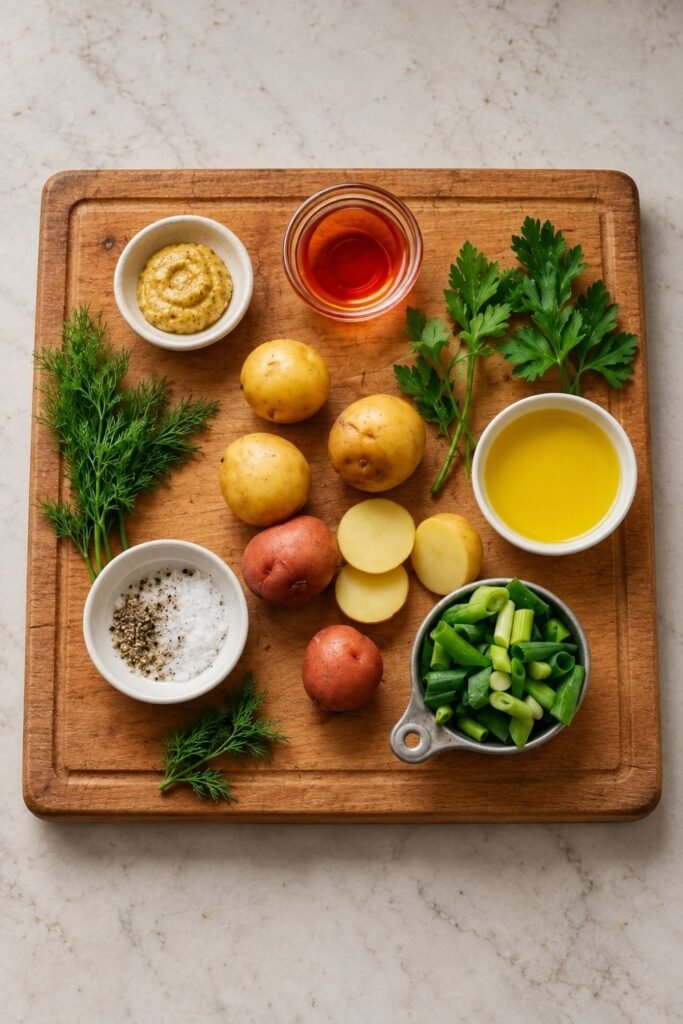
This is a short list with nowhere to hide. With no mayonnaise smoothing things over, each component in the dressing registers directly, which is why the balance between them matters.
- Spicy brown mustard: It does two jobs at once. The flavour is the backbone of the dressing, and mustard’s natural emulsifying compounds are what hold the oil and vinegar together once you whisk them. Dijon works in its place and gives a slightly sharper, less earthy result.
- Red wine vinegar: At 3 tablespoons, it’s the dominant acid and sets the overall tang. White wine vinegar is the listed alternative and reads a little cleaner and less fruity.
- Apple cider vinegar: Used twice, once on the warm potatoes and once in the dressing. It’s softer and slightly sweeter than red wine vinegar, which keeps the total acidity from tasting one-note.
- Olive oil: Three tablespoons, streamed in slowly, is what turns a sharp mixture into a dressing. The oil carries flavour, softens the acid, and gives the vinaigrette enough body to cling to potato slices.
- Garlic: Three minced cloves go in raw, so the flavour stays pungent rather than mellow. Mincing finely spreads that pungency instead of leaving harsh pockets.
- Fresh dill: A quarter cup is a bold amount, and it’s meant to be. Dill’s grassy, faintly anise character is what makes this taste herbal rather than simply acidic.
- Green onion: A full cup, diced, so it functions as a component rather than a garnish. It brings mild onion bite and a bit of crunch against soft potato.
- Parsley: Optional, and worth adding if you want a second, cleaner green note alongside the dill rather than letting dill dominate.
It’s worth reading the two vinegars together. Between the tablespoon on the potatoes, the tablespoon in the dressing and the 3 tablespoons of red wine vinegar, there’s significant acid in this bowl, which is exactly why the olive oil and the mustard both matter. They’re what turn that acidity into something balanced rather than punishing.
Cook The Potatoes Past The Point You Think
The recipe is unusually direct about this, and for good reason. Undercooked potatoes here are waxy and difficult to eat, and that texture is the most common way this salad disappoints.
Cover the sliced potatoes with water, add a healthy dash of salt, and bring it to a boil. Once it’s boiling, drop the heat slightly to medium-high and keep cooking for 10 to 15 minutes. The doneness test is specific and worth following exactly: a knife should pierce a slice easily, and the slice should also fall off the knife easily rather than clinging to the blade.
That second half of the test is the part people skip. A potato that a knife enters without much resistance but that hangs on when you lift it still has a firm, slightly dense core. It will taste fine hot and turn unpleasantly waxy as it cools.
If you’re unsure, carefully scoop one out and taste it. Ten to fifteen minutes is a wide window because slice thickness and potato size both vary, and the clock is less reliable than the test.
Season The Potatoes Before The Dressing Goes On
After draining and rinsing with cool water, the potatoes get seasoned with salt, black pepper and 1 tablespoon of apple cider vinegar, and then set aside while the dressing is finished. That intermediate step is easy to read as optional. It isn’t.
Freshly cooked potato is porous and absorbent, and a thin splash of straight vinegar sinks into it in a way that an oil-containing dressing can’t. The oil in a vinaigrette coats the surface and slows absorption, so whatever goes on first is what actually penetrates. By seasoning with vinegar alone first, you get acidity inside the slices and acidity around them.
The rinse with cool water matters for a related reason. It washes off surface starch that would otherwise make the slices tacky and cause them to clump together, and it stops the residual cooking that would push already-tender slices toward falling apart.
Let them sit until mostly dry before they go into the serving bowl. Excess water thins the vinaigrette and leaves a watery layer at the bottom of the bowl.
Whisking A Vinaigrette That Actually Holds Together
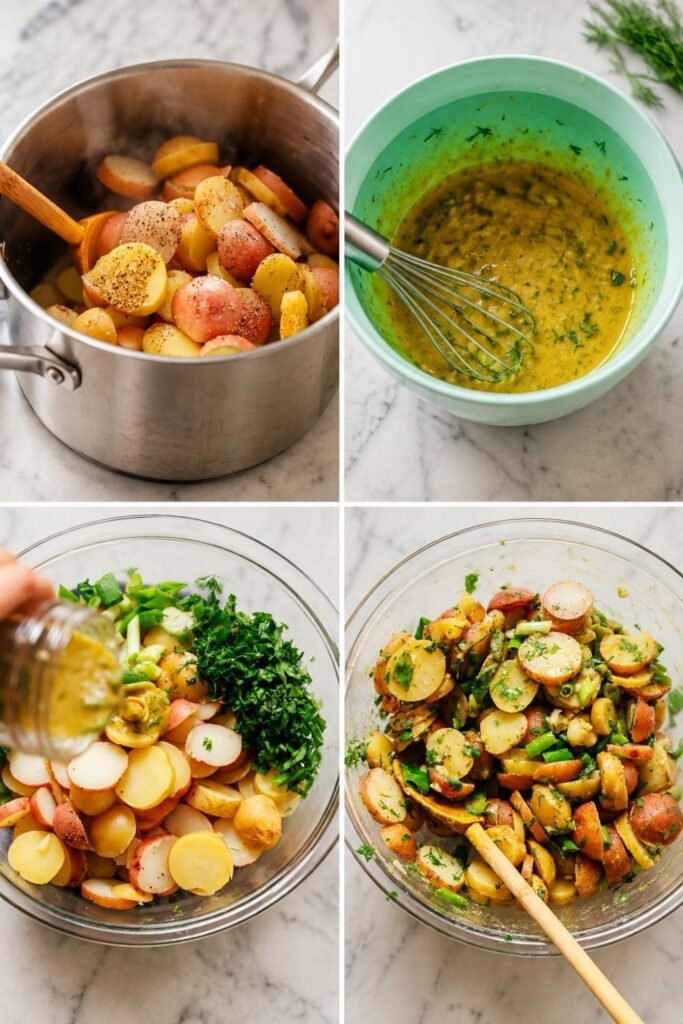
The dressing gets made while the potatoes boil, which is the most efficient use of that window. Mustard, minced garlic, salt, pepper, red wine vinegar and apple cider vinegar all go into a mixing bowl first and get whisked together.
Then comes the step that decides the texture. Keep whisking and stream the olive oil in slowly rather than pouring it in at once. Streaming breaks the oil into fine droplets as it enters, and the mustard’s emulsifiers coat those droplets and stop them re-merging. Add the oil in a single pour and you get large globules that separate again within a minute or two.
You can see the difference as it happens. A properly emulsified dressing turns opaque, slightly thickened, and uniform in colour, with no visible layer of oil floating on the surface. If you can still see distinct oil, keep whisking and slow the pour.
Add the dill last and whisk once more, then taste and adjust. The recipe gives you the levers directly: more salt for saltiness, black pepper for spice, mustard for a more intense mustard flavour, vinegar for acidity, or dill for herbal character.
Why It Improves As It Sits
The salad is ready to eat the moment it’s tossed, but it isn’t at its best yet. The dressing continues soaking into the potato slices the longer it sits, and the flavour deepens with it.
This is the practical advantage of a vinaigrette over a creamy dressing. Thin, acidic liquid keeps migrating into the potato, so time works in the salad’s favour rather than against it. Make it an hour ahead and it will taste noticeably more seasoned than it did straight away.
It also means you have real flexibility at serving. Warm, chilled, or room temperature all work, and each gives you something slightly different. Warm, the dill and garlic come forward most strongly. Chilled, the acidity is the first thing you notice. Room temperature sits between the two.
Leftovers keep covered in the refrigerator for up to 4 days. This one is not freezer friendly.
Ingredients
The two vinegars are the thing to watch here, since apple cider vinegar appears in both parts of the recipe and does a different job in each. Keep them straight before you start.
- 2 pounds baby yellow potatoes, we used half yellow, half red
- 1 pinch sea salt and black pepper
- 1 Tbsp apple cider vinegar, this one goes on the warm potatoes, not in the dressing
- 1 cup diced green onion
- 1/4 cup fresh chopped parsley (optional)
- 2 ½ Tbsp spicy brown mustard, or dijon mustard
- 3 cloves garlic, minced, fine enough to disperse, since it stays raw
- 1/4 tsp each sea salt and black pepper, plus more to taste
- 3 Tbsp red wine vinegar, or white wine vinegar
- 1 Tbsp apple cider vinegar
- 3 Tbsp good olive oil, if avoiding oil, see the notes below
- 1/4 cup fresh chopped dill
Instructions
The dressing is made while the potatoes boil, so read through the first three steps before you put a pan on. Nothing here is rushed once the potatoes are drained.
- Prep and boil the potatoes. Rinse and scrub the potatoes, then slice them into 1/4-inch slices. Put them in a large saucepan, cover with water, add a healthy dash of salt for flavour, and bring it to a boil.
- Cook until properly tender. Once it’s boiling, reduce the heat slightly to medium-high and keep cooking for 10 to 15 minutes, until a knife pierces the potatoes easily and they slide off the knife just as easily. Don’t undercook them, since waxy slices are difficult to eat. If you’re unsure, carefully scoop one out and test it.
- Start the dressing while they cook. Add the mustard, garlic, salt, pepper, red wine vinegar and apple cider vinegar to a mixing bowl and whisk to combine.
- Emulsify with the oil. Keep whisking and slowly stream in the olive oil so the oil and vinegar emulsify rather than separating. Add the dill and whisk once more.
- Taste and adjust the dressing. Adjust as needed, adding more salt for saltiness, black pepper for spice, mustard for a more intense mustard flavour, vinegar for more acidity, or dill for herbal flavour.
- Drain and season the potatoes. Drain the cooked potatoes and rinse them with cool water. Once they’re mostly dry, add them to a large serving bowl and season with a dash of salt, black pepper and the apple cider vinegar. Set aside.
- Combine everything. Add the dressing to the potatoes along with the green onion and the parsley if using, then toss to combine. Taste and adjust the salt and pepper again.
- Serve or let it sit. It’s ready to enjoy straight away, though it soaks in more of the dressing flavour the longer it sits. Serve warm, chilled, or at room temperature.
Rich At One End, Sharp At The Other
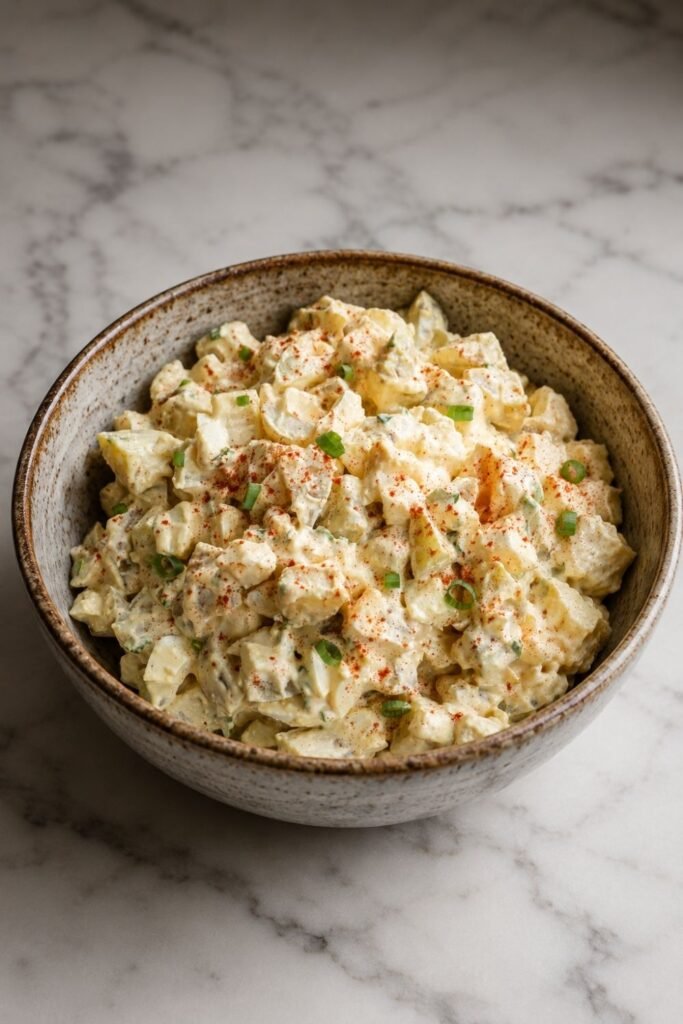
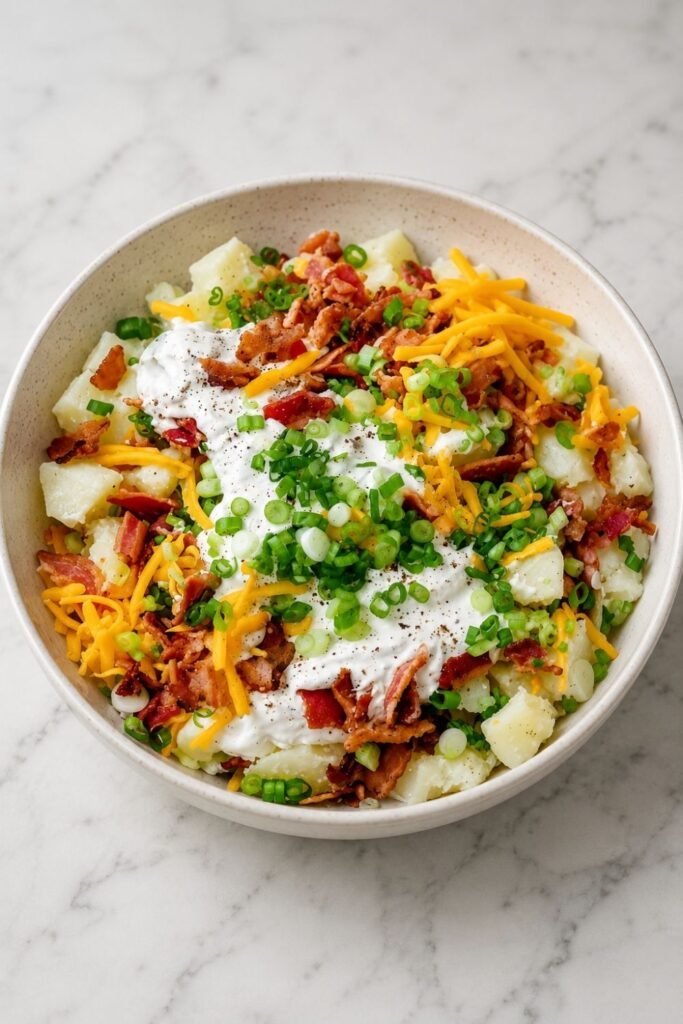
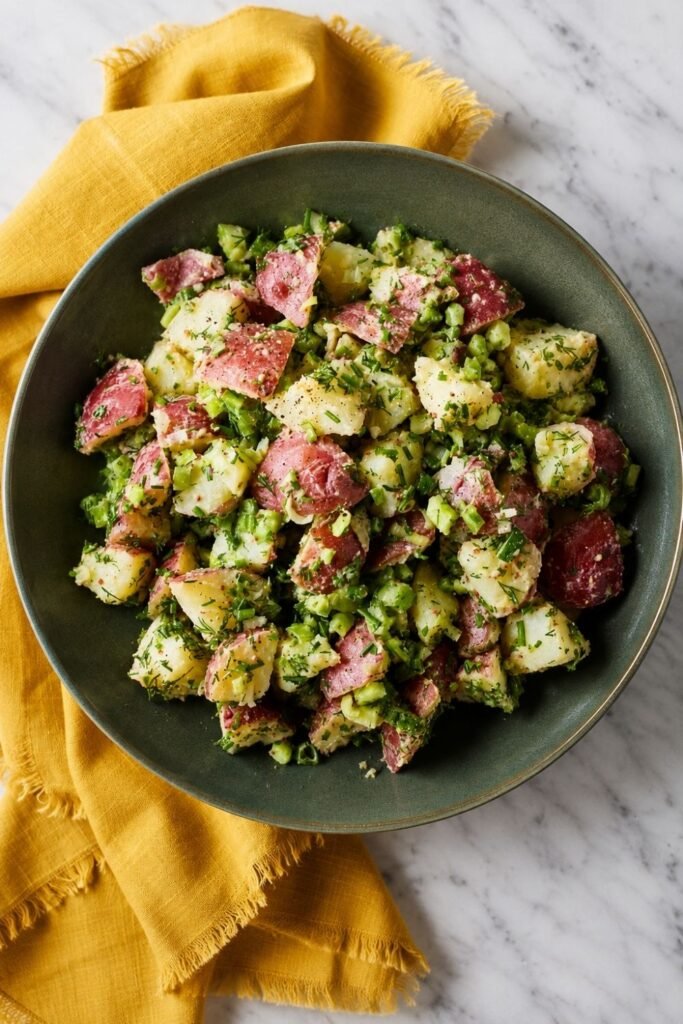
Two takes that land in opposite places. One goes fully indulgent with baked russets, bacon and cheddar in a creamy base. The other keeps things light, using barely a spoonful of mayonnaise and leaning on grainy Dijon, lemon and a pile of fresh herbs.
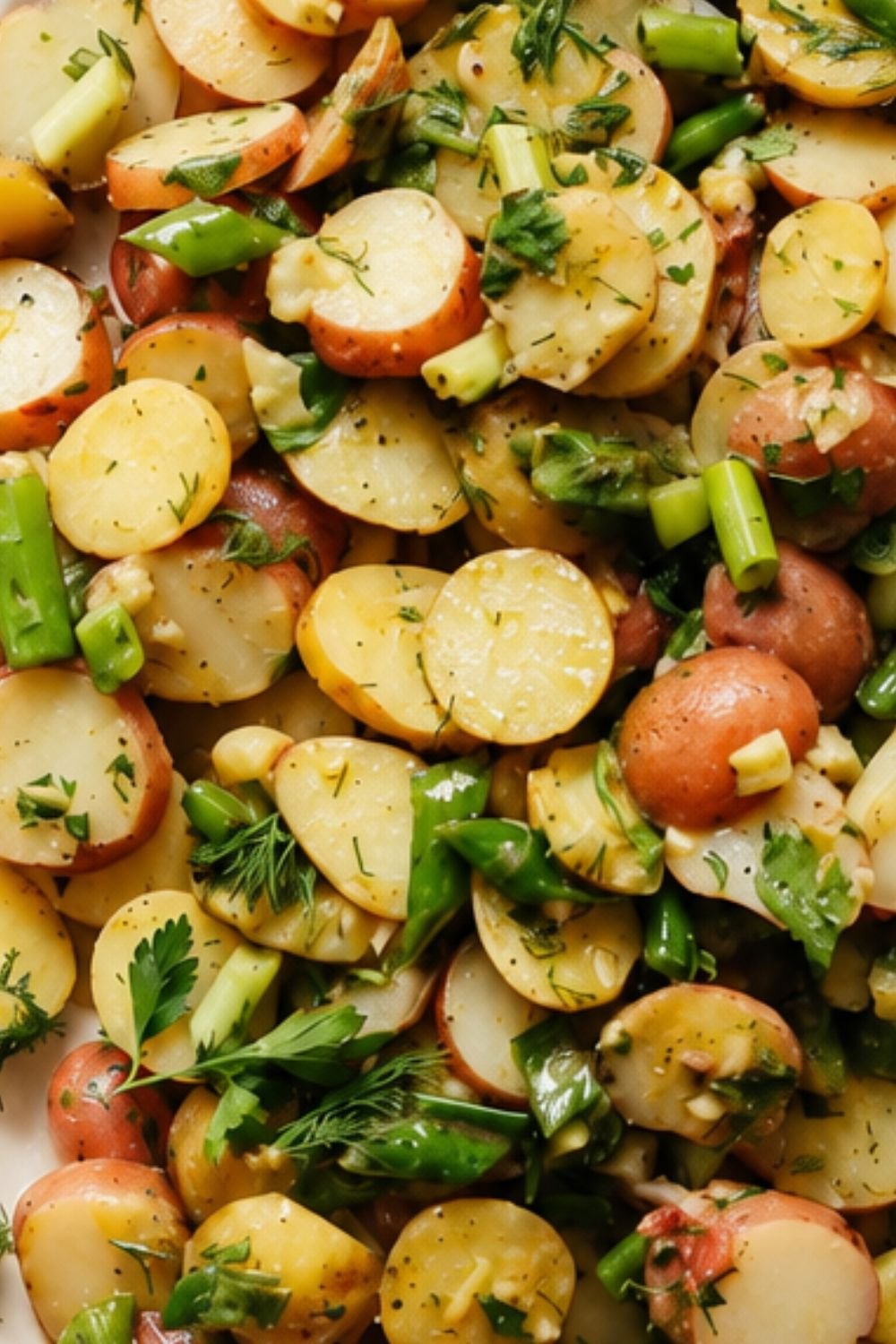
French Potato Salad (No Mayo, Mustard Vinaigrette)
Ingredients
Method
- Prep and boil the potatoes. Rinse and scrub the potatoes, then slice them into 1/4-inch slices. Put them in a large saucepan, cover with water, add a healthy dash of salt for flavour, and bring it to a boil.
- Cook until properly tender. Once it’s boiling, reduce the heat slightly to medium-high and keep cooking for 10 to 15 minutes, until a knife pierces the potatoes easily and they slide off the knife just as easily. Don’t undercook them, since waxy slices are difficult to eat. If you’re unsure, carefully scoop one out and test it.
- Start the dressing while they cook. Add the mustard, garlic, salt, pepper, red wine vinegar and apple cider vinegar to a mixing bowl and whisk to combine.
- Emulsify with the oil. Keep whisking and slowly stream in the olive oil so the oil and vinegar emulsify rather than separating. Add the dill and whisk once more.
- Taste and adjust the dressing. Adjust as needed, adding more salt for saltiness, black pepper for spice, mustard for a more intense mustard flavour, vinegar for more acidity, or dill for herbal flavour.
- Drain and season the potatoes. Drain the cooked potatoes and rinse them with cool water. Once they’re mostly dry, add them to a large serving bowl and season with a dash of salt, black pepper and the apple cider vinegar. Set aside.
- Combine everything. Add the dressing to the potatoes along with the green onion and the parsley if using, then toss to combine. Taste and adjust the salt and pepper again.
- Serve or let it sit. It’s ready to enjoy straight away, though it soaks in more of the dressing flavour the longer it sits. Serve warm, chilled, or at room temperature.
Notes
Common Questions
Can I use dijon instead of spicy brown mustard?
Yes, it’s given as a direct alternative. Dijon is sharper and more pungent while spicy brown tends to be earthier and a touch milder, so expect a slightly different edge to the dressing. Either will emulsify the vinaigrette equally well.Why rinse the potatoes with cool water after draining?
The rinse removes surface starch that would make the slices sticky and prone to clumping, and it stops residual cooking so already-tender slices don’t soften further. Let them get mostly dry afterwards so they don’t dilute the dressing.Recipe Notes
A few practical points on substitutions, yield and storage.
If you’re avoiding oil, the recipe points you to the dressing from its simple vegan potato salad as an alternative, with the 1 tablespoon of oil omitted.
As written, this makes approximately 7 cups of potato salad, which is where the 7 serving yield comes from.
Store leftovers covered in the refrigerator for up to 4 days. This salad is not freezer friendly, so plan to finish it within that window.
Common Questions
Can I use dijon instead of spicy brown mustard?
Yes, it’s given as a direct alternative. Dijon is sharper and more pungent while spicy brown tends to be earthier and a touch milder, so expect a slightly different edge to the dressing. Either will emulsify the vinaigrette equally well.
Why rinse the potatoes with cool water after draining?
The rinse removes surface starch that would make the slices sticky and prone to clumping, and it stops residual cooking so already-tender slices don’t soften further. Let them get mostly dry afterwards so they don’t dilute the dressing.
My dressing separated. Can I fix it?
Whisk it again vigorously right before pouring. Mustard-based vinaigrettes hold for a while but will eventually settle, and re-whisking brings it back together. If it separates repeatedly, the oil likely went in too quickly the first time.
Should I serve this warm or cold?
All three options work, and the recipe says so explicitly. Warm brings the garlic and dill forward most, chilled emphasises the acidity, and room temperature sits between them. The salad also absorbs more dressing the longer it sits, so making it ahead is a genuine advantage.
Can I leave out the parsley?
Yes, it’s listed as optional. Without it the dill carries the herbal flavour on its own, which makes the salad taste more distinctly of dill. Adding it gives you a cleaner second green note alongside.
Conclusion
Sharp with mustard and two vinegars, loose enough to soak in rather than sit on top, and green throughout from a full cup of onion and a generous handful of dill, this is potato salad that tastes lighter and louder than the creamy version. Give it an hour before serving and it only gets better.